
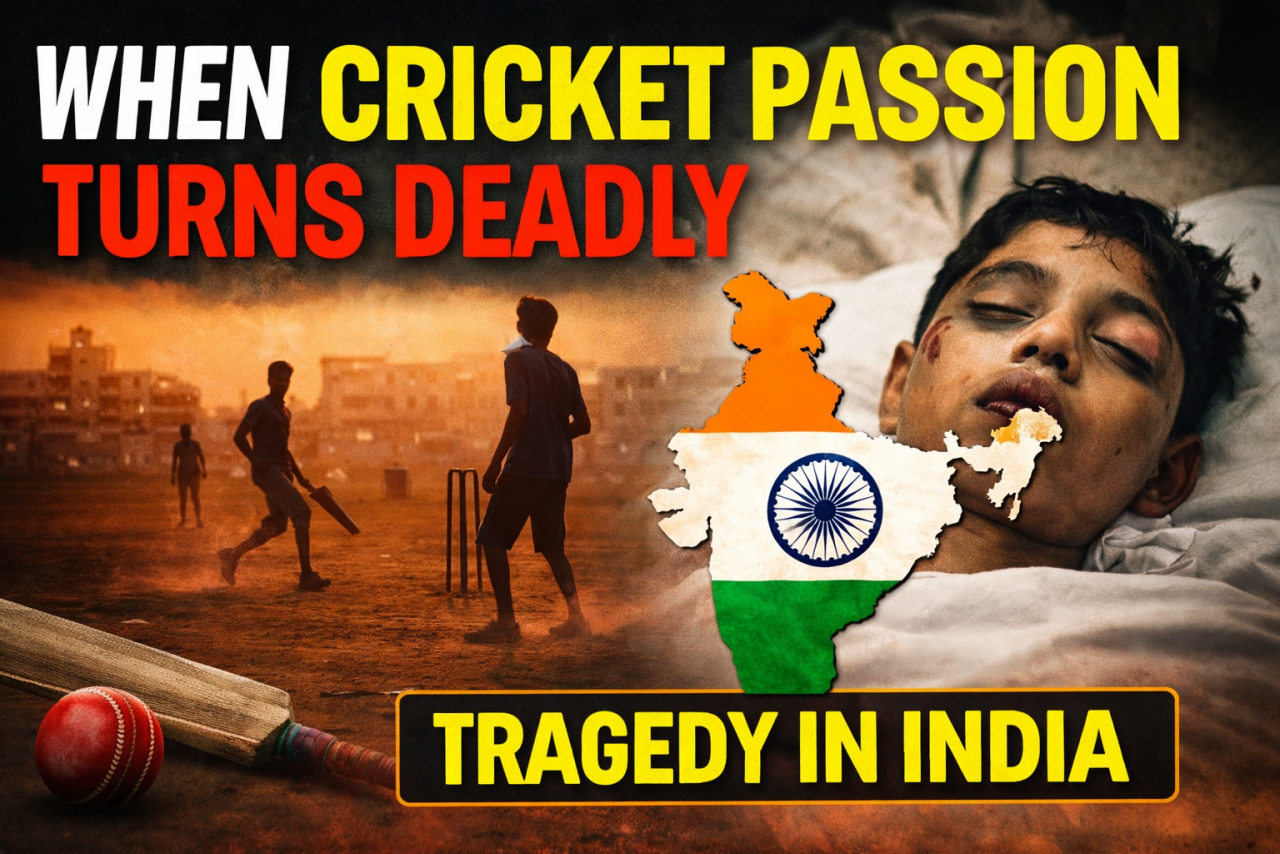
A cricket match in a neighbourhood park was meant to end with handshakes and laughter. Instead, it ended in the death of a 15-year-old — a chilling reminder of how quickly passion can turn into peril.
Cricket is often called a religion in India. It unites cities, villages and generations. It sparks celebrations, fuels debates and shapes childhood dreams. But when a neighbourhood cricket match ends in the death of a 15-year-old boy, it forces the country to confront a troubling question: has passion for the sport crossed into something more dangerous?
The recent tragedy in West Delhi’s Tilak Nagar, where a teenage dispute during a local cricket game escalated into fatal violence, is deeply disturbing. What should have been an ordinary evening of play turned into a confrontation that cost a young life. According to reports, a disagreement during the match spiralled into physical assault involving other minors. The victim later succumbed to his injuries.
At first glance, it may seem like an isolated act of aggression. But incidents like these are not just about one argument or one neighbourhood. They reveal a larger pattern about how sport, especially cricket, is emotionally consumed in India.
When Cricket Becomes More Than a Game
Cricket in India is not treated as casual entertainment. It carries emotional weight. International matches trigger national pride. IPL rivalries divide friend circles. Social media timelines explode with celebrations and abuse. In such an environment, winning is glorified and losing is often ridiculed.
Young boys growing up in this culture absorb these signals. For many, performance on the pitch becomes tied to personal identity and respect. A disputed decision in a local match can feel like an attack on honour. A taunt can feel like humiliation. Without emotional maturity, these moments can escalate rapidly.
The Tilak Nagar incident highlights how fragile the boundary between competition and conflict can be when ego overtakes sportsmanship.
The Role of Hyper-Competitive Culture
Television coverage, online commentary and fan behaviour often amplify aggression in cricket. Players celebrate fiercely. Fans troll opponents mercilessly. Heated exchanges are replayed and sensationalised. While professional athletes operate within regulated frameworks, children playing in parks do not have the same support systems.
In neighbourhood cricket, there are rarely referees, structured rules or adult supervision. Disputes over runs, outs or boundaries are settled emotionally rather than rationally. When tempers flare, there is little mechanism to calm the situation.
This hyper-competitive mindset is not created overnight. It is built gradually through constant messaging that victory equals worth and defeat equals failure.
A Wake-Up Call for Parents and Schools
The tragic death of a teenager over a cricket dispute should serve as a wake-up call for families, educators and community leaders. Sport must be redefined as a tool for learning life skills, not just proving dominance.
Parents need to model balanced reactions to wins and losses. Schools should actively teach conflict resolution and anger management alongside physical education. Local communities must ensure that children playing sports have some form of guidance and oversight.
Emotional intelligence is as important as physical strength. Young players must understand that a match ends when the game ends. It should never continue as personal hostility.
Restoring the True Spirit of Cricket
Cricket has given India unforgettable memories, iconic players and shared celebrations. It has inspired discipline, teamwork and resilience. The sport itself is not the problem. The issue lies in how society frames competition and ego.
If cricket is truly a religion in India, then its values must reflect fairness, respect and camaraderie. Passion should energise, not endanger. Rivalry should inspire excellence, not violence.
The loss of a 15-year-old boy is not just a crime statistic. It is a reminder that when emotions overpower perspective, even a simple neighbourhood game can turn tragic. India must protect its love for cricket by ensuring that the next generation learns not only how to bat and bowl, but also how to lose, forgive and walk away.
Only then can cricket remain what it was always meant to be — a game.
























Leave a Comment