
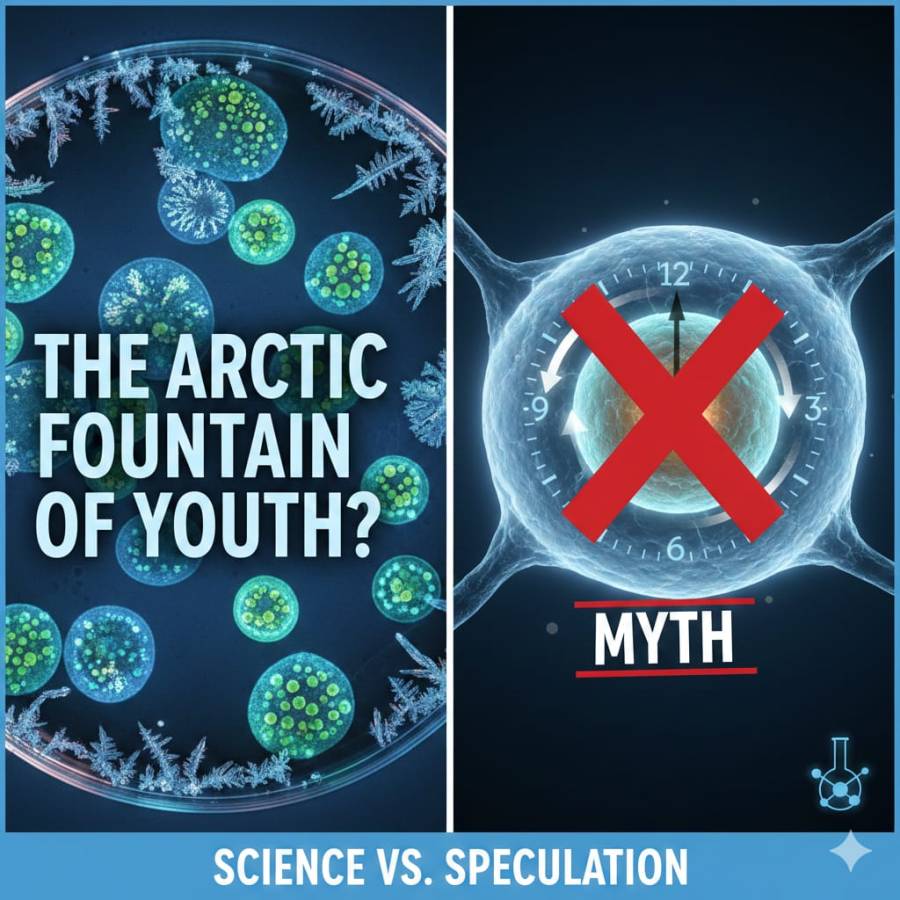
Can microbes buried in Arctic ice really rewind the human biological clock, or are we mistaking lab breakthroughs for a fountain of youth?
Deep beneath the permafrost and within the icy veins of the Arctic Circle, life doesn't just survive—it thrives. Scientists have long been fascinated by extremophiles, microorganisms that evolved to endure sub-zero temperatures, high UV radiation, and nutrient scarcity. Recently, whispers of a "miraculous" Arctic bacterium capable of reversing human aging have circulated through digital headlines. But does the science actually support the hype?
While the reality of Arctic microbiology is incredibly promising, it is far more nuanced than the "Benjamin Button" narrative suggests.
The Allure of Extremophiles
The fascination with Arctic bacteria isn't baseless. To survive the harsh polar environment, these microbes produce bioactive compounds—specialized proteins, enzymes, and lipids—that aren't found anywhere else on Earth.
Researchers have discovered that some of these molecules possess extraordinary properties:
- Antioxidant Powerhouses: Many Arctic microbes produce pigments and enzymes that neutralize free radicals, protecting their own DNA from damage.
- Anti-Inflammatory Effects: Certain bacterial extracts have shown the ability to dampen inflammatory responses in laboratory settings.
- Cellular Protection: "Cryoprotectants" produced by these bacteria help maintain cell membrane integrity, preventing the structural collapse that usually occurs during freezing or high stress.
In controlled cell culture experiments, scientists have applied these bacterial molecules to human cells. The results are often impressive: reduced oxidative stress markers and improved resilience against environmental toxins. However, this is where the gap between a lab breakthrough and a medical miracle begins to widen.
Lab Culture vs. Human Complexity
The claim that these bacteria can "reverse aging" in humans is a significant leap from current data. It is crucial to distinguish between cellular resilience in a Petri dish and biological age reversal in a living person.
Aging is not a single glitch that can be patched by a unique protein. It is a multi-faceted process involving:
- DNA Damage: The gradual accumulation of mutations over decades.
- Epigenetic Changes: Shifts in how our genes are expressed.
- Mitochondrial Decline: The loss of energy production within our cells.
- Systemic Inflammation: Often referred to as inflammaging, affecting the entire body simultaneously.
While an Arctic extract might help a skin cell in a lab handle stress more efficiently, it does not currently have the power to reset the complex biological clock of a human being. As of 2026, there are no confirmed peer-reviewed human clinical trials that support the claim of full cellular age reversal via naturally occurring Arctic bacteria.
The Path Forward: From Ice to Medicine
Despite the need for skepticism regarding miracle headlines, the field of Arctic microbiology remains one of the most exciting frontiers in biotechnology. The goal is not necessarily a fountain of youth pill, but rather the development of targeted therapies.
Potential future applications include:
- Dermatology: Utilizing protective microbial extracts in skincare to shield against UV damage.
- Pharmacology: Discovering new antibiotics or anti-inflammatory drugs to treat chronic diseases.
- Longevity Science: Understanding how these microbes repair their own DNA could provide blueprints for future gene therapies.
The Verdict
The Arctic holds a treasure trove of biological secrets, but scientific integrity requires a bridge built on evidence, not enthusiasm. For a discovery to transition from a curiosity to a treatment, it must undergo rigorous human trials, reproducible data analysis, and long-term safety validation.
Until then, we should view these Arctic microbes as a brilliant new chapter in drug discovery rather than a shortcut to immortality. The ice is melting, and while it reveals fascinating new life, it has not yet revealed a way to turn back the clock.

























Leave a Comment