
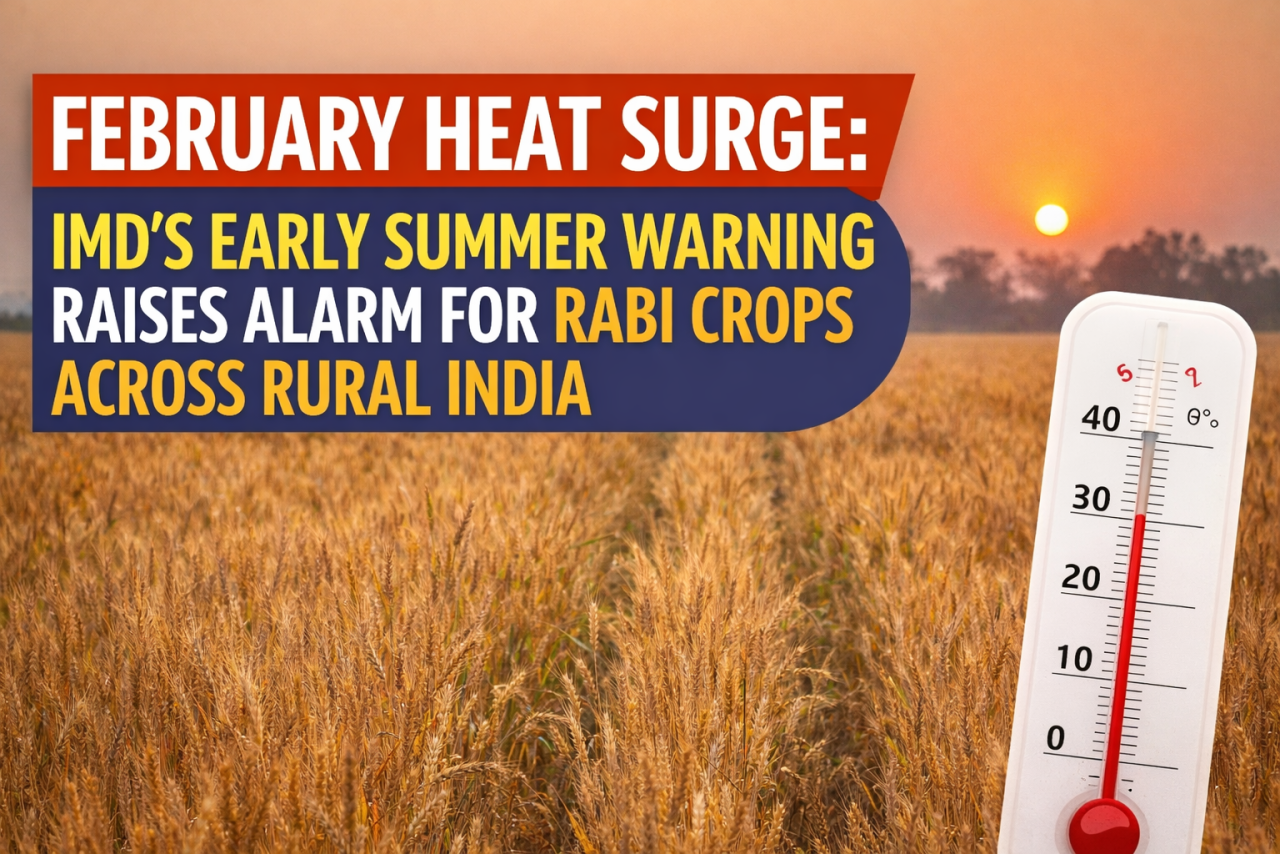
Winter appears to be loosening its grip sooner than expected. The India Meteorological Department (IMD) has reported that maximum temperatures in Delhi have already climbed close to 30°C in February — several degrees above normal. Forecasts suggest the mercury could rise further to 32–33°C by the end of the month.
For urban residents, it may feel like an early summer. For rural India, however, this is a serious agricultural warning.
Across northern and central India, February and March are critical months for Rabi crops. Wheat, mustard, gram, lentils, and barley are at sensitive growth stages — flowering, grain formation, or seed development. A sudden rise in temperature during this phase can reduce yield, shrink grain size, and weaken overall crop quality.
Why This Early Heat Matters
Agricultural experts have long observed that wheat requires cool conditions during grain filling. When temperatures rise above 30°C too early, plants rush to mature. This “forced maturity” often leads to:
- Smaller grains
- Lower production per acre
- Reduced market value
- Possible decline in protein quality
Similar risks apply to mustard and pulses. Excess heat can cause flower drop, poor seed setting, and lower oil content in mustard. In short, what looks like pleasant weather could quietly reduce farmers’ incomes.
Clear Skies, Less Rain, More Stress
The IMD has indicated clear skies and no immediate rainfall ahead. This combination accelerates evaporation, drying out soil moisture faster than usual. Fields that were comfortably moist a week ago may soon show cracks if irrigation is not properly managed.
Farmers in states such as Bihar, Uttar Pradesh, Haryana, Punjab, Rajasthan, and Madhya Pradesh — where large areas are under Rabi cultivation — must treat this forecast as an early advisory.
Water management now becomes crucial. Experts recommend light but timely irrigation, particularly during flowering and grain-filling stages. Over-irrigation should be avoided, as it can weaken roots. Where available, sprinkler or drip systems can help conserve water while maintaining soil moisture.
A Lesson From Recent Years
India has already witnessed the impact of early heatwaves on wheat production. In previous seasons, unexpected temperature spikes in March led to yield losses across northern states. Procurement numbers were affected, and market prices fluctuated.
This year’s early rise in February could signal similar risks if temperatures continue climbing into March.
Climate scientists also point out that winter seasons in northern India have gradually become shorter and warmer. While one warm spell does not define climate change, repeated early heat events suggest a shifting pattern. Farmers may increasingly need to consider:
- Adjusting sowing dates
- Choosing heat-tolerant crop varieties
- Planning irrigation more strategically
- Preparing for earlier harvest
Agricultural universities and Krishi Vigyan Kendras (KVKs) are already advising farmers in some regions to adopt resilient crop varieties suited to warmer late-winter conditions.
Watch for Warning Signs in the Field
Farmers should monitor crops closely over the next two weeks. Signs of heat stress include:
- Yellowing or drying leaves
- Early wilting during afternoon hours
- Reduced flowering
- Poor grain filling
- Soil cracking
Immediate corrective measures — such as light irrigation during early morning or evening — can reduce damage.
Livestock Also at Risk
The early rise in temperature is not just a crop concern. Livestock can also experience heat stress. Reduced feed intake, lower milk production, and dehydration are common symptoms.
Simple precautions — adequate drinking water, shaded resting areas, and avoiding midday grazing — can protect animals during rising temperatures.
Insurance and Preparedness
With weather patterns becoming less predictable, crop insurance is more important than ever. Farmers enrolled under schemes like the Pradhan Mantri Fasal Bima Yojana should ensure their documentation is up to date. In case of extreme weather damage, timely reporting will be essential.
Staying connected to local weather bulletins and agricultural advisories can also make a critical difference. Mobile alerts, radio updates, and local extension services provide practical, location-specific guidance.
An Early Warning, Not a Panic Signal
The IMD forecast should not cause fear — but it demands awareness. When February temperatures touch 30°C and threaten to cross 32–33°C, it signals that the agricultural calendar may shift.
For rural India, preparation is protection.
By monitoring crops daily, managing irrigation carefully, and staying informed about weather trends, farmers can reduce potential losses. Winter may be ending early, but informed action today can safeguard tomorrow’s harvest.
As the mercury rises, vigilance in the fields will matter more than ever.





















Leave a Comment