
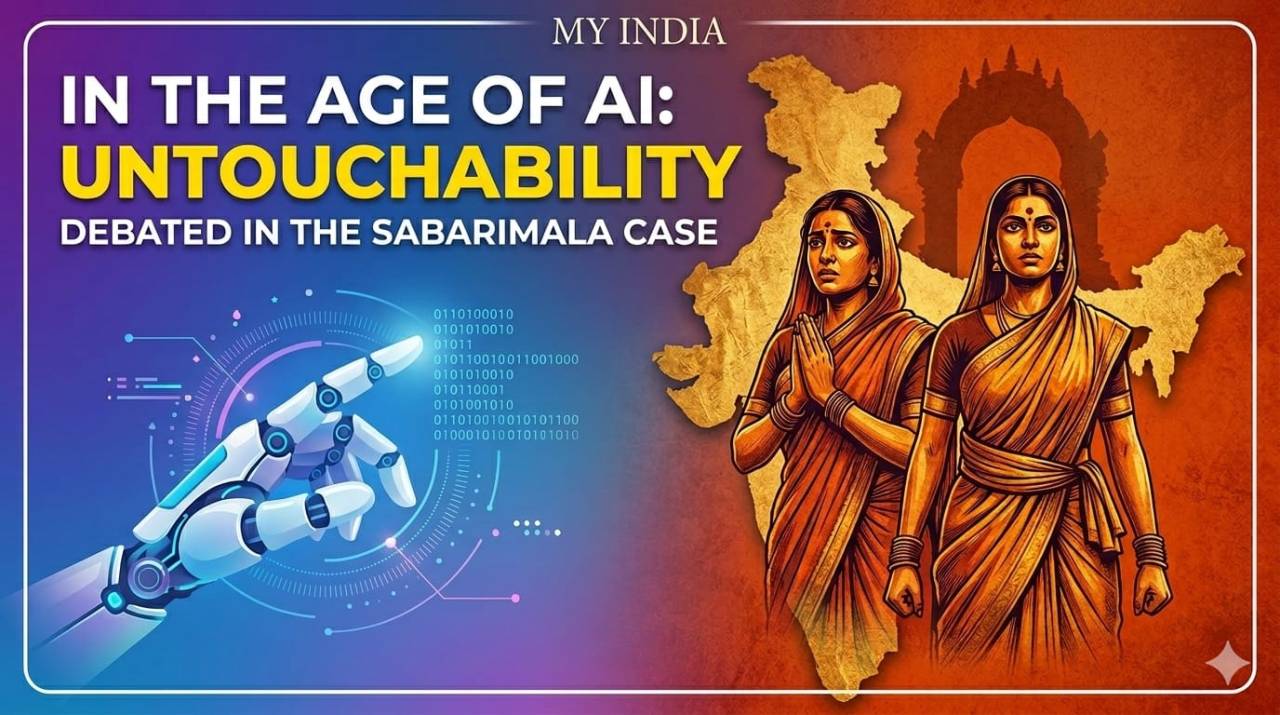
Can a biological process be equated with untouchability? The Supreme Court’s fresh take on the Sabarimala case reopens one of India’s most complex debates on faith, gender, and equality.
In a nation where the digital revolution is rapidly transforming the social landscape, the ghosts of ancient exclusions continue to haunt the corridors of India’s highest institutions. The recent observations by the Supreme Court’s nine-judge Constitution Bench regarding the Sabarimala temple entry case have reignited a profound legal and social debate: Can the exclusion of women based on biological cycles be equated to the historical scourge of "untouchability"?
As AI begins to solve complex human problems, the human element of "purity and pollution" remains a stubborn hurdle in the pursuit of constitutional equality.
The Historical Weight of Article 17
Article 17 of the Indian Constitution is one of the few absolute fundamental rights. It states:
"Untouchability" is abolished and its practice in any form is forbidden. The enforcement of any disability arising out of "untouchability" shall be an offence punishable in accordance with law."
Historically, this article was a direct response to the centuries of systemic oppression faced by Dalit communities. It was designed to dismantle a hierarchy that deemed a segment of the population "polluted" by birth. However, in the 2018 Sabarimala judgment, the Supreme Court (specifically Justice D.Y. Chandrachud) expanded this definition. The court argued that "untouchability" was not merely a caste-based phenomenon but a mindset rooted in notions of purity and pollution—notions that are also used to exclude women during menstruation.
The Recent Pivot: "Hard Realities" and Legal Logic
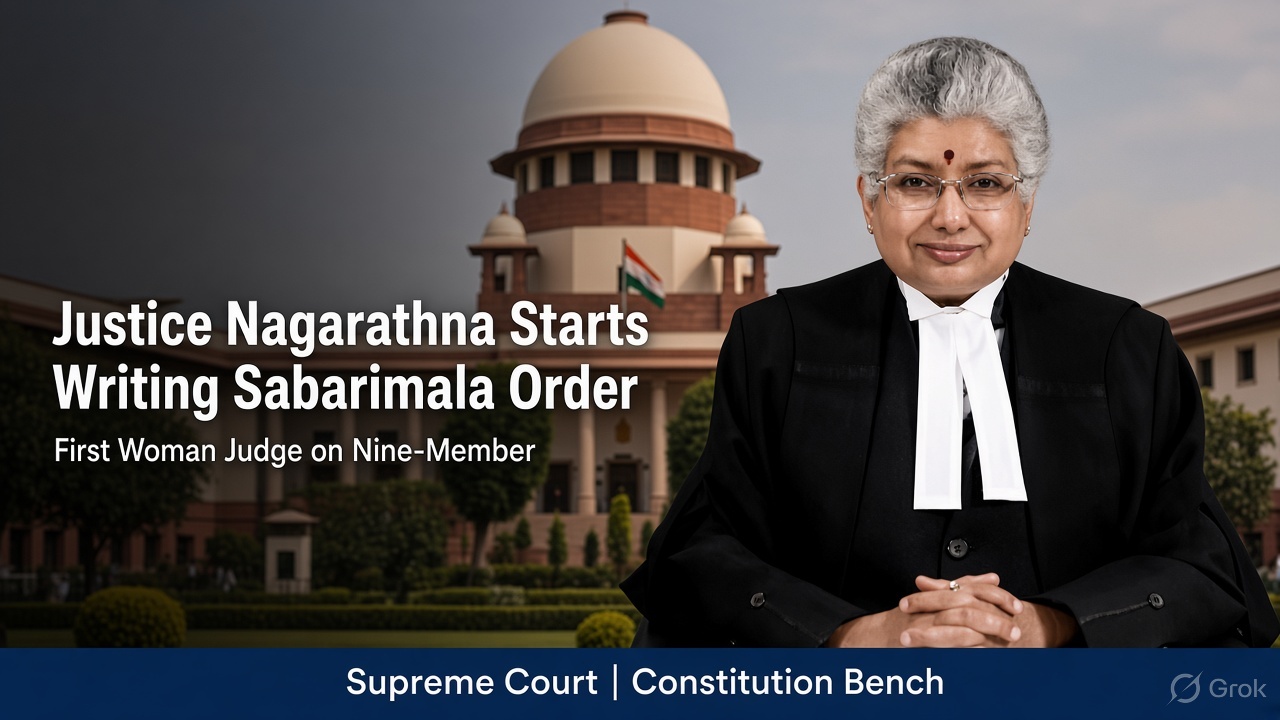
The court’s recent observations reveal a critical shift in its current approach. Justice B.V. Nagarathna, the only woman on the current nine-judge bench, pointed out a logical and biological dissonance in applying Article 17 to menstrual exclusion. Her remark strikes at the heart of the matter:
"Speaking as a woman, I can say there cannot be three days of untouchability every month and on the fourth day, there is no untouchability... let us go by hard realities."
Justice Nagarathna’s observation suggests that "untouchability," as envisioned by the framers of the Constitution, was a permanent, inherited status that a person could never escape. In contrast, the exclusion at Sabarimala is periodic and linked specifically to the age group (10–50 years) associated with menstruation. This "part-time" application of the label, the bench suggests, may not meet the threshold of the historical and constitutional definition of untouchability.
The Collision of Faith and Equality
The Centre’s stance, as presented by Solicitor General Tushar Mehta, further complicates the issue. The government argues that the restriction is not a "social ill" or a form of gender discrimination, but rather a practice unique to the Naisthika Brahmachari (eternal celibate) nature of the deity at Sabarimala.
This presents a classic constitutional tension:
- Article 25 & 26: The right to practice religion and the right of denominations to manage their own affairs.
- Article 14 & 15: The right to equality and non-discrimination based on sex.
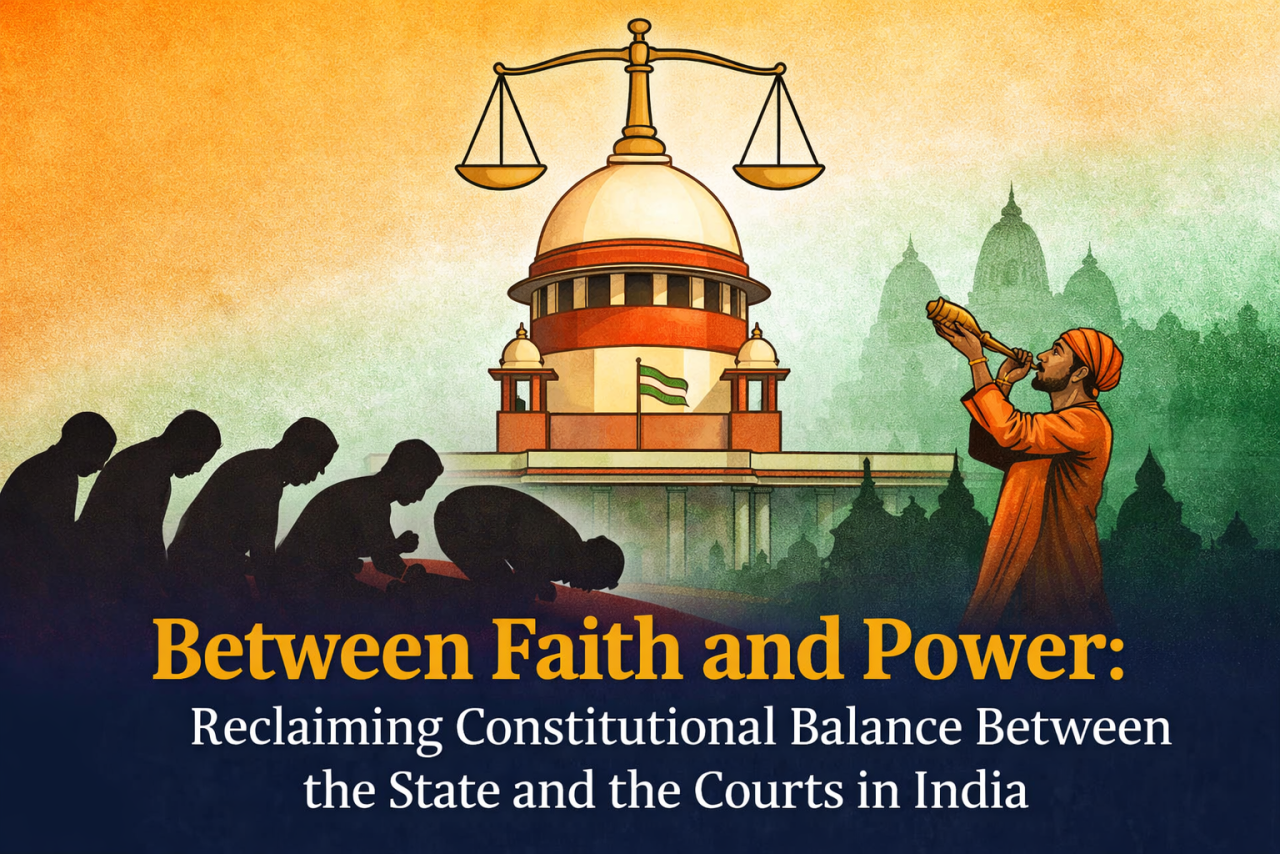
By questioning the use of Article 17, the court is essentially asking whether gender-based exclusion should be fought using the tools of anti-caste legislation or if it belongs strictly to the realm of gender justice and religious freedom.
Untouchability in the Age of AI
We live in an era where AI can predict crop yields, diagnose rare diseases, and even simulate human emotion. Yet, we are still debating the "purity" of a biological process as fundamental as the menstrual cycle. The irony is stark: while we strive for a "Smart India" powered by data and logic, the social fabric remains snagged on concepts of "pollution" that predate the printing press.
If we cannot agree on whether the exclusion of women constitutes "untouchability," it reflects a deeper national struggle. It shows that while our laws are modern, our social definitions are still in flux. Using Article 17 to protect women’s rights was a "transformative" attempt to bridge this gap, but as the current bench suggests, it might have been a bridge too far for the legal definition of the term.
Final Take
The Sabarimala case is about more than just a temple; it is a litmus test for the Modern Indian Identity. Whether the court decides that menstrual exclusion is "untouchability" or simply a "discriminatory religious practice," the underlying issue remains.
Social progress cannot be achieved by legal definitions alone. True "abolition" of exclusion—whether based on caste or gender—requires a shift in the collective consciousness. As the nine-judge bench deliberates, the nation is reminded that even in the age of AI, the most difficult code to rewrite is the one governing human prejudice. The "hard realities" Justice Nagarathna spoke of are not just biological—they are the enduring social hierarchies that we have yet to fully dismantle.

















Leave a Comment