
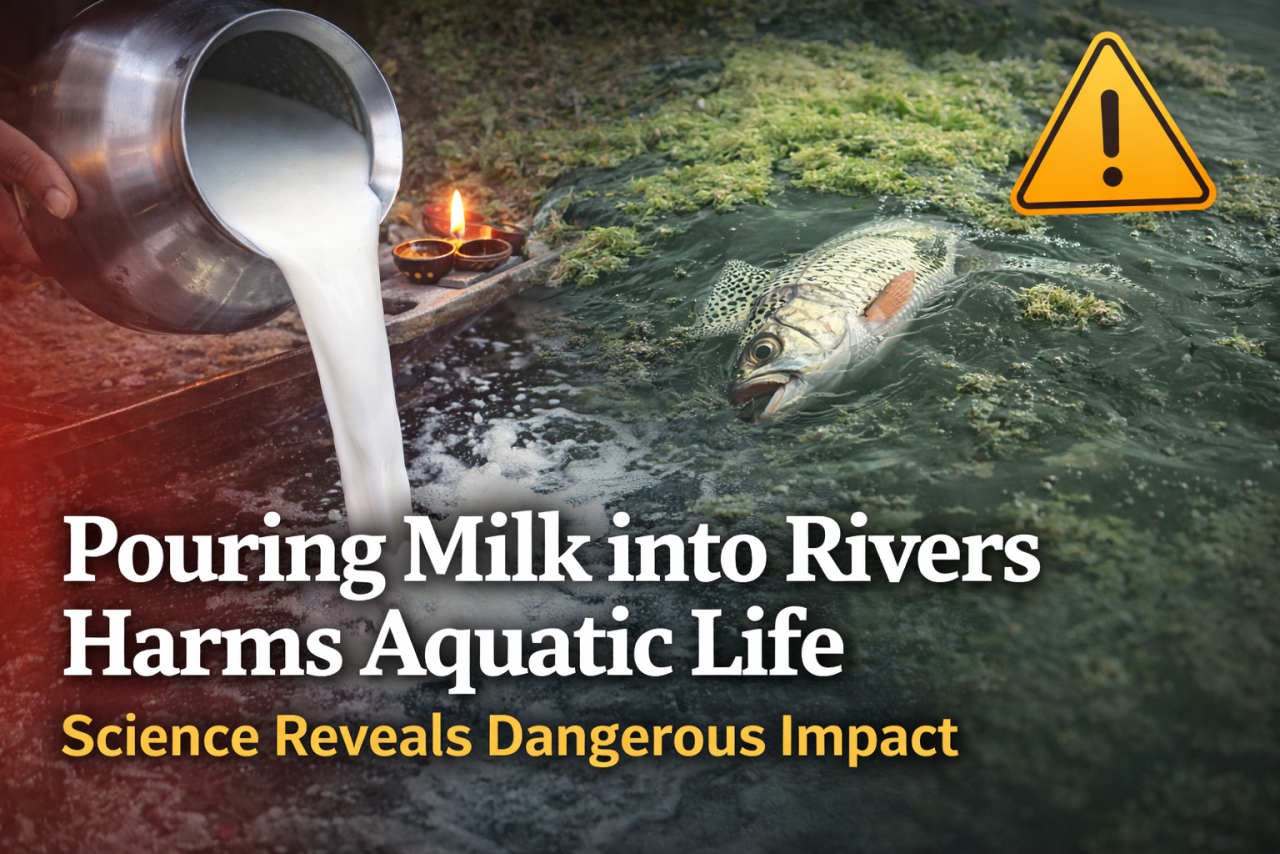
11,000 litres of milk in one river—faith or environmental risk? Science raises serious questions.
A recent incident in which nearly 11,000 litres of milk were poured into the Narmada River has triggered widespread debate on social media platform X and renewed concerns among environmental experts about the ecological impact of such practices.
The act, reportedly linked to religious offerings, has drawn criticism from scientists and environmental groups. They warn that pouring large quantities of milk into rivers can increase pollution levels and harm aquatic life in already stressed water systems.
A Common Practice, A Growing Concern
Pouring milk into rivers is a common ritual in many parts of India. It is often seen as an act of faith. However, experts say that when done at scale, it can create serious environmental problems.
While there is no official nationwide data on how much milk is poured into rivers annually, environmentalists note that such practices occur frequently during religious events and across multiple regions. Even small quantities, when repeated by large numbers of people, can have a cumulative impact.
How Milk Affects River Water
Milk contains proteins, fats, and sugars. These are organic substances that begin to break down once they enter river water. Microorganisms present in the water start decomposing these substances.
This process increases Biological Oxygen Demand (BOD). It is the amount of oxygen needed to break down organic matter. When BOD rises, the level of dissolved oxygen in water falls.
“Large-scale disposal of organic substances like milk can sharply reduce oxygen levels, putting aquatic life at risk,” an environmental expert said.
Threat to Aquatic Life
Aquatic organisms depend on dissolved oxygen to survive. Fish, insects, and plants need stable oxygen levels in water.
When oxygen levels drop, it creates stress for these organisms. In severe cases, it leads to hypoxia, a condition where oxygen becomes too low to support life. This can result in fish deaths and long-term damage to biodiversity.
Experts warn that repeated exposure to such conditions can weaken river ecosystems over time.
Risk of Algal Blooms and Toxic Growth
Milk also acts as a nutrient source for algae and bacteria. This can trigger algal blooms, which grow rapidly on the water surface.
These blooms block sunlight from reaching underwater plants. This affects photosynthesis and reduces oxygen production. Some algae also release toxins, which can harm animals and contaminate water used by humans.
India’s Rivers Already Under Stress
India’s rivers are already facing high levels of pollution from sewage, industrial waste, and urban runoff. Adding organic waste like milk increases the burden.
Environmental experts say that such practices, though individually small, can contribute to long-term degradation when repeated across regions.
The recent Narmada incident highlights how large, one-time events can also have immediate local impacts.
Balancing Faith with Responsibility
Experts and social groups are calling for greater awareness. They stress that religious practices can continue in ways that do not harm the environment.
“Respect for nature should be part of cultural practices. Protecting rivers is also a form of devotion,” an environmental researcher said.
Some communities have started promoting alternatives such as symbolic offerings or donating milk to the poor.
Environmentalists believe awareness is key. When large numbers of people follow eco-friendly practices, the impact can be significant.
They urge citizens to understand the scientific effects of such actions and make responsible choices.
Final Take
The pouring of 11,000 litres of milk into the Narmada River has brought attention to a wider issue. Scientific evidence shows that such practices can reduce oxygen levels, trigger harmful algal growth, and damage aquatic ecosystems.
At a time when India is investing heavily in cleaning its rivers, reducing such practices can play an important role in protecting these vital natural resources.
























Leave a Comment