
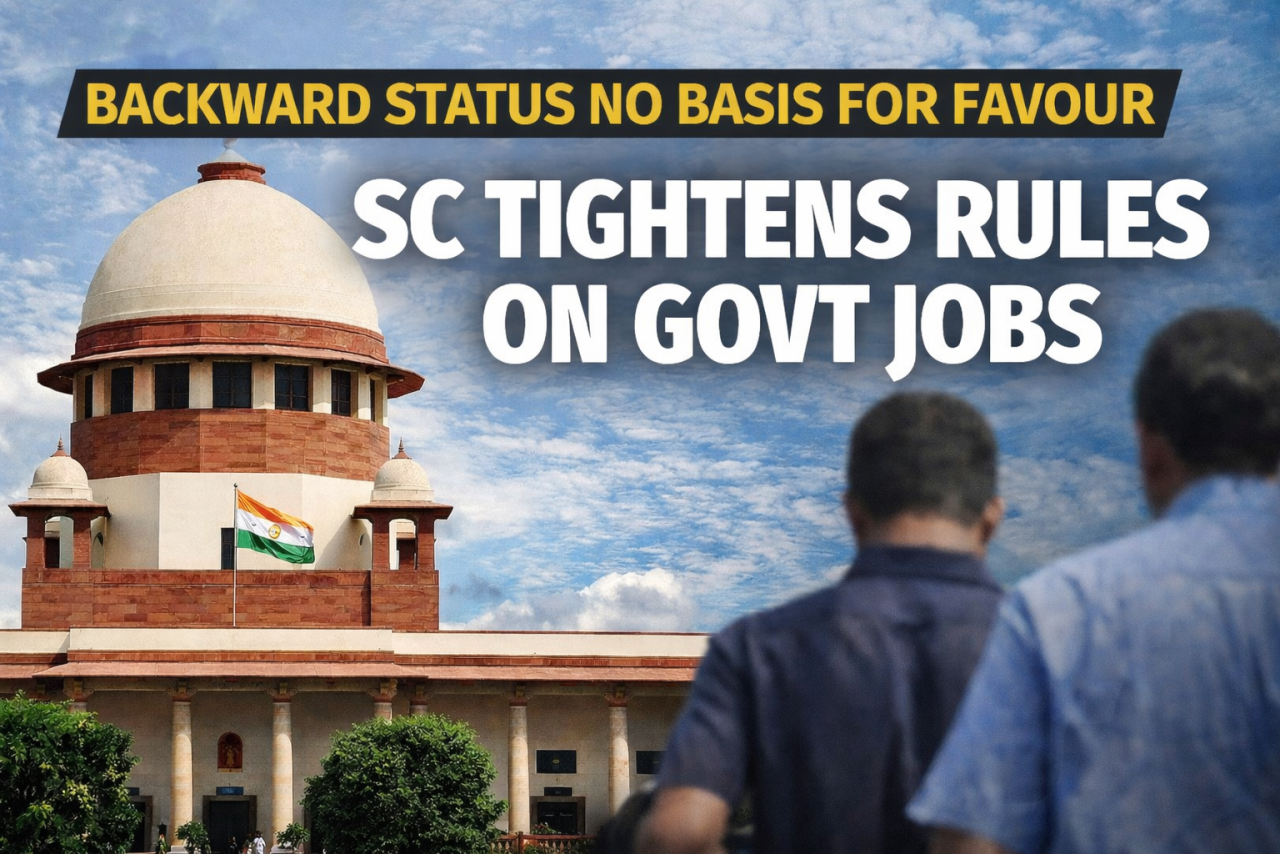
A crucial Supreme Court ruling is reshaping how fairness and merit are defined in government jobs—sending a strong message to millions of aspirants.
The Supreme Court has clarified an important principle in public employment. It stated that belonging to a backward community alone cannot be a reason for special favour in government jobs. This observation comes at a time when concerns about fairness in recruitment are growing across India.
Reservation has long been part of India’s system to support socially and economically weaker sections. It aims to create equal opportunities. However, many candidates from the general category feel that the system sometimes reduces their chances. This has led to dissatisfaction among job seekers and working professionals. In this context, the court’s statement gains importance.
The court stressed that public employment must follow strict and equal rules. It said that sympathy or social background should not influence recruitment decisions. This reinforces the idea that government jobs must be given through a fair process. The focus must remain on rules and performance.
The case involved a candidate who missed a key stage of a recruitment process. He later asked for another chance. The court rejected this request. It said that allowing such exceptions would weaken the integrity of the system. The judges noted that large recruitment drives involve many candidates. Giving relief to one person can harm fairness for others.
For working professionals, this judgment carries a strong message. It highlights the importance of discipline and responsibility. Missing deadlines or ignoring procedures can have serious consequences. In today’s competitive environment, professionals must stay alert and follow rules carefully.
The decision may also increase confidence among those who support merit-based systems. Many employees believe that effort and performance should be the main factors in career growth. This judgment supports that view. It shows that rules will be applied equally.
At the same time, the court did not reject the idea of reservation. It only limited the use of sympathy in recruitment decisions. Reservation remains an important tool for social justice. It continues to help many communities gain access to jobs and education. The judgment aims to balance fairness with equality.
Working professionals can learn an important lesson from this case. Equal treatment is essential in any workplace. When rules are applied in the same way to everyone, it builds trust. It also improves work culture. Employees feel more confident when they know that opportunities are fair.
The ruling may also affect future hiring practices. Recruitment bodies may become stricter in following guidelines. They may avoid giving special relaxations. This can lead to more transparent systems. Such changes can benefit both employers and job seekers.
However, the debate on reservation is far from over. There are strong views on both sides. Some people want reforms in the system. Others believe it should remain as it is. This judgment does not end the debate. It only sets a clear boundary for recruitment rules.
Ultimately, the Supreme Court has sent a clear message. Government jobs must be filled through a fair and disciplined process. Social background alone cannot be the basis for special favour. For working professionals, the lesson is simple. Follow rules, stay prepared, and focus on performance. In a competitive job market, these factors play a key role in success.




























Leave a Comment