
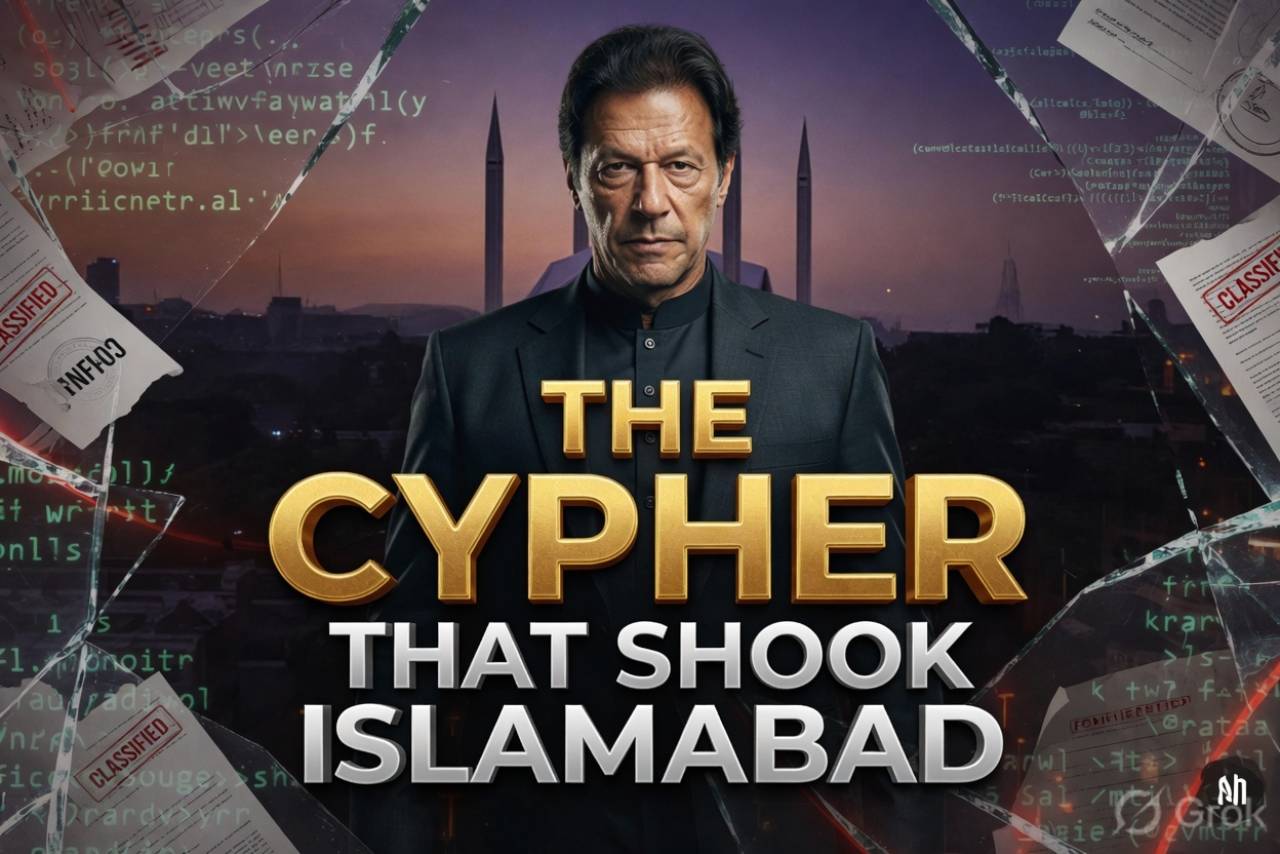
A leaked diplomatic cable—known as the “cypher”—has reignited debate over whether Pakistan’s 2022 political transition was shaped only by domestic politics, or influenced by external diplomatic pressure from Washington.
In world politics, the internal decisions of a country are often linked with the interests of powerful nations. This is especially true for developing countries that depend on trade, aid, or security cooperation. A recent controversy involving a leaked diplomatic cable—commonly called the “cypher”—has once again brought this issue into focus in Pakistan.
The document, reported by investigative media outlet Drop Site News, has become central to a debate about whether foreign pressure influenced political changes in Pakistan during 2022. It is closely connected to the period just before the removal of former Prime Minister Imran Khan from office.
The leaked cable describes concerns expressed by United States officials about Pakistan’s foreign policy direction under Imran Khan. In particular, his visit to Moscow in February 2022, on the same day Russia began its military action in Ukraine, is seen as an important turning point in relations between Islamabad and Washington.
The Diplomatic Background
According to the leaked communication, identified as cable I-0678, a key meeting took place on March 7, 2022. The Pakistani ambassador to the United States met Donald Lu, a senior U.S. official responsible for South and Central Asia.
During this meeting, the U.S. side reportedly expressed dissatisfaction with Pakistan’s foreign policy choices. One major concern was Imran Khan’s decision to maintain a neutral position on the Russia-Ukraine conflict while also visiting Moscow during a highly sensitive moment in global politics.
The cable suggests that this created tension between the two countries. It is reported that the U.S. viewed this move as harmful to the relationship between Washington and Islamabad.
A part of the communication notes that the visit had “created a dent” in bilateral ties. The idea of a “dent” here refers to a weakening of trust between the two governments.
The Political Warning
One of the most discussed parts of the leaked cypher is the alleged warning about Pakistan’s internal political situation.
At that time, a no-confidence motion against Imran Khan was already being discussed in Pakistan’s parliament. The cable suggests that the U.S. official indicated that if the political leadership changed through constitutional means, relations between the two countries could improve.
The phrase often quoted from the document is “all will be forgiven,” meaning that tensions could ease if there was a change in leadership. However, it also suggested that if Imran Khan remained in power, relations could become more difficult.
This part of the document has led to strong debate in Pakistan. Supporters of Imran Khan argue that it shows foreign interference in domestic politics. Others say it reflects normal diplomatic communication, where countries express their preferences but do not directly control political outcomes.
Other Points of Tension
The leaked cable also refers to earlier disagreements between the United States and Imran Khan’s government.
One major issue was Pakistan’s refusal to allow the United States military bases on its territory after the withdrawal of American forces from Afghanistan in 2021. The United States had used such bases in the past for counter-terrorism operations in the region.
Pakistan’s decision was seen as a shift in its foreign policy, moving away from close military cooperation with Washington. This added to already existing tensions between the two countries.
The Timeline of Events
The sequence of events has been widely discussed in political debates. According to public information:
- On March 7, 2022, the diplomatic meeting recorded in the cypher took place.
- On April 10, 2022, Imran Khan was removed from office after losing a no-confidence vote in parliament.
The closeness of these dates has led to speculation and political arguments. Supporters of Imran Khan claim that the timing suggests foreign influence. However, opponents argue that the change in government followed constitutional procedures within Pakistan’s parliamentary system.
Aftermath and Political Impact
After his removal, Imran Khan launched a strong public campaign. He claimed that the cypher was evidence of foreign involvement in removing his government. This claim became a central part of his political narrative.
The issue became highly controversial in Pakistan. It divided public opinion and led to protests, political rallies, and legal cases. Imran Khan and his party, Pakistan Tehreek-e-Insaf (PTI), argued that the document proved external pressure in domestic politics.
At the same time, the government and other political actors rejected these claims. They maintained that the change in leadership was the result of internal parliamentary processes and political disagreement within Pakistan.
The controversy also led to legal proceedings involving the handling of classified documents, adding further complexity to the situation.
Broader Questions of Sovereignty
The cypher debate raises a larger question in international relations: how independent are countries in making political decisions when they depend on powerful global partners?
For countries like Pakistan, foreign policy decisions often involve balancing relationships with major powers such as the United States, China, and Russia. Each of these relationships carries economic, military, and diplomatic importance.
The leaked cable highlights how disagreements over foreign policy can create tension not only between governments but also influence internal political debates.
Final Take: A Complex Political Moment
The cypher controversy remains a significant event in recent Pakistani political history. It reflects the complexity of modern diplomacy, where foreign relations and domestic politics are closely connected.
While different groups interpret the leaked document in different ways, it has clearly shaped political discussions in Pakistan. It has also raised important questions about transparency, sovereignty, and the role of international influence in domestic affairs.
In the end, the events surrounding the cypher show how global and national politics are often linked in ways that are not always visible, but can have lasting consequences for governments and societies.
In world politics, the internal decisions of a country are often linked with the interests of powerful nations. This is especially true for developing countries that depend on trade, aid, or security cooperation. A recent controversy involving a leaked diplomatic cable—commonly called the “cypher”—has once again brought this issue into focus in Pakistan.
The document, reported by investigative media outlet Drop Site News, has become central to a debate about whether foreign pressure influenced political changes in Pakistan during 2022. It is closely connected to the period just before the removal of former Prime Minister Imran Khan from office.
The leaked cable describes concerns expressed by United States officials about Pakistan’s foreign policy direction under Imran Khan. In particular, his visit to Moscow in February 2022, on the same day Russia began its military action in Ukraine, is seen as an important turning point in relations between Islamabad and Washington.
The Diplomatic Background
According to the leaked communication, identified as cable I-0678, a key meeting took place on March 7, 2022. The Pakistani ambassador to the United States met Donald Lu, a senior U.S. official responsible for South and Central Asia.
During this meeting, the U.S. side reportedly expressed dissatisfaction with Pakistan’s foreign policy choices. One major concern was Imran Khan’s decision to maintain a neutral position on the Russia-Ukraine conflict while also visiting Moscow during a highly sensitive moment in global politics.
The cable suggests that this created tension between the two countries. It is reported that the U.S. viewed this move as harmful to the relationship between Washington and Islamabad.
A part of the communication notes that the visit had “created a dent” in bilateral ties. The idea of a “dent” here refers to a weakening of trust between the two governments.
The Political Warning
One of the most discussed parts of the leaked cypher is the alleged warning about Pakistan’s internal political situation.
At that time, a no-confidence motion against Imran Khan was already being discussed in Pakistan’s parliament. The cable suggests that the U.S. official indicated that if the political leadership changed through constitutional means, relations between the two countries could improve.
The phrase often quoted from the document is “all will be forgiven,” meaning that tensions could ease if there was a change in leadership. However, it also suggested that if Imran Khan remained in power, relations could become more difficult.
This part of the document has led to strong debate in Pakistan. Supporters of Imran Khan argue that it shows foreign interference in domestic politics. Others say it reflects normal diplomatic communication, where countries express their preferences but do not directly control political outcomes.
Other Points of Tension
The leaked cable also refers to earlier disagreements between the United States and Imran Khan’s government.
One major issue was Pakistan’s refusal to allow the United States military bases on its territory after the withdrawal of American forces from Afghanistan in 2021. The United States had used such bases in the past for counter-terrorism operations in the region.
Pakistan’s decision was seen as a shift in its foreign policy, moving away from close military cooperation with Washington. This added to already existing tensions between the two countries.
The Timeline of Events
The sequence of events has been widely discussed in political debates. According to public information:
- On March 7, 2022, the diplomatic meeting recorded in the cypher took place.
- On April 10, 2022, Imran Khan was removed from office after losing a no-confidence vote in parliament.
The closeness of these dates has led to speculation and political arguments. Supporters of Imran Khan claim that the timing suggests foreign influence. However, opponents argue that the change in government followed constitutional procedures within Pakistan’s parliamentary system.
Aftermath and Political Impact
After his removal, Imran Khan launched a strong public campaign. He claimed that the cypher was evidence of foreign involvement in removing his government. This claim became a central part of his political narrative.
The issue became highly controversial in Pakistan. It divided public opinion and led to protests, political rallies, and legal cases. Imran Khan and his party, Pakistan Tehreek-e-Insaf (PTI), argued that the document proved external pressure in domestic politics.
At the same time, the government and other political actors rejected these claims. They maintained that the change in leadership was the result of internal parliamentary processes and political disagreement within Pakistan.
The controversy also led to legal proceedings involving the handling of classified documents, adding further complexity to the situation.
Broader Questions of Sovereignty
The cypher debate raises a larger question in international relations: how independent are countries in making political decisions when they depend on powerful global partners?
For countries like Pakistan, foreign policy decisions often involve balancing relationships with major powers such as the United States, China, and Russia. Each of these relationships carries economic, military, and diplomatic importance.
The leaked cable highlights how disagreements over foreign policy can create tension not only between governments but also influence internal political debates.
Final Take: A Complex Political Moment
The cypher controversy remains a significant event in recent Pakistani political history. It reflects the complexity of modern diplomacy, where foreign relations and domestic politics are closely connected.
While different groups interpret the leaked document in different ways, it has clearly shaped political discussions in Pakistan. It has also raised important questions about transparency, sovereignty, and the role of international influence in domestic affairs.
In the end, the events surrounding the cypher show how global and national politics are often linked in ways that are not always visible, but can have lasting consequences for governments and societies.



.jpeg)


















Leave a Comment