
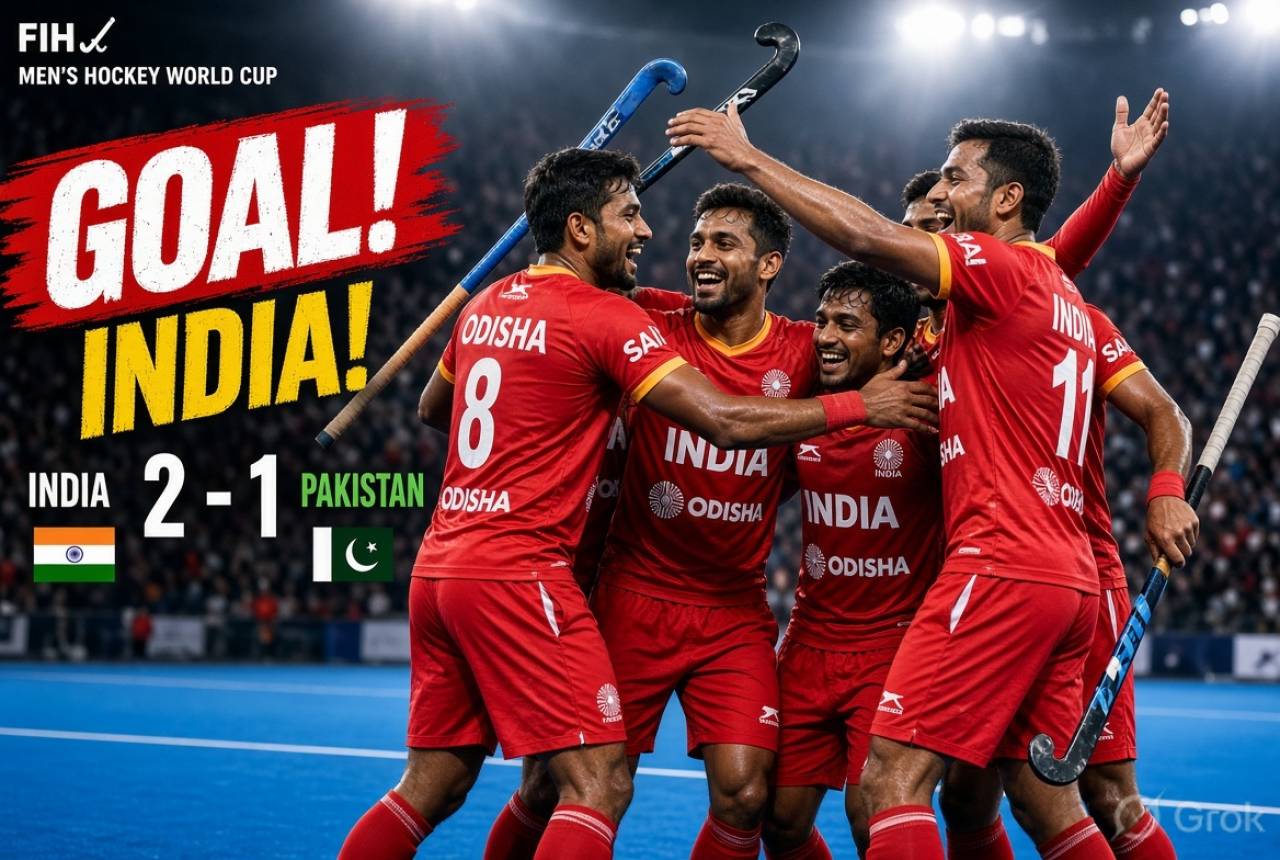
India beat Pakistan 5-3 in a high-voltage Hockey World Cup clash, but the scoreline tells only part of the story of a rivalry that still refuses to be ordinary.
There is a strange thing that happens every time India and Pakistan step onto a hockey pitch together. On paper, the contest stopped being evenly matched years ago. India has not lost to Pakistan in a World Cup in four decades, and recent meetings between the two sides have increasingly produced one-sided results. Yet when the teams walked out at Wagener Hockey Stadium in Amstelveen for their Pool D clash, the atmosphere tightened, as it always does when these neighbours meet.
What followed was anything but an anticlimax.
India defeated Pakistan 5-3 to advance to the next stage of the newly formatted World Cup as the second-best team from their pool. But unlike India's 7-1 rout of Pakistan in June's Pro League fixture or the 10-2 demolition at the last Asian Games, this contest carried genuine tension until the closing minutes.
India Strike Early
The match began almost exactly as India would have wanted. The team in saffron raced to a 2-0 lead within ten minutes and extended its advantage to 3-0 by the twentieth minute, relying on the set-piece precision that has become captain Harmanpreet Singh's trademark.
Two penalty-corner conversions, in the fifth and twenty-first minutes, did the early damage. India's drag-flick threat once again proved to be one of the most dependable weapons in world hockey.
But Pakistan refused to fold.
Playing in white and green, Pakistan fought its way back through two sharp field goals, reducing the deficit to 4-2 by half-time. For a spell, the match appeared capable of taking an unexpected turn.
The comeback also carried a reminder of the rivalry's enduring emotional weight. Despite India's overwhelming recent dominance, Pakistan had beaten India in their previous Pro League meeting, showing that form alone cannot always explain what happens when these two teams meet.
Abhishek Provides the Spark
India's individual difference-maker was forward Abhishek, whose craft and improvisation produced two outstanding field goals in the eleventh and twenty-fourth minutes.
His finishing provided India with the attacking edge required to stay ahead as Pakistan continued to threaten. Head coach Craig Fulton will likely view that quality as an important positive as India moves deeper into the tournament.
Hardik Singh added India's fifth goal through a penalty stroke in the thirty-fifth minute after a period in which Pakistan had threatened to seize control of the contest.
Pakistan's resistance, however, was far from over.
A field goal in the twenty-second minute and a penalty-corner conversion two minutes later kept Pakistan within touching distance. A fourth-quarter strike then threatened to turn the match into another nervous finish, reminiscent of the previous Pro League encounter when late Pakistani goals had transformed a comfortable Indian advantage into a tense contest.
This time, India held its nerve.
Even after being reduced to ten men for most of the final five minutes, India managed to protect its lead and secure the victory.
Turnovers Remain a Concern
The late wobble is something India will need to examine carefully.
At half-time, Fulton had already identified ball control and repeated turnovers as areas requiring improvement. Those weaknesses resurfaced as Pakistan found openings and put pressure on the Indian defence.
Against stronger and more clinical opposition later in the competition, such lapses could prove considerably more costly. India's ability to dominate possession and territory will mean little if unnecessary turnovers repeatedly allow opponents back into matches.
The warning signs were therefore visible even in victory.
Harmanpreet's Leadership
There were also moments that captured why India-Pakistan matches continue to feel different from ordinary fixtures.
Harmanpreet Singh's animated fist-bump and celebration after India's second unanswered goal reflected more than routine satisfaction. For a captain leading India through a rare full-blooded World Cup encounter against Pakistan, the moment carried an emotional intensity that statistics cannot fully capture.
His penalty-corner expertise remains central to India's tactical identity. But his ability to create opportunities from open play and influence the team's temperament has become equally important.
What the Match Says About India
Beyond the rivalry and the final score, the contest offered a useful snapshot of India's position in the tournament.
India are good enough to control matches against most opposition. They possess the attacking quality, set-piece threat and individual talent to build commanding leads.
But they can also surrender momentum.
That inconsistency will concern Fulton far more when India faces the tournament's genuine heavyweights. Against elite opposition, opportunities to recover from defensive lapses and careless turnovers are likely to be fewer.
The 5-3 scoreline therefore tells only part of the story.
A Rivalry Still Bigger Than the Numbers
For Indian hockey fans, victories over Pakistan carry a significance that extends beyond tactical analysis.
Four decades without a World Cup defeat against Pakistan represents more than a statistical milestone. It reflects a generational transformation in a rivalry that was once defined by unpredictability and regularly produced contests in which neither side could be considered a clear favourite.
India now enter the next stage with both the result and a set of lessons.
The biggest of them is perhaps the simplest. India must learn to sustain the intensity, discipline and attacking intent shown during the opening twenty minutes for the full duration of a match.
Because as this encounter demonstrated, even when the balance of power has shifted decisively, an India-Pakistan contest rarely behaves like an ordinary hockey match.
India won 5-3. Pakistan lost.
But the rivalry, as ever, refused to be ordinary.
There is a strange thing that happens every time India and Pakistan step onto a hockey pitch together. On paper, the contest stopped being evenly matched years ago. India has not lost to Pakistan in a World Cup in four decades, and recent meetings between the two sides have increasingly produced one-sided results. Yet when the teams walked out at Wagener Hockey Stadium in Amstelveen for their Pool D clash, the atmosphere tightened, as it always does when these neighbours meet.
What followed was anything but an anticlimax.
India defeated Pakistan 5-3 to advance to the next stage of the newly formatted World Cup as the second-best team from their pool. But unlike India's 7-1 rout of Pakistan in June's Pro League fixture or the 10-2 demolition at the last Asian Games, this contest carried genuine tension until the closing minutes.
India Strike Early
The match began almost exactly as India would have wanted. The team in saffron raced to a 2-0 lead within ten minutes and extended its advantage to 3-0 by the twentieth minute, relying on the set-piece precision that has become captain Harmanpreet Singh's trademark.
Two penalty-corner conversions, in the fifth and twenty-first minutes, did the early damage. India's drag-flick threat once again proved to be one of the most dependable weapons in world hockey.
But Pakistan refused to fold.
Playing in white and green, Pakistan fought its way back through two sharp field goals, reducing the deficit to 4-2 by half-time. For a spell, the match appeared capable of taking an unexpected turn.
The comeback also carried a reminder of the rivalry's enduring emotional weight. Despite India's overwhelming recent dominance, Pakistan had beaten India in their previous Pro League meeting, showing that form alone cannot always explain what happens when these two teams meet.
Abhishek Provides the Spark
India's individual difference-maker was forward Abhishek, whose craft and improvisation produced two outstanding field goals in the eleventh and twenty-fourth minutes.
His finishing provided India with the attacking edge required to stay ahead as Pakistan continued to threaten. Head coach Craig Fulton will likely view that quality as an important positive as India moves deeper into the tournament.
Hardik Singh added India's fifth goal through a penalty stroke in the thirty-fifth minute after a period in which Pakistan had threatened to seize control of the contest.
Pakistan's resistance, however, was far from over.
A field goal in the twenty-second minute and a penalty-corner conversion two minutes later kept Pakistan within touching distance. A fourth-quarter strike then threatened to turn the match into another nervous finish, reminiscent of the previous Pro League encounter when late Pakistani goals had transformed a comfortable Indian advantage into a tense contest.
This time, India held its nerve.
Even after being reduced to ten men for most of the final five minutes, India managed to protect its lead and secure the victory.
Turnovers Remain a Concern
The late wobble is something India will need to examine carefully.
At half-time, Fulton had already identified ball control and repeated turnovers as areas requiring improvement. Those weaknesses resurfaced as Pakistan found openings and put pressure on the Indian defence.
Against stronger and more clinical opposition later in the competition, such lapses could prove considerably more costly. India's ability to dominate possession and territory will mean little if unnecessary turnovers repeatedly allow opponents back into matches.
The warning signs were therefore visible even in victory.
Harmanpreet's Leadership
There were also moments that captured why India-Pakistan matches continue to feel different from ordinary fixtures.
Harmanpreet Singh's animated fist-bump and celebration after India's second unanswered goal reflected more than routine satisfaction. For a captain leading India through a rare full-blooded World Cup encounter against Pakistan, the moment carried an emotional intensity that statistics cannot fully capture.
His penalty-corner expertise remains central to India's tactical identity. But his ability to create opportunities from open play and influence the team's temperament has become equally important.
What the Match Says About India
Beyond the rivalry and the final score, the contest offered a useful snapshot of India's position in the tournament.
India are good enough to control matches against most opposition. They possess the attacking quality, set-piece threat and individual talent to build commanding leads.
But they can also surrender momentum.
That inconsistency will concern Fulton far more when India faces the tournament's genuine heavyweights. Against elite opposition, opportunities to recover from defensive lapses and careless turnovers are likely to be fewer.
The 5-3 scoreline therefore tells only part of the story.
A Rivalry Still Bigger Than the Numbers
For Indian hockey fans, victories over Pakistan carry a significance that extends beyond tactical analysis.
Four decades without a World Cup defeat against Pakistan represents more than a statistical milestone. It reflects a generational transformation in a rivalry that was once defined by unpredictability and regularly produced contests in which neither side could be considered a clear favourite.
India now enter the next stage with both the result and a set of lessons.
The biggest of them is perhaps the simplest. India must learn to sustain the intensity, discipline and attacking intent shown during the opening twenty minutes for the full duration of a match.
Because as this encounter demonstrated, even when the balance of power has shifted decisively, an India-Pakistan contest rarely behaves like an ordinary hockey match.
India won 5-3. Pakistan lost.
But the rivalry, as ever, refused to be ordinary.
























Leave a Comment