
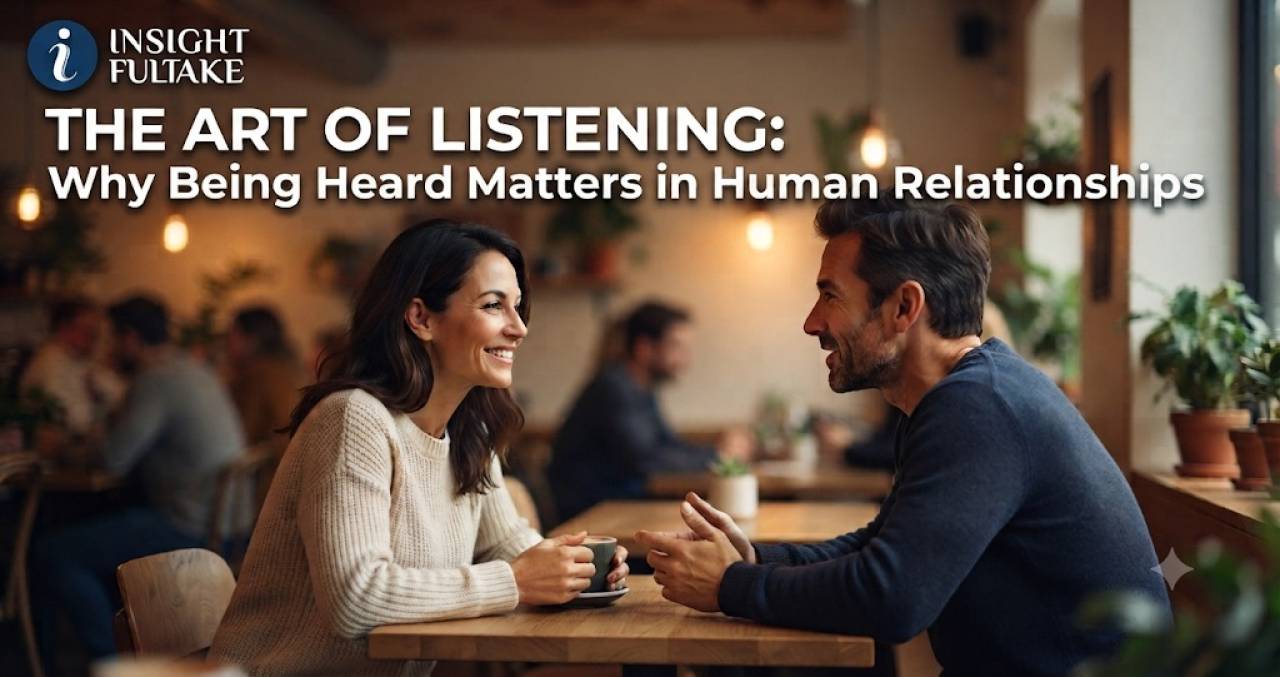
Sometimes, the greatest gift we can give someone is not advice or answers, but the patience to listen and the willingness to understand.
In a world where everyone wants to be heard, the ability to listen with patience, empathy and understanding has become a rare and deeply meaningful human quality.
"Listening closely is one of the most valuable gifts we can give to another human being."
There is a quiet wisdom in this thought. It reminds us that some of the most meaningful things we offer others do not come with a price tag. They do not require expensive gestures, grand promises or carefully chosen words. Sometimes, all another person needs is someone who is willing to sit beside them, listen without interruption and make them feel that their thoughts and emotions matter.
Yet, genuine listening is becoming increasingly difficult in modern life. We live in a world of constant notifications, hurried conversations, social media updates and competing opinions. Everyone seems eager to express an opinion, make a point or share an experience. In this rush to speak, the simple act of listening often gets neglected.
Listening Is More Than Hearing Words
Hearing is a natural physical process. Listening, however, requires attention, patience and emotional involvement.
We may hear someone speaking while checking our phones, thinking about our next response or waiting for an opportunity to bring the conversation back to ourselves. But that is not necessarily listening.
Real listening means giving another person the freedom to express themselves without feeling judged, dismissed or misunderstood. It involves paying attention not only to words but also to the emotions, pauses and silences that accompany them.
Sometimes, a person may say they are fine when their voice suggests otherwise. Someone may talk about an ordinary day while quietly carrying a burden they cannot easily explain. A sensitive listener recognises that communication is not always about what is spoken. Much of it lies in what remains unsaid.
This is why listening requires more than good hearing. It requires empathy.
The Emotional Value of Being Heard
One of the strongest human needs is the desire to feel understood. People want to know that their experiences matter and that their emotions are not insignificant.
A person going through professional disappointment may not need immediate career advice. Someone struggling with a family problem may not be looking for a lecture on how to manage relationships. A young person confused about the future may simply need an adult who will listen without comparing their struggles with those of an earlier generation.
In such moments, listening can provide emotional relief.
It creates a space where people can express fear, frustration, disappointment and uncertainty without having to defend themselves. It can reduce feelings of isolation and help individuals understand their own thoughts more clearly.
Being heard does not automatically solve a problem, but it can make the problem feel less overwhelming.
That is the quiet power of attentive listening. It communicates something deeply reassuring: You are not alone, and what you feel deserves attention.
Why We Have Become Poor Listeners
Modern communication has made it easier than ever to remain connected, but connection and understanding are not always the same thing.
We exchange hundreds of messages, participate in online discussions and follow the lives of people across the world. Yet, meaningful conversations often become shorter and more distracted.
Social media has also encouraged a culture of instant reactions. We respond before understanding the complete context, form opinions based on fragments of information and sometimes mistake the loudest voice for the most convincing one.
Even in personal relationships, conversations can become competitive. Instead of listening to understand, people listen to disagree. They prepare their arguments while the other person is still speaking.
At home, parents may be occupied with work while children struggle to find an attentive listener. Couples may discuss household responsibilities but rarely talk about their deeper emotional needs. At workplaces, employees may have ideas and concerns that remain unheard because communication flows mainly from the top down.
The result is a strange contradiction: people are constantly communicating, yet many feel that nobody is really listening.
Listening Can Strengthen Relationships
Every healthy relationship depends on mutual understanding. Whether between parents and children, partners, friends, colleagues or neighbours, listening builds trust.
When people feel heard, they are more likely to communicate honestly. They become less defensive and more willing to share their concerns. Disagreements also become easier to manage when both sides are prepared to understand the other's perspective.
This does not mean that listening requires agreement.
We can listen to someone without accepting their opinion. We can understand another person's disappointment without believing that their reaction is entirely justified. Listening does not mean surrendering our judgement or abandoning our values.
It simply means recognising the other person's right to be heard.
In fact, some of the most difficult conversations become constructive when people stop trying to win and start trying to understand.
Listening Is a Form of Respect
At its heart, attentive listening is an expression of respect. It tells another person that their time, experiences and feelings are important.
This quality is equally valuable in leadership, education and public life. A good teacher listens to students before judging their abilities. A responsible leader listens to people before making decisions that affect them. A sensitive parent listens to a child without assuming that age automatically makes their concerns insignificant.
Listening also strengthens democratic values. A society that allows different voices to be heard is better equipped to understand its disagreements and address its problems.
When institutions, communities and individuals stop listening, misunderstandings deepen and trust begins to disappear.
Learning to Listen Again
Becoming a better listener does not require extraordinary effort. It begins with small, conscious changes.
Put the phone aside when someone is speaking. Resist the urge to interrupt. Ask questions to understand rather than to challenge. Avoid turning every conversation into an opportunity to offer advice. Allow people to finish their thoughts, even when you disagree.
Most importantly, do not assume that every problem needs an immediate solution. Sometimes, the most helpful response is simply to be present.
We should also learn to listen to those whose experiences differ from our own. Empathy becomes meaningful when we make an effort to understand perspectives beyond our personal circumstances.
The Gift That Costs Nothing but Means Everything
In a world increasingly measured by possessions, achievements and visible success, attentive listening is an understated act of generosity.
It costs nothing, yet its emotional value can be immeasurable. It can comfort someone experiencing loneliness, restore confidence in a person who feels ignored and bring understanding to relationships strained by silence.
We often remember the people who helped us during difficult times. But we should also remember those who simply listened when we needed to speak.
Perhaps the greatest lesson in this simple quote is that being present for another human being is itself an act of kindness.
We do not always need the perfect words to make someone feel better. We do not always need to have the answers.
Sometimes, we only need to listen.
And in doing so, we give someone something increasingly rare in today's world: our undivided attention, our patience and the reassurance that their voice matters.






















Leave a Comment