
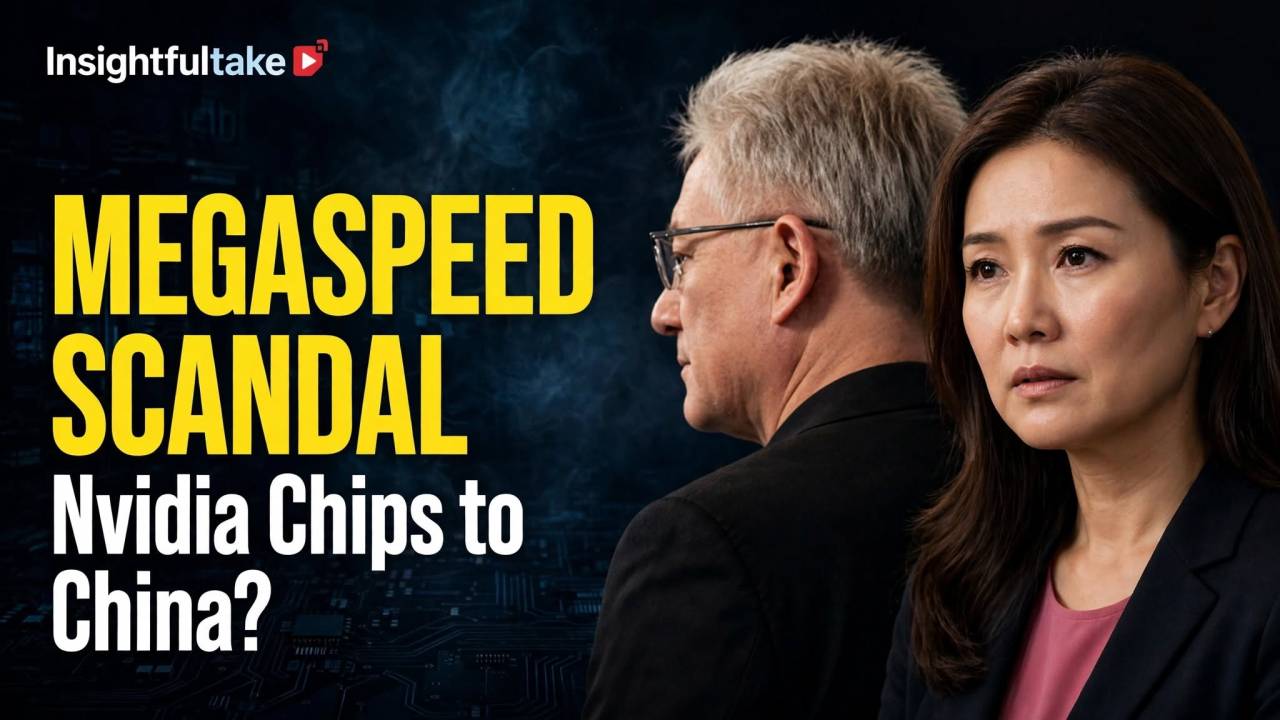
Nvidia’s crisis reveals how one founder’s credibility can shake global markets, affect Indian employees and expose the hidden risks of a technology ecosystem built around individuals.
Most coverage of Jensen Huang’s exit from Nvidia has focused on the controversy itself about the alleged links to a suspected Chinese spy, questions surrounding Megaspeed International, and the geopolitics of semiconductor exports. These are important issues. But a quieter story lies beneath them, one that matters even more for countries like India. What happens when an entire industry’s confidence rests on the credibility of one individual?
The Cult of the Founder Has a Hidden Cost
For three decades, Nvidia and Huang were almost synonymous. The leather jacket, the keynote stage and the confident forecasts became part of the company’s identity, just as much as its processors. Investors were not simply buying a chipmaker. They were buying into the vision of a man who appeared to understand the future of computing.
That is a strength until it becomes a vulnerability.
When the allegations surfaced, Nvidia faced more than a legal question. It faced a crisis of confidence. Reports suggested that the company’s shares had fallen to around $165, down from a peak above $240 just weeks earlier. A company supplying the engines of the global AI boom saw a significant portion of its market value come under pressure because of questions surrounding an individual’s judgment, rather than a failure of its products.
For investors, editors and policymakers, this is the real headline. In the AI era, key-person risk has become systemic risk. Companies, investment funds and governments have built ambitious plans around a handful of celebrated chief executives. Very few have seriously examined what happens when one of these individuals loses credibility.
A Finance Chief Steps In: A Telling Choice
Nvidia’s board named Chief Financial Officer Colette Kress as interim CEO. The decision is revealing.
At a moment of crisis, the company did not turn to another visionary or product evangelist. It turned to someone who understands its financial structure, has shared the earnings-call stage with Huang since 2013, and knows how to reassure investors, lenders, regulators and customers.
The immediate priority appears to be restoring confidence rather than selling another technological vision.
Following allegations involving questions about who purchased Nvidia’s chips and where they ultimately ended up, the company needs someone familiar with internal controls, financial disclosures and audit trails.
This could signal a broader shift in corporate culture. The era of Silicon Valley celebrating the visionary founder above almost everything else may gradually be giving way to an era in which compliance is the new charisma.
The Bengaluru Angle Nobody Is Discussing
Indian readers should pay particular attention to one aspect of this controversy.
Employees of Nvidia’s Indian operations reportedly held millions of restricted stock units (RSUs), a form of compensation through which employees receive company shares over time. Reports have estimated the resulting paper losses at roughly half a billion dollars within weeks. While some employees may already have received portions of their stock compensation, many unvested shares have lost value.
The financial figures are significant, but the larger issue is what they reveal. India’s technology sector has quietly become a stock-linked economy.
Engineers in Bengaluru, Hyderabad and Pune are no longer compensated only through salaries in rupees. A growing part of their financial expectations is tied to the share prices of companies headquartered thousands of kilometres away.
Their home loans, children's education, wedding plans and long-term savings may depend on decisions taken in corporate boardrooms in California.
When questions about a foreign founder’s personal conduct become international headlines, the financial consequences can reach Indian households almost immediately.
This is a new form of economic dependence that deserves greater attention. Global capability centres have brought employment, skills and professional opportunities to India. But they have also imported market volatility that has little to do with the performance of Indian employees.
The Real Test Is Not in China, but Along the Supply Route
Much of the commentary has focused on China as the biggest potential loser, arguing that tighter export controls could make advanced chips increasingly difficult to obtain.
That may be true. But the allegations also highlight a concern for every emerging economy: the role of intermediary countries and trading hubs in the global semiconductor supply chain.
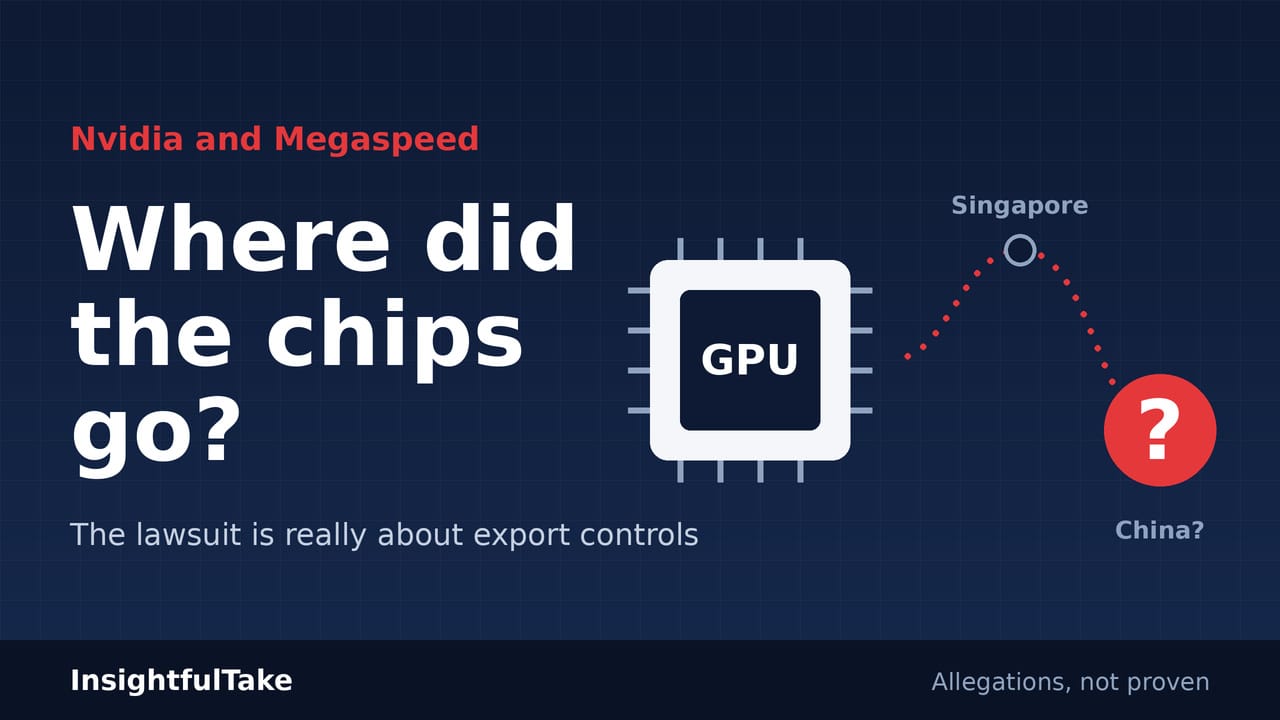
Reported scrutiny of Singapore-based entities and allegations involving servers diverted to China underline how sensitive technologies move through complex networks of resellers, cloud partners and intermediary arrangements.
Governments will increasingly ask a difficult question of every country seeking to host AI data centres: Can you prove where the chips go?
India has ambitions to become a major AI computing hub, supported by sovereign data centres, semiconductor initiatives and an expanding cloud market.
The Nvidia controversy presents both a warning and an opportunity.
Countries capable of offering transparent tracking, strict end-use verification and credible regulatory oversight could emerge as trusted alternatives to locations facing scrutiny. As concerns about technology diversion grow, trust may become a more valuable export than talent.
What Indian Companies and Founders Should Learn
The Nvidia episode offers several lessons for India's expanding technology and start-up ecosystem.
First, personal branding is not corporate governance. A founder’s popularity can strengthen a company’s market position, but it cannot replace independent boards, transparent reporting, institutional accountability and credible succession planning. Indian start-ups built around celebrity founders should take note.
Second, employee wealth tied to a single stock is inherently vulnerable. Companies offering substantial equity compensation should help employees understand concentration risk. Employees, too, must distinguish between paper wealth and realised financial gains.
Third, ethical lapses can become strategic failures. The assumption that a company's internal conduct is separate from its commercial value no longer holds, particularly in industries connected to national security, advanced technology and international trade.
For Indian businesses competing globally, reputation and compliance are no longer secondary considerations. They are essential business assets.
A Cautionary Closing Note
It is important to remember that several claims in this story remain allegations. Reports indicate that the individuals and companies named have denied wrongdoing, while investigations are ongoing. It would be premature to reach conclusions before the facts are established.
But whatever investigators eventually determine, the episode has already raised an uncomfortable question for the global technology industry.
The most powerful machines ever built still depend on one of the most fragile things in the world: human trust.
When that trust is concentrated in one individual, one company or one supply route, a single crack can travel across continents, from a boardroom in Santa Clara to an employee's salary-linked investments in Bengaluru.
The lesson for India is not to watch Nvidia's crisis from a distance, or to assume that it presents an opportunity without risks. It is to examine whether our own growing technology ambitions rest on institutions strong enough to survive the loss of any single individual.
Because a truly resilient technology ecosystem is not built around an extraordinary founder. It is built around institutions that can function even when that founder is no longer there.





















Leave a Comment