

From correcting his weakest shooting position to winning a world championship medal, Niraj Kumar's Doha performance marks a major step towards Los Angeles 2028.
In the high-pressure world of elite rifle shooting, where a millimetre of movement can change the outcome and a shift in wind can decide a medal, 26-year-old Niraj Kumar delivered a performance built on technical precision and quiet resilience. The shooter from Hoshiarpur, Punjab, won bronze in the men’s 50m 3 Positions event at the ISSF World Championships in Doha on Wednesday, securing India’s second quota place for the 2028 Los Angeles Olympics.
Niraj finished with a score of 346.5, behind Individual Neutral Athlete Dmitrii Pimenov, who claimed gold with 362.8 and set a world junior record, and Slovakia’s Patrik Jany, who took silver with 357.2. However, Niraj’s performance had stood out even before the final. He topped the qualification round with an impressive 591, establishing himself as a strong medal contender.
The journey to the podium was not without challenges. Niraj was fifth after the kneeling series in the eight-man final. A steady performance in the subsequent stages helped him climb to second after 30 shots. However, a 9.4 on his penultimate competition shot pushed him down to third. He recovered immediately and held his nerve to secure bronze.
National coach Manoj Kumar later praised his ability to handle the pressure, describing his performance in the final as exceptional.
Correcting the Weakest Link
Niraj's success was the result of months of focused preparation. The coaching team had identified the kneeling position as his biggest weakness. In previous competitions, he had often qualified for the finals but missed out on medals because of mistakes in this opening stage.
"Kneeling was his weakest suit," Manoj explained. "In many competitions he would make the final but not win a medal only because he would mess up the kneeling round. It's the first round, so if you shoot bad, you fall back at the start itself, which also hits your confidence."
The coaching team responded with a series of technical adjustments. The emphasis was on reducing unnecessary muscle engagement and improving structural stability.
Niraj's shooting jacket was modified, while the position of his Target Shooting Sling was adjusted. The sling, worn high on the triceps of the supporting arm and connected to the rifle's hand stop, transfers the rifle's weight to the shooter's arm bones. This allows the muscles to remain relatively relaxed and helps maintain stability.
Even a small change in sling placement can affect balance and control. The team also worked on regulating Niraj's heart rate while shooting from the kneeling position. These adjustments gradually improved his stability and helped him approach the competition with greater confidence.
Reading the Wind in Doha
Wind conditions presented another challenge for the Indian shooters. At Delhi's Karni Singh Shooting Range, where the team trains, wind speeds generally remain around 6-7 knots. In Doha, however, they rose to 16-17 knots, making it considerably harder to maintain accuracy.
After the elimination relays, Niraj, Aishwary Pratap Singh Tomar and Akhil Sheoran discussed the conditions with coach Manoj Kumar and worked out a common strategy.
The approach involved carefully reading the wind, remaining patient and adjusting the aim slightly to the left or right depending on its direction and intensity.
"The way we line up the target varies according to wind direction," Manoj noted. "These are standard practices, but it's tough to execute under the competition pressure. Niraj trusted his training and instincts and succeeded."
The ability to translate familiar training techniques into accurate decisions under competition pressure proved crucial.
India Strengthens Its Olympic Campaign
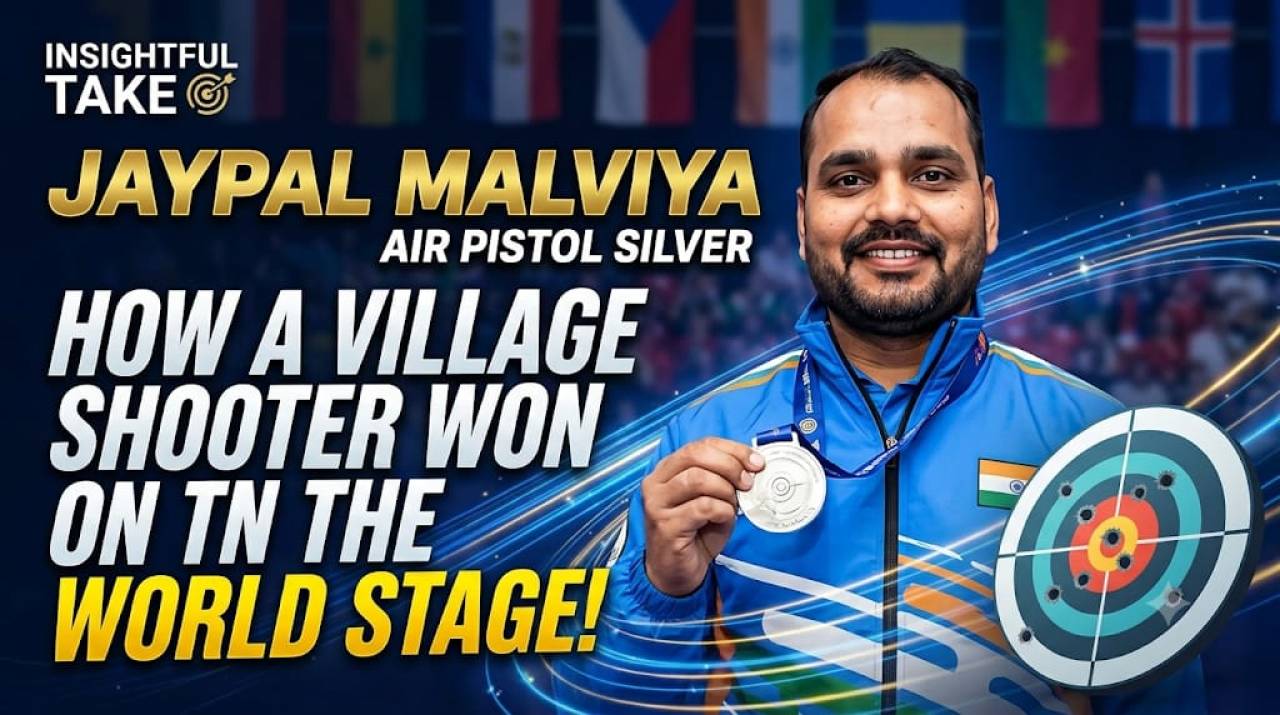
Niraj's bronze added to India's growing medal tally at the Doha championships. His performance followed Jaypal Malviya's silver medal in the 10m air pistol event, which had secured India's first quota place for the Los Angeles Olympics.
Niraj's bronze brought India its second Olympic quota in the competition. Norway's Jon-Hermann Hegg secured another quota, while Patrik Jany's silver did not earn Slovakia an additional place because the country had already secured one in the 10m rifle event.
India also won team bronze in the men's 50m 3 Positions competition. Niraj, Aishwary and Akhil combined to secure a place on the podium. Aishwary also finished fifth in the individual final with a score of 323.7, highlighting the strength of India's shooting squad.
From a Medal to Consistency
For Niraj, the Doha medal represents both recognition of his progress and the beginning of a more demanding phase in his career.
He arrived at the championships after a strong Asian Games campaign, although the team had been hoping for more individual medals. Instead of focusing only on results, the coaching staff concentrated on improving the technical aspects of his shooting.
The bronze medal and Olympic quota are the first major rewards of that approach.
Manoj Kumar believes Niraj has the ability to become a world-class shooter but is keen to see him maintain consistency.
"This medal should open the floodgates for Niraj because he has the potential to be a world-class shooter," the coach said.
That expectation places the focus firmly on what comes next. One successful final is an important achievement, but repeating that performance across major international competitions will be the real test.
The Road to Los Angeles
India's growing presence in international shooting reflects years of investment in training, coaching and competitive exposure. However, Olympic quota places are limited, and securing them is only the first step towards success at the Games.
The technical improvements behind Niraj's Doha performance offer a glimpse into what sustained progress demands. Shooting jacket adjustments, sling positioning, wind assessment and mental discipline may not attract much attention, but these details often determine the difference between reaching a final and winning a medal.
Niraj Kumar left Doha with a world championship bronze and an Olympic quota for India. More importantly, he demonstrated that weaknesses identified through experience can be addressed through patient training and precise corrections.
The kneeling position that once cost him medals is no longer the same obstacle. The challenging wind conditions did not prevent him from delivering under pressure.
The next challenge is to build on this performance and carry that consistency towards Los Angeles 2028. For Niraj, the Olympic journey has begun with a hard-earned place, but the bigger ambition will be to turn that opportunity into a medal-winning performance.
























Leave a Comment