
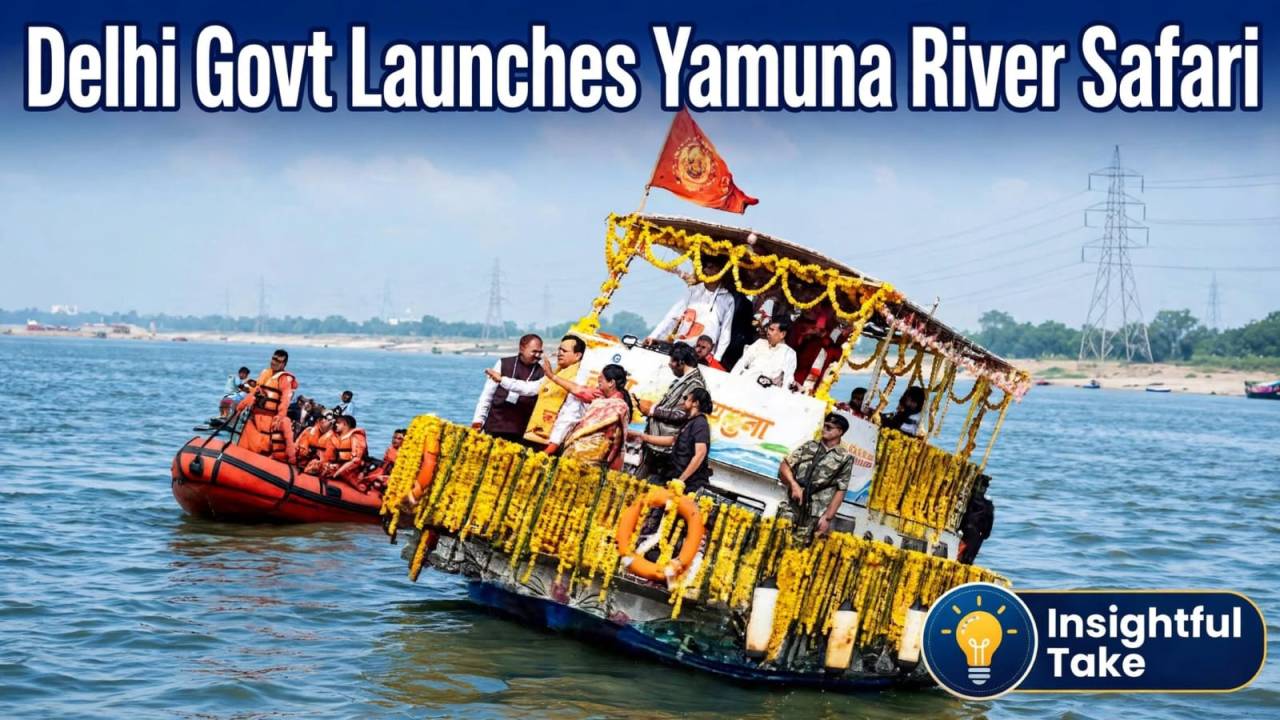
Delhi's new Yamuna cruise offers a fresh way to experience the river, but can tourism succeed without restoring the waterway itself?
For decades, most Delhiites have encountered the Yamuna only through a car window, glancing down for a few seconds while crossing a bridge. The river appears in headlines as foam, froth and toxic ammonia far more often than as a place anyone would choose to spend a Sunday.
So, when the capital's first recreational cruise began sailing from Sonia Vihar this week, it did something symbolic before it did anything else. It changed people's physical relationship with the river. They were no longer standing on the bank looking at it but travelling on the water itself.
That shift matters, and it deserves serious attention. But it also raises a question that Delhi cannot afford to ignore: can a river become a tourist attraction before it becomes healthy enough to support life?
A Launch Timed for Faith
The timing is hard to miss. The service was launched just ahead of Chhath Puja, the festival when the Yamuna's banks fill with devotees offering prayers to the Sun God. Chhath will be celebrated between November 13 and 16.
The overlap is significant. Few occasions connect Delhi's people to the river as deeply as this festival. The cruise draws on that emotional bond, presenting the Yamuna as something to be experienced and enjoyed rather than simply avoided.
It also comes after a considerable wait. An earlier plan had targeted a launch before the end of May, but reports indicated that the date had been postponed more than once. A project that takes this long to set sail has usually encountered practical obstacles. Here, the biggest challenge is the river itself.
The Real Test Is Under the Hull
A cruise needs water. The Yamuna in Delhi, however, is a seasonal river that often runs shallow, with water spread across different channels. That is the central challenge for the project.
A vessel designed to operate in shallow water may offer a clever engineering solution, but it also highlights the problem. Boating on a river depends on the availability of sufficient water, and the experience cannot remain reliable if the river's flow is inadequate.
The debate around the cruise should not be reduced to tourism versus environmental protection. A more important question concerns priorities. Should a river become a tourist destination before it has been restored as an ecosystem? Or can greater public visibility create the pressure needed to bring about that restoration?
There is a reasonable argument for the second possibility. People are more likely to care about places they can see, visit and experience. A family spending an afternoon on the Yamuna, enjoying the cruise, visiting the food court and watching an evening light show, might develop a stronger interest in the river's condition than someone who encounters it only through government reports.
Cities have used public access to neglected waterfronts to build civic interest. Delhi could benefit from a similar approach. But public engagement must lead to environmental responsibility, not become a substitute for it.
The Riverfront Comparison Cuts Both Ways
Officials have pointed to Ahmedabad's Sabarmati and Varanasi's ghats as possible models for developing the Yamuna waterfront. These are useful references for public spaces, visitor facilities, lighting and crowd management.
However, they are less reassuring when viewed purely through the lens of ecological restoration.
The Sabarmati's year-round water availability depends significantly on water diverted from elsewhere rather than the river independently recovering its natural flow. For Delhi, the distinction is important. A developed riverfront and a healthy river are two different achievements. The first does not automatically deliver the second.
Delhi must avoid confusing the appearance of a restored river with the restoration of its natural ecosystem. Better infrastructure can improve the visitor experience, but it cannot resolve the problems of sewage discharge, inadequate freshwater flow and declining aquatic life.
What a Fair Scorecard Would Look Like
If the Yamuna cruise is to be judged honestly, passenger numbers and tourist interest cannot be the only measures of success. The project should also be evaluated against clear environmental indicators.
Four measures deserve particular attention:
1. Regular water-quality reports: Water quality along the cruise route should be tested regularly, with results published openly and made accessible to visitors.
2. Monitoring aquatic and bird life: The stretch should be monitored for changes in bird populations and aquatic biodiversity. Its ecological condition matters as much as its recreational potential.
3. Transparency about operating conditions: Authorities should disclose how many days the river has sufficient depth and flow to support the cruise, particularly during the dry months.
4. Progress in sewage treatment: The long-term success of the project will depend on reducing untreated sewage entering the Yamuna. Without meaningful progress, the water beside the jetty will remain a reminder of the problem the cruise is supposed to help people rediscover.
Ridership figures will be easy to announce and celebrate. These environmental indicators will reveal whether the river itself is benefiting.
Delhi's Choice
None of this means the cruise is a mistake. A capital that has treated its river as an afterthought needs to find ways to reconnect citizens with it. Giving ordinary people a reason to visit the Yamuna and take an interest in its condition is not a trivial beginning.
But a boat ride is an invitation, not a solution.
If the attraction becomes the entire story, Delhi will have added another weekend outing while leaving the river largely as it was. The real opportunity lies in making the cruise part of a wider effort to restore the Yamuna.
Ideally, passengers should leave with more than photographs and memories of a pleasant afternoon. They should also understand the gap between the river they have just travelled on and the river Delhi needs to recover.
That awareness must translate into public demand for adequate water flow, cleaner water, better sewage management and transparent environmental reporting.
The boat has left the jetty at Sonia Vihar. The more important journey, from a tourist attraction to genuine river stewardship, has only just begun.








Leave a Comment