
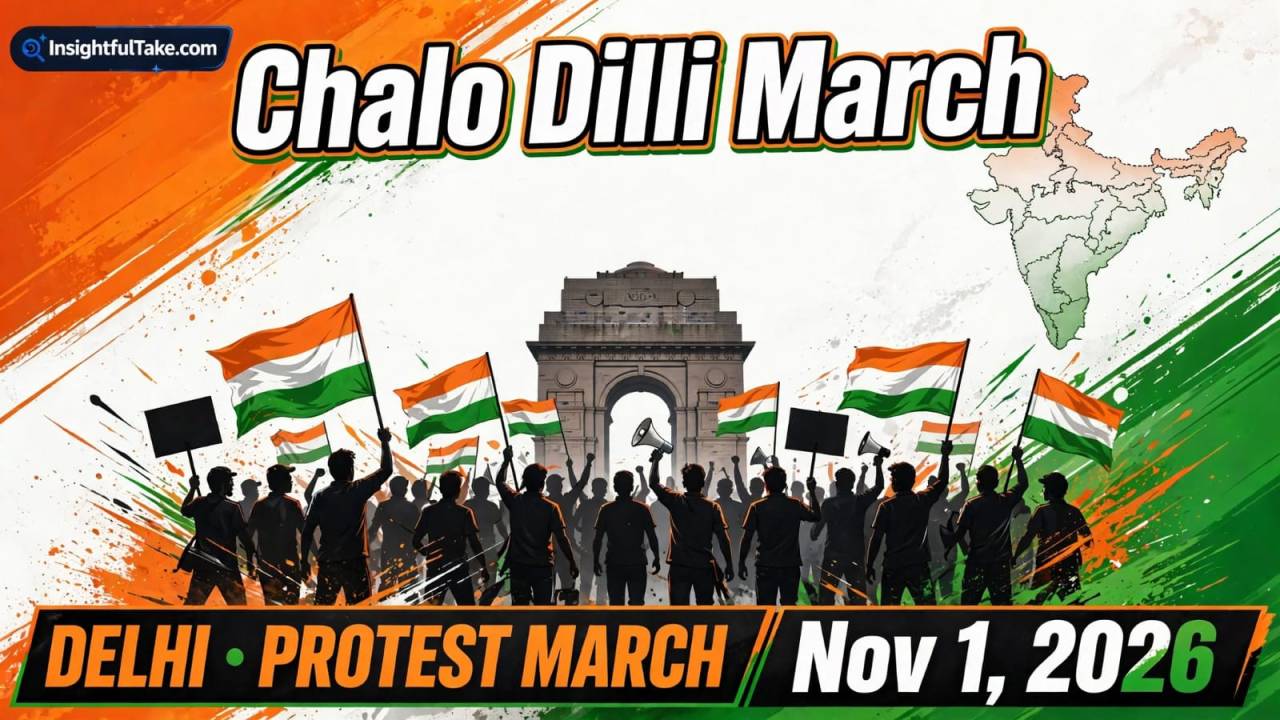
Opposition parties intensify their campaign against the Election Commission over electoral roll revisions, with a symbolic impeachment proceeding and a 'Chalo Dilli' rally at Ramlila Maidan.
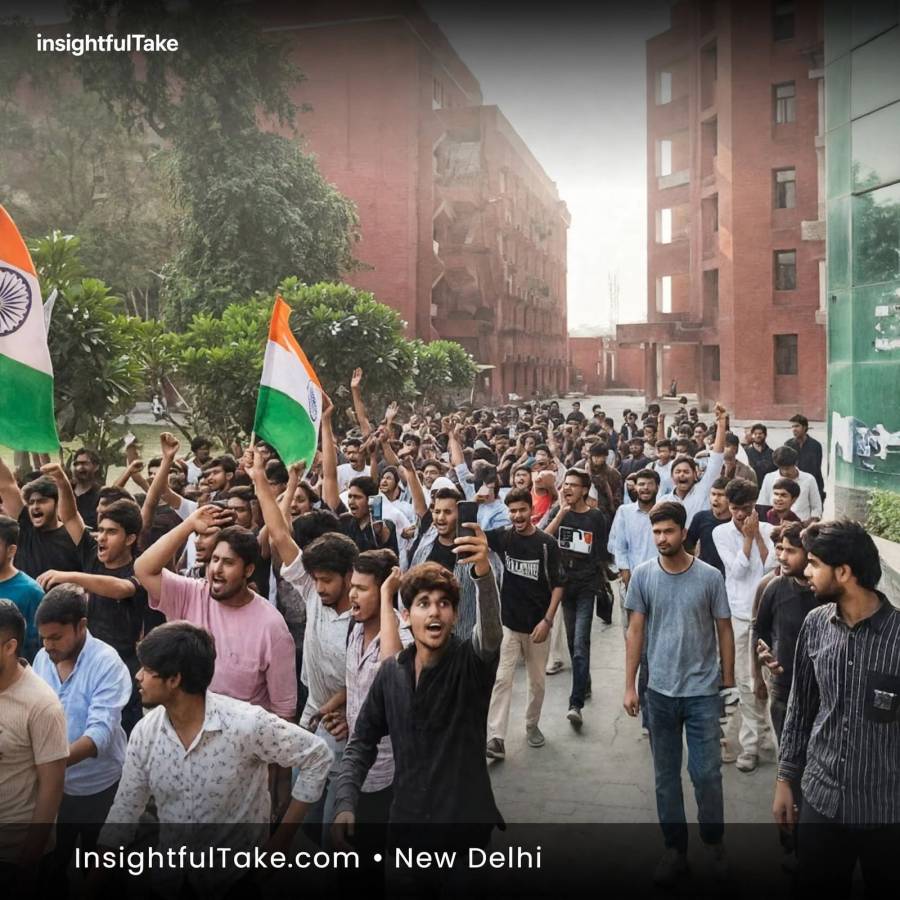
The INDIA bloc has stepped up its campaign against Chief Election Commissioner (CEC) Gyanesh Kumar over the Election Commission of India's Special Intensive Revision (SIR) of electoral rolls. Opposition parties have scheduled a symbolic impeachment proceeding at Congress president Mallikarjun Kharge's residence on Saturday, following Friday's postponement due to rain. The confrontation is expected to continue on Sunday, November 1, with a proposed 'Chalo Dilli' march and rally at Ramlila Maidan in New Delhi. Congress leader Rahul Gandhi has appealed to students, civil society organisations and citizens to join the protest against alleged voter deletions and electoral irregularities. The Opposition accuses the Election Commission of undermining electoral transparency through the SIR exercise, while the poll body has maintained that its decisions were taken collectively. The planned demonstrations have also triggered political exchanges between the BJP and Opposition parties over the credibility of India's electoral institutions.
Rahul Gandhi Calls for Participation Beyond Party Lines
Leader of Opposition in the Lok Sabha Rahul Gandhi released a video on Thursday, October 29, appealing for public participation in Sunday's rally. He described the proposed demonstration as a protest against alleged vote theft rather than an event belonging to any particular political party.
His appeal was particularly directed at students. Gandhi urged student organisations, irrespective of their political affiliations, to participate if they believed their democratic rights or freedom of expression were under threat.
He also addressed concerns about possible police action. With security arrangements planned around Jantar Mantar and other restricted areas, Gandhi urged supporters not to be intimidated by the prospect of police intervention.
The Congress leader maintained that the campaign concerned the voting rights of ordinary citizens and should not be confined to political organisations.
Symbolic Impeachment Replaces Mock Parliament Plan
The Opposition's symbolic impeachment programme was initially scheduled for Friday, October 30. However, heavy rain in Delhi prompted its postponement to Saturday.
The programme had originally been conceived as a mock Parliament, with Opposition lawmakers portraying the Prime Minister, Union Home Minister and Chief Election Commissioner.
That proposal was dropped after Trinamool Congress leader Derek O'Brien objected to impersonating political and constitutional officeholders. Other Opposition leaders subsequently agreed to adopt a more formal format.
The revised programme was designed to resemble impeachment proceedings without theatrical representations.
Former Lok Sabha Speaker Meira Kumar was expected to preside, while Congress president Mallikarjun Kharge was scheduled to move the resolution against Gyanesh Kumar.
Representatives of participating Opposition parties were allotted speaking time, with Rahul Gandhi expected to deliver the concluding address.
The Samajwadi Party and Trinamool Congress were allotted ten minutes each, while other participating parties were given five minutes.
Individuals who claimed their names had been wrongly removed from electoral rolls were also expected to share their experiences.
CPI(M) leader John Brittas said the objective was to conduct a serious political discussion rather than stage a parody.
Can the Opposition Remove the Chief Election Commissioner?
The symbolic impeachment proceedings have no constitutional or legal authority to remove the Chief Election Commissioner.
Under Article 324(5) of the Constitution, a Chief Election Commissioner can be removed only through the procedure prescribed for removing a Supreme Court judge.
Such removal requires parliamentary approval through a special majority in both Houses. A political gathering at a private residence cannot initiate or substitute for that constitutional process.
The Opposition's exercise is therefore intended to make a political statement rather than bring about Kumar's removal.
INDIA bloc leaders want to place their allegations against the Election Commission before the public. They also intend to highlight complaints from voters who claim their names were wrongly deleted from electoral rolls.
Opposition leaders have already approached President Droupadi Murmu seeking Kumar's removal. They have also questioned the legal framework governing the appointment and functioning of election commissioners.
Their objections include provisions of the 2023 legislation governing the appointment, conditions of service and tenure of election commissioners.
The Election Commission has previously maintained that decisions concerning the SIR exercise were taken collectively.
Venue Dispute Adds to Political Confrontation
Preparations for the Opposition's protests have been accompanied by disagreements over venue permissions.
Congress leaders alleged that attempts to organise the symbolic proceedings at other venues faced administrative obstacles. Congress general secretary KC Venugopal accused the government of trying to obstruct the programme.
Delhi Police sources, however, maintained that permission for the November 1 rally at Ramlila Maidan had not been withdrawn.
The no-objection certificate from the law-and-order perspective was subject to conditions, including approval from the land-owning authority.
Concerns have also emerged over the timing of the rally.
A traders' organisation reportedly requested that the Congress postpone the demonstration until after November 10, citing the festive shopping season and potential disruption to nearby markets.
BJP leaders have also criticised the selection of November 1, pointing to the date's association with the 1984 anti-Sikh violence.
BJP Rejects Allegations Against Election Commission
The BJP has rejected the Opposition's allegations against the Election Commission, describing them as an attempt to undermine public confidence in a constitutional institution.
According to the reported plans, BJP leaders have considered involving traders, professionals and civil society representatives in an outreach campaign supporting the Election Commission's credibility.
The Forum for Democracy, a civil society organisation, also planned a counter-event at the Constitution Club on Friday.
Union minister Kiren Rijiju criticised the Opposition's approach, arguing that governments are ultimately chosen through elections rather than street demonstrations.
The political disagreement has widened beyond the revision of electoral rolls. It now involves competing claims about the independence of the Election Commission and the accountability of constitutional institutions.
November 1 Chalo Dilli March to Begin at Minto Road
The INDIA bloc's "Chalo Dilli" march is scheduled to begin at noon on Sunday, November 1, from the Minto Road-Connaught Place junction.
Rahul Gandhi confirmed the route during an Instagram interaction on Friday. Participants are expected to proceed towards Ramlila Maidan, where Opposition leaders plan to address a large gathering.
The Congress has presented the demonstration as part of its campaign against alleged voter-list irregularities and its demand for Gyanesh Kumar's removal.
Gandhi has also accused the government of attempting to prevent Opposition supporters from travelling to Delhi. The allegation remains contested and requires independent verification.
For the INDIA bloc, Sunday's gathering will provide an opportunity to demonstrate public support for its objections to the SIR exercise.
For the Election Commission, the challenge remains to address questions concerning the accuracy, transparency and fairness of electoral roll revisions.
Electoral Transparency Remains the Central Question
The confrontation between the Opposition and the Election Commission has brought the process of revising electoral rolls under renewed political scrutiny.
The Opposition argues that eligible voters risk losing their voting rights through improper deletions. The Election Commission maintains that its revision procedures are intended to preserve the accuracy of electoral rolls.
These competing positions cannot be resolved through political demonstrations alone.
A meaningful assessment requires reliable figures on voter deletions, clear explanations of the grounds for removing names, accessible correction procedures and transparent responses to complaints.
The November 1 rally may demonstrate the extent of public mobilisation around the controversy. It will not, by itself, establish whether the SIR exercise was conducted fairly.
This question must ultimately be answered through verifiable electoral records, institutional accountability and effective safeguards for every eligible voter's right to participate in elections.



















Leave a Comment