
From Manish Malhotra’s glamorous return to Spotlight’s emerging designers, Nexa brought established fashion and fresh creativity together in Delhi.
In mid-October, Delhi’s Taj Palace became the meeting point of two distinct currents in Indian fashion. One was the established glamour of Manish Malhotra, returning to the runway after more than three years. The other was the experimental energy of emerging designers showcased through Nexa’s Spotlight platform.
Bringing these worlds together were celebrities Sara Ali Khan, Ayushmann Khurrana and Diana Penty, alongside a brand campaign built around a simple phrase: Dare to Go Glam.
Associated with the Stunning New Baleno, the campaign slogan became a recurring theme throughout the event. Rather than being limited to a conventional advertising message, it reflected the larger mood of the presentations. Glamour was portrayed not simply as extravagance but as an expression of confidence, individuality and personal style.
Nexa’s presence at Lakmé Fashion Week this season offered an interesting connection between established fashion names and designers exploring new creative directions.
Manish Malhotra Returns with a Contemporary Fashion Language
Manish Malhotra’s Luxury Prêt 2026 collection carried considerable expectations. His return to this particular runway after an extended break brought renewed attention to a designer whose name has long been associated with Indian occasion wear.
The collection presented a more edited approach to glamour. Sculpted silhouettes, luminous metallic details, fluid draping, cropped jackets and relaxed tailoring created a balance between structure and movement.
While Indian craftsmanship remained central to the designer’s signature, the emphasis appeared to shift towards cleaner silhouettes and contemporary styling rather than relying heavily on elaborate embroidery.
Sara Ali Khan closed the show in a black draped ensemble featuring floral embellishments. Ayushmann Khurrana brought a menswear statement in a structured black jacket with silver detailing.
Their appearances reflected the collection's broader direction, where occasion wear was presented as something that could accommodate individual personality and movement rather than being restricted to elaborate formal dressing.
The introduction of Menswear Luxe Prêt added another dimension to the presentation. Although Malhotra has dressed male celebrities for red carpets and weddings for years, a dedicated ready-to-wear direction signals a wider ambition for the label.
It also reflects a changing Indian fashion market, where men's clothing is increasingly moving beyond conventional wedding and formal categories.
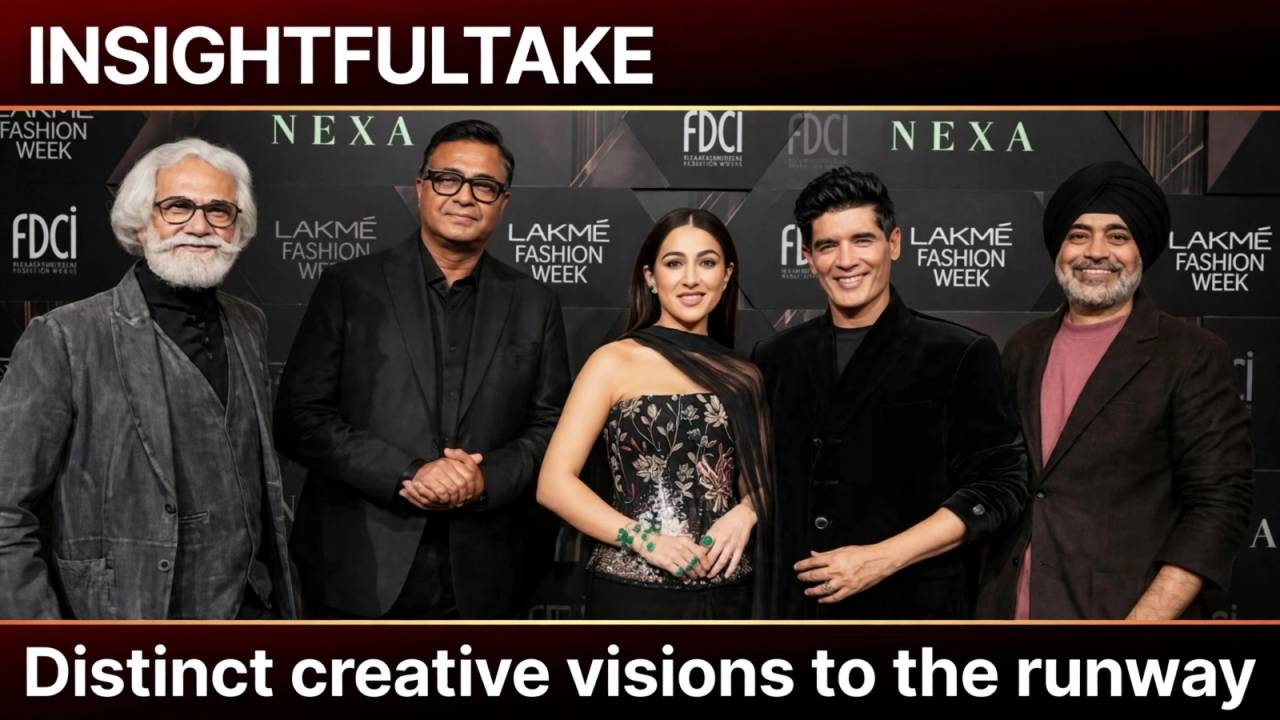
The post-show gathering brought together Sunil Sethi of the Fashion Design Council of India, Partho Banerjee of Maruti Suzuki Nexa, Jaspreet Chandok of Reliance Brands, the designer and Sara Ali Khan. Their presence reflected the collaboration between fashion, industry institutions, commercial partners and popular culture that makes large-scale fashion events possible.
Nexa Spotlight Puts Emerging Designers in Focus
While Malhotra's collection attracted considerable attention, Nexa's Spotlight platform offered a different perspective on the future of Indian fashion.
This season's theme, The Unseen, encouraged designers to explore stories, craftsmanship and creative perspectives that often remain outside mainstream fashion narratives.
The two winners, Gaurav Jagtiani of Linetribe and Richa Khemka, approached the theme through distinctly different collections.
Jagtiani's Pinnacle examined conventional ideas of success and glamour. The collection looked beyond polished appearances to explore the journeys, personal choices and individual identities that shape achievement.
Its design language drew on construction, deconstruction, distinctive silhouettes and considered tailoring. The underlying idea was that contemporary aspiration is increasingly about personal expression rather than simply displaying status.
Richa Khemka's Vesper explored identity through the visual language of noir. Light, shadow and reflection informed a collection that combined sculptural forms, sheer organza, metallic surfaces and fluid layers.
The presentation explored the relationship between visibility and mystery, suggesting that confidence does not always require complete disclosure.
Diana Penty appeared as the showstopper in an embellished black bralette, a high-waisted black-and-white fringed skirt and a silver-embroidered cummerbund. The ensemble combined theatrical appeal with restraint, complementing the collection's exploration of controlled revelation.
The significance of Spotlight lies in its effort to provide emerging designers with something more substantial than temporary visibility. Access to a major runway, industry attention and an established platform can help young labels build recognition in an industry where opportunities are often concentrated around familiar names.
When Fashion, Celebrity and Branding Share the Runway
Lakmé Fashion Week 2026, organised in partnership with FDCI, brought together established designers, emerging talent, multi-designer presentations and the GenNext platform.
Within this larger programme, the Nexa-backed presentations offered an interesting contrast between continuity and experimentation.
Malhotra's return demonstrated how an established design identity can evolve without abandoning its signature appeal. Spotlight's The Unseen, meanwhile, drew attention to designers attempting to challenge conventional ideas of fashion, identity and glamour.
The association with the Stunning New Baleno and its Dare to Go Glam campaign was an evident commercial presence. However, brand partnerships have become an integral part of fashion weeks, where sponsorship helps support large-scale productions and provides brands with access to influential cultural platforms.
The more relevant question is whether such partnerships leave room for creative expression or turn the runway into an extended advertising exercise.
At the Taj Palace, the two Nexa-backed presentations offered a combination of both commercial visibility and creative exploration.
There was also a larger shift in the fashion language on display. Indian designers are increasingly negotiating the relationship between traditional craftsmanship, contemporary silhouettes and everyday personal style. Glamour is no longer defined exclusively by elaborate ornamentation. It can also emerge through the way a garment fits, moves and reflects the wearer's personality.
The contrast between Malhotra's metallic accents and fluid tailoring, Jagtiani's experimental construction and Khemka's interplay of light and shadow illustrated the diversity of approaches within contemporary Indian fashion.
The Takeaway from Nexa's Lakmé Fashion Week Showcase
Celebrity appearances continue to attract attention, but the long-term value of a fashion platform depends equally on the opportunities it creates for new creative voices.
Nexa's presence at Lakmé Fashion Week brought these two elements together. Manish Malhotra offered the assurance of an established design identity, while Spotlight gave emerging designers an opportunity to present ideas that might otherwise struggle to find a mainstream audience.
It was not a dramatic reinvention of Indian fashion. Rather, it was a meeting of commercial ambition, established glamour and emerging creativity.
And perhaps that was the most interesting aspect of the showcase. In a fashion industry driven by visibility, the real challenge is not simply getting noticed but creating space for different voices to be seen.


















Leave a Comment