

A 64% increase in fertiliser subsidy offers relief to Indian farmers ahead of the Rabi season, but timely availability and fair distribution will determine its real impact.
Higher government support offers hope to farmers amid rising global prices, but timely supply and fair distribution will determine its real impact on rural India.
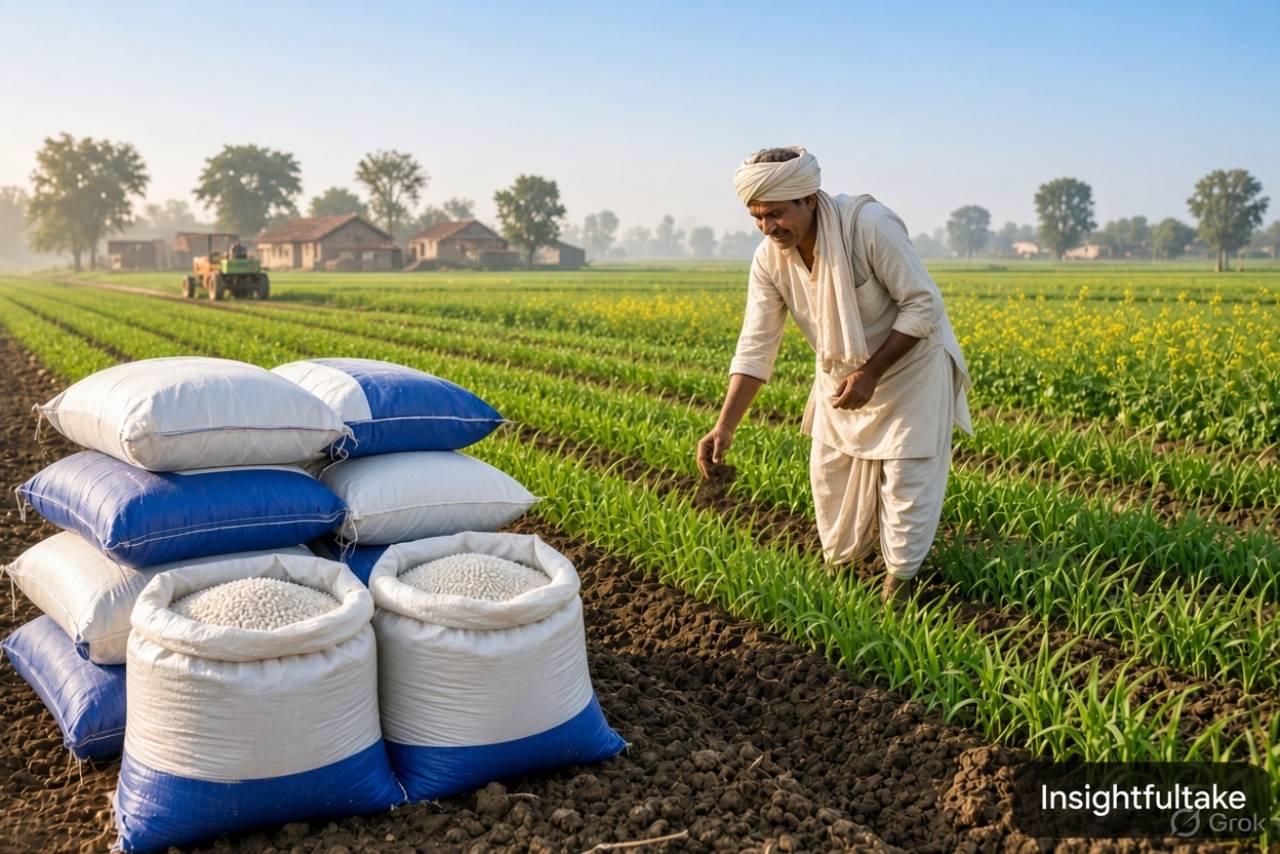
As farmers across India prepare their fields for the Rabi season, the rising cost of agricultural inputs remains a major concern. From wheat and mustard to gram and other winter crops, timely access to affordable fertilisers is essential for a successful harvest.
Against this backdrop, the Union Cabinet's decision to increase the fertiliser subsidy allocation by more than 64 per cent comes as an important development for the agricultural sector.
On November 11, 2026, the Union Cabinet approved an estimated subsidy allocation of ₹62,370.02 crore for phosphatic and potassic (P&K) fertilisers for the Rabi 2026-27 season. This represents an increase of ₹24,417.73 crore over the previous Rabi season's allocation of ₹37,952.29 crore.
The decision comes at a time when international fertiliser prices and the cost of essential raw materials have been affected by geopolitical tensions and disruptions in global supply chains. For a country like India, which depends significantly on imported fertilisers and raw materials, these developments have direct consequences for agricultural production and farmers' expenses.
Why Does This Decision Matter for Farmers?
Fertilisers are among the most important expenses in crop cultivation. Farmers need different nutrients at different stages of plant growth. Phosphorus supports root development, while potassium helps plants maintain strength and withstand environmental stress. Nitrogen is equally important for healthy vegetative growth.
Di-ammonium phosphate (DAP), NPK and other complex fertilisers are widely used across agricultural regions. Their affordability becomes particularly important during the sowing period, when farmers have to arrange seeds, irrigation, labour and other inputs within limited financial resources.
Under the Nutrient-Based Subsidy (NBS) scheme, the government provides financial support to fertiliser manufacturers and importers. This helps make eligible fertilisers available to farmers at subsidised prices.
The revised subsidy rates will remain applicable from October 1, 2026, to March 31, 2027. The government has also continued the special arrangement to make DAP available at ₹1,350 per bag, offering important support to farmers during the season.
However, farmers should understand that a higher subsidy allocation does not mean direct cash assistance to every cultivator. Its benefit is reflected in the subsidised prices of eligible fertilisers available in the market.
Rising Global Prices and India's Dependence
The international fertiliser market has faced considerable uncertainty. Conflicts in West Asia, disruptions around important shipping routes and rising raw material prices have increased pressure on global supply chains.
India imports a significant share of its fertiliser requirements and depends on overseas markets for important raw materials used in domestic production. This dependence makes the agricultural economy vulnerable to international price fluctuations.
When global prices increase, fertiliser companies face higher procurement and production costs. Without adequate government support, these additional expenses could eventually put pressure on farmers.
The latest subsidy decision is therefore an attempt to protect Indian agriculture from some of these external economic pressures. It also reflects the importance of maintaining stable input prices for a sector that supports millions of rural households.
Availability Is as Important as Affordability
An important question remains: Will farmers receive fertilisers when they actually need them?
A subsidy announcement alone cannot solve the problems of shortages, delayed transportation or unequal distribution. Farmers often face difficulties when essential fertilisers are unavailable at local cooperative societies and authorised retail centres during peak sowing periods.
According to the latest government figures, the country's total stock of major fertilisers stood at 235.21 lakh tonnes on November 10, 2026. This was approximately 35.6 per cent higher than the 173.46 lakh tonnes recorded on the corresponding date last year.
The improved stock position is encouraging. Nevertheless, national availability must translate into reliable supplies at the village level. A farmer cannot benefit from adequate stocks in distant warehouses if the required fertiliser is unavailable at the nearest distribution centre.
State governments, district administrations and agricultural departments must therefore ensure proper monitoring of stocks, transportation and retail distribution.
The Need for Balanced Fertiliser Use
The increasing subsidy also brings attention to another important issue: responsible fertiliser consumption.
In many agricultural areas, farmers tend to depend heavily on familiar fertilisers without considering the actual nutrient requirements of their soil. Excessive or imbalanced application can increase cultivation costs and gradually affect soil health.
Soil testing should become a regular practice, particularly among small and marginal farmers. Agricultural extension workers and local Krishi Vigyan Kendras can help farmers understand the correct combination and quantity of nutrients required for different crops.
Promoting organic manure, compost and other suitable soil-improvement practices alongside balanced fertiliser application can also support long-term agricultural sustainability.
The Real Test Lies in Implementation
For rural India, the success of this decision will not be measured by the size of the subsidy announcement alone. It will depend on whether farmers experience actual relief when purchasing fertilisers.
Small and marginal farmers, who often arrange cultivation expenses through savings or borrowed money, need particular attention. Transparent pricing, adequate stocks, timely transportation and strict action against black marketing are essential.
Agriculture remains the foundation of India's rural economy. A successful Rabi season contributes not only to farmers' incomes but also to food security, rural employment and the stability of the wider economy.
The government's increased subsidy allocation is a positive step towards protecting farmers from rising international costs. However, its real purpose will be fulfilled only when affordable fertilisers reach every farming region at the right time.
For India's farmers, relief is not simply about a bigger subsidy on paper. It is about having the right fertiliser, at the right price, in the right place, when the crop needs it most.
























Leave a Comment