
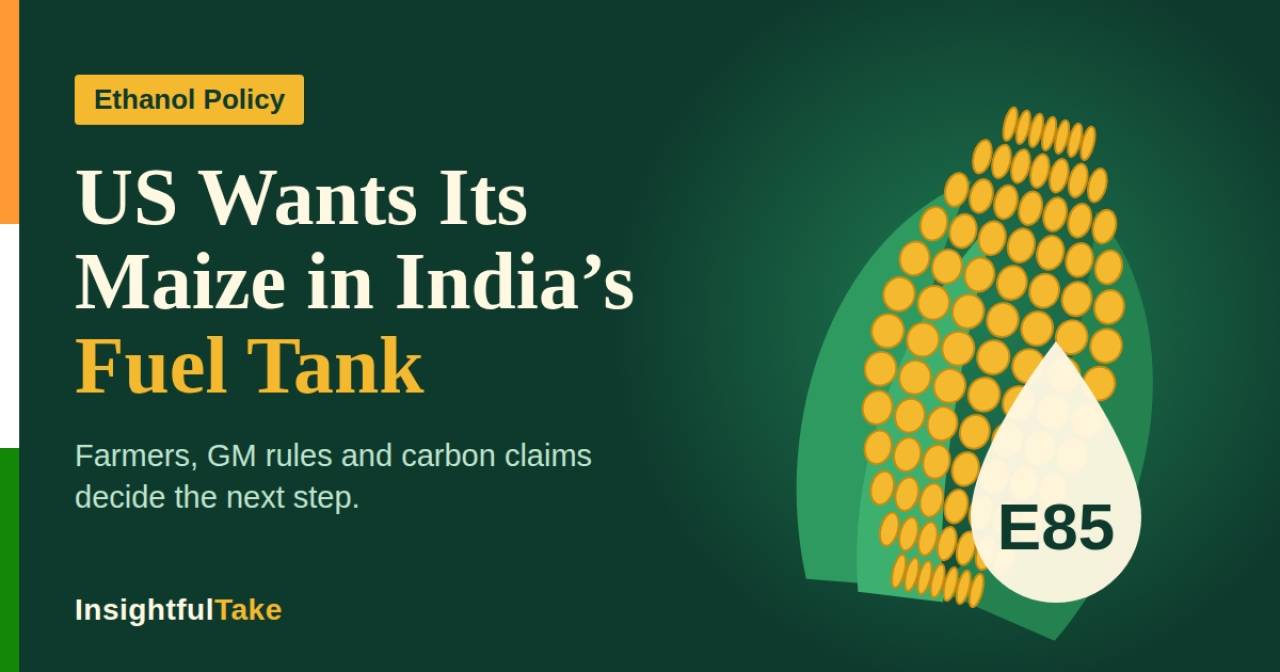
As Washington argues for carbon accounting over GM labels, India must balance cleaner fuel, farm incomes and food-security caution.
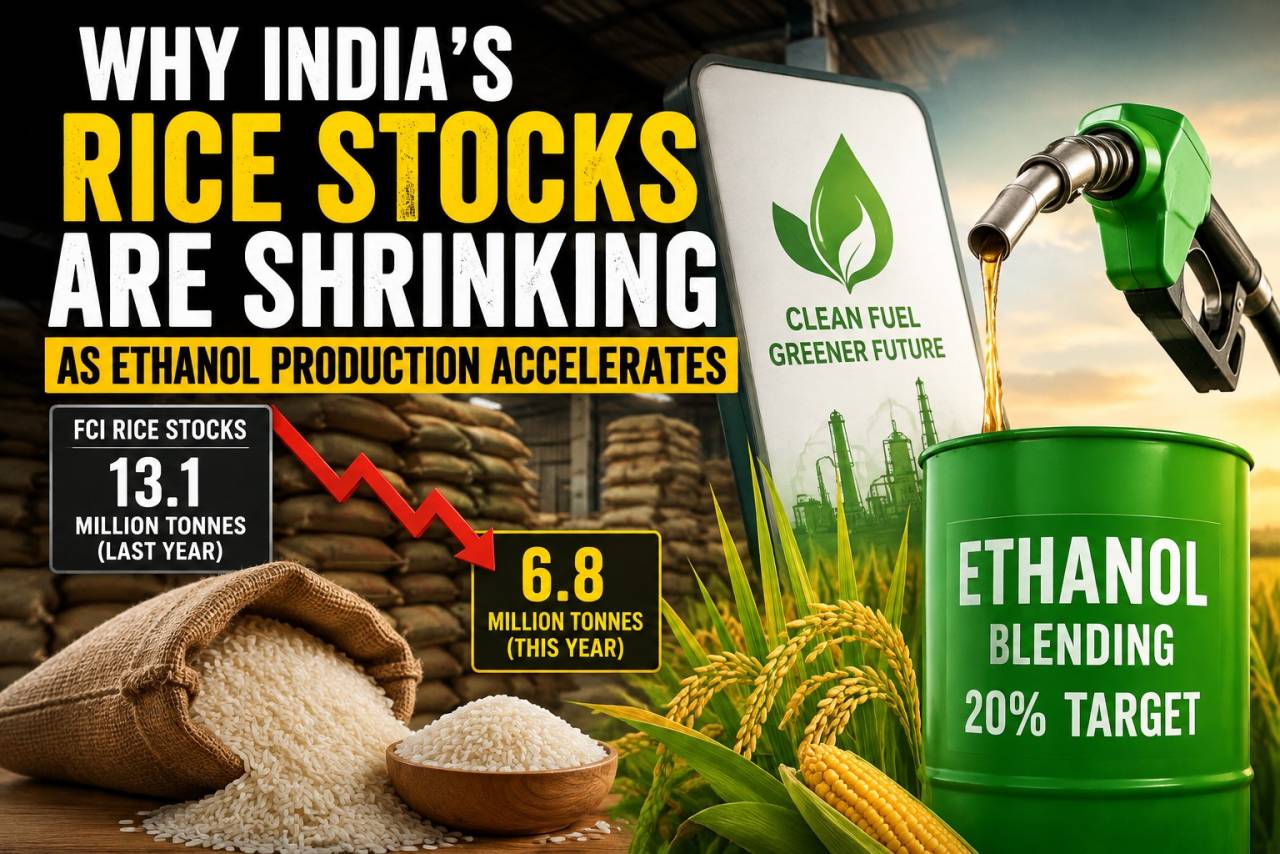
India’s ethanol story has been one of its rare policy successes. The country reached 20% ethanol blending in petrol ahead of its 2030 target, reducing its dependence on crude oil imports and creating a new market for farmers. Now, a new player wants a seat at that table. According to reports, the American grain industry is pushing to bring US maize into India’s ethanol economy.
The Pitch for Deal
At a US-India biofuels summit in New Delhi on September 22, American industry bodies reportedly explored several possibilities, including higher ethanol blends, sustainable aviation fuel (SAF) and ethanol for cooking.
The US argument is that American corn should be assessed on the basis of its life-cycle carbon emissions rather than rejected because it is imported and genetically modified (GM).
The shift in emphasis is significant. India has long maintained a cautious approach to GM crops in its food and feed supply chains, and the government has repeatedly ruled out importing GM maize for ethanol production. By shifting the debate from where and how the grain was grown to how much carbon the resulting fuel emits, the US is trying to move the discussion towards a measure on which it believes its products can compete.
Where India Is Vulnerable, and Where It Is Strong
India’s ethanol programme has been driven less by carbon calculations alone than by administered procurement prices, feedstock availability and blending mandates. Carbon intensity matters, but it has not been the programme’s primary yardstick.
Washington is betting that this could change as global markets increasingly assess fuels on the basis of their emissions.
India, however, has a potential advantage of its own. Early work by Indian industry reportedly suggests that domestically grown maize has a relatively low carbon intensity. If confirmed, this could help Indian feedstock compete under the very standard the US wants applied.
The Indian Institute of Petroleum has commissioned a life-cycle assessment of maize-based ethanol, but the study remains unfinished and unpublished. Until its findings are available, neither side can claim a definitive comparison between American and Indian maize.
The study matters because India needs evidence to assess competing claims about emissions, rather than allowing either side to define the terms of the debate.
Why E20 Is Not the Real Battleground
Officials have indicated that any move beyond E20 as a nationwide petrol-blending target will require further scientific and technical studies. India does have E85 fuel for flex-fuel vehicles, but it has not mandated E85 blending nationwide.
That leaves room for the US to make its case. A higher-blend market, if developed at scale, could create fresh demand for ethanol without immediately displacing established domestic suppliers.
One proposal reportedly discussed is to retain Indian feedstock for the existing 20% blending programme while considering US corn for higher blends if that market develops.
Such an arrangement could appear politically convenient, allowing India to preserve its current system while exploring new fuel options. But it also carries risks. A separate market for imported corn could gradually create pressure for wider access, even if the initial opening were limited.
India would need to establish clear conditions before allowing such a shift, particularly where domestic farmers and food-security priorities are concerned.
The Farmer Question
Maize has emerged as one of the beneficiaries of India’s ethanol push. Farmers in states such as Bihar, Karnataka and Madhya Pradesh have found a more dependable market as distilleries compete for grain.
For growers who have only recently begun to benefit from this additional demand, the prospect of cheaper imported corn raises an obvious concern. If imports increase supply and put downward pressure on domestic prices, farmers could lose some of the gains made under the ethanol programme.
Agricultural commodities have long been sensitive subjects in India’s trade negotiations. Maize and other grains are particularly important because they connect farm incomes, food and feed supplies, and industrial demand. Even a limited opening for US corn could therefore become a flashpoint as India and the US negotiate broader trade issues.
There is also a practical challenge. If India raises its blending targets, demand for ethanol feedstock will increase. Domestic maize production, along with other sources such as sugarcane and surplus grain, will need to expand to meet that demand.
If domestic supplies fail to keep pace, pressure to import will grow, regardless of political preferences. The central policy question is not simply whether India wants imported corn. It is whether the country can produce enough feedstock to meet its fuel ambitions without undermining farm incomes or food security.
Beyond Petrol: Sustainable Aviation Fuel and Cooking Fuel
The American pitch extends beyond petrol pumps.
Sustainable aviation fuel is becoming an important part of the global effort to reduce aviation emissions. Indian airlines and fuel suppliers will face growing pressure to respond as international requirements and climate commitments evolve.
Ethanol-to-jet technologies could help India develop a domestic SAF industry. But the benefits would depend on how the industry is built. India would have stronger reasons to welcome American participation if it brought technology partnerships, domestic manufacturing, investment and local value creation, rather than simply opening the door to feedstock imports.
Ethanol as a cooking fuel is another possibility. It could offer an alternative for households that still rely on polluting fuels, but its practical value would depend on cost, availability, distribution infrastructure and safety. Its economics would also need to be assessed against established options such as liquefied petroleum gas (LPG).
These possibilities deserve serious examination. They should not, however, become a reason to relax safeguards without first establishing clear benefits for Indian consumers and producers.
What India Should Do
Four priorities should guide New Delhi’s response.
1. Publish the life-cycle assessment. The government should make the Indian Institute of Petroleum’s study available as soon as it is completed. Transparent evidence would help India negotiate from a position of strength and establish whether domestic maize has a genuine emissions advantage.
2. Clarify its position on GM maize. If India intends to maintain restrictions on GM grain, it should communicate that position clearly. Decisions on biosafety, food security and farmer protection should be evaluated on their own merits, rather than being blurred with claims about carbon emissions.
3. Strengthen domestic feedstock production. Better seeds, higher yields, improved storage and more efficient supply chains would help Indian farmers meet rising demand. Expanding domestic production is a more durable response to import pressure than relying on trade restrictions alone.
4. Turn American interest into an opportunity. India’s growing ethanol market gives it negotiating leverage. New Delhi could use that interest to seek technology transfers, investment in sustainable aviation fuel, domestic manufacturing partnerships and better market access for Indian products.
Final Take
The US pitch shows how India’s ethanol success has turned its fuel market into an attractive opportunity for international suppliers. Whether that interest becomes an advantage or a source of pressure will depend on the choices New Delhi makes now.
India must measure emissions rigorously, protect farm livelihoods and build a stronger domestic feedstock base. It should also remain open to technologies and partnerships that can deliver genuine environmental and economic benefits.
A fuel policy designed to strengthen self-reliance should not end up creating a new dependence on imported grain. India must take the carbon argument seriously without allowing it to become a back door for decisions that should be made by Indian farmers, scientists and regulators.
India’s ethanol story has been one of its rare policy successes. The country reached 20% ethanol blending in petrol ahead of its 2030 target, reducing its dependence on crude oil imports and creating a new market for farmers. Now, a new player wants a seat at that table. According to reports, the American grain industry is pushing to bring US maize into India’s ethanol economy.
The Pitch for Deal
At a US-India biofuels summit in New Delhi on September 22, American industry bodies reportedly explored several possibilities, including higher ethanol blends, sustainable aviation fuel (SAF) and ethanol for cooking.
The US argument is that American corn should be assessed on the basis of its life-cycle carbon emissions rather than rejected because it is imported and genetically modified (GM).
The shift in emphasis is significant. India has long maintained a cautious approach to GM crops in its food and feed supply chains, and the government has repeatedly ruled out importing GM maize for ethanol production. By shifting the debate from where and how the grain was grown to how much carbon the resulting fuel emits, the US is trying to move the discussion towards a measure on which it believes its products can compete.
Where India Is Vulnerable, and Where It Is Strong
India’s ethanol programme has been driven less by carbon calculations alone than by administered procurement prices, feedstock availability and blending mandates. Carbon intensity matters, but it has not been the programme’s primary yardstick.
Washington is betting that this could change as global markets increasingly assess fuels on the basis of their emissions.
India, however, has a potential advantage of its own. Early work by Indian industry reportedly suggests that domestically grown maize has a relatively low carbon intensity. If confirmed, this could help Indian feedstock compete under the very standard the US wants applied.
The Indian Institute of Petroleum has commissioned a life-cycle assessment of maize-based ethanol, but the study remains unfinished and unpublished. Until its findings are available, neither side can claim a definitive comparison between American and Indian maize.
The study matters because India needs evidence to assess competing claims about emissions, rather than allowing either side to define the terms of the debate.
Why E20 Is Not the Real Battleground
Officials have indicated that any move beyond E20 as a nationwide petrol-blending target will require further scientific and technical studies. India does have E85 fuel for flex-fuel vehicles, but it has not mandated E85 blending nationwide.
That leaves room for the US to make its case. A higher-blend market, if developed at scale, could create fresh demand for ethanol without immediately displacing established domestic suppliers.
One proposal reportedly discussed is to retain Indian feedstock for the existing 20% blending programme while considering US corn for higher blends if that market develops.
Such an arrangement could appear politically convenient, allowing India to preserve its current system while exploring new fuel options. But it also carries risks. A separate market for imported corn could gradually create pressure for wider access, even if the initial opening were limited.
India would need to establish clear conditions before allowing such a shift, particularly where domestic farmers and food-security priorities are concerned.
The Farmer Question
Maize has emerged as one of the beneficiaries of India’s ethanol push. Farmers in states such as Bihar, Karnataka and Madhya Pradesh have found a more dependable market as distilleries compete for grain.
For growers who have only recently begun to benefit from this additional demand, the prospect of cheaper imported corn raises an obvious concern. If imports increase supply and put downward pressure on domestic prices, farmers could lose some of the gains made under the ethanol programme.
Agricultural commodities have long been sensitive subjects in India’s trade negotiations. Maize and other grains are particularly important because they connect farm incomes, food and feed supplies, and industrial demand. Even a limited opening for US corn could therefore become a flashpoint as India and the US negotiate broader trade issues.
There is also a practical challenge. If India raises its blending targets, demand for ethanol feedstock will increase. Domestic maize production, along with other sources such as sugarcane and surplus grain, will need to expand to meet that demand.
If domestic supplies fail to keep pace, pressure to import will grow, regardless of political preferences. The central policy question is not simply whether India wants imported corn. It is whether the country can produce enough feedstock to meet its fuel ambitions without undermining farm incomes or food security.
Beyond Petrol: Sustainable Aviation Fuel and Cooking Fuel
The American pitch extends beyond petrol pumps.
Sustainable aviation fuel is becoming an important part of the global effort to reduce aviation emissions. Indian airlines and fuel suppliers will face growing pressure to respond as international requirements and climate commitments evolve.
Ethanol-to-jet technologies could help India develop a domestic SAF industry. But the benefits would depend on how the industry is built. India would have stronger reasons to welcome American participation if it brought technology partnerships, domestic manufacturing, investment and local value creation, rather than simply opening the door to feedstock imports.
Ethanol as a cooking fuel is another possibility. It could offer an alternative for households that still rely on polluting fuels, but its practical value would depend on cost, availability, distribution infrastructure and safety. Its economics would also need to be assessed against established options such as liquefied petroleum gas (LPG).
These possibilities deserve serious examination. They should not, however, become a reason to relax safeguards without first establishing clear benefits for Indian consumers and producers.
What India Should Do
Four priorities should guide New Delhi’s response.
1. Publish the life-cycle assessment. The government should make the Indian Institute of Petroleum’s study available as soon as it is completed. Transparent evidence would help India negotiate from a position of strength and establish whether domestic maize has a genuine emissions advantage.
2. Clarify its position on GM maize. If India intends to maintain restrictions on GM grain, it should communicate that position clearly. Decisions on biosafety, food security and farmer protection should be evaluated on their own merits, rather than being blurred with claims about carbon emissions.
3. Strengthen domestic feedstock production. Better seeds, higher yields, improved storage and more efficient supply chains would help Indian farmers meet rising demand. Expanding domestic production is a more durable response to import pressure than relying on trade restrictions alone.
4. Turn American interest into an opportunity. India’s growing ethanol market gives it negotiating leverage. New Delhi could use that interest to seek technology transfers, investment in sustainable aviation fuel, domestic manufacturing partnerships and better market access for Indian products.
Final Take
The US pitch shows how India’s ethanol success has turned its fuel market into an attractive opportunity for international suppliers. Whether that interest becomes an advantage or a source of pressure will depend on the choices New Delhi makes now.
India must measure emissions rigorously, protect farm livelihoods and build a stronger domestic feedstock base. It should also remain open to technologies and partnerships that can deliver genuine environmental and economic benefits.
A fuel policy designed to strengthen self-reliance should not end up creating a new dependence on imported grain. India must take the carbon argument seriously without allowing it to become a back door for decisions that should be made by Indian farmers, scientists and regulators.




















Leave a Comment