
A four-decade partnership between India’s dairy cooperatives and the Defence forces is creating reliable milk supplies for troops while opening stronger markets and regular income opportunities for dairy farmers.
A unique partnership between India’s dairy cooperatives and the Defence establishment is helping ensure a steady supply of milk and dairy products to personnel serving the country, while also creating reliable markets and regular income opportunities for dairy farmers.
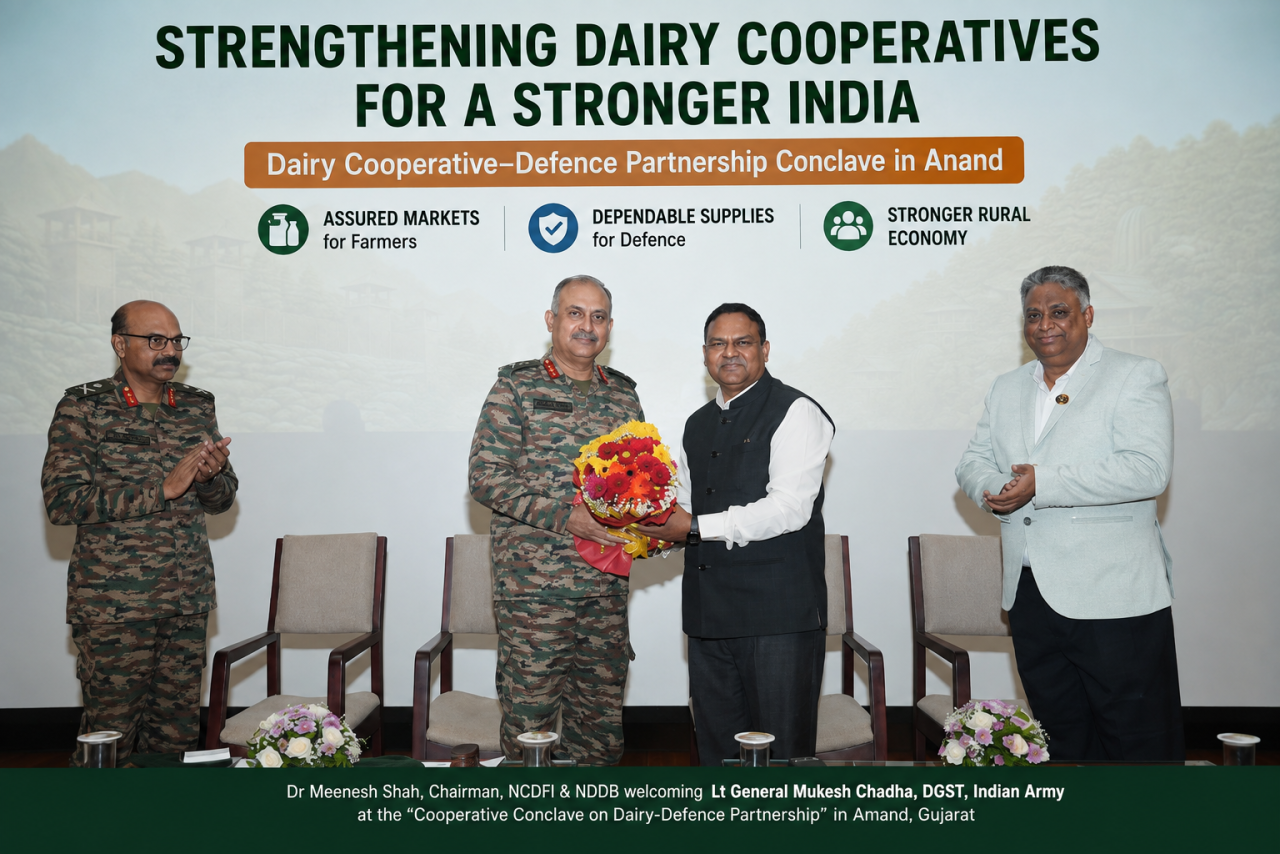
The National Cooperative Dairy Federation of India Ltd. (NCDFI) and the Indian Army recently reiterated their commitment to strengthen this partnership, which has been working for more than four decades. The discussion took place at the Cooperative Conclave on Dairy-Defence Partnership held in Anand, Gujarat, on August 11, 2026.
The partnership connects dairy farmers, cooperatives and Defence establishments through a strong supply network. For Defence personnel, particularly those serving in remote, border and high-altitude areas, dependable access to quality milk and dairy products is important. At the same time, dairy cooperatives get assured institutional markets, while farmers gain access to wider markets and more regular income.
Dr Meenesh Shah, Chairman of NCDFI and the National Dairy Development Board, said the partnership benefits all stakeholders. He also highlighted the important role played by dairy cooperatives in improving milk procurement, processing, cold storage and supply-chain systems in border and North-Eastern regions.
The conclave also recognised the work of dairy cooperatives that supply milk and milk products to Defence establishments in difficult locations. These efforts are especially important in areas where transportation and logistics can be challenging.
Lt General Mukesh Chadha, Director General of Supplies and Transport of the Indian Army, appreciated NCDFI and its member cooperatives for maintaining reliable supplies to troops serving in difficult terrains. He also highlighted the efforts of NDDB to strengthen dairy cooperatives and local milk production in border areas.
A stronger dairy cooperative network in border areas can have benefits beyond milk production. According to the discussions at the conclave, stronger local dairy systems can create sustainable markets, generate employment and provide livelihood opportunities for people living in these regions. Such opportunities could also encourage people to remain in their local communities instead of moving elsewhere for work.
The partnership is also looking at ways to increase the supply of fresh milk wherever local conditions make it possible. This requires suitable milk procurement systems, processing facilities, cold-chain infrastructure and reliable transportation.
At present, long-life UHT milk remains important for locations where fresh milk supply may not be practical. The conclave noted that UHT milk supplies currently amount to 4.11 crore litres. At the same time, there is scope to increase fresh-milk supplies and reduce dependence on UHT milk in areas where local infrastructure can support it.
The conclave also focused on improving coordination between the Army, NCDFI and dairy cooperatives. The participants discussed better demand planning, product-wise capacity mapping, alternate supply arrangements, quality control, cold-chain systems and digital coordination.
The scale of the partnership shows how large the cooperative network has become. NCDFI’s association with the Ministry of Defence began in 1984. Over the years, it has grown to include 117 dairy cooperatives. In 2025-26, the contract value reached ₹1,627 crore. Fresh milk supplies stood at 18.48 crore litres, while the combined supply of fresh and UHT milk reached 22.60 crore litres.
The role of cooperatives in border and North-Eastern regions is particularly significant. Ten dairy cooperatives from these areas supplied 6.44 crore litres of fresh milk to 196 Army units during 2025-26.
The four-decade-old Dairy Cooperative-Defence partnership therefore represents more than a supply arrangement. It connects farmers in local communities with the men and women serving the nation. By strengthening local procurement, processing and logistics, the partnership can support both reliable Defence supplies and stronger rural livelihoods.
The renewed focus on fresh milk, better infrastructure and digital coordination could further strengthen this relationship in the years ahead. For farmers, it can mean dependable markets and income. For Defence personnel, it can mean reliable access to quality dairy products even in challenging locations.
A unique partnership between India’s dairy cooperatives and the Defence establishment is helping ensure a steady supply of milk and dairy products to personnel serving the country, while also creating reliable markets and regular income opportunities for dairy farmers.
The National Cooperative Dairy Federation of India Ltd. (NCDFI) and the Indian Army recently reiterated their commitment to strengthen this partnership, which has been working for more than four decades. The discussion took place at the Cooperative Conclave on Dairy-Defence Partnership held in Anand, Gujarat, on August 11, 2026.
The partnership connects dairy farmers, cooperatives and Defence establishments through a strong supply network. For Defence personnel, particularly those serving in remote, border and high-altitude areas, dependable access to quality milk and dairy products is important. At the same time, dairy cooperatives get assured institutional markets, while farmers gain access to wider markets and more regular income.
Dr Meenesh Shah, Chairman of NCDFI and the National Dairy Development Board, said the partnership benefits all stakeholders. He also highlighted the important role played by dairy cooperatives in improving milk procurement, processing, cold storage and supply-chain systems in border and North-Eastern regions.
The conclave also recognised the work of dairy cooperatives that supply milk and milk products to Defence establishments in difficult locations. These efforts are especially important in areas where transportation and logistics can be challenging.
Lt General Mukesh Chadha, Director General of Supplies and Transport of the Indian Army, appreciated NCDFI and its member cooperatives for maintaining reliable supplies to troops serving in difficult terrains. He also highlighted the efforts of NDDB to strengthen dairy cooperatives and local milk production in border areas.
A stronger dairy cooperative network in border areas can have benefits beyond milk production. According to the discussions at the conclave, stronger local dairy systems can create sustainable markets, generate employment and provide livelihood opportunities for people living in these regions. Such opportunities could also encourage people to remain in their local communities instead of moving elsewhere for work.
The partnership is also looking at ways to increase the supply of fresh milk wherever local conditions make it possible. This requires suitable milk procurement systems, processing facilities, cold-chain infrastructure and reliable transportation.
At present, long-life UHT milk remains important for locations where fresh milk supply may not be practical. The conclave noted that UHT milk supplies currently amount to 4.11 crore litres. At the same time, there is scope to increase fresh-milk supplies and reduce dependence on UHT milk in areas where local infrastructure can support it.
The conclave also focused on improving coordination between the Army, NCDFI and dairy cooperatives. The participants discussed better demand planning, product-wise capacity mapping, alternate supply arrangements, quality control, cold-chain systems and digital coordination.
The scale of the partnership shows how large the cooperative network has become. NCDFI’s association with the Ministry of Defence began in 1984. Over the years, it has grown to include 117 dairy cooperatives. In 2025-26, the contract value reached ₹1,627 crore. Fresh milk supplies stood at 18.48 crore litres, while the combined supply of fresh and UHT milk reached 22.60 crore litres.
The role of cooperatives in border and North-Eastern regions is particularly significant. Ten dairy cooperatives from these areas supplied 6.44 crore litres of fresh milk to 196 Army units during 2025-26.
The four-decade-old Dairy Cooperative-Defence partnership therefore represents more than a supply arrangement. It connects farmers in local communities with the men and women serving the nation. By strengthening local procurement, processing and logistics, the partnership can support both reliable Defence supplies and stronger rural livelihoods.
The renewed focus on fresh milk, better infrastructure and digital coordination could further strengthen this relationship in the years ahead. For farmers, it can mean dependable markets and income. For Defence personnel, it can mean reliable access to quality dairy products even in challenging locations.


















Leave a Comment