
Anxiety keeps you worrying about what might happen. Taking one small, practical step can help you regain control and break the cycle.
It is 2 a.m. The phone lies lit up on the pillow. The deadline, the EMI, the unanswered message, the medical report still unopened in a drawer. Each worry takes its turn in the mind. Nothing has happened, yet the body behaves as if everything has. The heart races, the jaw tightens, and sleep slips away.
Anxiety is one of the most common human experiences, yet it is often misunderstood. Research in psychology offers a practical insight: taking action, even a small step, can help break the cycle of worry. The idea also echoes advice from philosophers who lived centuries ago. Instead of waiting for anxiety to disappear before doing anything, we can sometimes begin to feel better by doing something useful.
A Widespread Problem
The World Health Organization estimates that depression and anxiety cost the global economy about US$1 trillion every year in lost productivity. In India, the National Mental Health Survey of 2015–16 found that mental health conditions affected a significant section of the population, with many people unable to access treatment.
Mental health professionals remain difficult to access in many parts of the country, while social stigma discourages people from seeking help.
For millions, the immediate question is not which clinic to visit but what to do tonight, alone in a room with a restless mind. That is where the case for action begins.
How Worry Takes Hold
Anxiety is, at its core, the mind's attempt to prepare for a possible threat. The problem begins when preparation turns into endless thinking. An uncertain future offers an unlimited supply of questions, and the mind can keep returning to the same fears without finding an answer.
Psychologists call one form of this repetitive thinking rumination. A person may replay a conversation, imagine a job interview going wrong or worry about an unpaid bill for hours. The thinking feels necessary, but it often produces little progress.
Action changes the nature of the problem. Worry is open-ended, while a task has a clear beginning and an achievable end.
"What if the interview goes badly?" may have no immediate answer. Updating a résumé, researching the organisation or practising a few interview questions are concrete tasks that can be completed.
The aim is not to pretend the problem does not exist. It is to stop treating every possible outcome as something that must be solved in the mind before anything can be done.
What Research Tells Us
One of the strongest psychological approaches supporting this idea is behavioural activation. It is based on the principle that our behaviour can influence our mood. Instead of waiting to feel motivated, people are encouraged to schedule and complete small, meaningful activities, such as taking a walk, calling a friend or finishing a household chore.
A UK trial published in The Lancet in 2016 found that behavioural activation, delivered by junior mental health workers, was a cost-effective alternative to cognitive behavioural therapy for treating depression, with comparable outcomes over the study period.
India has its own important evidence. A trial conducted in Goa and published in The Lancet in 2017 tested the Healthy Activity Programme, a treatment based on behavioural activation and delivered by trained lay counsellors. The programme improved outcomes for people with moderate to severe depression.
These findings matter in a country where access to mental health specialists remains limited. They show that structured psychological care can be delivered by trained workers beyond specialist clinics. They do not mean that activity alone can treat every mental health condition, but they underline the value of helping people re-engage with everyday life.
Exposure therapy, a standard treatment for many anxiety disorders and phobias, works on a related principle. Avoiding a feared situation may bring temporary relief, but repeated avoidance can strengthen the fear. Gradually approaching the situation in planned, manageable steps allows people to learn through experience that the danger may be less than they expected.
In both approaches, progress comes through action rather than waiting for fear or low mood to disappear first.
The Body Needs to Move, Too
Anxiety is not just a problem of thought. It affects the body as well.
When the brain senses a threat, the body's stress response prepares it to fight or flee. The heart rate rises, breathing changes and muscles tighten. But when a person remains seated, worrying about a deadline or a difficult conversation, that physical readiness may have no useful outlet.
This helps explain why physical activity can be useful for managing anxiety symptoms. A brisk walk, a few minutes of climbing stairs or a short cycle ride can interrupt repetitive thinking while helping the body regulate its stress response.
The activity does not have to be strenuous. Even a short walk outside can provide a change of setting, shift attention away from persistent thoughts and create a manageable task with a clear beginning and end.
Exercise is not a substitute for treatment when anxiety is severe, but regular movement can be a valuable part of a broader approach to mental well-being.
Ancient Wisdom, the Same Lesson
The idea that action can help us deal with distress is not new.
In the Bhagavad Gita, Arjuna stands on the battlefield overwhelmed by fear, grief and moral uncertainty. He struggles to act. Krishna's response centres on duty, disciplined action and the need to perform one's responsibilities without becoming consumed by the fruits of the outcome.
The lesson is not that people should ignore their emotions. It is that uncertainty about the result need not prevent them from doing what they can.
The Stoic philosopher Epictetus offered a similar distinction. Some things are within our control, while others are not. We cannot fully control other people's responses, the outcome of an interview or the course of every illness. We can, however, decide how to prepare, what questions to ask and what step to take next.
Anxiety often grows when we try to mentally control outcomes that remain uncertain. A more useful question is simple: what is within my control today?
The answer may be small, but it gives the mind somewhere practical to begin.
Start Small and Start Now
When everything feels overwhelming, a long list of tasks can make matters worse. The answer is not to demand more from an already exhausted mind. It is to make the next step manageable.
Name the problem. Identify the worry that needs attention most. Writing it down can help separate one specific concern from the many possibilities surrounding it.
Make the task smaller. Instead of "fix my finances", open the bank statement. Instead of "finish the report", write the first paragraph. Instead of worrying about an upcoming conversation, write down the three points you want to discuss.
Give yourself ten minutes. A short, realistic time limit can make it easier to begin. You do not have to finish the entire task. You only have to make a start.
Notice what you have completed. Every finished step gives you something concrete to work with. Anxiety often draws strength from imagined futures, while completed tasks provide evidence of what you can actually do.
These steps may not remove the underlying problem. A bill still needs to be paid, a medical report still needs to be discussed with a doctor, and a difficult conversation may still lie ahead. But taking the first step can replace helplessness with a measure of control.
Not All Activity Is Useful
There is an important distinction between taking action and keeping busy.
People experiencing anxiety may answer emails late into the night, repeatedly check their phones, reorganise their desks or revisit the same information without making progress on the issue that concerns them. Such activity can provide temporary distraction while leaving the underlying worry untouched.
Repeated checking can be particularly unhelpful when it becomes compulsive and reinforces the belief that certainty is always necessary.
A useful test is to ask whether an activity brings you closer to addressing the problem or simply leaves you more exhausted. Effective action is deliberate, limited and directed towards something that matters.
It is equally important to recognise the limits of this approach. Persistent anxiety, panic attacks, prolonged sleeplessness or difficulty managing everyday responsibilities deserve professional attention. Therapy, medication or a combination of treatments may be necessary.
Suggesting action should never become a way of blaming people for their distress. Mental health difficulties are not a failure of willpower, and seeking professional help is itself a meaningful step.
The First Step Matters
Anxiety often tells us to wait until we feel calm, confident or certain before acting. But those feelings may not arrive while we remain trapped in the same cycle of worry.
Psychological research suggests that, in many situations, the order can work the other way. We take a manageable step, discover that we can do something despite feeling anxious, and gradually build the confidence to continue.
The worry may not disappear immediately. The deadline may still be approaching, the conversation may still be difficult, and the future may remain uncertain.
But something has changed. Instead of spending another hour imagining what might happen, you have begun dealing with what is happening now.
Tonight, or tomorrow morning, choose one small, useful task and do it. You do not have to solve everything at once. You only have to begin.
It is 2 a.m. The phone lies lit up on the pillow. The deadline, the EMI, the unanswered message, the medical report still unopened in a drawer. Each worry takes its turn in the mind. Nothing has happened, yet the body behaves as if everything has. The heart races, the jaw tightens, and sleep slips away.
Anxiety is one of the most common human experiences, yet it is often misunderstood. Research in psychology offers a practical insight: taking action, even a small step, can help break the cycle of worry. The idea also echoes advice from philosophers who lived centuries ago. Instead of waiting for anxiety to disappear before doing anything, we can sometimes begin to feel better by doing something useful.
A Widespread Problem
The World Health Organization estimates that depression and anxiety cost the global economy about US$1 trillion every year in lost productivity. In India, the National Mental Health Survey of 2015–16 found that mental health conditions affected a significant section of the population, with many people unable to access treatment.
Mental health professionals remain difficult to access in many parts of the country, while social stigma discourages people from seeking help.
For millions, the immediate question is not which clinic to visit but what to do tonight, alone in a room with a restless mind. That is where the case for action begins.
How Worry Takes Hold
Anxiety is, at its core, the mind's attempt to prepare for a possible threat. The problem begins when preparation turns into endless thinking. An uncertain future offers an unlimited supply of questions, and the mind can keep returning to the same fears without finding an answer.
Psychologists call one form of this repetitive thinking rumination. A person may replay a conversation, imagine a job interview going wrong or worry about an unpaid bill for hours. The thinking feels necessary, but it often produces little progress.
Action changes the nature of the problem. Worry is open-ended, while a task has a clear beginning and an achievable end.
"What if the interview goes badly?" may have no immediate answer. Updating a résumé, researching the organisation or practising a few interview questions are concrete tasks that can be completed.
The aim is not to pretend the problem does not exist. It is to stop treating every possible outcome as something that must be solved in the mind before anything can be done.
What Research Tells Us
One of the strongest psychological approaches supporting this idea is behavioural activation. It is based on the principle that our behaviour can influence our mood. Instead of waiting to feel motivated, people are encouraged to schedule and complete small, meaningful activities, such as taking a walk, calling a friend or finishing a household chore.
A UK trial published in The Lancet in 2016 found that behavioural activation, delivered by junior mental health workers, was a cost-effective alternative to cognitive behavioural therapy for treating depression, with comparable outcomes over the study period.
India has its own important evidence. A trial conducted in Goa and published in The Lancet in 2017 tested the Healthy Activity Programme, a treatment based on behavioural activation and delivered by trained lay counsellors. The programme improved outcomes for people with moderate to severe depression.
These findings matter in a country where access to mental health specialists remains limited. They show that structured psychological care can be delivered by trained workers beyond specialist clinics. They do not mean that activity alone can treat every mental health condition, but they underline the value of helping people re-engage with everyday life.
Exposure therapy, a standard treatment for many anxiety disorders and phobias, works on a related principle. Avoiding a feared situation may bring temporary relief, but repeated avoidance can strengthen the fear. Gradually approaching the situation in planned, manageable steps allows people to learn through experience that the danger may be less than they expected.
In both approaches, progress comes through action rather than waiting for fear or low mood to disappear first.
The Body Needs to Move, Too
Anxiety is not just a problem of thought. It affects the body as well.
When the brain senses a threat, the body's stress response prepares it to fight or flee. The heart rate rises, breathing changes and muscles tighten. But when a person remains seated, worrying about a deadline or a difficult conversation, that physical readiness may have no useful outlet.
This helps explain why physical activity can be useful for managing anxiety symptoms. A brisk walk, a few minutes of climbing stairs or a short cycle ride can interrupt repetitive thinking while helping the body regulate its stress response.
The activity does not have to be strenuous. Even a short walk outside can provide a change of setting, shift attention away from persistent thoughts and create a manageable task with a clear beginning and end.
Exercise is not a substitute for treatment when anxiety is severe, but regular movement can be a valuable part of a broader approach to mental well-being.
Ancient Wisdom, the Same Lesson
The idea that action can help us deal with distress is not new.
In the Bhagavad Gita, Arjuna stands on the battlefield overwhelmed by fear, grief and moral uncertainty. He struggles to act. Krishna's response centres on duty, disciplined action and the need to perform one's responsibilities without becoming consumed by the fruits of the outcome.
The lesson is not that people should ignore their emotions. It is that uncertainty about the result need not prevent them from doing what they can.
The Stoic philosopher Epictetus offered a similar distinction. Some things are within our control, while others are not. We cannot fully control other people's responses, the outcome of an interview or the course of every illness. We can, however, decide how to prepare, what questions to ask and what step to take next.
Anxiety often grows when we try to mentally control outcomes that remain uncertain. A more useful question is simple: what is within my control today?
The answer may be small, but it gives the mind somewhere practical to begin.
Start Small and Start Now
When everything feels overwhelming, a long list of tasks can make matters worse. The answer is not to demand more from an already exhausted mind. It is to make the next step manageable.
Name the problem. Identify the worry that needs attention most. Writing it down can help separate one specific concern from the many possibilities surrounding it.
Make the task smaller. Instead of "fix my finances", open the bank statement. Instead of "finish the report", write the first paragraph. Instead of worrying about an upcoming conversation, write down the three points you want to discuss.
Give yourself ten minutes. A short, realistic time limit can make it easier to begin. You do not have to finish the entire task. You only have to make a start.
Notice what you have completed. Every finished step gives you something concrete to work with. Anxiety often draws strength from imagined futures, while completed tasks provide evidence of what you can actually do.
These steps may not remove the underlying problem. A bill still needs to be paid, a medical report still needs to be discussed with a doctor, and a difficult conversation may still lie ahead. But taking the first step can replace helplessness with a measure of control.
Not All Activity Is Useful
There is an important distinction between taking action and keeping busy.
People experiencing anxiety may answer emails late into the night, repeatedly check their phones, reorganise their desks or revisit the same information without making progress on the issue that concerns them. Such activity can provide temporary distraction while leaving the underlying worry untouched.
Repeated checking can be particularly unhelpful when it becomes compulsive and reinforces the belief that certainty is always necessary.
A useful test is to ask whether an activity brings you closer to addressing the problem or simply leaves you more exhausted. Effective action is deliberate, limited and directed towards something that matters.
It is equally important to recognise the limits of this approach. Persistent anxiety, panic attacks, prolonged sleeplessness or difficulty managing everyday responsibilities deserve professional attention. Therapy, medication or a combination of treatments may be necessary.
Suggesting action should never become a way of blaming people for their distress. Mental health difficulties are not a failure of willpower, and seeking professional help is itself a meaningful step.
The First Step Matters
Anxiety often tells us to wait until we feel calm, confident or certain before acting. But those feelings may not arrive while we remain trapped in the same cycle of worry.
Psychological research suggests that, in many situations, the order can work the other way. We take a manageable step, discover that we can do something despite feeling anxious, and gradually build the confidence to continue.
The worry may not disappear immediately. The deadline may still be approaching, the conversation may still be difficult, and the future may remain uncertain.
But something has changed. Instead of spending another hour imagining what might happen, you have begun dealing with what is happening now.
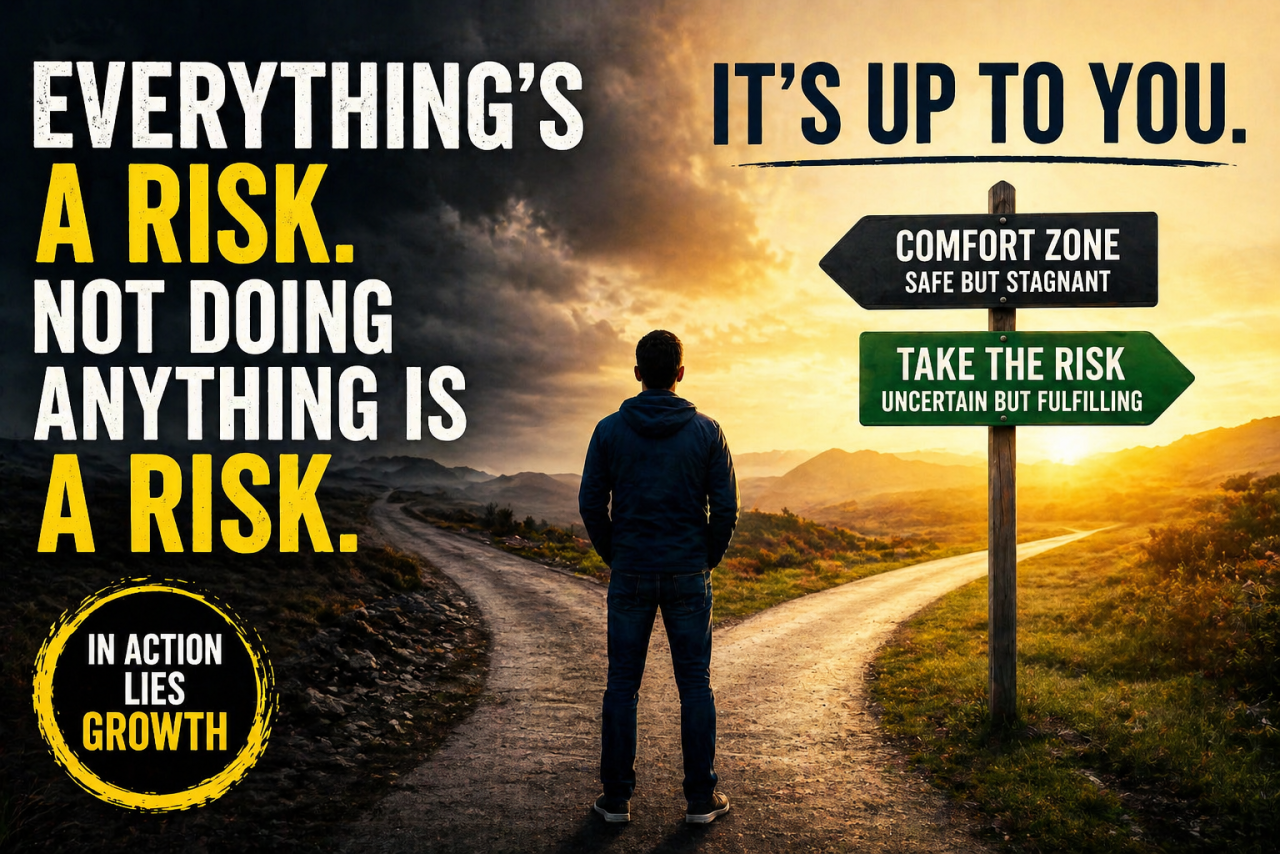
Tonight, or tomorrow morning, choose one small, useful task and do it. You do not have to solve everything at once. You only have to begin.
















Leave a Comment