
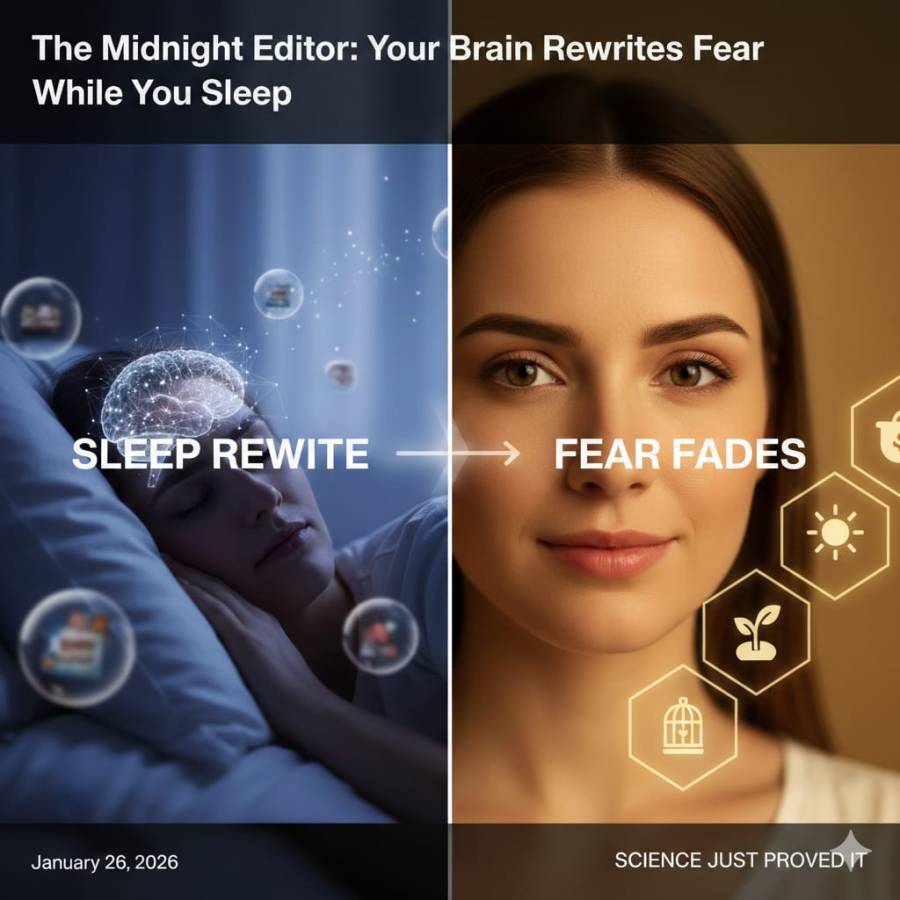
New research shows the sleeping brain can reduce fear linked to memories without conscious effort.
Sleep plays an active role in how the human brain stores and reshapes memories. Research in neuroscience shows that during sleep, the brain does more than archive daily experiences. It reorganises them, deciding which details to strengthen and which emotional responses to weaken. Recent studies have shown that it is possible to reduce the emotional intensity of a memory while a person is in deep sleep.
How Emotional Memories Are Stored
When an experience occurs, the brain processes two components at the same time. The hippocampus records factual information such as people, places, and events. The amygdala processes emotional responses, especially fear and threat. These two regions work together so that emotionally important experiences are remembered clearly and influence future behaviour.
This system is essential for survival, but it can become problematic. In conditions such as anxiety disorders and post-traumatic stress disorder, the emotional response linked to a memory remains excessively strong even when there is no longer any danger.
The Role of Sleep in Memory Processing
Memory consolidation mainly occurs during non-rapid eye movement (NREM) sleep. During this phase, brain activity patterns replay recent experiences. This replay helps stabilise memories and integrate them into long-term storage. Importantly, stress hormones are lower during deep sleep, creating a biological environment that allows memories to be reprocessed without strong emotional arousal.
This unique state makes sleep an effective period for modifying how emotions are attached to memories.
What Is Targeted Memory Reactivation
Targeted Memory Reactivation, or TMR, is a technique used by researchers to influence memory processing during sleep. In controlled experiments, participants are first trained while awake to associate a specific sound with a particular experience, often one that produces fear or discomfort.
Once the association is formed, participants are allowed to enter deep NREM sleep. During this stage, researchers quietly play the same sound at a low volume. The sleeping brain detects the sound and automatically reactivates the associated memory.
Why Fear Responses Decrease
When a memory is reactivated during sleep, the brain processes it under conditions of physical relaxation and reduced stress response. The conscious mind is inactive, and the body does not produce the same fear-related physiological reactions seen during wakefulness.
As a result, the brain weakens the connection between the memory and the fear response. The factual content of the memory remains intact, but the emotional charge attached to it is reduced. Studies measuring heart rate and skin conductance have shown that participants react less strongly to the same fear-inducing stimuli after this sleep-based reprocessing.
Implications for Mental Health Treatment
These findings are important for the treatment of mental health conditions linked to traumatic memories. Current therapies for PTSD and chronic anxiety often require patients to consciously revisit distressing experiences. While effective for some, this approach can be slow and emotionally difficult.
Sleep-based memory modulation offers a potential alternative. Reducing emotional intensity without conscious re-exposure could support gentler treatment methods. While this research is still in early stages, it suggests that non-invasive interventions using sound cues during sleep may one day complement existing therapies.
Why This Research Matters
This work challenges the idea that memories are fixed once formed. Instead, memories are flexible structures that can be updated and reshaped over time. Sleep acts as a biological editing window, allowing the brain to fine-tune emotional responses in ways that improve psychological resilience.
Understanding how sleep modifies emotional memories may lead to new strategies for managing stress, anxiety, and trauma. It also highlights the broader importance of healthy sleep for emotional regulation and mental well-being.






















Leave a Comment