
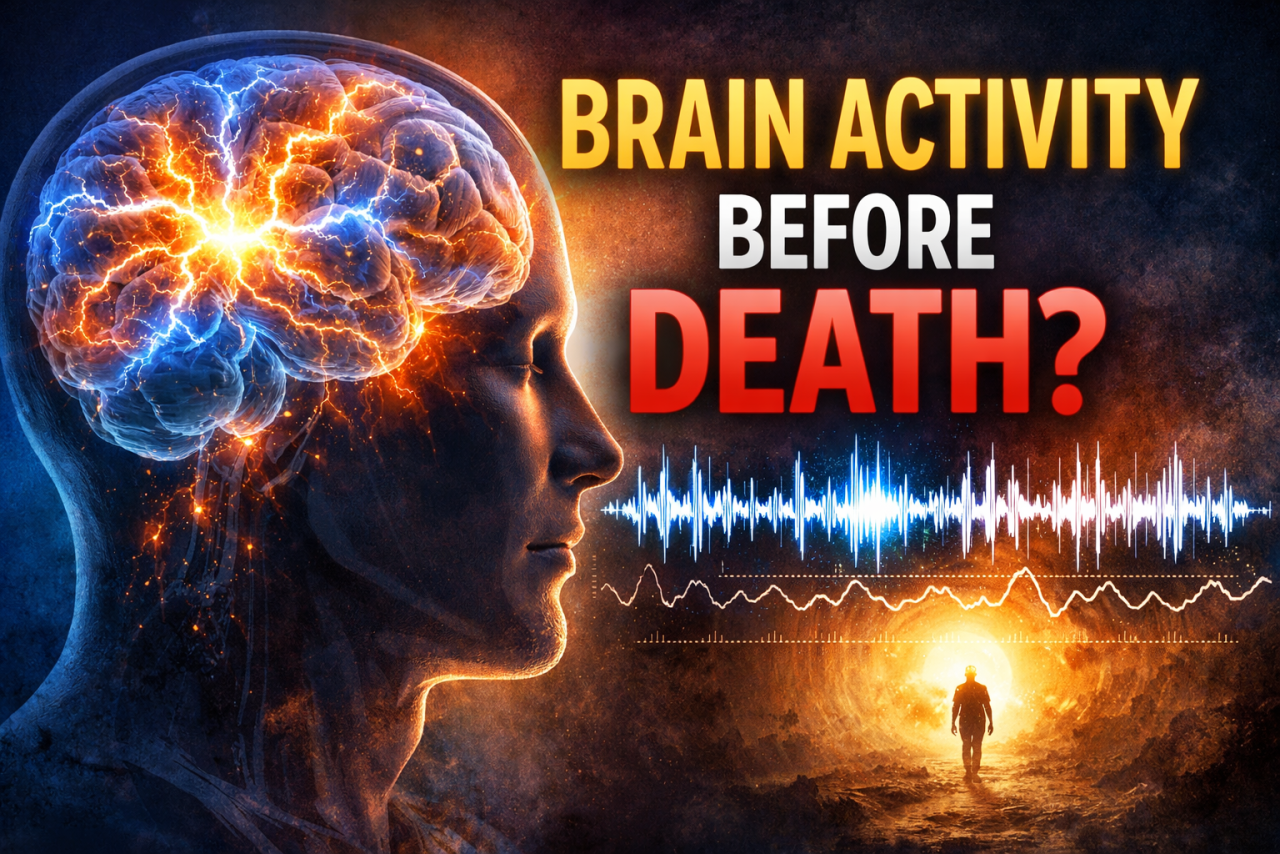
In the final moments of life, the human brain may not simply fade into silence. Scientists have discovered that it can produce sudden bursts of intense activity linked to awareness and conscious thinking. This surprising finding raises a profound question: does the mind briefly become clearer just before death?
For a long time, many people believed that the human mind slowly fades away as death approaches. The common image is that consciousness becomes weaker and weaker until it disappears completely. However, modern scientific research is beginning to show that the final moments of life may not always be a simple fading of awareness. In some cases, the brain may briefly become more active just before death.
Doctors and scientists studying the final stages of life have observed that the body and brain go through several rapid changes during the last minutes. These changes involve oxygen levels, blood circulation, and chemical activity in the brain. Together, they can influence how a person perceives the world, processes emotions, and recalls memories.
One important factor is oxygen. As the body begins to shut down, oxygen supply to the brain becomes unstable. Blood pressure can fall, breathing patterns may change, and the flow of oxygen to different parts of the brain may fluctuate. These sudden shifts can affect how brain cells communicate with each other.
At the same time, the brain releases different chemicals that can influence mood, awareness, and perception. These chemical changes may create unusual mental experiences. Some people may feel a sudden sense of calm, clarity, or emotional understanding during these final moments.
Medical workers and family members have sometimes reported that dying patients suddenly appear more alert or aware shortly before passing away. A person who had been quiet or unconscious may briefly speak, recognize loved ones, or express a clear thought. Such moments have often been described in hospitals, hospices, and homes where end-of-life care takes place.
For many years, these experiences were mostly understood through personal stories and observations. But recently, scientists have begun to measure what happens in the brain during the final stage of life.
Researchers at Michigan Medicine, which is part of the University of Michigan, conducted studies on patients who were near death while being monitored with brain-recording equipment. In some cases, the scientists observed brief bursts of organized brain activity even when the patients were very close to dying.
The activity appeared in the form of gamma waves. Gamma waves are a type of brain signal that is often linked with higher mental functions such as awareness, attention, and conscious thinking. In healthy individuals, these waves are usually seen when the brain is actively processing information or forming memories.
The surprising part of the study was that similar patterns appeared in the brains of some dying patients. The bursts of gamma-wave activity occurred shortly before death. According to the researchers, this could suggest that the brain briefly enters a highly active state during the transition between life and death.
Scientists are still careful about drawing firm conclusions. The research in this field is still developing, and many questions remain unanswered. Not every patient shows the same patterns, and the exact meaning of these bursts of brain activity is still being studied.
However, these findings may help explain why some people report strong inner experiences near the end of life. In different cultures and medical reports, individuals have described moments of sudden clarity, strong intuition, or a clear sense that the end is near. Some have even shared meaningful conversations with loved ones shortly before passing away.
Researchers believe that the brain’s final surge of activity might temporarily sharpen awareness. The brain could be trying to process memories, emotions, or sensory information during this final transition. It may also reflect the brain’s last attempt to maintain organized activity as the body’s systems begin to fail.
Understanding these changes is important not only for science but also for medicine and end-of-life care. Learning how the brain behaves in the final minutes of life can help doctors better understand consciousness and improve the way patients are cared for during their last moments.
While death remains one of the greatest mysteries of human life, scientific research is slowly revealing that the final stage may involve more activity in the brain than previously believed. Instead of simply fading away, the mind may briefly shine with a last moment of awareness before the journey ends.




























Leave a Comment