
Tamil Nadu is getting richer faster than India—but why are many still feeling left behind?
Tamil Nadu is often seen as one of India’s most developed states. Over the past two decades, it has shown steady economic growth and improvement in living standards. Data on income, consumption and state output suggest that the state has moved ahead of the national average on several indicators. However, the same data also points to gaps between growth and people’s expectations. This creates a mix of progress and concern.
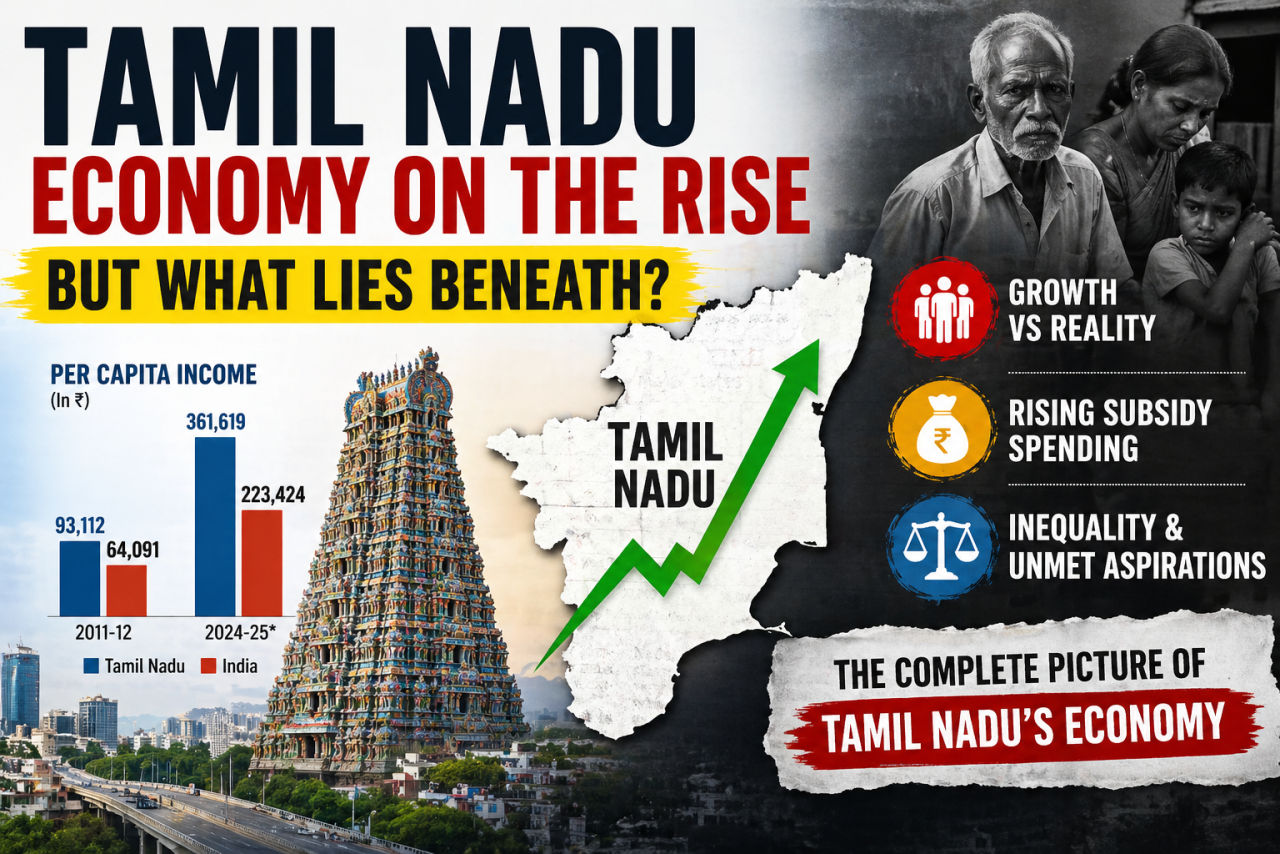
One of the clearest signs of growth is the rise in per capita income. Tamil Nadu’s per capita Net State Domestic Product has increased sharply since 2011–12. It has grown from about ₹93,000 to more than ₹3.6 lakh in recent years. In comparison, India’s average per capita income has also increased, but at a slower pace, rising from about ₹64,000 to around ₹2.2 lakh. This shows that Tamil Nadu has stayed ahead of the national average and widened its lead over time.
The state’s contribution to India’s total economic output has also improved. Tamil Nadu now accounts for a larger share of the country’s GDP than before. It stands among the top states in terms of economic size, just behind Maharashtra. This rise reflects strong performance in manufacturing, services and exports. It also shows that the state has been able to attract investment and maintain industrial growth.
Another important measure is consumption, which reflects how much people spend. Tamil Nadu performs well in this area too. The Monthly Per Capita Expenditure in the state is higher than the all-India average. Both rural and urban consumption levels are above the national benchmark. This suggests that, on average, people in Tamil Nadu enjoy better living standards compared to many other states.
However, higher averages do not always mean equal benefits for all. There is a visible gap between income levels and actual consumption among people. This means that while the state is generating wealth, not everyone is able to use it fully in their daily lives. The difference between economic output and household spending points to inequality and uneven distribution of gains.
This gap also explains the continued demand for welfare measures. Tamil Nadu has a long history of social support schemes such as subsidies, free services and income support. Data shows that the state spends a significant amount on subsidies, and this spending has increased over time. Compared to many other states, Tamil Nadu’s subsidy growth has been higher. This reflects the role of welfare in addressing social needs and maintaining political support.
The rise in subsidies also raises questions about long-term sustainability. While welfare schemes help reduce hardship and improve access to basic services, they can put pressure on government finances if not managed carefully. The challenge for the state is to balance growth with responsible spending.
Another issue is the difference between aspirations and reality. As incomes rise and education levels improve, people expect better jobs, higher wages and improved public services. When these expectations are not fully met, it leads to dissatisfaction. This is visible even in a state that performs well on many economic indicators.
In simple terms, Tamil Nadu’s story is not just about growth numbers. It is about how that growth reaches people. The state has done well in increasing income, boosting consumption and expanding its role in the national economy. At the same time, it faces challenges related to inequality, expectations and fiscal balance.
The way forward lies in improving job quality, supporting small businesses and ensuring that growth benefits reach all sections of society. Welfare schemes will continue to play a role, but they need to be combined with policies that create long-term opportunities.
Tamil Nadu shows that economic success is not only about higher numbers. It is also about how evenly those gains are shared and how well they meet the needs of people.
Tamil Nadu is often seen as one of India’s most developed states. Over the past two decades, it has shown steady economic growth and improvement in living standards. Data on income, consumption and state output suggest that the state has moved ahead of the national average on several indicators. However, the same data also points to gaps between growth and people’s expectations. This creates a mix of progress and concern.
One of the clearest signs of growth is the rise in per capita income. Tamil Nadu’s per capita Net State Domestic Product has increased sharply since 2011–12. It has grown from about ₹93,000 to more than ₹3.6 lakh in recent years. In comparison, India’s average per capita income has also increased, but at a slower pace, rising from about ₹64,000 to around ₹2.2 lakh. This shows that Tamil Nadu has stayed ahead of the national average and widened its lead over time.
The state’s contribution to India’s total economic output has also improved. Tamil Nadu now accounts for a larger share of the country’s GDP than before. It stands among the top states in terms of economic size, just behind Maharashtra. This rise reflects strong performance in manufacturing, services and exports. It also shows that the state has been able to attract investment and maintain industrial growth.
Another important measure is consumption, which reflects how much people spend. Tamil Nadu performs well in this area too. The Monthly Per Capita Expenditure in the state is higher than the all-India average. Both rural and urban consumption levels are above the national benchmark. This suggests that, on average, people in Tamil Nadu enjoy better living standards compared to many other states.
However, higher averages do not always mean equal benefits for all. There is a visible gap between income levels and actual consumption among people. This means that while the state is generating wealth, not everyone is able to use it fully in their daily lives. The difference between economic output and household spending points to inequality and uneven distribution of gains.
This gap also explains the continued demand for welfare measures. Tamil Nadu has a long history of social support schemes such as subsidies, free services and income support. Data shows that the state spends a significant amount on subsidies, and this spending has increased over time. Compared to many other states, Tamil Nadu’s subsidy growth has been higher. This reflects the role of welfare in addressing social needs and maintaining political support.
The rise in subsidies also raises questions about long-term sustainability. While welfare schemes help reduce hardship and improve access to basic services, they can put pressure on government finances if not managed carefully. The challenge for the state is to balance growth with responsible spending.
Another issue is the difference between aspirations and reality. As incomes rise and education levels improve, people expect better jobs, higher wages and improved public services. When these expectations are not fully met, it leads to dissatisfaction. This is visible even in a state that performs well on many economic indicators.
In simple terms, Tamil Nadu’s story is not just about growth numbers. It is about how that growth reaches people. The state has done well in increasing income, boosting consumption and expanding its role in the national economy. At the same time, it faces challenges related to inequality, expectations and fiscal balance.
The way forward lies in improving job quality, supporting small businesses and ensuring that growth benefits reach all sections of society. Welfare schemes will continue to play a role, but they need to be combined with policies that create long-term opportunities.
Tamil Nadu shows that economic success is not only about higher numbers. It is also about how evenly those gains are shared and how well they meet the needs of people.























Leave a Comment