
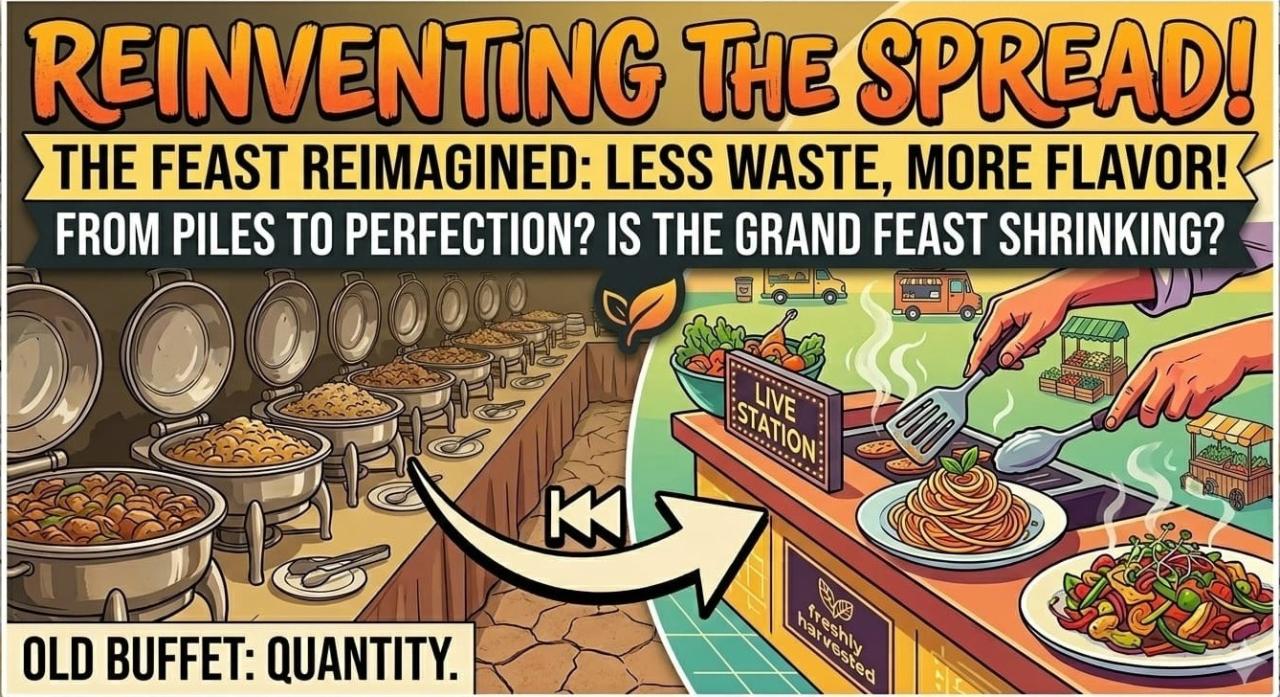
The era of overloaded buffet plates is ending. Hotels are rethinking brunch with live cooking, fresher portions, and a focus on quality over quantity.
There was once a silent, gluttonous pact between the diner and the hotel: we provided the appetite, and they provided the geography—acres of silver lids and mountains of food that felt more like a landscape than a meal. It was the era of the "sneeze-guard sprawl," where the goal was to achieve a plate so heavy it required two hands to carry. But lately, those sprawling horizons are shrinking, and in their place, something much more kinetic is happening.
The buffet isn't shrinking because we’ve lost our appetite; it’s being dismantled because we’ve found our standards.
The End of the "Heat Lamp" Era
We’ve all seen it: the lonely, slightly shriveled sausage or the pasta that has slowly fused into a single, lukewarm brick under the orange glow of a heat lamp. This is the static display, and it is rapidly becoming a relic of the past.
Modern luxury dining is pivoting toward micro-batching. Instead of a chef preparing enough fried rice to feed a small village, they are now cooking for five people at a time. The goal is "perpetual freshness"—a cycle of constant, small refills that ensure the dish you pick up at 10:00 AM tastes exactly like the one served at opening. It turns the kitchen into a high-stakes relay race, but the result for the diner is a plate that actually has a soul.
Culinary Busking: The Chef as Performer
The most magnetic part of the modern dining room is no longer the dessert tower; it’s the live station. We are witnessing the rise of "culinary busking," where the barrier between the prep table and the dining table has evaporated.
At places like the St. Regis or the Pullman, the action has shifted to the counter. There is a psychological shift when you watch a chef crack an egg or toss a stir-fry specifically for you. It transforms the meal from a passive "scooping" exercise into an interactive performance. It also solves the buffet’s oldest sin: waste. When food is made to order, the 50% waste margins of the old-school spreads vanish. We are finally eating with our eyes and our conscience.
The Rise of the "Boutique" Spread
If the old buffet was a warehouse, the new one is a curated gallery. We’re seeing a sophisticated "editing" of the menu.
- Hyper-Local Sourcing: If the herbs weren't picked from the hotel’s kitchen garden or a farm down the road, they likely aren't on the menu.
- Wellness Over Weight: The "heavy" options are being pushed to the wings, making center stage for sprouted grains, cold-pressed elixirs, and seasonal produce.
- The Hybrid Model: Many high-end spots are now combining a small, high-quality cold spread with an à la carte menu for mains.
The New Social Contract
The makeover of the buffet reflects a change in the diner themselves. We are moving away from the "get your money's worth" mentality toward a "make the calories count" philosophy. The modern spread is no longer about how much you can carry; it’s about how much you can experience.
The grand, static mounds of food are disappearing, and honestly? We should let them go. The new era of the buffet is smaller, faster, and infinitely more flavorful. The "all-you-can-eat" era is dead; long live the "all-you-can-savor" era.
Does this shift toward smaller, high-quality portions make you more likely to visit a hotel brunch, or do you still miss the charm of a massive, traditional spread?
There was once a silent, gluttonous pact between the diner and the hotel: we provided the appetite, and they provided the geography—acres of silver lids and mountains of food that felt more like a landscape than a meal. It was the era of the "sneeze-guard sprawl," where the goal was to achieve a plate so heavy it required two hands to carry. But lately, those sprawling horizons are shrinking, and in their place, something much more kinetic is happening.
The buffet isn't shrinking because we’ve lost our appetite; it’s being dismantled because we’ve found our standards.
The End of the "Heat Lamp" Era
We’ve all seen it: the lonely, slightly shriveled sausage or the pasta that has slowly fused into a single, lukewarm brick under the orange glow of a heat lamp. This is the static display, and it is rapidly becoming a relic of the past.
Modern luxury dining is pivoting toward micro-batching. Instead of a chef preparing enough fried rice to feed a small village, they are now cooking for five people at a time. The goal is "perpetual freshness"—a cycle of constant, small refills that ensure the dish you pick up at 10:00 AM tastes exactly like the one served at opening. It turns the kitchen into a high-stakes relay race, but the result for the diner is a plate that actually has a soul.
Culinary Busking: The Chef as Performer
The most magnetic part of the modern dining room is no longer the dessert tower; it’s the live station. We are witnessing the rise of "culinary busking," where the barrier between the prep table and the dining table has evaporated.
At places like the St. Regis or the Pullman, the action has shifted to the counter. There is a psychological shift when you watch a chef crack an egg or toss a stir-fry specifically for you. It transforms the meal from a passive "scooping" exercise into an interactive performance. It also solves the buffet’s oldest sin: waste. When food is made to order, the 50% waste margins of the old-school spreads vanish. We are finally eating with our eyes and our conscience.
The Rise of the "Boutique" Spread
If the old buffet was a warehouse, the new one is a curated gallery. We’re seeing a sophisticated "editing" of the menu.
- Hyper-Local Sourcing: If the herbs weren't picked from the hotel’s kitchen garden or a farm down the road, they likely aren't on the menu.
- Wellness Over Weight: The "heavy" options are being pushed to the wings, making center stage for sprouted grains, cold-pressed elixirs, and seasonal produce.
- The Hybrid Model: Many high-end spots are now combining a small, high-quality cold spread with an à la carte menu for mains.
The New Social Contract
The makeover of the buffet reflects a change in the diner themselves. We are moving away from the "get your money's worth" mentality toward a "make the calories count" philosophy. The modern spread is no longer about how much you can carry; it’s about how much you can experience.
The grand, static mounds of food are disappearing, and honestly? We should let them go. The new era of the buffet is smaller, faster, and infinitely more flavorful. The "all-you-can-eat" era is dead; long live the "all-you-can-savor" era.
Does this shift toward smaller, high-quality portions make you more likely to visit a hotel brunch, or do you still miss the charm of a massive, traditional spread?






















Leave a Comment