
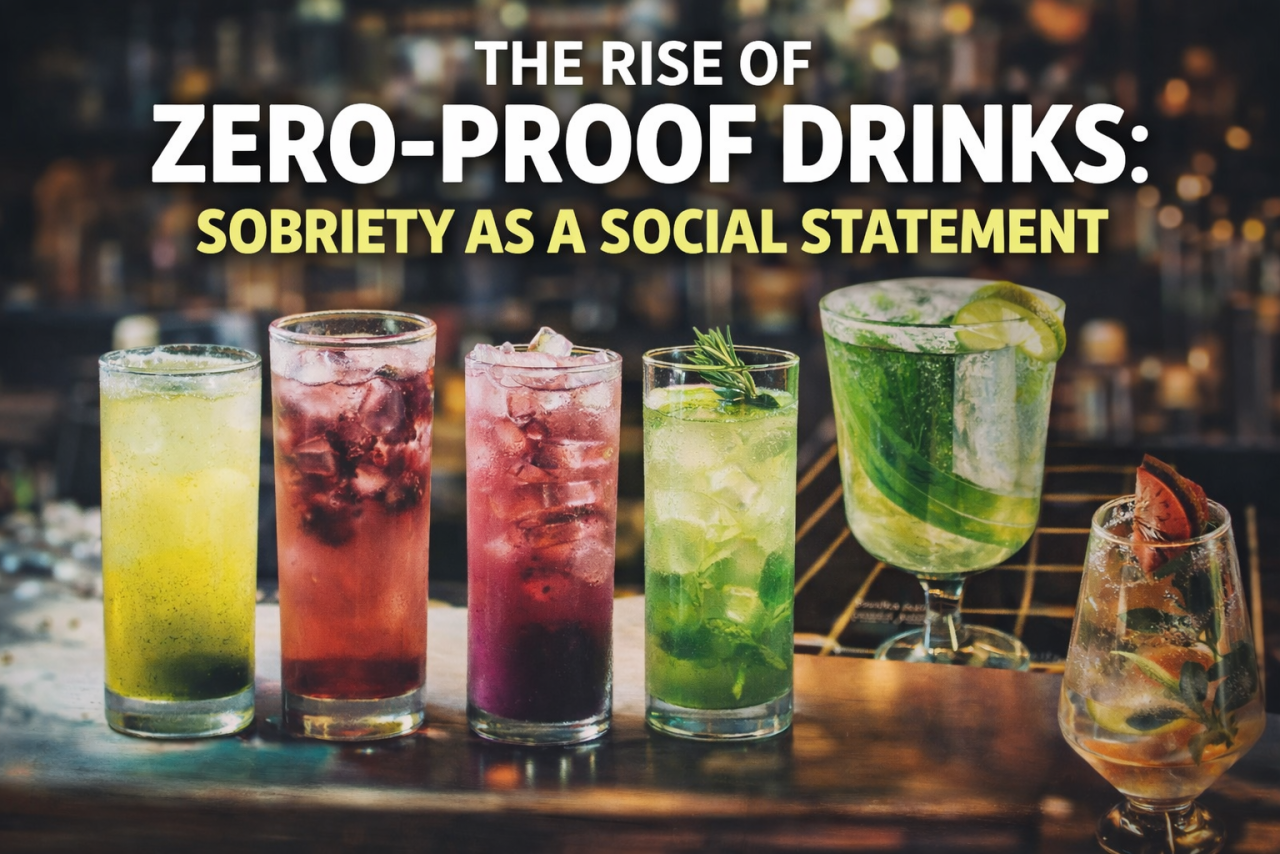
The most interesting drink at the party no longer needs alcohol.
For much of modern social life, social drinking followed a predictable script. Celebrations meant champagne, networking events revolved around cocktails, and a night out was incomplete without alcohol. That script is now being quietly rewritten. Across cities, menus, and social gatherings, a new category of beverages is taking center stage: zero-proof drinks.
These are not the old, uninspiring “soft drink or water” alternatives. Today’s zero-proof cocktails are thoughtfully crafted, layered with flavors, and designed to offer the same sense of occasion as an alcoholic drink—without the alcohol. From botanical infusions and fermented teas to spice-forward mocktails inspired by regional cuisines, sobriety is no longer about abstaining; it is about choosing differently.
A Shift Driven by a New Generation
One of the strongest forces behind this trend is Gen Z. Unlike earlier generations, many young adults are questioning the role alcohol plays in their lives. Health awareness, mental well-being, and productivity matter more than fitting into traditional drinking culture. For them, saying no to alcohol is not a sacrifice—it is a statement.
Social media has amplified this shift. Wellness influencers openly discuss sober curiosity, while viral videos celebrate alcohol-free parties and mindful mornings. Drinking less—or not at all—has become socially acceptable, even aspirational. The result is a growing demand for drinks that feel special but align with healthier lifestyles.
Redefining Taste Without the Buzz
Modern zero-proof menus focus on how a drink is made, not on what is missing. Chefs and mixologists are borrowing techniques from fine dining: cold infusions, reductions, smoking, fermentation, and the careful balance of bitterness, acidity, and sweetness. Ingredients like kaffir lime, hibiscus, ginger, rosemary, peppercorn, and native herbs are replacing spirits as the backbone of flavor.
In many cases, these drinks are inspired by traditional recipes—herbal waters, spiced coolers, fermented beverages—that existed long before modern cocktails. By reinterpreting them for contemporary palates, brands and bars are creating drinks that feel both familiar and innovative.
Importantly, zero-proof does not mean flavor-free. The goal is to deliver depth and ritual: the clink of ice, the aroma of herbs, the visual appeal of a carefully garnished glass. People want the experience of drinking, not the side effects.
From Niche to Mainstream
Once confined to wellness circles, alcohol-free drinking has stepped into everyday social life. Restaurants now dedicate entire sections of their menus to alcohol-free cocktails. High-end bars treat zero-proof options with the same seriousness as signature drinks. Even at weddings and corporate events, hosts are ensuring that non-drinkers are not sidelined.
The business potential is significant. Zero-proof beverages attract not just abstainers, but also people who want to pace themselves, drive safely, or simply avoid hangovers. In many cases, consumers are willing to pay premium prices for well-crafted alcohol-free drinks, challenging the idea that alcohol is necessary for value.
A Cultural Reset Around Socializing
Perhaps the most meaningful change is cultural. Drinking has long been intertwined with social bonding, often creating subtle pressure to participate. Zero-proof drinks help remove that pressure. They allow people to stay present, engaged, and included—without having to explain their choices.
This shift also reflects a broader reevaluation of success and balance. Late nights and excess are giving way to mornings, fitness, and mental clarity. The drink in your hand no longer defines how much fun you can have.
What the Future Looks Like
The zero-proof movement is not about banning alcohol. It is about expanding choice. As innovation continues, expect to see more regionally inspired flavors, functional ingredients linked to mood and digestion, and storytelling around craftsmanship rather than intoxication.
In redefining what it means to drink socially, zero-proof beverages are quietly changing habits, menus, and mindsets. The message is simple but powerful that celebration does not require alcohol. Sometimes, the most refreshing change is clarity itself.










Leave a Comment