
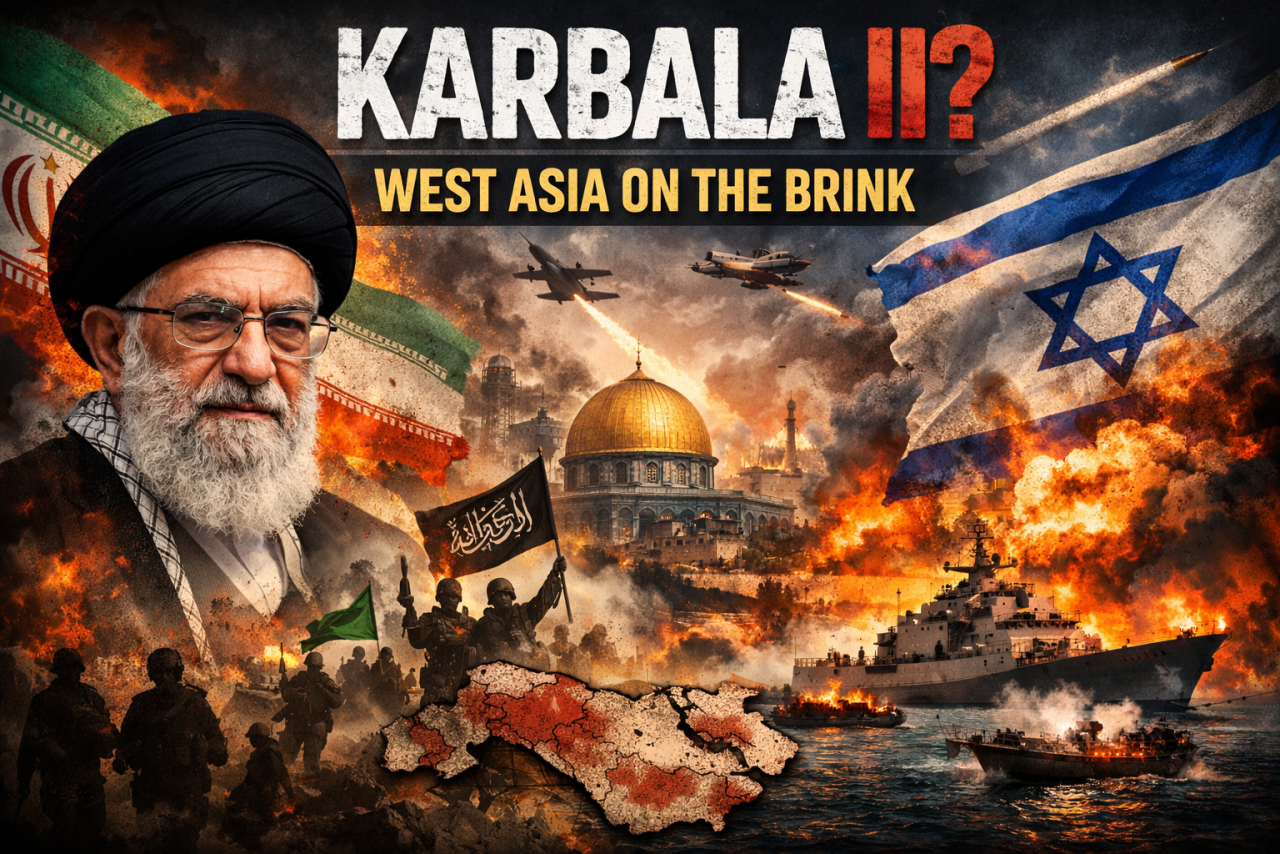
A single assassination has pushed West Asia to the edge — and the fallout could reshape the global order.
West Asia is standing at the edge of a historic rupture. On February 28, 2026, a coordinated aerospace operation by the United States and Israel—reportedly code-named “Operation Epic Fury”—targeted and killed Iran’s Supreme Leader, Ali Khamenei. In a matter of hours, decades of calibrated brinkmanship, shadow warfare, and strategic patience were replaced by a direct decapitation strike unprecedented in the modern Middle East.
As smoke rose over Tehran, a question began to echo far beyond the region: Has Washington eliminated a long-standing adversary—or unleashed a chain reaction that could destabilize the global order?
This is no longer a regional flashpoint. It is a geopolitical turning point.
A Political Strike, A Spiritual Shockwave
To Western policymakers, the removal of a head of state is a strategic maneuver—high-risk, high-impact, but ultimately tactical. Within Shia Islam’s theological and historical framework, however, the killing of a Vali-e-Faqih (Guardian Jurist) by foreign military forces carries profound symbolic weight.
Shia political identity is deeply intertwined with the concept of mazlumiyat—the idea of righteous victimhood in the face of oppression. The assassination of Khamenei risks transforming him from a controversial political leader into a martyr figure. In that transformation lies the danger.
Iran declared 40 days of national mourning. Black banners filled the streets of Mashhad and Qom. In parts of Beirut, Basra, and even Kashmir, solidarity processions carried his portrait alongside religious iconography. What may have been intended as a decisive blow has instead triggered a narrative of historical repetition.
Many commentators within the region have drawn parallels to the 7th-century Battle of Karbala, where Imam Hussain was killed by the forces of Yazid I. In that framing, contemporary geopolitics becomes a reenactment of sacred history—an emotionally powerful lens that transcends conventional deterrence logic.
When conflict acquires a spiritual dimension, escalation becomes harder to contain.
The Strategic Gamble
The strike appears rooted in the belief that Iran’s system was vulnerable—perhaps even brittle. Supporters of the operation argued that internal dissent, economic strain, and a resurgent nuclear program created a moment of opportunity. Some in Washington reportedly anticipated a “Persian Spring”: a leaderless system fragmenting under pressure.
That expectation has not materialized.
Instead of collapse, Iran has experienced a consolidation of power. Authority has transferred to an interim leadership council comprising senior clerical and political figures. Within days, coordinated missile and drone barrages were launched against U.S. military installations in the Gulf and targets inside Israel.
The response signaled two realities: Iran’s command-and-control systems remain intact, and the security establishment—particularly the Islamic Revolutionary Guard Corps (IRGC)—had contingency plans ready.
Far from paralysis, the system moved with speed.
The Strait That Could Shake the World
Perhaps the most dangerous variable is maritime.
Tehran has threatened to restrict passage through the Strait of Hormuz, the narrow corridor through which roughly a fifth of global oil supply passes. Even partial disruption would send energy markets into shock, pushing oil prices upward and intensifying inflation worldwide.
The United States Navy has increased its presence, escorting tankers and reinforcing regional bases. Insurance premiums for commercial shipping have surged. Markets are reacting not just to missiles—but to uncertainty.
Energy chokepoints turn regional wars into global crises.
Did Washington Miscalculate?
On paper, decapitation strikes can destabilize adversaries. In practice, their success depends on the political architecture of the targeted state.
Iran is not a personalist dictatorship in the traditional sense. It is an ideological system with layered institutions: clerical councils, security networks, and decentralized proxies across the region. The IRGC, in particular, has long prepared for succession scenarios.
Without Khamenei’s occasional pragmatic restraint, power dynamics may shift toward more hardline actors. If the Assembly of Experts ultimately selects a successor aligned with uncompromising elements—potentially even Mojtaba Khamenei—the trajectory could harden further.
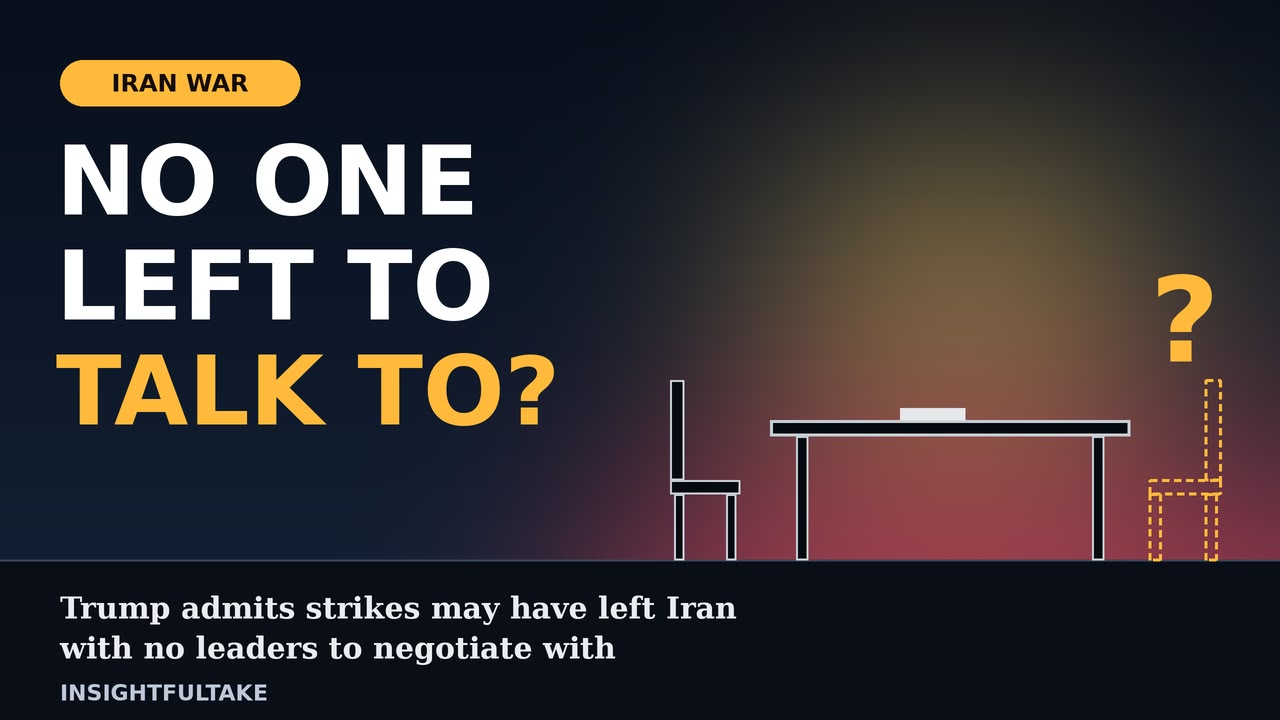
Another consequence is diplomatic fallout. European allies, already wary of unilateral action, now face a volatile security environment with limited leverage. Indirect talks that were quietly unfolding have collapsed. The diplomatic runway has shortened.
The Expanding Theatre
The conflict is no longer confined to Iran and Israel.
Israeli sorties over southern Lebanon aim to deter Hezbollah. U.S. bases across the Gulf are on high alert. Cyberattacks, drone warfare, and proxy engagements stretch from Iraq to Syria. The battlespace is multidimensional—land, sea, air, and digital.
The risk is not a single catastrophic moment, but a cascading escalation: retaliation triggering counter-retaliation in an accelerating cycle.
History shows that wars often begin with calculated moves that spiral beyond their architects’ intentions.
A World Holding Its Breath
The assassination of Ali Khamenei has undeniably altered the strategic map of West Asia. It removed a central figure in the so-called “Axis of Resistance.” Yet it may also have granted that axis a renewed ideological cohesion—an immortalized cause.
Whether this moment becomes a brief but violent chapter or the opening act of a prolonged regional war depends on decisions made in the coming days: succession choices in Tehran, restraint in Washington, calculations in Tel Aviv, and mediation efforts from global powers.
The next 72 hours may define the next decade.
For now, energy markets tremble, militaries mobilize, and civilians across the region brace for uncertainty. The fire lit in Tehran has not yet spread beyond control—but the winds are strong.
West Asia stands at a precipice. And the world is watching.
















Leave a Comment