
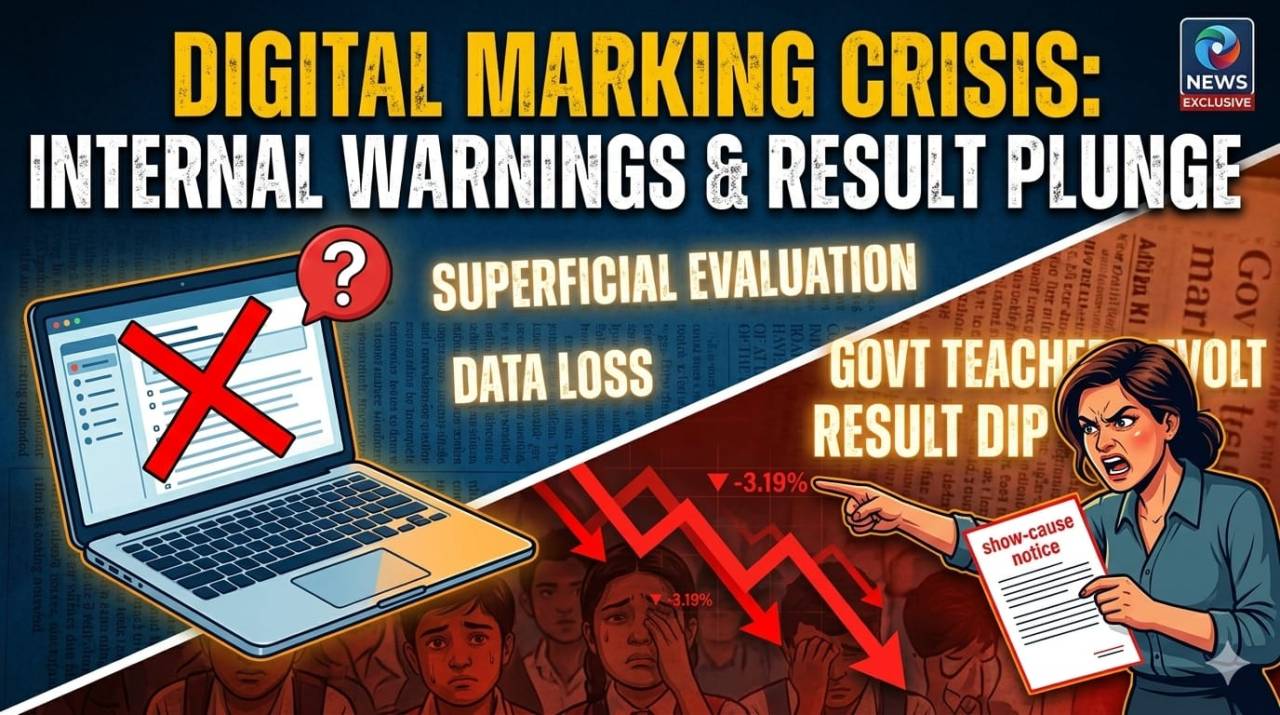
Internal warnings were ignored before CBSE’s digital marking system rollout—now falling results, teacher backlash, and a High Court case have raised serious questions about the evaluation process.
What began as an ambitious effort to modernize the evaluation of board examinations has now evolved into one of the most significant controversies facing the Central Board of Secondary Education (CBSE) in recent years. Internal documents, mounting complaints from teachers and students, declining examination results, and judicial intervention have collectively raised serious questions about the board’s newly introduced digital evaluation system.
At the center of the controversy is the On-Screen Marking (OSM) system, a digital platform introduced for the evaluation of Class 12 board examination answer sheets. Evidence emerging from internal reports suggests that senior officials were alerted to substantial technical and operational shortcomings months before the system was implemented nationwide. Critics now argue that those warnings were not adequately addressed, paving the way for widespread dissatisfaction and a legal challenge that has reached the courts.
Internal Reports Raised Early Concerns
The roots of the current crisis can be traced back to January 2026, when CBSE conducted a dry run of the OSM system in five schools across Delhi. The exercise was intended to identify potential challenges before the platform was deployed on a national scale.
According to internal observations from the trial, evaluators and observers identified at least 36 concerns related to technology, workflow, and the quality of assessment. The report highlighted the possibility of superficial or incomplete evaluation, noting that answer scripts could be marked without sufficient scrutiny due to limitations in the software and the absence of effective supervisory safeguards.
Observers also expressed concern about the lack of opportunities for evaluators to discuss difficult answers, resolve discrepancies, or establish consistency in marking standards—long-standing practices that have traditionally helped maintain fairness in large-scale examinations.
Additional issues reportedly included:
- Slow system performance during marking.
- Absence of an automatic save function.
- Difficulties viewing answer scripts, question papers, and marking schemes simultaneously.
- Hidden student responses beneath digital annotations.
- Subject-code inconsistencies.
- Challenges in tracking responses that were not neatly divided into separate sections.
The report warned that these shortcomings could increase evaluator fatigue and contribute to inconsistencies in assessment.
Despite these concerns, the system proceeded to full implementation for the 2026 board examinations.
Results Trigger Wider Questions
The controversy intensified after CBSE announced the Class 12 results on May 15. The nationwide pass percentage stood at 85.20 percent, a decline of 3.19 percentage points from the previous year's 88.39 percent. It marked the lowest pass rate recorded since 2019.
While examination outcomes can be influenced by multiple factors, the timing of the decline immediately drew attention to the newly implemented evaluation system. Students, parents, and teachers began questioning whether technical shortcomings in the marking process had affected final scores.
The concerns grew louder as some students obtained scanned copies of their evaluated answer sheets and reported inconsistencies, missing annotations, and evaluations that appeared incomplete.
Teachers Push Back Against Accountability Measures
As concerns over the results mounted, frustration spread among educators.
Government school teachers reported receiving notices and performance-related memoranda in cases where student pass percentages declined or failed to meet administrative expectations. Many educators argued that they were being held responsible for outcomes potentially linked to flaws in the evaluation system itself.
The Government Schools Teachers’ Association (GSTA) strongly opposed the move and urged authorities to withdraw such notices. The association maintained that teachers should not be penalized for problems arising from the implementation of a system over which they had little control.
According to educators involved in the evaluation process, numerous technical difficulties emerged during marking. These reportedly included blurred scans of answer sheets, missing pages, incorrect answer booklets being assigned to evaluators, and software-related bottlenecks that complicated the assessment process.
Teacher representatives have argued that the rapid rollout of the OSM system occurred without sufficient testing, training, or infrastructure verification, creating conditions that undermined confidence in the fairness of the evaluation process.
Judiciary Steps In
The growing controversy has now reached the judiciary.
The Lucknow Bench of the Allahabad High Court has issued notices to the Union Government, CBSE, the Controller of Examinations, and the Government of Uttar Pradesh following a Public Interest Litigation (PIL) challenging the implementation of the digital evaluation system.
The petition alleges that the rollout of the OSM platform amounted to a systemic failure with consequences for millions of students across the country. It calls for an independent expert review of the system and seeks a comprehensive examination of alleged discrepancies in the evaluation process.
Among the key demands is the re-evaluation of affected answer sheets, free of cost, by properly trained evaluators operating under a more transparent and accountable framework.
The court's intervention has elevated what was initially viewed as an administrative issue into a matter of national educational significance.
A Test of Trust in Digital Reform
The controversy arrives at a time when educational institutions across India are increasingly embracing digital technologies to improve efficiency and scalability. While technological modernization offers undeniable advantages, the CBSE episode underscores the risks of implementing large-scale reforms without adequately addressing operational challenges.
The emergence of internal documents suggesting that concerns were identified before implementation has intensified scrutiny of decision-making within the board. Critics argue that the current situation was not merely the result of unforeseen technical glitches but of warnings that were known and documented in advance.
Supporters of digital evaluation maintain that technological systems can ultimately improve consistency and transparency, but they acknowledge that successful implementation requires extensive testing, robust safeguards, and continuous oversight.
Final Take
With the next hearing expected in August, the future of the OSM system remains uncertain. The outcome could have far-reaching implications not only for CBSE but also for the broader adoption of digital evaluation mechanisms across India’s education system.
For students awaiting clarity, teachers demanding accountability, and policymakers defending modernization efforts, the coming months will be critical.
What is already clear is that the controversy has evolved far beyond a technical dispute. It has become a debate about transparency, accountability, and the responsibility institutions bear when introducing reforms that affect the academic futures of millions of young people.
As investigations continue and legal proceedings unfold, CBSE faces perhaps its most difficult challenge yet: restoring public confidence in a system designed to measure merit but now itself under examination.
What began as an ambitious effort to modernize the evaluation of board examinations has now evolved into one of the most significant controversies facing the Central Board of Secondary Education (CBSE) in recent years. Internal documents, mounting complaints from teachers and students, declining examination results, and judicial intervention have collectively raised serious questions about the board’s newly introduced digital evaluation system.
At the center of the controversy is the On-Screen Marking (OSM) system, a digital platform introduced for the evaluation of Class 12 board examination answer sheets. Evidence emerging from internal reports suggests that senior officials were alerted to substantial technical and operational shortcomings months before the system was implemented nationwide. Critics now argue that those warnings were not adequately addressed, paving the way for widespread dissatisfaction and a legal challenge that has reached the courts.
Internal Reports Raised Early Concerns
The roots of the current crisis can be traced back to January 2026, when CBSE conducted a dry run of the OSM system in five schools across Delhi. The exercise was intended to identify potential challenges before the platform was deployed on a national scale.
According to internal observations from the trial, evaluators and observers identified at least 36 concerns related to technology, workflow, and the quality of assessment. The report highlighted the possibility of superficial or incomplete evaluation, noting that answer scripts could be marked without sufficient scrutiny due to limitations in the software and the absence of effective supervisory safeguards.
Observers also expressed concern about the lack of opportunities for evaluators to discuss difficult answers, resolve discrepancies, or establish consistency in marking standards—long-standing practices that have traditionally helped maintain fairness in large-scale examinations.
Additional issues reportedly included:
- Slow system performance during marking.
- Absence of an automatic save function.
- Difficulties viewing answer scripts, question papers, and marking schemes simultaneously.
- Hidden student responses beneath digital annotations.
- Subject-code inconsistencies.
- Challenges in tracking responses that were not neatly divided into separate sections.
The report warned that these shortcomings could increase evaluator fatigue and contribute to inconsistencies in assessment.
Despite these concerns, the system proceeded to full implementation for the 2026 board examinations.
Results Trigger Wider Questions
The controversy intensified after CBSE announced the Class 12 results on May 15. The nationwide pass percentage stood at 85.20 percent, a decline of 3.19 percentage points from the previous year's 88.39 percent. It marked the lowest pass rate recorded since 2019.
While examination outcomes can be influenced by multiple factors, the timing of the decline immediately drew attention to the newly implemented evaluation system. Students, parents, and teachers began questioning whether technical shortcomings in the marking process had affected final scores.
The concerns grew louder as some students obtained scanned copies of their evaluated answer sheets and reported inconsistencies, missing annotations, and evaluations that appeared incomplete.
Teachers Push Back Against Accountability Measures
As concerns over the results mounted, frustration spread among educators.
Government school teachers reported receiving notices and performance-related memoranda in cases where student pass percentages declined or failed to meet administrative expectations. Many educators argued that they were being held responsible for outcomes potentially linked to flaws in the evaluation system itself.
The Government Schools Teachers’ Association (GSTA) strongly opposed the move and urged authorities to withdraw such notices. The association maintained that teachers should not be penalized for problems arising from the implementation of a system over which they had little control.
According to educators involved in the evaluation process, numerous technical difficulties emerged during marking. These reportedly included blurred scans of answer sheets, missing pages, incorrect answer booklets being assigned to evaluators, and software-related bottlenecks that complicated the assessment process.
Teacher representatives have argued that the rapid rollout of the OSM system occurred without sufficient testing, training, or infrastructure verification, creating conditions that undermined confidence in the fairness of the evaluation process.
Judiciary Steps In
The growing controversy has now reached the judiciary.
The Lucknow Bench of the Allahabad High Court has issued notices to the Union Government, CBSE, the Controller of Examinations, and the Government of Uttar Pradesh following a Public Interest Litigation (PIL) challenging the implementation of the digital evaluation system.
The petition alleges that the rollout of the OSM platform amounted to a systemic failure with consequences for millions of students across the country. It calls for an independent expert review of the system and seeks a comprehensive examination of alleged discrepancies in the evaluation process.
Among the key demands is the re-evaluation of affected answer sheets, free of cost, by properly trained evaluators operating under a more transparent and accountable framework.
The court's intervention has elevated what was initially viewed as an administrative issue into a matter of national educational significance.
A Test of Trust in Digital Reform
The controversy arrives at a time when educational institutions across India are increasingly embracing digital technologies to improve efficiency and scalability. While technological modernization offers undeniable advantages, the CBSE episode underscores the risks of implementing large-scale reforms without adequately addressing operational challenges.
The emergence of internal documents suggesting that concerns were identified before implementation has intensified scrutiny of decision-making within the board. Critics argue that the current situation was not merely the result of unforeseen technical glitches but of warnings that were known and documented in advance.
Supporters of digital evaluation maintain that technological systems can ultimately improve consistency and transparency, but they acknowledge that successful implementation requires extensive testing, robust safeguards, and continuous oversight.
Final Take
With the next hearing expected in August, the future of the OSM system remains uncertain. The outcome could have far-reaching implications not only for CBSE but also for the broader adoption of digital evaluation mechanisms across India’s education system.
For students awaiting clarity, teachers demanding accountability, and policymakers defending modernization efforts, the coming months will be critical.
What is already clear is that the controversy has evolved far beyond a technical dispute. It has become a debate about transparency, accountability, and the responsibility institutions bear when introducing reforms that affect the academic futures of millions of young people.
As investigations continue and legal proceedings unfold, CBSE faces perhaps its most difficult challenge yet: restoring public confidence in a system designed to measure merit but now itself under examination.






















Leave a Comment