
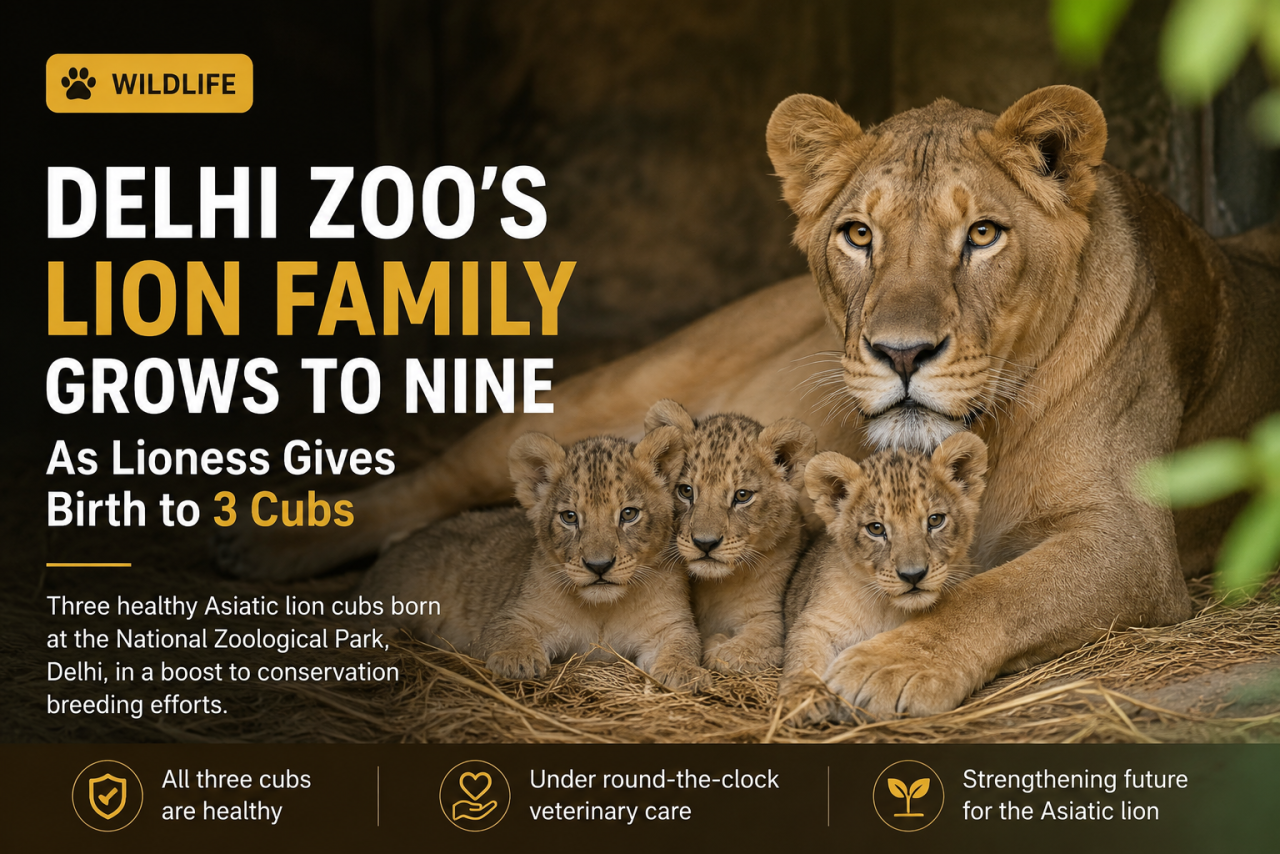
Three healthy Asiatic lion cubs born at Delhi Zoo mark another conservation milestone, raising the zoo's lion population to nine.
The National Zoological Park (NZP) in Delhi has welcomed three new Asiatic lion cubs after lioness Mahagauri gave birth on Monday (July 13, 2026). With the latest addition, the zoo's lion population has increased to nine, marking another milestone in its conservation breeding programme.
Zoo officials said the newborn cubs are healthy and are being regularly nursed by their mother. There are no signs of abandonment or health complications, and the cubs continue to receive close care from both their mother and the zoo's animal care team.
Second Successful Litter for the Breeding Pair
The cubs were born to Mahagauri and Maheshwar, a breeding pair that has now produced healthy offspring for the second consecutive year. In April 2025, the pair welcomed two cubs, a male named Kartik and a female named Karni, both of whom are thriving at the zoo.
Zoo Director Sanjeet Kumar described the latest birth as an encouraging achievement for the park's conservation efforts, highlighting the importance of sustained breeding success for the endangered Asiatic lion.
Mother and Cubs Under Round-the-Clock Care
The lioness and her three cubs have been shifted to a secure maternity enclosure where they can remain undisturbed during the critical early weeks after birth.
According to zoo authorities, veterinary experts and animal caretakers are monitoring the family through 24-hour CCTV surveillance. This allows the team to observe the cubs' development and respond quickly to any health concerns without disturbing the mother or the newborns.
Earlier Litter Faced Survival Challenges
This is not Mahagauri's first litter. In an earlier breeding season, she gave birth to five cubs, but only two survived.
Wildlife experts note that cub mortality during the first few weeks is common among big cats due to factors such as infections, low birth weight and maternal complications. Against this backdrop, the healthy condition of all three newborn cubs is being viewed as a positive sign by the zoo's veterinary team.
Why Asiatic Lion Conservation Matters
The Asiatic lion is among the world's most endangered big cat subspecies. Unlike African lions, Asiatic lions survive in the wild only in and around Gir Forest in Gujarat.
Although decades of conservation have helped increase their numbers, the entire wild population remains concentrated in a single region. This makes the species vulnerable to disease outbreaks, natural disasters and other unforeseen threats that could affect the entire population.
Role of Zoo Breeding Programmes
Conservation breeding programmes at institutions like Delhi's National Zoological Park play an important role in safeguarding the species.
Captive breeding helps maintain a genetically diverse backup population, reducing long-term conservation risks. Every successful birth strengthens future breeding plans and supports broader efforts to preserve the Asiatic lion for generations to come.
A Positive Milestone for Wildlife Conservation
The birth of three healthy cubs represents more than just an increase in the zoo's animal population. It reflects years of dedicated work by veterinarians, wildlife biologists and animal caretakers committed to protecting one of India's most iconic endangered species.
As the cubs grow and are eventually introduced to public enclosures, they will stand as a reminder that wildlife conservation is built through consistent scientific care, responsible breeding and long-term commitment. For visitors and conservationists alike, the arrival of the three cubs is a welcome sign of progress in safeguarding the future of the Asiatic lion.
The National Zoological Park (NZP) in Delhi has welcomed three new Asiatic lion cubs after lioness Mahagauri gave birth on Monday (July 13, 2026). With the latest addition, the zoo's lion population has increased to nine, marking another milestone in its conservation breeding programme.
Zoo officials said the newborn cubs are healthy and are being regularly nursed by their mother. There are no signs of abandonment or health complications, and the cubs continue to receive close care from both their mother and the zoo's animal care team.
Second Successful Litter for the Breeding Pair
The cubs were born to Mahagauri and Maheshwar, a breeding pair that has now produced healthy offspring for the second consecutive year. In April 2025, the pair welcomed two cubs, a male named Kartik and a female named Karni, both of whom are thriving at the zoo.
Zoo Director Sanjeet Kumar described the latest birth as an encouraging achievement for the park's conservation efforts, highlighting the importance of sustained breeding success for the endangered Asiatic lion.
Mother and Cubs Under Round-the-Clock Care
The lioness and her three cubs have been shifted to a secure maternity enclosure where they can remain undisturbed during the critical early weeks after birth.
According to zoo authorities, veterinary experts and animal caretakers are monitoring the family through 24-hour CCTV surveillance. This allows the team to observe the cubs' development and respond quickly to any health concerns without disturbing the mother or the newborns.
Earlier Litter Faced Survival Challenges
This is not Mahagauri's first litter. In an earlier breeding season, she gave birth to five cubs, but only two survived.
Wildlife experts note that cub mortality during the first few weeks is common among big cats due to factors such as infections, low birth weight and maternal complications. Against this backdrop, the healthy condition of all three newborn cubs is being viewed as a positive sign by the zoo's veterinary team.
Why Asiatic Lion Conservation Matters
The Asiatic lion is among the world's most endangered big cat subspecies. Unlike African lions, Asiatic lions survive in the wild only in and around Gir Forest in Gujarat.
Although decades of conservation have helped increase their numbers, the entire wild population remains concentrated in a single region. This makes the species vulnerable to disease outbreaks, natural disasters and other unforeseen threats that could affect the entire population.
Role of Zoo Breeding Programmes
Conservation breeding programmes at institutions like Delhi's National Zoological Park play an important role in safeguarding the species.
Captive breeding helps maintain a genetically diverse backup population, reducing long-term conservation risks. Every successful birth strengthens future breeding plans and supports broader efforts to preserve the Asiatic lion for generations to come.
A Positive Milestone for Wildlife Conservation
The birth of three healthy cubs represents more than just an increase in the zoo's animal population. It reflects years of dedicated work by veterinarians, wildlife biologists and animal caretakers committed to protecting one of India's most iconic endangered species.
As the cubs grow and are eventually introduced to public enclosures, they will stand as a reminder that wildlife conservation is built through consistent scientific care, responsible breeding and long-term commitment. For visitors and conservationists alike, the arrival of the three cubs is a welcome sign of progress in safeguarding the future of the Asiatic lion.

























Leave a Comment