
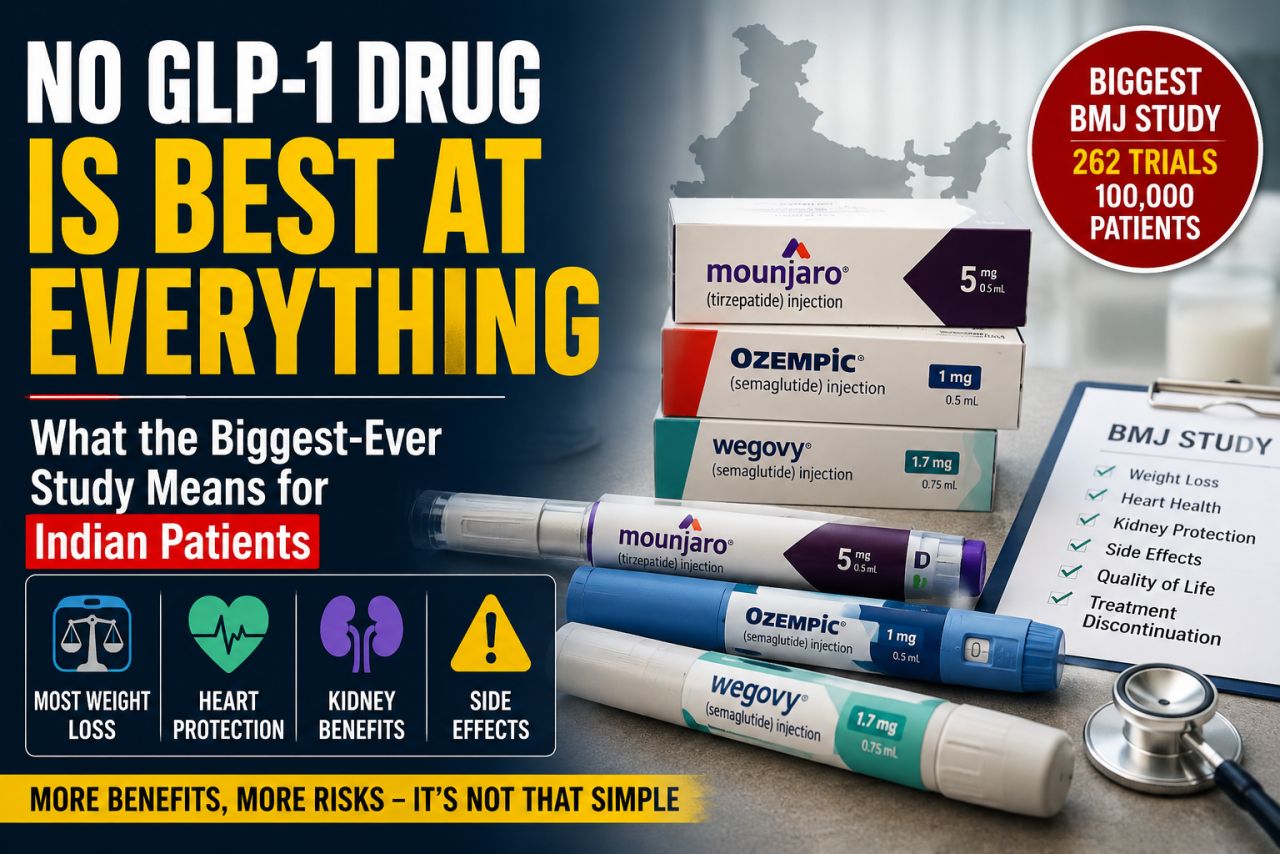
Everyone wants the "best" weight-loss drug. The biggest study ever says there isn't one. Here's what every Indian patient should know before following the latest health trend.
Weight-loss drugs have become one of the biggest medical stories in recent years. Names such as Ozempic, Mounjaro and Wegovy have entered everyday conversations. Social media is full of dramatic "before and after" pictures, celebrities openly discuss these medicines, and many people now see them as a shortcut to losing weight.
But a major new study has delivered a reality check. It says there is no single GLP-1 drug that is the best in every aspect. A medicine that helps people lose the most weight may also cause more side effects. Another drug may better protect the heart or kidneys but may not lead to the highest weight loss.
For patients, doctors and policymakers, the message is simple. Choosing a weight-loss drug is not about finding "the best" medicine. It is about finding the right medicine for the right patient.
The Biggest Comparison So Far
The research, published in the British Medical Journal (BMJ), is the largest comparison of obesity medicines conducted so far.
Researchers analysed data from 262 clinical trials involving nearly 100,000 participants. Instead of comparing only weight loss, they examined several important outcomes, including:
- Weight reduction
- Heart health
- Kidney protection
- Risk of death
- Side effects
- Quality of life
- Chances of stopping treatment
This makes the study far more useful than earlier comparisons, which often focused only on how many kilograms people lost.
Tirzepatide Leads in Weight Loss
Among all medicines studied, tirzepatide produced the greatest reduction in body weight.
Patients lost around 15 percent of their body weight after one year, making it the strongest performer for weight reduction. A closely related combination medicine followed closely behind, while semaglutide delivered lower but still significant weight loss.
For people living with severe obesity, such results can improve mobility, reduce joint pain and lower the risk of developing diabetes and other diseases.
However, the study also found that greater weight loss often came with greater risks.
The Hidden Cost of Rapid Weight Loss
The same medicines that helped people lose the most weight also produced the highest rates of side effects.
Many patients experienced:
- Nausea
- Vomiting
- Diarrhoea
- Digestive discomfort
These problems were serious enough that many people stopped taking the medicines before completing treatment.
Real-world data cited in the study suggest that nearly half of patients discontinue treatment within one year.
This highlights an important issue that receives far less attention than dramatic weight-loss stories on social media. A medicine only works if patients can continue taking it safely and comfortably.
Muscle Loss Is Another Concern
The study also raises concerns about muscle loss.
Tirzepatide, while producing the greatest reduction in body fat, also resulted in the highest loss of lean muscle mass. Researchers estimated that around 8.3 percent of lean body mass was lost after one year.
Doctors have increasingly warned that losing muscle can become a long-term health problem, especially for older adults. Healthy muscles support movement, strength, balance and metabolism. Losing too much muscle may increase weakness and make it harder to maintain weight loss over time.
This is why experts now recommend combining these medicines with adequate protein intake and regular strength training.
Semaglutide Stands Out in Heart and Kidney Protection
Although semaglutide did not produce the greatest weight loss, it performed exceptionally well in other areas.
According to the analysis, it showed strong evidence of reducing:
- Overall mortality
- Heart attacks
- Progression of kidney disease
For patients who already have diabetes or cardiovascular disease, these benefits may be even more important than losing a few extra kilograms.
The study therefore suggests that doctors should not judge obesity medicines only by their effect on body weight.
No Major Improvement in Quality of Life
One surprising finding was that none of the medicines showed a meaningful improvement in quality of life after one year.
At first glance, this may seem disappointing. However, quality of life depends on many factors beyond body weight, including mental health, physical fitness, social relationships, sleep, financial security and long-term disease management.
This reminds us that medicines alone cannot solve every health problem.
What Does This Mean for India?
India faces a unique challenge.
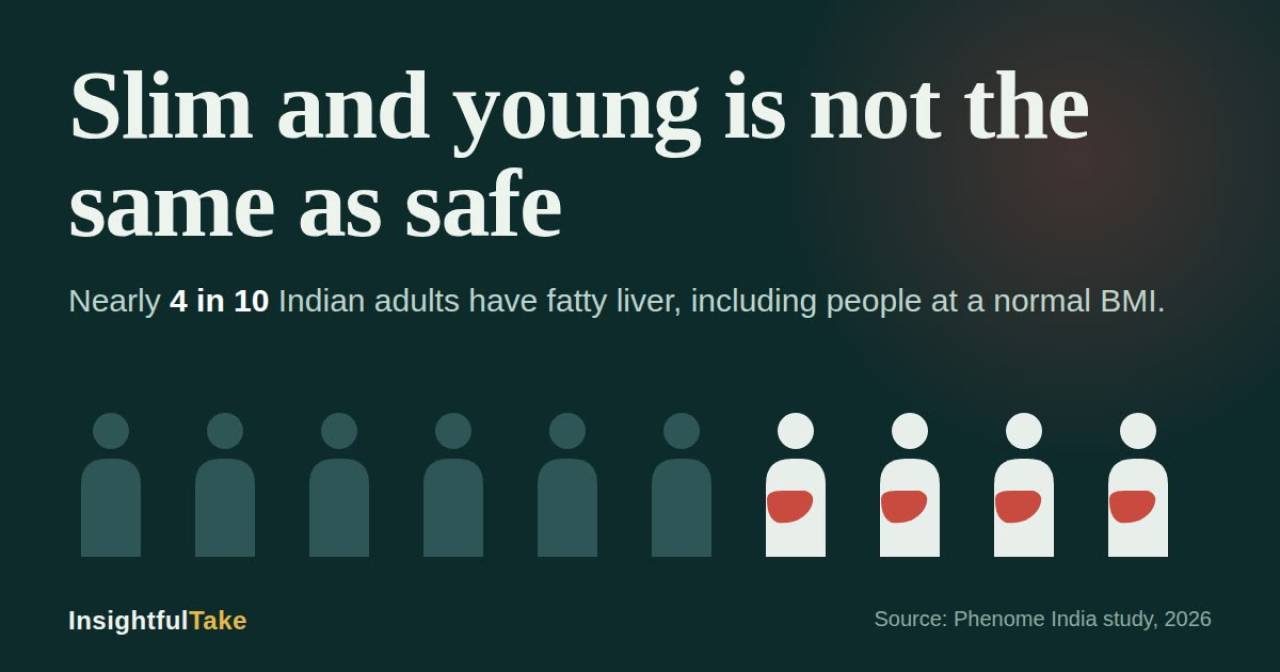
Obesity is rising rapidly in both cities and smaller towns. At the same time, India also has one of the world's largest populations living with diabetes, hypertension and fatty liver disease.
As patents expire, generic versions of medicines like semaglutide are becoming more affordable. This will likely increase their use across the country.
But affordability should not encourage self-medication.
These medicines require careful medical supervision because they affect blood sugar, appetite, digestion and overall metabolism. They may not be suitable for everyone, especially people with certain medical conditions.
Doctors must evaluate a patient's age, existing illnesses, weight, treatment goals and ability to tolerate side effects before prescribing any GLP-1 medicine.
The Bigger Lesson
Perhaps the most valuable message from this study goes beyond obesity drugs.
Healthcare should not be driven by advertisements, celebrity endorsements or viral social media posts. It should be guided by scientific evidence.
Many television channels spend hours discussing political controversies, election strategies and sensational headlines while giving very little attention to research that can directly improve people's health and quality of life.
Yet medical studies like this affect millions of Indians. Understanding the benefits and limitations of modern medicines helps people make informed decisions instead of following trends.
This is where independent knowledge platforms have an important role. By presenting scientific developments in simple language, they bridge the gap between medical journals and ordinary citizens. An informed public is better equipped to ask the right questions, understand treatment options and participate in decisions about their own health.
Final Take
The latest BMJ analysis does not declare a winner among GLP-1 medicines. Instead, it delivers a more important message: every drug involves trade-offs.
Some medicines help patients lose more weight. Others offer stronger protection for the heart or kidneys. Some are easier to tolerate than others. The right choice depends on the individual patient, not on marketing claims or social media popularity.
For India, where obesity and metabolic diseases are becoming major public health challenges, evidence-based reporting is essential. People deserve health journalism that explains scientific findings clearly and objectively. That is how citizens make better decisions, and that is how public health ultimately improves.
Weight-loss drugs have become one of the biggest medical stories in recent years. Names such as Ozempic, Mounjaro and Wegovy have entered everyday conversations. Social media is full of dramatic "before and after" pictures, celebrities openly discuss these medicines, and many people now see them as a shortcut to losing weight.
But a major new study has delivered a reality check. It says there is no single GLP-1 drug that is the best in every aspect. A medicine that helps people lose the most weight may also cause more side effects. Another drug may better protect the heart or kidneys but may not lead to the highest weight loss.
For patients, doctors and policymakers, the message is simple. Choosing a weight-loss drug is not about finding "the best" medicine. It is about finding the right medicine for the right patient.
The Biggest Comparison So Far
The research, published in the British Medical Journal (BMJ), is the largest comparison of obesity medicines conducted so far.
Researchers analysed data from 262 clinical trials involving nearly 100,000 participants. Instead of comparing only weight loss, they examined several important outcomes, including:
- Weight reduction
- Heart health
- Kidney protection
- Risk of death
- Side effects
- Quality of life
- Chances of stopping treatment
This makes the study far more useful than earlier comparisons, which often focused only on how many kilograms people lost.
Tirzepatide Leads in Weight Loss
Among all medicines studied, tirzepatide produced the greatest reduction in body weight.
Patients lost around 15 percent of their body weight after one year, making it the strongest performer for weight reduction. A closely related combination medicine followed closely behind, while semaglutide delivered lower but still significant weight loss.
For people living with severe obesity, such results can improve mobility, reduce joint pain and lower the risk of developing diabetes and other diseases.
However, the study also found that greater weight loss often came with greater risks.
The Hidden Cost of Rapid Weight Loss
The same medicines that helped people lose the most weight also produced the highest rates of side effects.
Many patients experienced:
- Nausea
- Vomiting
- Diarrhoea
- Digestive discomfort
These problems were serious enough that many people stopped taking the medicines before completing treatment.
Real-world data cited in the study suggest that nearly half of patients discontinue treatment within one year.
This highlights an important issue that receives far less attention than dramatic weight-loss stories on social media. A medicine only works if patients can continue taking it safely and comfortably.
Muscle Loss Is Another Concern
The study also raises concerns about muscle loss.
Tirzepatide, while producing the greatest reduction in body fat, also resulted in the highest loss of lean muscle mass. Researchers estimated that around 8.3 percent of lean body mass was lost after one year.
Doctors have increasingly warned that losing muscle can become a long-term health problem, especially for older adults. Healthy muscles support movement, strength, balance and metabolism. Losing too much muscle may increase weakness and make it harder to maintain weight loss over time.
This is why experts now recommend combining these medicines with adequate protein intake and regular strength training.
Semaglutide Stands Out in Heart and Kidney Protection
Although semaglutide did not produce the greatest weight loss, it performed exceptionally well in other areas.
According to the analysis, it showed strong evidence of reducing:
- Overall mortality
- Heart attacks
- Progression of kidney disease
For patients who already have diabetes or cardiovascular disease, these benefits may be even more important than losing a few extra kilograms.
The study therefore suggests that doctors should not judge obesity medicines only by their effect on body weight.
No Major Improvement in Quality of Life
One surprising finding was that none of the medicines showed a meaningful improvement in quality of life after one year.
At first glance, this may seem disappointing. However, quality of life depends on many factors beyond body weight, including mental health, physical fitness, social relationships, sleep, financial security and long-term disease management.
This reminds us that medicines alone cannot solve every health problem.
What Does This Mean for India?
India faces a unique challenge.
Obesity is rising rapidly in both cities and smaller towns. At the same time, India also has one of the world's largest populations living with diabetes, hypertension and fatty liver disease.
As patents expire, generic versions of medicines like semaglutide are becoming more affordable. This will likely increase their use across the country.
But affordability should not encourage self-medication.
These medicines require careful medical supervision because they affect blood sugar, appetite, digestion and overall metabolism. They may not be suitable for everyone, especially people with certain medical conditions.
Doctors must evaluate a patient's age, existing illnesses, weight, treatment goals and ability to tolerate side effects before prescribing any GLP-1 medicine.
The Bigger Lesson
Perhaps the most valuable message from this study goes beyond obesity drugs.
Healthcare should not be driven by advertisements, celebrity endorsements or viral social media posts. It should be guided by scientific evidence.
Many television channels spend hours discussing political controversies, election strategies and sensational headlines while giving very little attention to research that can directly improve people's health and quality of life.
Yet medical studies like this affect millions of Indians. Understanding the benefits and limitations of modern medicines helps people make informed decisions instead of following trends.
This is where independent knowledge platforms have an important role. By presenting scientific developments in simple language, they bridge the gap between medical journals and ordinary citizens. An informed public is better equipped to ask the right questions, understand treatment options and participate in decisions about their own health.
Final Take
The latest BMJ analysis does not declare a winner among GLP-1 medicines. Instead, it delivers a more important message: every drug involves trade-offs.
Some medicines help patients lose more weight. Others offer stronger protection for the heart or kidneys. Some are easier to tolerate than others. The right choice depends on the individual patient, not on marketing claims or social media popularity.
For India, where obesity and metabolic diseases are becoming major public health challenges, evidence-based reporting is essential. People deserve health journalism that explains scientific findings clearly and objectively. That is how citizens make better decisions, and that is how public health ultimately improves.






















Leave a Comment