
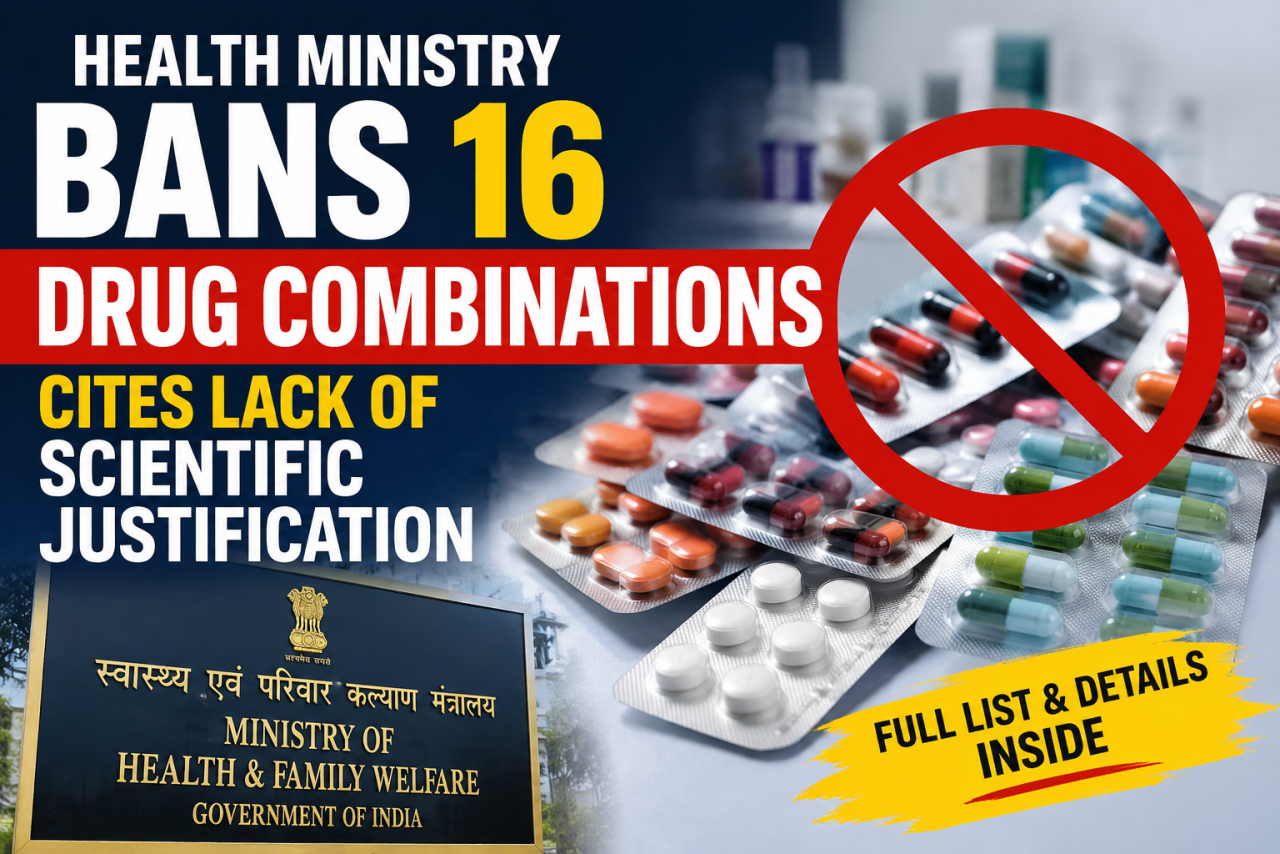
The Health Ministry has banned 16 drug combinations after experts found insufficient scientific evidence supporting their safety and effectiveness.
The Union Ministry of Health and Family Welfare has prohibited 16 more fixed-dose combination (FDC) drugs from being manufactured, sold, or distributed in India. The decision, which came into effect immediately, follows a detailed scientific review that found these combinations lacked adequate therapeutic justification or carried risks that outweighed their benefits.
The ban was notified under Section 26A of the Drugs and Cosmetics Act, 1940, empowering the central government to restrict medicines considered harmful or lacking sufficient evidence of safety and efficacy.
What Are Fixed-Dose Combination (FDC) Drugs?
Fixed-dose combination drugs contain two or more active pharmaceutical ingredients in a single formulation. These medicines are commonly prescribed to improve patient convenience by reducing the number of pills a person needs to take.
Many FDCs are widely accepted and medically useful. However, health experts have repeatedly raised concerns about certain combinations that entered the market without strong clinical evidence proving that the ingredients work better together than separately.
Why Were These Drugs Banned?
The latest action follows a long-running review of combination medicines initiated after directions from the Supreme Court. Acting on those directions, the Drugs Technical Advisory Board (DTAB) constituted expert committees to examine the safety, effectiveness, and therapeutic value of FDCs available in the Indian market.
According to the Health Ministry, the review concluded that the 16 prohibited combinations either lacked scientific justification, duplicated therapeutic effects unnecessarily, or posed potential risks to public health.
The evaluation process began in 2021 and involved multiple levels of expert scrutiny before the final recommendations were approved.
Full List of the 16 Banned Drug Combinations
The prohibited formulations include combinations used in pain management, gastrointestinal disorders, dermatological products, diabetes treatment, and antibiotics.
Among the notable combinations are:
- Dicyclomine + Paracetamol + Clidinium Bromide
- Paracetamol + Lignocaine
- Amoxicillin + Serratiopeptidase
- Cefuroxime + Serratiopeptidase
- Cefadroxil + Probenecid
- Gliclazide + Chromium Picolinate
The ban also covers several dermatological formulations containing combinations of ingredients such as aloe vera, vitamin E, allantoin, D-panthenol, jojoba oil, wheat germ oil, and tea tree oil.
Experts noted that antibiotic combinations involving serratiopeptidase are not supported by standard treatment guidelines or robust clinical evidence. Similarly, chromium picolinate-containing diabetes formulations were found to have limited therapeutic justification under current medical recommendations.
A Continuing Crackdown on Irrational Drug Combinations
The latest prohibition is part of a broader regulatory effort to eliminate irrational drug combinations from the market.
In 2016, the government banned 344 fixed-dose combinations following a major expert review. Regulatory scrutiny has continued in subsequent years, with approximately 205 additional FDCs reportedly prohibited between 2023 and 2025.
The Health Ministry says the objective is to ensure that medicines available to the public are supported by sound scientific evidence and established standards of safety and effectiveness.
What This Means for Patients
Patients may notice that some medicines previously prescribed for pain, muscle spasms, stomach discomfort, or minor skin conditions are no longer available in their existing combined form.
Health experts advise patients not to discontinue any prescribed medication abruptly without consulting a qualified medical professional. Alternative treatments or individual formulations may be available where medically appropriate.
The government has directed state drug regulators to enforce the ban strictly, while manufacturers, distributors, and importers have been instructed to comply with the notification immediately.
Why the Decision Matters
The move reflects India's continuing effort to strengthen pharmaceutical regulation and align medicine approvals with evidence-based medical practice. By removing drug combinations that lack sufficient scientific support, regulators aim to reduce unnecessary exposure to potential side effects and improve overall patient safety.
For consumers, the decision serves as a reminder that convenience alone is not enough to justify a medicine's use. Increasingly, regulators are insisting that every formulation on pharmacy shelves be backed by clear clinical evidence demonstrating both safety and effectiveness.
The Union Ministry of Health and Family Welfare has prohibited 16 more fixed-dose combination (FDC) drugs from being manufactured, sold, or distributed in India. The decision, which came into effect immediately, follows a detailed scientific review that found these combinations lacked adequate therapeutic justification or carried risks that outweighed their benefits.
The ban was notified under Section 26A of the Drugs and Cosmetics Act, 1940, empowering the central government to restrict medicines considered harmful or lacking sufficient evidence of safety and efficacy.
What Are Fixed-Dose Combination (FDC) Drugs?
Fixed-dose combination drugs contain two or more active pharmaceutical ingredients in a single formulation. These medicines are commonly prescribed to improve patient convenience by reducing the number of pills a person needs to take.
Many FDCs are widely accepted and medically useful. However, health experts have repeatedly raised concerns about certain combinations that entered the market without strong clinical evidence proving that the ingredients work better together than separately.
Why Were These Drugs Banned?
The latest action follows a long-running review of combination medicines initiated after directions from the Supreme Court. Acting on those directions, the Drugs Technical Advisory Board (DTAB) constituted expert committees to examine the safety, effectiveness, and therapeutic value of FDCs available in the Indian market.
According to the Health Ministry, the review concluded that the 16 prohibited combinations either lacked scientific justification, duplicated therapeutic effects unnecessarily, or posed potential risks to public health.
The evaluation process began in 2021 and involved multiple levels of expert scrutiny before the final recommendations were approved.
Full List of the 16 Banned Drug Combinations
The prohibited formulations include combinations used in pain management, gastrointestinal disorders, dermatological products, diabetes treatment, and antibiotics.
Among the notable combinations are:
- Dicyclomine + Paracetamol + Clidinium Bromide
- Paracetamol + Lignocaine
- Amoxicillin + Serratiopeptidase
- Cefuroxime + Serratiopeptidase
- Cefadroxil + Probenecid
- Gliclazide + Chromium Picolinate
The ban also covers several dermatological formulations containing combinations of ingredients such as aloe vera, vitamin E, allantoin, D-panthenol, jojoba oil, wheat germ oil, and tea tree oil.
Experts noted that antibiotic combinations involving serratiopeptidase are not supported by standard treatment guidelines or robust clinical evidence. Similarly, chromium picolinate-containing diabetes formulations were found to have limited therapeutic justification under current medical recommendations.
A Continuing Crackdown on Irrational Drug Combinations
The latest prohibition is part of a broader regulatory effort to eliminate irrational drug combinations from the market.
In 2016, the government banned 344 fixed-dose combinations following a major expert review. Regulatory scrutiny has continued in subsequent years, with approximately 205 additional FDCs reportedly prohibited between 2023 and 2025.
The Health Ministry says the objective is to ensure that medicines available to the public are supported by sound scientific evidence and established standards of safety and effectiveness.
What This Means for Patients
Patients may notice that some medicines previously prescribed for pain, muscle spasms, stomach discomfort, or minor skin conditions are no longer available in their existing combined form.
Health experts advise patients not to discontinue any prescribed medication abruptly without consulting a qualified medical professional. Alternative treatments or individual formulations may be available where medically appropriate.
The government has directed state drug regulators to enforce the ban strictly, while manufacturers, distributors, and importers have been instructed to comply with the notification immediately.
Why the Decision Matters
The move reflects India's continuing effort to strengthen pharmaceutical regulation and align medicine approvals with evidence-based medical practice. By removing drug combinations that lack sufficient scientific support, regulators aim to reduce unnecessary exposure to potential side effects and improve overall patient safety.
For consumers, the decision serves as a reminder that convenience alone is not enough to justify a medicine's use. Increasingly, regulators are insisting that every formulation on pharmacy shelves be backed by clear clinical evidence demonstrating both safety and effectiveness.

























Leave a Comment