
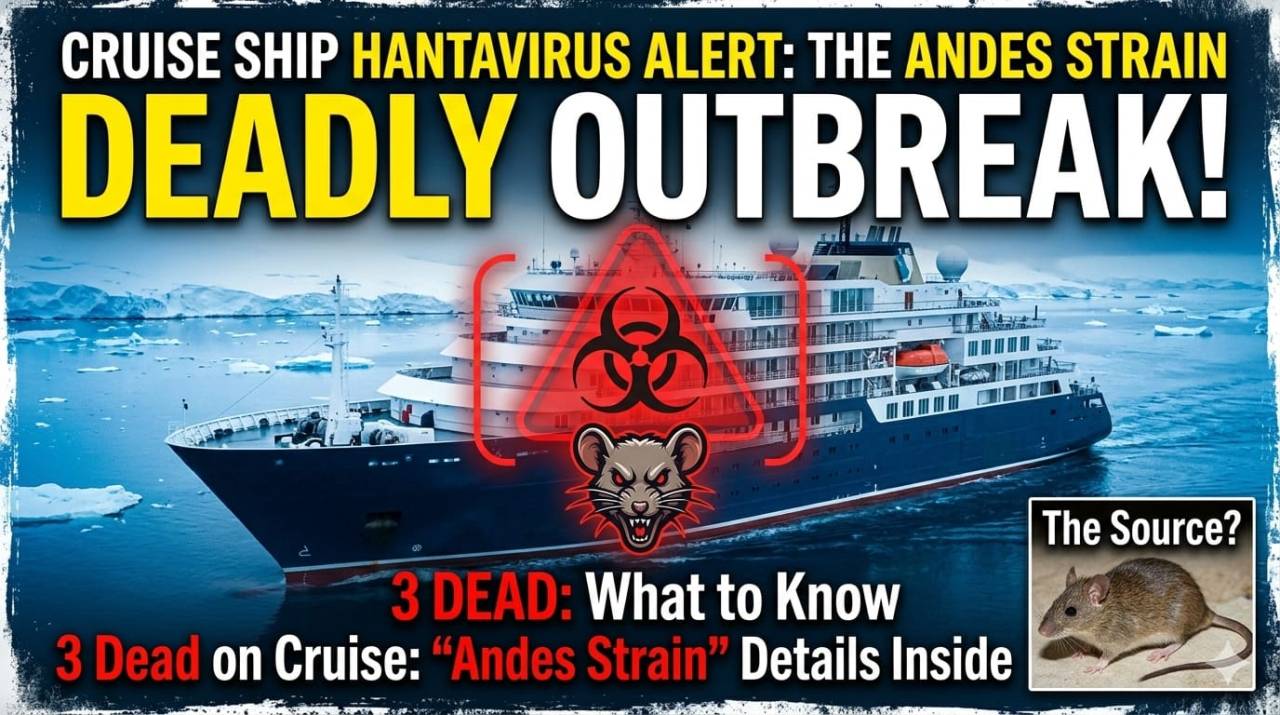
A deadly outbreak of the rare Andes hantavirus aboard a cruise ship has triggered a global health alert, raising fears over one of the world’s most dangerous rodent-borne diseases — but experts say this is not another COVID-style pandemic.
The World Health Organization (WHO) has issued an urgent alert following a deadly outbreak of hantavirus aboard a cruise ship, sparking international concern. While the virus has already claimed three lives and infected several others, health officials are moving quickly to contain the situation, emphasizing that this is not a “new COVID-19” but a serious localized health threat requiring immediate attention.
The outbreak unfolded on the MV Hondius, a Dutch-flagged expedition vessel that departed from Ushuaia, Argentina, on April 1, 2026. What began as a scenic voyage across the South Atlantic quickly turned into a medical emergency after passengers developed severe respiratory symptoms during the journey.
How the Outbreak Unfolded
The first alarm was raised when a 70-year-old Dutch passenger became critically ill and died on April 11 shortly after the ship departed southern Argentina. His 69-year-old wife later died after being evacuated to a hospital in South Africa. A third victim, a German woman, has also succumbed to the infection.
So far, at least eight cases — five confirmed and three suspected — have been identified. Health experts warn that more infections could surface because hantavirus can remain dormant for up to eight weeks before symptoms appear.
Passengers aboard the ship have since returned or are returning to countries including the UK, Germany, the Netherlands, and Switzerland, prompting authorities to intensify international contact tracing efforts.
What Is Hantavirus?
Hantaviruses are a group of viruses primarily carried by rodents such as rats and mice. Humans usually become infected by inhaling airborne particles contaminated with infected rodent saliva, urine, or droppings.
Most hantavirus strains do not spread between humans. However, the outbreak aboard the cruise ship involves the Andes strain, a rare and particularly dangerous version of the virus found mainly in South America.
Why the Andes Strain Is Especially Concerning
The Andes strain stands out for two major reasons:
- Human-to-Human Transmission: Unlike most hantaviruses, the Andes strain can spread directly between people through prolonged close contact.
- High Fatality Rate: Medical experts estimate the death rate for this strain ranges between 35% and 50%, making it one of the deadliest known hantavirus variants.
Health officials believe the initial infections may have occurred during outdoor excursions in rodent-populated areas of southern Argentina, including hiking and bird-watching activities.
Symptoms to Watch For
Doctors are urging travelers and recent contacts of passengers to monitor themselves carefully for symptoms, which often appear in two stages.
Early Symptoms
- Fever and chills
- Severe muscle pain, especially in the thighs, hips, and back
- Headaches and fatigue
Advanced Symptoms
Within four to ten days, the illness can rapidly worsen:
- Shortness of breath
- Persistent coughing
- Chest tightness
- Fluid buildup in the lungs
Some hantavirus strains can also trigger Hemorrhagic Fever with Renal Syndrome (HFRS), a severe condition involving internal bleeding and kidney failure.
No Vaccine, No Specific Cure
There is currently no approved vaccine or antiviral treatment for hantavirus infections. Doctors rely on early diagnosis and supportive intensive care, including oxygen therapy and ventilators, to improve survival chances.
Medical experts stress that seeking treatment early can significantly increase the likelihood of recovery.
Is This the Next Pandemic?
WHO officials have strongly pushed back against comparisons with COVID-19.
According to health authorities, hantavirus does not spread easily through casual contact or airborne exposure in public places. Transmission usually requires close and prolonged exposure to infected individuals or contaminated environments.
For now, WHO maintains that the risk to the wider public remains low, provided health agencies continue aggressive contact tracing and isolation measures.
What Happens Next
The MV Hondius is currently under monitoring near the Canary Islands as international authorities coordinate the safe return of the remaining passengers and crew.
Meanwhile, Argentina is investigating where the initial infections may have originated and whether exposure occurred during land excursions in rodent-heavy regions.
What Travelers Should Keep in Mind
Health officials advise travelers in rural South American regions to:
- Avoid contact with rodents and rodent droppings
- Keep accommodations clean and sealed
- Wear masks when entering dusty or poorly ventilated areas
- Seek immediate medical attention if flu-like symptoms appear after travel
The outbreak serves as a reminder that while rare diseases may not become global pandemics, they can still pose serious risks when early warning signs are missed.
The World Health Organization (WHO) has issued an urgent alert following a deadly outbreak of hantavirus aboard a cruise ship, sparking international concern. While the virus has already claimed three lives and infected several others, health officials are moving quickly to contain the situation, emphasizing that this is not a “new COVID-19” but a serious localized health threat requiring immediate attention.
The outbreak unfolded on the MV Hondius, a Dutch-flagged expedition vessel that departed from Ushuaia, Argentina, on April 1, 2026. What began as a scenic voyage across the South Atlantic quickly turned into a medical emergency after passengers developed severe respiratory symptoms during the journey.
How the Outbreak Unfolded
The first alarm was raised when a 70-year-old Dutch passenger became critically ill and died on April 11 shortly after the ship departed southern Argentina. His 69-year-old wife later died after being evacuated to a hospital in South Africa. A third victim, a German woman, has also succumbed to the infection.
So far, at least eight cases — five confirmed and three suspected — have been identified. Health experts warn that more infections could surface because hantavirus can remain dormant for up to eight weeks before symptoms appear.
Passengers aboard the ship have since returned or are returning to countries including the UK, Germany, the Netherlands, and Switzerland, prompting authorities to intensify international contact tracing efforts.
What Is Hantavirus?
Hantaviruses are a group of viruses primarily carried by rodents such as rats and mice. Humans usually become infected by inhaling airborne particles contaminated with infected rodent saliva, urine, or droppings.
Most hantavirus strains do not spread between humans. However, the outbreak aboard the cruise ship involves the Andes strain, a rare and particularly dangerous version of the virus found mainly in South America.
Why the Andes Strain Is Especially Concerning
The Andes strain stands out for two major reasons:
- Human-to-Human Transmission: Unlike most hantaviruses, the Andes strain can spread directly between people through prolonged close contact.
- High Fatality Rate: Medical experts estimate the death rate for this strain ranges between 35% and 50%, making it one of the deadliest known hantavirus variants.
Health officials believe the initial infections may have occurred during outdoor excursions in rodent-populated areas of southern Argentina, including hiking and bird-watching activities.
Symptoms to Watch For
Doctors are urging travelers and recent contacts of passengers to monitor themselves carefully for symptoms, which often appear in two stages.
Early Symptoms
- Fever and chills
- Severe muscle pain, especially in the thighs, hips, and back
- Headaches and fatigue
Advanced Symptoms
Within four to ten days, the illness can rapidly worsen:
- Shortness of breath
- Persistent coughing
- Chest tightness
- Fluid buildup in the lungs
Some hantavirus strains can also trigger Hemorrhagic Fever with Renal Syndrome (HFRS), a severe condition involving internal bleeding and kidney failure.
No Vaccine, No Specific Cure
There is currently no approved vaccine or antiviral treatment for hantavirus infections. Doctors rely on early diagnosis and supportive intensive care, including oxygen therapy and ventilators, to improve survival chances.
Medical experts stress that seeking treatment early can significantly increase the likelihood of recovery.
Is This the Next Pandemic?
WHO officials have strongly pushed back against comparisons with COVID-19.
According to health authorities, hantavirus does not spread easily through casual contact or airborne exposure in public places. Transmission usually requires close and prolonged exposure to infected individuals or contaminated environments.
For now, WHO maintains that the risk to the wider public remains low, provided health agencies continue aggressive contact tracing and isolation measures.
What Happens Next
The MV Hondius is currently under monitoring near the Canary Islands as international authorities coordinate the safe return of the remaining passengers and crew.
Meanwhile, Argentina is investigating where the initial infections may have originated and whether exposure occurred during land excursions in rodent-heavy regions.
What Travelers Should Keep in Mind
Health officials advise travelers in rural South American regions to:
- Avoid contact with rodents and rodent droppings
- Keep accommodations clean and sealed
- Wear masks when entering dusty or poorly ventilated areas
- Seek immediate medical attention if flu-like symptoms appear after travel
The outbreak serves as a reminder that while rare diseases may not become global pandemics, they can still pose serious risks when early warning signs are missed.



























Leave a Comment