
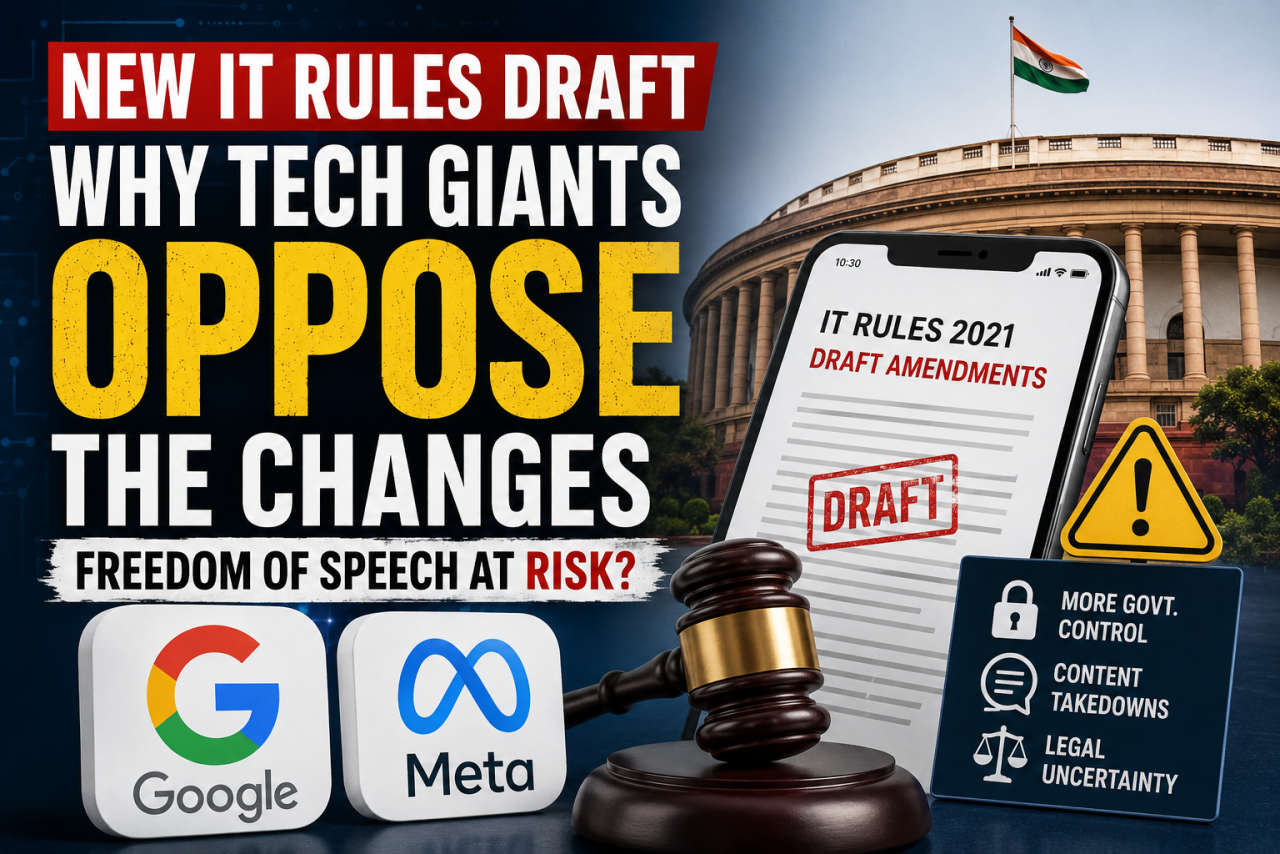
India’s latest IT Rules draft has opened a fierce debate: should governments have greater control over online platforms, or could stricter regulations threaten digital freedom and free speech?
India’s digital space is growing rapidly. Millions of people now use social media, online shopping platforms, AI tools, video apps, and messaging services every day. Because of this growing influence of technology, the government wants stronger rules to regulate online platforms. However, many global tech companies and industry groups are strongly opposing some of the proposed changes to India’s IT Rules.
The debate has now become an important issue about the balance between government control, user safety, free speech, and business freedom.
What Are the Proposed IT Rule Changes?
The government has proposed amendments to the Information Technology (IT) Rules, 2021. According to the draft, online platforms may have to follow government advisories, stricter compliance instructions, and content-related directions more seriously.
Industry bodies representing companies like Google and Meta argue that these changes could increase government control over digital platforms and create uncertainty for businesses operating in India.
Groups such as the Internet and Mobile Association of India (IAMAI) and the Broadband India Forum (BIF) have officially objected to several provisions in the draft.
Why Are Tech Companies Worried?
One of the biggest concerns is related to Rule 3(4) of the draft amendments.
This rule may require online platforms to follow government-issued advisories and directions in a much stricter way. Tech companies fear that such advisories could become indirectly binding even without proper legal backing.
In simple terms, companies worry that if the government issues frequent instructions about content moderation or takedown requests, platforms may be forced to comply quickly to avoid penalties.
According to industry groups, this could create confusion because advisories are generally meant as guidance, not strict law.
The “Safe Harbour” Concern
Another major issue is something called “safe harbour protection.”
Under Section 79 of the IT Act, social media companies and digital platforms are generally protected from being directly blamed for user-generated content posted by people online.
For example, if a user uploads illegal or harmful content, the platform itself is usually not treated as the original creator of that content.
Tech groups argue that the new draft may weaken this protection. They fear companies could become legally vulnerable if they fail to follow every advisory or instruction issued by authorities.
This creates anxiety among digital businesses because platforms host billions of posts, videos, and comments every day. Monitoring everything perfectly is almost impossible.
Concerns About Free Speech
Another sensitive issue is freedom of expression.
Critics say that stronger government powers over online content could lead to excessive censorship or pressure on platforms to remove content quickly, even before courts examine whether the content is actually illegal.
Industry bodies have referred to past Supreme Court observations which emphasized that content takedowns should ideally happen through proper legal or judicial processes.
Supporters of free speech worry that vague or broad rules may encourage “over-removal” of content, where platforms delete posts simply to stay safe from penalties.
Why the Government Wants Stricter Rules
The government, on the other hand, believes stronger regulation is necessary.
Authorities argue that misinformation, fake news, harmful AI-generated content, online scams, and digital abuse are increasing rapidly. The government says online platforms must become more accountable because digital companies now have enormous influence over society.
Officials also believe advisories help maintain public order and ensure quicker action during emergencies or harmful online campaigns.
The Larger Debate
This issue is not only about technology companies versus the government. It is really about finding balance.
People want safer internet spaces, protection from harmful content, and accountability from powerful tech firms. At the same time, citizens also want freedom of speech, transparency, and protection from excessive control.
The challenge is creating rules that protect users without discouraging innovation or creating fear among digital platforms.
India is one of the world’s largest internet markets. Whatever rules are finally implemented could shape the future of online freedom, digital business, and internet governance for years to come.
The ongoing debate shows that regulating the digital world is no longer just a technical matter — it has become a major democratic and social question affecting millions of ordinary users every day.
India’s digital space is growing rapidly. Millions of people now use social media, online shopping platforms, AI tools, video apps, and messaging services every day. Because of this growing influence of technology, the government wants stronger rules to regulate online platforms. However, many global tech companies and industry groups are strongly opposing some of the proposed changes to India’s IT Rules.
The debate has now become an important issue about the balance between government control, user safety, free speech, and business freedom.
What Are the Proposed IT Rule Changes?
The government has proposed amendments to the Information Technology (IT) Rules, 2021. According to the draft, online platforms may have to follow government advisories, stricter compliance instructions, and content-related directions more seriously.
Industry bodies representing companies like Google and Meta argue that these changes could increase government control over digital platforms and create uncertainty for businesses operating in India.
Groups such as the Internet and Mobile Association of India (IAMAI) and the Broadband India Forum (BIF) have officially objected to several provisions in the draft.
Why Are Tech Companies Worried?
One of the biggest concerns is related to Rule 3(4) of the draft amendments.
This rule may require online platforms to follow government-issued advisories and directions in a much stricter way. Tech companies fear that such advisories could become indirectly binding even without proper legal backing.
In simple terms, companies worry that if the government issues frequent instructions about content moderation or takedown requests, platforms may be forced to comply quickly to avoid penalties.
According to industry groups, this could create confusion because advisories are generally meant as guidance, not strict law.
The “Safe Harbour” Concern
Another major issue is something called “safe harbour protection.”
Under Section 79 of the IT Act, social media companies and digital platforms are generally protected from being directly blamed for user-generated content posted by people online.
For example, if a user uploads illegal or harmful content, the platform itself is usually not treated as the original creator of that content.
Tech groups argue that the new draft may weaken this protection. They fear companies could become legally vulnerable if they fail to follow every advisory or instruction issued by authorities.
This creates anxiety among digital businesses because platforms host billions of posts, videos, and comments every day. Monitoring everything perfectly is almost impossible.
Concerns About Free Speech
Another sensitive issue is freedom of expression.
Critics say that stronger government powers over online content could lead to excessive censorship or pressure on platforms to remove content quickly, even before courts examine whether the content is actually illegal.
Industry bodies have referred to past Supreme Court observations which emphasized that content takedowns should ideally happen through proper legal or judicial processes.
Supporters of free speech worry that vague or broad rules may encourage “over-removal” of content, where platforms delete posts simply to stay safe from penalties.
Why the Government Wants Stricter Rules
The government, on the other hand, believes stronger regulation is necessary.
Authorities argue that misinformation, fake news, harmful AI-generated content, online scams, and digital abuse are increasing rapidly. The government says online platforms must become more accountable because digital companies now have enormous influence over society.
Officials also believe advisories help maintain public order and ensure quicker action during emergencies or harmful online campaigns.
The Larger Debate
This issue is not only about technology companies versus the government. It is really about finding balance.
People want safer internet spaces, protection from harmful content, and accountability from powerful tech firms. At the same time, citizens also want freedom of speech, transparency, and protection from excessive control.
The challenge is creating rules that protect users without discouraging innovation or creating fear among digital platforms.
India is one of the world’s largest internet markets. Whatever rules are finally implemented could shape the future of online freedom, digital business, and internet governance for years to come.
The ongoing debate shows that regulating the digital world is no longer just a technical matter — it has become a major democratic and social question affecting millions of ordinary users every day.



















Leave a Comment