
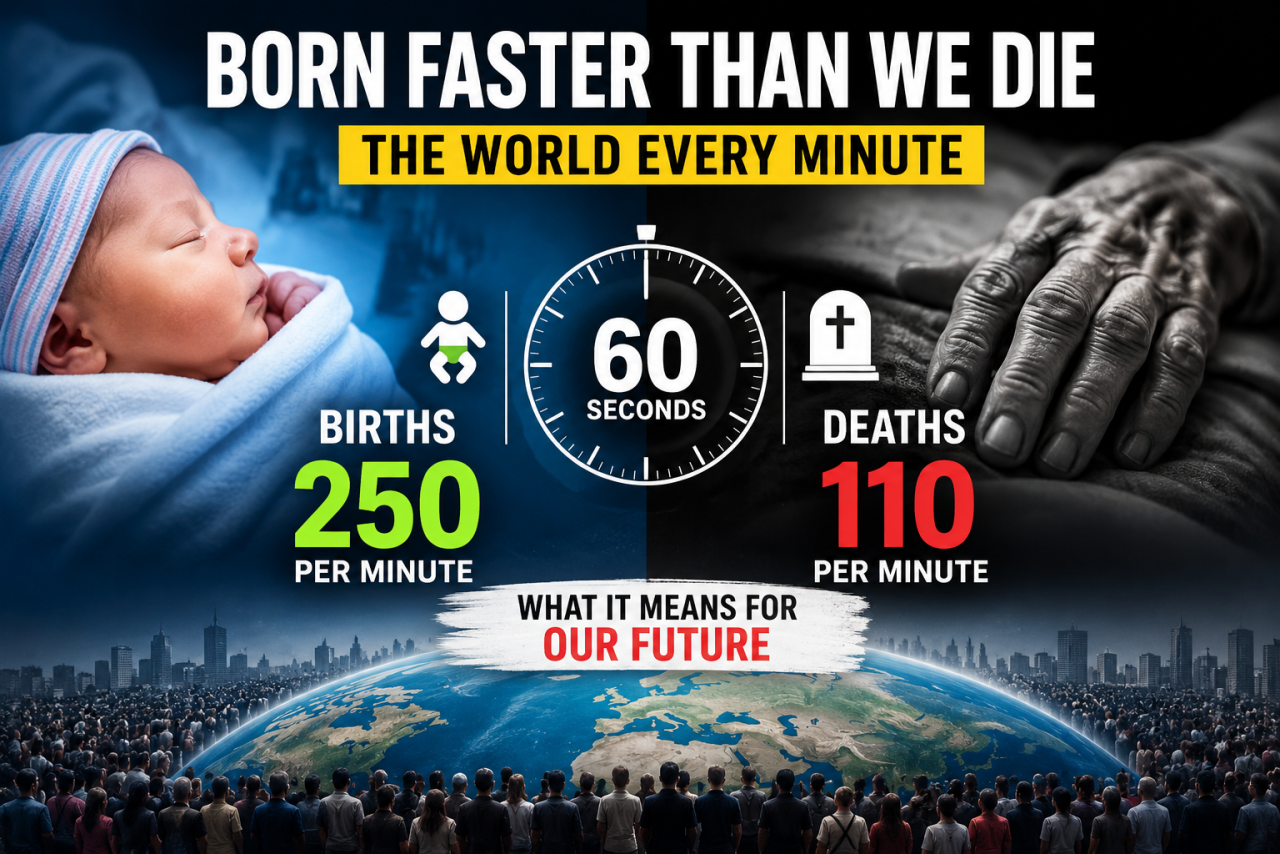
Every minute, nearly 250 babies are born while around 110 people die across the globe. These silent statistics are reshaping economies, cities, healthcare systems, and the future of humanity in ways most people never realize.
Every minute, the world changes in ways most people never notice. Roughly 250 babies are born across the planet during those 60 seconds. In the same span, around 110 people die. By the time another minute passes, humanity has grown by nearly 140 people.
The numbers may sound abstract, but together they reveal one of the defining stories of the modern age: the world is still growing rapidly, even as many countries fear demographic decline.
According to global population estimates, humanity is adding nearly 200,000 people every day. Over a year, that translates to roughly 70 to 80 million additional people — almost the population of a large nation added annually.
Yet behind these statistics lies a far more complex reality. Some nations are struggling to manage exploding young populations, while others are desperately trying to convince citizens to have children at all.
The world, it seems, is experiencing two demographic futures at the same time.
The Great Population Divide
In parts of Africa and South Asia, maternity wards remain crowded and school systems continue expanding to accommodate millions of new children. Countries such as India and Nigeria are expected to contribute heavily to future global population growth.
India, now the world’s most populous country, continues to witness large numbers of births every year despite a gradual fall in fertility rates. A younger population has helped fuel economic growth, labor supply, and consumer demand.
But that demographic advantage also creates pressure.
Governments must build more schools, hospitals, homes, roads, and jobs simply to keep pace with population growth. In cities already struggling with congestion, pollution, and housing shortages, rapid expansion often stretches public infrastructure to its limits.
Meanwhile, many wealthy nations face the opposite problem.
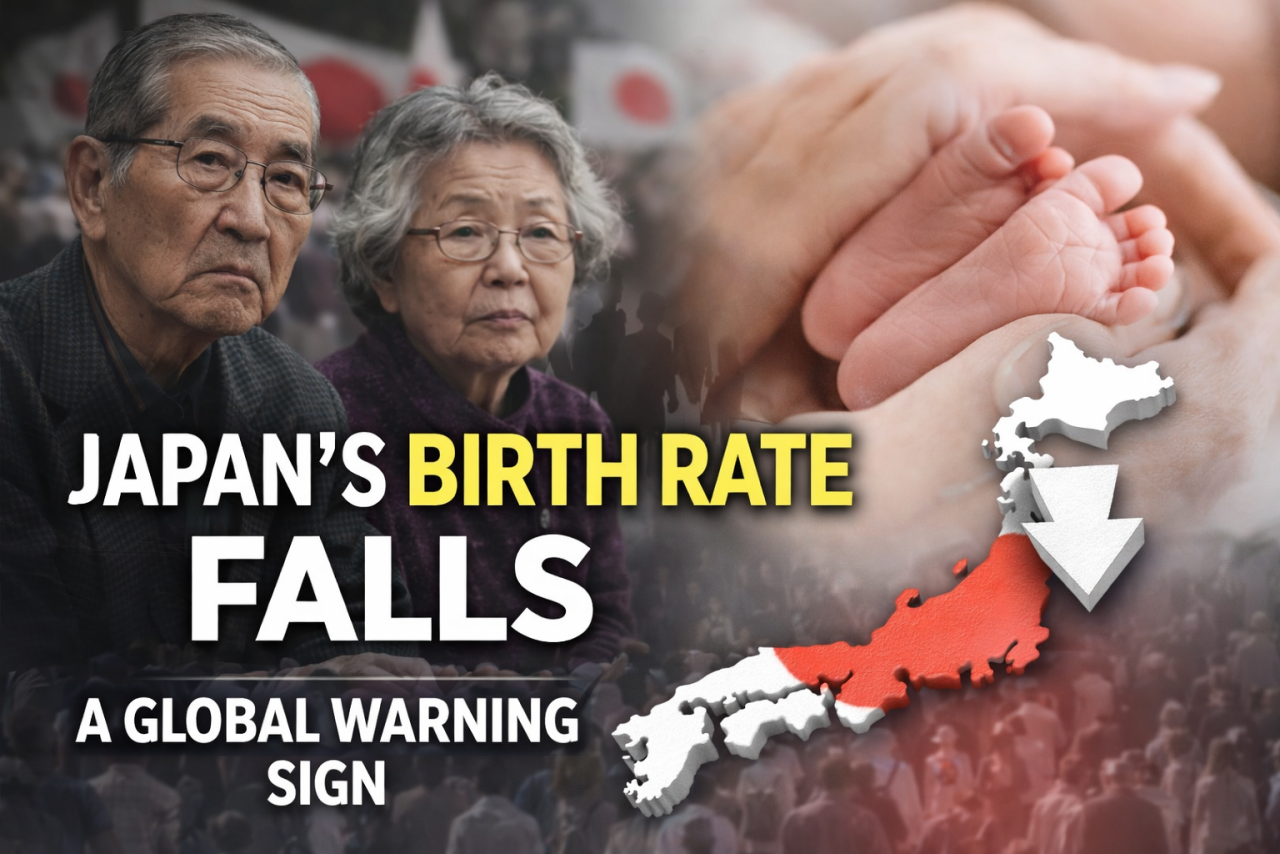
Japan’s population has been shrinking for years. South Korea’s birth rate is among the lowest ever recorded globally. Several European countries are also aging rapidly as births fall below replacement levels.
In these societies, fewer young workers are available to support growing elderly populations. Pension systems are under stress, healthcare costs are rising, and governments are increasingly worried about long-term economic stagnation.
Some countries have responded with cash incentives, tax breaks, subsidized childcare, and even dating programs aimed at encouraging marriage and parenthood. So far, results have remained limited.
Living Longer Than Ever Before
The imbalance between births and deaths is not only about fertility. It is also a consequence of one of humanity’s greatest achievements: people are surviving longer.
A century ago, infectious diseases, poor sanitation, and limited medical care kept life expectancy painfully low in many regions. Infant mortality was common, and epidemics frequently devastated populations.
Today, vaccines, antibiotics, cleaner water, improved nutrition, and modern healthcare have dramatically reduced death rates worldwide.
As a result, humans are living longer than any previous generation in history.
The average global life expectancy has risen sharply over recent decades, though progress remains uneven between rich and poor countries.
This success story, however, carries its own complications.
Aging societies are now grappling with chronic illnesses such as heart disease, diabetes, dementia, and cancer. Healthcare systems designed decades ago are struggling to adapt to populations living well into their seventies and eighties.
For policymakers, the challenge is no longer simply preventing death. It is managing longevity.
The Population Explosion Is Slowing
Despite the steady rise in global population, experts say the pace of growth is slowing significantly compared to the last century.
During the 1960s, fears of uncontrolled population growth dominated international debates. Economists and environmentalists warned that Earth’s resources might not sustain humanity’s expansion.
But fertility rates have steadily declined across much of the world.
Urbanization, higher education levels, rising living costs, and greater participation of women in the workforce have all contributed to smaller family sizes. Access to healthcare and contraception has further accelerated the trend.
Even countries once associated with high birth rates are witnessing major demographic transitions.
The United Nations expects the world population to continue growing for several decades before eventually stabilizing later this century. Some projections even suggest that population decline could become a major concern in the future.
Climate Pressure and Resource Anxiety
The global population debate is increasingly tied to climate change and resource management.
Every additional million people require food, water, electricity, transportation, and housing. Expanding populations place growing pressure on forests, rivers, agricultural land, and energy systems.
Cities are expanding at unprecedented speed. Megacities across Asia and Africa are absorbing millions of migrants seeking jobs and better opportunities. Yet many urban centers are already struggling to provide clean air, affordable housing, and reliable public services.
At the same time, declining populations in some countries raise fears of shrinking economies and labor shortages.
The challenge for governments is finding balance: sustaining economic growth without exhausting natural resources or overwhelming public infrastructure.
More Than a Statistical Story
Ultimately, birth and death figures are more than demographic calculations. They represent the rhythm of human civilization itself.
Every minute, new lives begin in hospitals, villages, apartments, and refugee camps around the world. In that same minute, families somewhere else lose parents, grandparents, children, or friends.
Together, these moments form an ongoing cycle that quietly shapes economies, politics, healthcare systems, and the future of nations.
The world’s population story is no longer simply about growth or decline. It is about how societies adapt to dramatic demographic change — a challenge that may define the 21st century as profoundly as technology, climate change, or geopolitics itself.
Every minute, the world changes in ways most people never notice. Roughly 250 babies are born across the planet during those 60 seconds. In the same span, around 110 people die. By the time another minute passes, humanity has grown by nearly 140 people.
The numbers may sound abstract, but together they reveal one of the defining stories of the modern age: the world is still growing rapidly, even as many countries fear demographic decline.
According to global population estimates, humanity is adding nearly 200,000 people every day. Over a year, that translates to roughly 70 to 80 million additional people — almost the population of a large nation added annually.
Yet behind these statistics lies a far more complex reality. Some nations are struggling to manage exploding young populations, while others are desperately trying to convince citizens to have children at all.
The world, it seems, is experiencing two demographic futures at the same time.
The Great Population Divide
In parts of Africa and South Asia, maternity wards remain crowded and school systems continue expanding to accommodate millions of new children. Countries such as India and Nigeria are expected to contribute heavily to future global population growth.
India, now the world’s most populous country, continues to witness large numbers of births every year despite a gradual fall in fertility rates. A younger population has helped fuel economic growth, labor supply, and consumer demand.
But that demographic advantage also creates pressure.
Governments must build more schools, hospitals, homes, roads, and jobs simply to keep pace with population growth. In cities already struggling with congestion, pollution, and housing shortages, rapid expansion often stretches public infrastructure to its limits.
Meanwhile, many wealthy nations face the opposite problem.
Japan’s population has been shrinking for years. South Korea’s birth rate is among the lowest ever recorded globally. Several European countries are also aging rapidly as births fall below replacement levels.
In these societies, fewer young workers are available to support growing elderly populations. Pension systems are under stress, healthcare costs are rising, and governments are increasingly worried about long-term economic stagnation.
Some countries have responded with cash incentives, tax breaks, subsidized childcare, and even dating programs aimed at encouraging marriage and parenthood. So far, results have remained limited.
Living Longer Than Ever Before
The imbalance between births and deaths is not only about fertility. It is also a consequence of one of humanity’s greatest achievements: people are surviving longer.
A century ago, infectious diseases, poor sanitation, and limited medical care kept life expectancy painfully low in many regions. Infant mortality was common, and epidemics frequently devastated populations.
Today, vaccines, antibiotics, cleaner water, improved nutrition, and modern healthcare have dramatically reduced death rates worldwide.
As a result, humans are living longer than any previous generation in history.
The average global life expectancy has risen sharply over recent decades, though progress remains uneven between rich and poor countries.
This success story, however, carries its own complications.
Aging societies are now grappling with chronic illnesses such as heart disease, diabetes, dementia, and cancer. Healthcare systems designed decades ago are struggling to adapt to populations living well into their seventies and eighties.
For policymakers, the challenge is no longer simply preventing death. It is managing longevity.
The Population Explosion Is Slowing
Despite the steady rise in global population, experts say the pace of growth is slowing significantly compared to the last century.
During the 1960s, fears of uncontrolled population growth dominated international debates. Economists and environmentalists warned that Earth’s resources might not sustain humanity’s expansion.
But fertility rates have steadily declined across much of the world.
Urbanization, higher education levels, rising living costs, and greater participation of women in the workforce have all contributed to smaller family sizes. Access to healthcare and contraception has further accelerated the trend.
Even countries once associated with high birth rates are witnessing major demographic transitions.
The United Nations expects the world population to continue growing for several decades before eventually stabilizing later this century. Some projections even suggest that population decline could become a major concern in the future.
Climate Pressure and Resource Anxiety
The global population debate is increasingly tied to climate change and resource management.
Every additional million people require food, water, electricity, transportation, and housing. Expanding populations place growing pressure on forests, rivers, agricultural land, and energy systems.
Cities are expanding at unprecedented speed. Megacities across Asia and Africa are absorbing millions of migrants seeking jobs and better opportunities. Yet many urban centers are already struggling to provide clean air, affordable housing, and reliable public services.
At the same time, declining populations in some countries raise fears of shrinking economies and labor shortages.
The challenge for governments is finding balance: sustaining economic growth without exhausting natural resources or overwhelming public infrastructure.
More Than a Statistical Story
Ultimately, birth and death figures are more than demographic calculations. They represent the rhythm of human civilization itself.
Every minute, new lives begin in hospitals, villages, apartments, and refugee camps around the world. In that same minute, families somewhere else lose parents, grandparents, children, or friends.
Together, these moments form an ongoing cycle that quietly shapes economies, politics, healthcare systems, and the future of nations.
The world’s population story is no longer simply about growth or decline. It is about how societies adapt to dramatic demographic change — a challenge that may define the 21st century as profoundly as technology, climate change, or geopolitics itself.






















Leave a Comment