
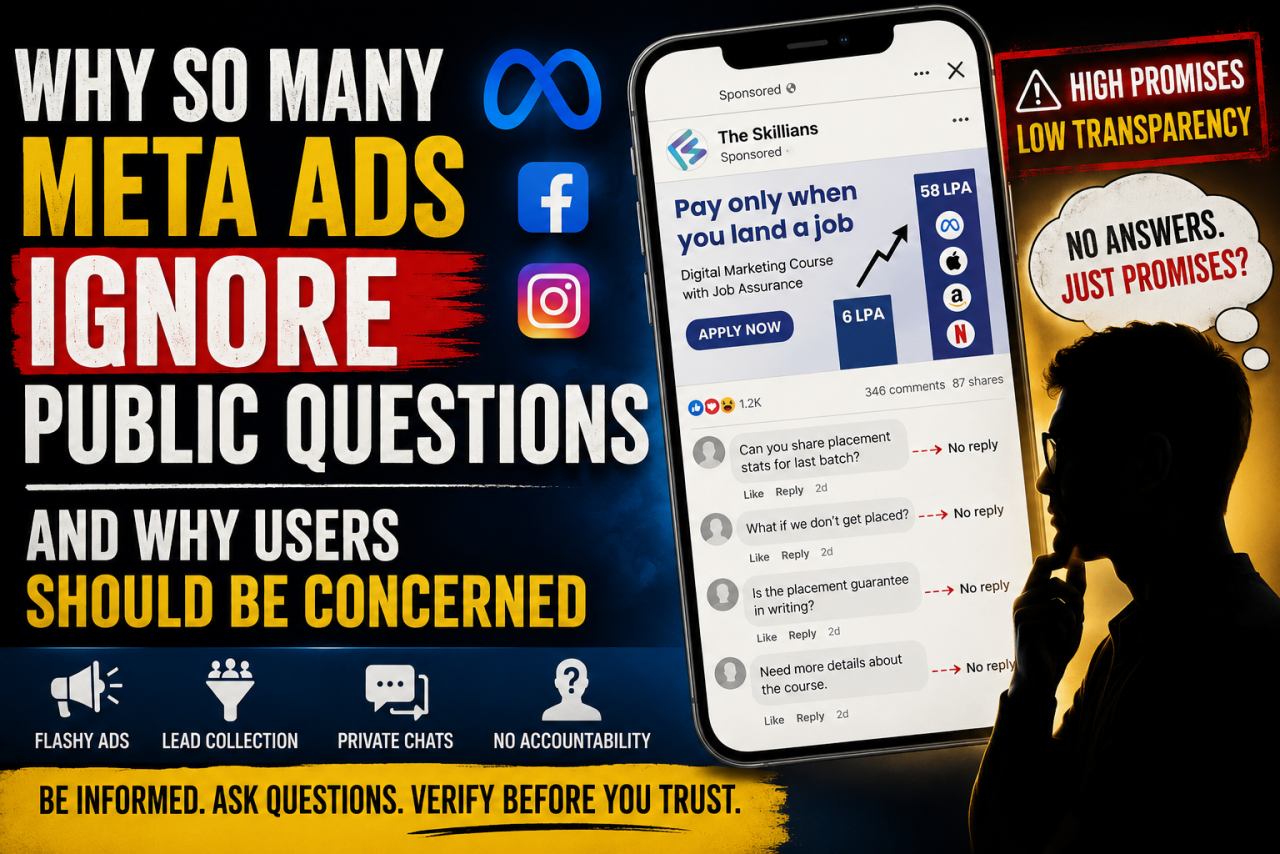
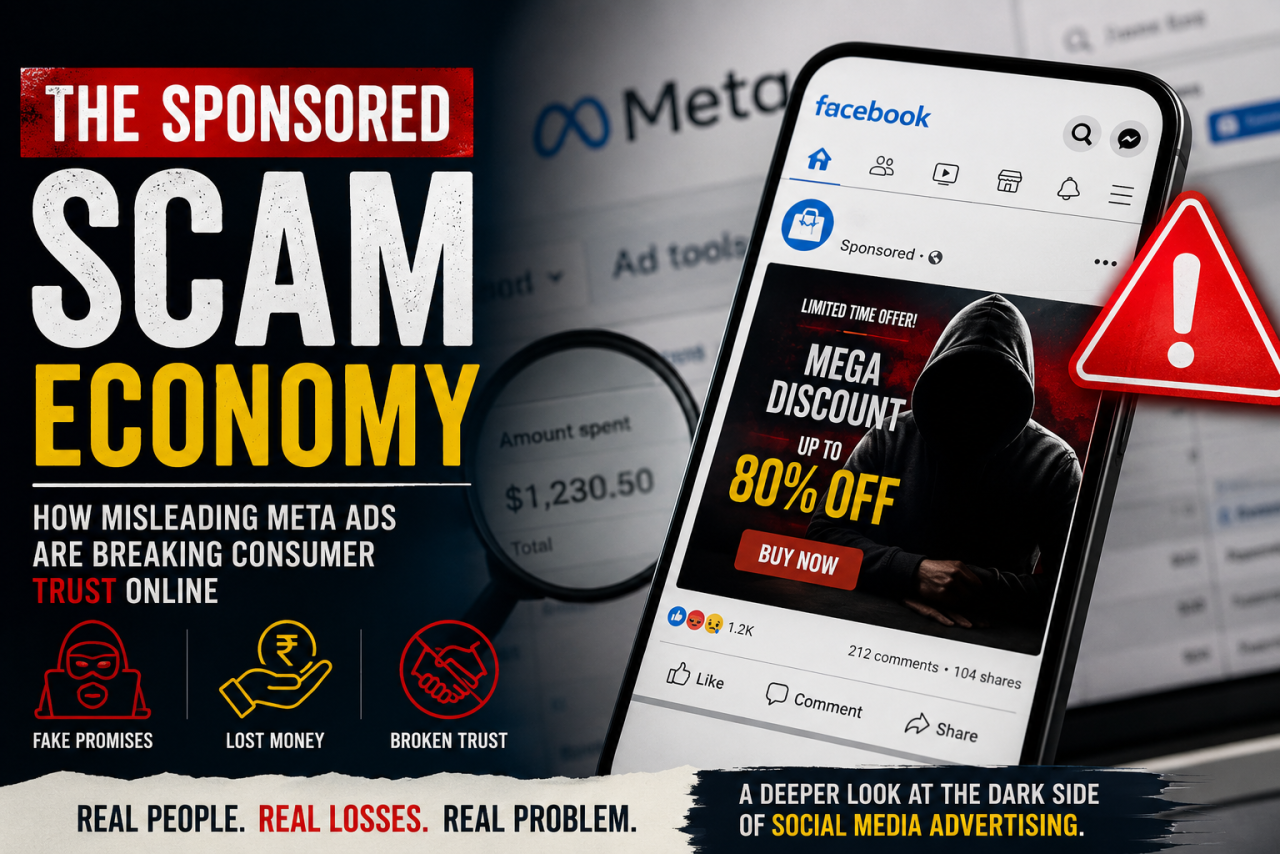
Scroll through Facebook or Instagram today, and you will quickly encounter advertisements promising life-changing opportunities such as guaranteed jobs, high-paying tech careers, instant trading success, online certifications, and “pay after placement” courses. Many of these ads attract thousands of likes, comments, and shares. But there is one pattern users are increasingly noticing — despite heavy engagement and genuine public queries, the advertisers often remain silent in the comments section.
For many users, this raises an uncomfortable question like if a company is spending heavily on advertising, why does it not answer basic public questions from potential customers?
The answer lies in how Meta’s advertising ecosystem actually works.
Meta, the parent company of Facebook and Instagram, primarily earns revenue through ad performance. Its algorithms reward advertisements that generate clicks, reactions, comments, and form submissions. In other words, engagement itself becomes the success metric. Whether the advertiser meaningfully interacts with users afterward is often secondary to the platform’s system.
This has created a growing digital culture where visibility matters more than transparency.
Many modern ads, especially in sectors like edtech, job placement programs, stock market coaching, and digital marketing courses, are designed mainly to capture leads rather than build open public trust. The strategy is simple: create an emotionally attractive promise, drive curiosity, collect phone numbers through forms, and shift conversations to private channels like WhatsApp or direct calls.
That is why users frequently see replies such as “Check inbox,” “DM us,” or “Our team will contact you,” instead of detailed public answers.
Public comment sections can actually become risky for advertisers. If they respond openly, users may ask difficult questions about placement records, salary claims, refund policies, or real student outcomes. Former customers may post negative experiences. Screenshots can spread quickly across social media. A single unresolved complaint can damage credibility far beyond the original advertisement.
As a result, many brands intentionally avoid prolonged public discussions.
Another factor is the rise of outsourced advertising agencies. A large number of Meta campaigns are managed not by the companies themselves but by marketing firms whose primary targets are lead generation and conversion numbers. Their focus is often on reducing the “cost per lead” rather than building meaningful community engagement. Once users submit contact details, the sales process moves offline, leaving public comments ignored.
This environment also creates room for artificial engagement. Across Meta platforms, some businesses allegedly boost credibility using purchased likes, employee-generated comments, promotional testimonials, or influencer-style marketing tactics. While not every advertiser engages in such practices, the lack of independent verification makes it difficult for ordinary users to separate genuine success stories from marketing narratives.
The issue becomes even more sensitive in countries like India, where rising youth unemployment and intense competition for high-paying jobs create fertile ground for aspirational advertising. Promises like “8 LPA guaranteed package,” “pay after placement,” or “job assurance” tap directly into economic anxiety and ambition. Such messages naturally generate high engagement — and Meta’s algorithm tends to amplify content that performs well emotionally.
Importantly, Meta’s moderation system is largely reactive, not preventive. Unless advertisements clearly violate policies or attract mass reporting, they often continue running. As long as advertisers technically comply with platform guidelines, deeper questions about customer satisfaction, placement authenticity, or support quality may remain unexamined.
This does not automatically mean every advertiser is fraudulent. Many legitimate companies also use aggressive digital marketing strategies. However, the growing disconnect between heavily promoted advertisements and unanswered public concerns highlights a broader trust problem within platform-driven advertising ecosystems.
For users, the lesson is increasingly clear: advertisements alone should never be treated as proof of credibility.
Before joining expensive online programs or sharing personal details, consumers should:
- verify alumni profiles on LinkedIn,
- read independent reviews on Reddit and Google,
- examine contracts carefully,
- question unrealistic salary promises,
- and observe whether companies engage transparently in public conversations.
In today’s attention economy, visibility can be purchased. Trust, however, still has to be earned.






















Leave a Comment