
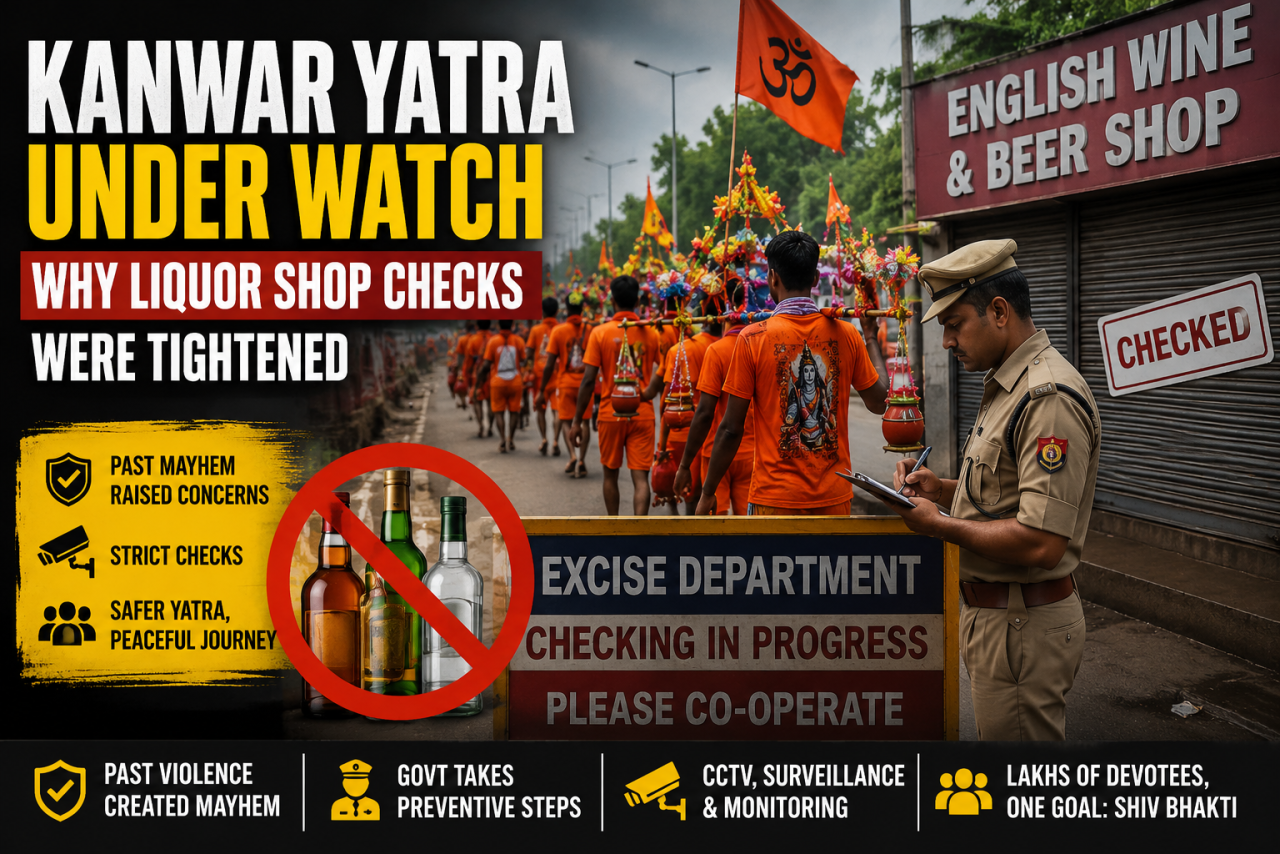
Past incidents of unrest during the Kanwar Yatra have prompted Uttar Pradesh authorities to tighten liquor shop inspections and strengthen security measures along pilgrimage routes.
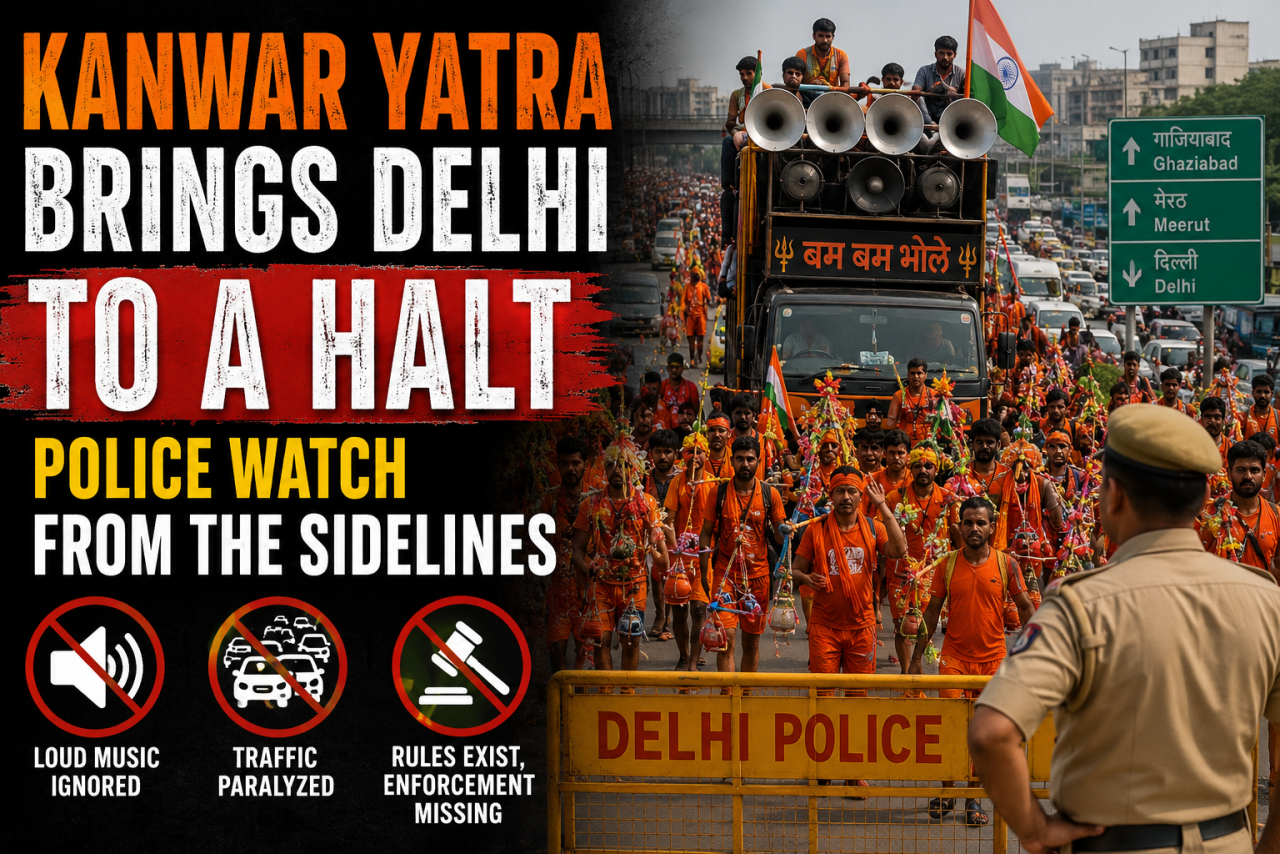
Every year, the Kanwar Yatra draws millions of devotees who travel long distances to collect holy water from the Ganga and offer it at Shiva temples during the month of Shravan. For most pilgrims, the journey is one of faith, discipline and devotion. At the same time, the yatra has also witnessed instances of violence, vandalism, traffic disruption and clashes in different parts of north India over the years. These incidents have made crowd management a major challenge for state authorities.
Against this backdrop, the Uttar Pradesh Excise Department recently carried out surprise inspections of liquor shops located along Kanwar Yatra routes, particularly in Gautam Buddh Nagar and other districts. The move was aimed at ensuring that liquor outlets strictly followed government rules during the pilgrimage period.
According to officials, the inspections focused on verifying whether licensed liquor shops were operating within legal guidelines. Teams checked country liquor shops, composite liquor stores, premium outlets and bars. They also conducted test purchases to ensure that alcohol was being sold only according to prescribed norms.
One of the major instructions issued to liquor shop owners was to keep CCTV cameras fully operational throughout business hours. Officials also directed shops situated directly on Kanwar routes to remain covered with curtains so that liquor bottles and advertisements were not visible to passing devotees. The objective was to avoid unnecessary provocation and maintain a respectful environment during the religious procession.
These precautions are not without reason. Over the past several years, some Kanwar Yatra routes have witnessed incidents in which groups of pilgrims damaged vehicles, vandalised shops or clashed with members of the public after minor disputes or road accidents. While such incidents involve only a small section of participants, they have received widespread public attention and have raised concerns about law and order during the pilgrimage.
Authorities believe that visible liquor shops along the procession route could become flashpoints in an already crowded and emotionally charged environment. By ensuring that outlets comply with operational guidelines and remain visually discreet, officials hope to reduce the chances of confrontation.
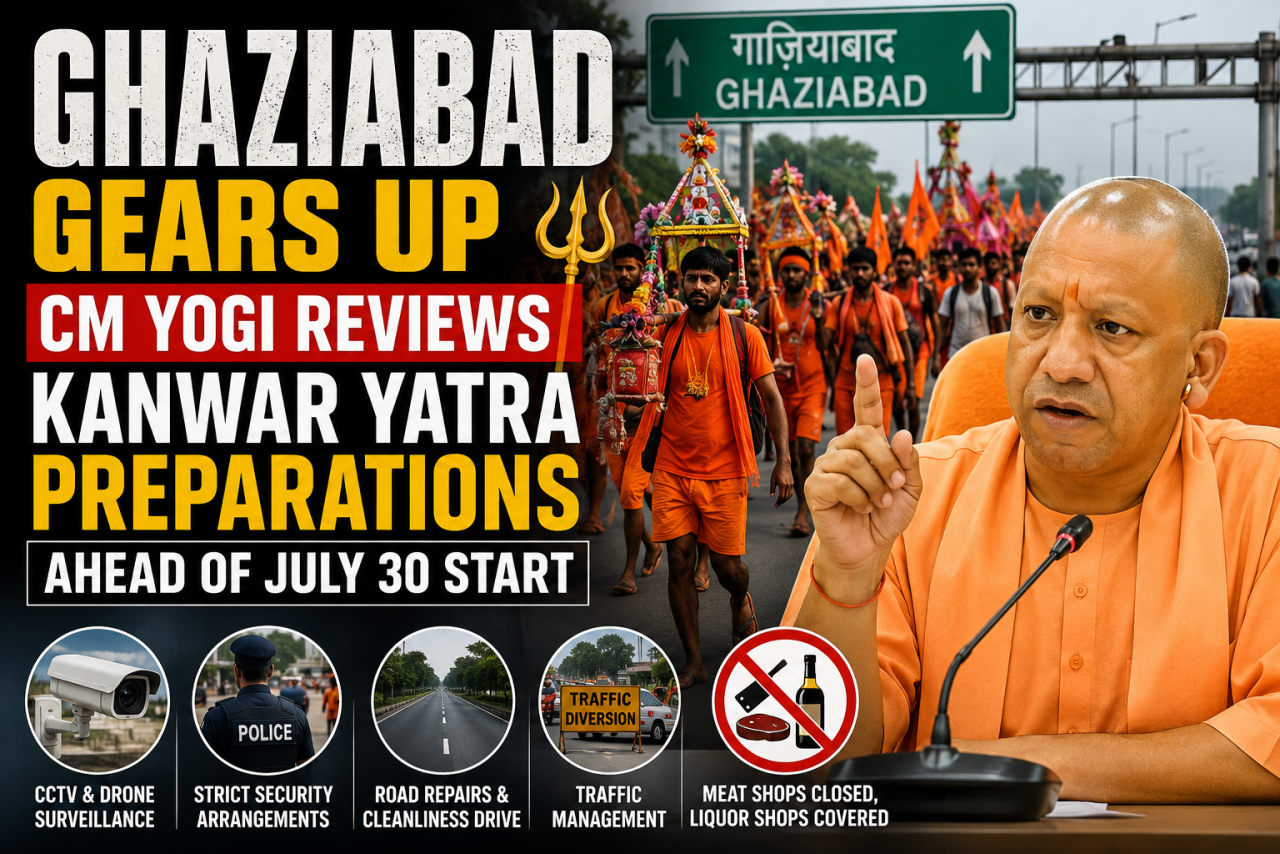
The administration has also strengthened other security measures during the yatra. Police personnel have been deployed in large numbers, traffic routes have been diverted, surveillance has been increased through CCTV cameras and drones, and emergency response teams have been placed on standby. These arrangements are intended to ensure the safety of both pilgrims and the general public.
It is important to understand that the inspections do not amount to a ban on liquor sales. Licensed shops are allowed to continue operating unless specific local orders require temporary closure. Instead, the focus is on strict compliance with existing rules while respecting the religious nature of the event.
The government's approach reflects a balance between two responsibilities. On one hand, it must facilitate a peaceful pilgrimage for millions of devotees. On the other, it has a duty to maintain public order, protect businesses and ensure that normal life is affected as little as possible.
Experts in public administration often point out that preventive action is more effective than reacting after violence occurs. Surprise inspections, enhanced surveillance and clear operational guidelines are examples of preventive policing. Even if no untoward incident takes place, such measures are generally considered successful because they reduce risk rather than respond to damage.
At the same time, it is equally important to avoid generalising about all Kanwar pilgrims. The overwhelming majority complete the pilgrimage peacefully and return home without creating any disturbance. Law enforcement measures are designed to address potential risks associated with large gatherings and past experiences, not to question the faith or intentions of devotees.
As the Kanwar Yatra continues to grow in scale every year, governments are increasingly relying on careful planning, coordination and preventive strategies. The inspection of liquor shops is one part of a broader administrative effort to ensure that religious devotion, public safety and civic order can coexist during one of north India's largest annual pilgrimages.
Every year, the Kanwar Yatra draws millions of devotees who travel long distances to collect holy water from the Ganga and offer it at Shiva temples during the month of Shravan. For most pilgrims, the journey is one of faith, discipline and devotion. At the same time, the yatra has also witnessed instances of violence, vandalism, traffic disruption and clashes in different parts of north India over the years. These incidents have made crowd management a major challenge for state authorities.
Against this backdrop, the Uttar Pradesh Excise Department recently carried out surprise inspections of liquor shops located along Kanwar Yatra routes, particularly in Gautam Buddh Nagar and other districts. The move was aimed at ensuring that liquor outlets strictly followed government rules during the pilgrimage period.
According to officials, the inspections focused on verifying whether licensed liquor shops were operating within legal guidelines. Teams checked country liquor shops, composite liquor stores, premium outlets and bars. They also conducted test purchases to ensure that alcohol was being sold only according to prescribed norms.
One of the major instructions issued to liquor shop owners was to keep CCTV cameras fully operational throughout business hours. Officials also directed shops situated directly on Kanwar routes to remain covered with curtains so that liquor bottles and advertisements were not visible to passing devotees. The objective was to avoid unnecessary provocation and maintain a respectful environment during the religious procession.
These precautions are not without reason. Over the past several years, some Kanwar Yatra routes have witnessed incidents in which groups of pilgrims damaged vehicles, vandalised shops or clashed with members of the public after minor disputes or road accidents. While such incidents involve only a small section of participants, they have received widespread public attention and have raised concerns about law and order during the pilgrimage.
Authorities believe that visible liquor shops along the procession route could become flashpoints in an already crowded and emotionally charged environment. By ensuring that outlets comply with operational guidelines and remain visually discreet, officials hope to reduce the chances of confrontation.
The administration has also strengthened other security measures during the yatra. Police personnel have been deployed in large numbers, traffic routes have been diverted, surveillance has been increased through CCTV cameras and drones, and emergency response teams have been placed on standby. These arrangements are intended to ensure the safety of both pilgrims and the general public.
It is important to understand that the inspections do not amount to a ban on liquor sales. Licensed shops are allowed to continue operating unless specific local orders require temporary closure. Instead, the focus is on strict compliance with existing rules while respecting the religious nature of the event.
The government's approach reflects a balance between two responsibilities. On one hand, it must facilitate a peaceful pilgrimage for millions of devotees. On the other, it has a duty to maintain public order, protect businesses and ensure that normal life is affected as little as possible.
Experts in public administration often point out that preventive action is more effective than reacting after violence occurs. Surprise inspections, enhanced surveillance and clear operational guidelines are examples of preventive policing. Even if no untoward incident takes place, such measures are generally considered successful because they reduce risk rather than respond to damage.
At the same time, it is equally important to avoid generalising about all Kanwar pilgrims. The overwhelming majority complete the pilgrimage peacefully and return home without creating any disturbance. Law enforcement measures are designed to address potential risks associated with large gatherings and past experiences, not to question the faith or intentions of devotees.
As the Kanwar Yatra continues to grow in scale every year, governments are increasingly relying on careful planning, coordination and preventive strategies. The inspection of liquor shops is one part of a broader administrative effort to ensure that religious devotion, public safety and civic order can coexist during one of north India's largest annual pilgrimages.



















Leave a Comment