

Nine kanwariyas have died in separate incidents during the Sawan pilgrimage, raising fresh questions over river, road and electrical safety amid a massive annual religious gathering.
At least nine kanwariyas lost their lives over the weekend in separate incidents across Uttarakhand, Punjab and Uttar Pradesh, as the annual Kanwar Yatra once again exposed the risks embedded in one of India's largest religious gatherings.
The deaths, linked to drowning accidents, a road crash and electrocution, turned the festive pilgrimage into a grim reminder that the scale of the yatra can often outpace safety arrangements during the month of Sawan.
Three Pilgrims Swept Away in Haridwar
In Haridwar, three kanwariyas who had arrived to collect Ganga water went missing after being swept away by strong currents in two separate incidents over 48 hours.
Officials said the men had moved beyond marked safety zones to bathe in the river near Har Ki Pauri, one of the most prominent pilgrimage sites in Haridwar.
The Uttarakhand State Disaster Response Force rescued 21 pilgrims from the river on Sunday alone after they encountered difficulties at various ghats and bathing points.
According to the state's Kanwar Mela control cell, the cumulative number of kanwariya deaths in Uttarakhand during the ongoing pilgrimage has reached nine. Two more pilgrims were reportedly killed in road accidents over the last two days.
The incidents highlight a recurring danger during the Kanwar Yatra. Strong river currents, sudden changes in water levels, unmarked depths and slippery riverbeds can turn a routine dip into a life-threatening situation within seconds.
Why River Safety Remains a Challenge
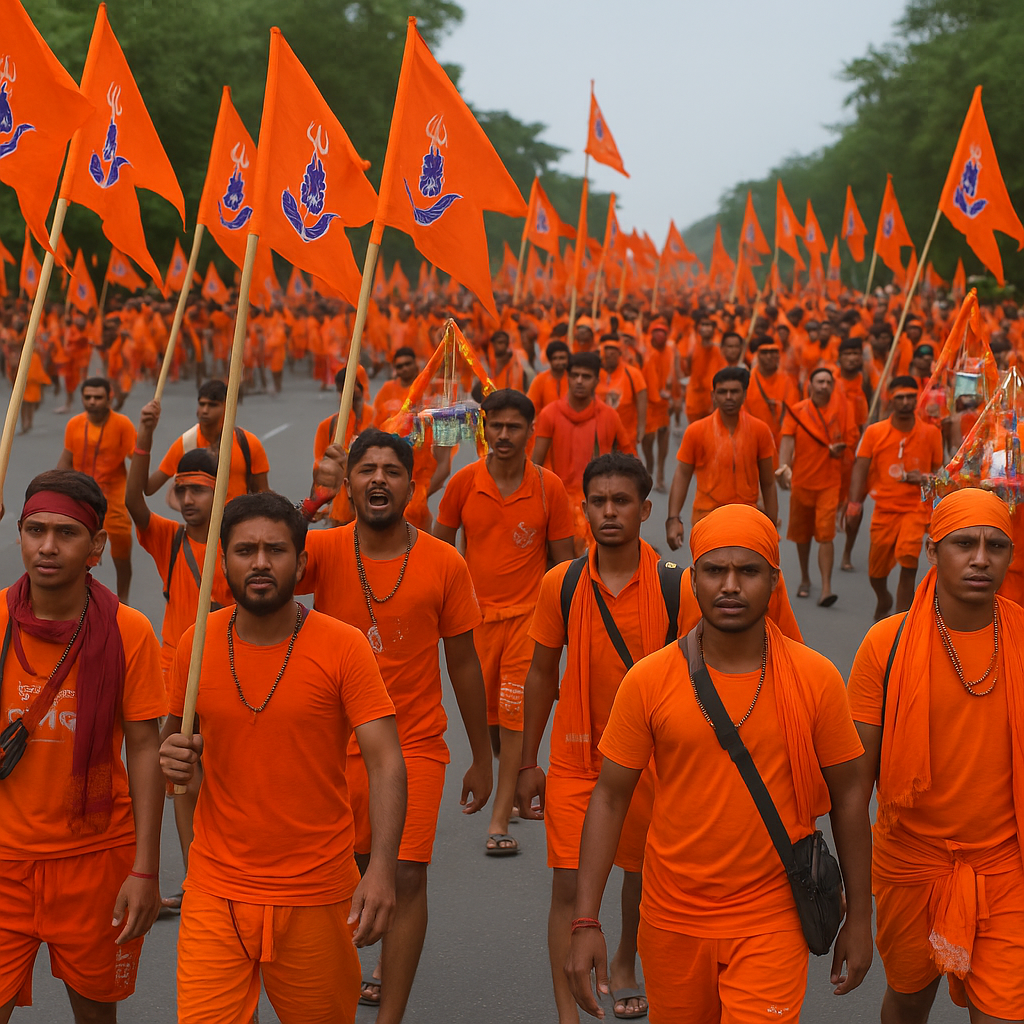
Every monsoon, lakhs of Shiva devotees, many of them teenagers and young men, walk barefoot for days to collect holy water from the Ganga and carry it back to temples in their hometowns.
The pilgrimage routes pass through some of the most challenging stretches along the river. Despite repeated warnings from police and disaster response teams, many pilgrims continue to enter open stretches of the river rather than using designated and barricaded bathing ghats.
Authorities routinely appeal to pilgrims to remain within safety zones, particularly when the river is flowing strongly.
The challenge becomes greater as crowds increase. What may appear to be a harmless ritual dip can become dangerous when hundreds or thousands of people gather around the same stretch of river.
Electrocution Kills Kanwariya in Uttar Pradesh
Uttar Pradesh reported another tragedy in Budaun district, where a 35-year-old kanwariya was killed and eight others, including several children, suffered burn injuries after coming into contact with an electrically charged generator.
The generator was being used to power a DJ setup accompanying a group of kanwariyas.
The incident took place in Garhi village under the Kadar Chowk police station area on Saturday evening.
Police said the victims were dancing behind the DJ trolley when the generator's outer casing became electrically charged, sending current through the group.
The incident also raises questions about the growing use of generators, sound systems and DJ-equipped vehicles during the pilgrimage. What was traditionally a largely devotional walking journey has increasingly evolved into a more elaborate procession involving music, vehicles and large groups of participants.
Car Hits Kanwariyas on Punjab Highway
In Punjab, a car struck a group of kanwariyas travelling on foot along the GT Road in the Fatehgarh Sahib area, killing one pilgrim and injuring several others.
According to police, the pilgrims were walking along the highway shoulder when a speeding vehicle reportedly hit them from behind.
Walking alongside busy highways remains one of the most persistent risks associated with the Kanwar Yatra, particularly when large groups of pilgrims travel during the night or early morning.
The Punjab government has announced financial assistance of ₹2 lakh for the family of the deceased, along with support for the treatment of injured pilgrims.
38 Million Pilgrims in Haridwar
The sheer scale of this year's pilgrimage adds another layer to the safety challenge.
According to officials, the number of kanwariyas arriving in Haridwar during the ongoing yatra crossed 38 million on Sunday.
Such a massive concentration of pilgrims creates extraordinary logistical demands. Thousands of devotees move simultaneously along highways, riverbanks, narrow roads and crowded town routes over a relatively short period.
Administrations across Uttarakhand, Uttar Pradesh and Punjab deploy thousands of police personnel, traffic officials and disaster response workers to manage the movement.
Yet managing such a vast pilgrimage remains difficult, particularly when pilgrims travel at night or in large groups accompanied by vehicles, generators and loudspeakers.
A Recurring Safety Problem
The tragedies of this year's Kanwar Yatra are not isolated incidents.
Almost every pilgrimage season brings reports of drownings at unsafe river stretches, road accidents involving pilgrims and vehicles, and injuries associated with temporary electrical installations and DJ systems.
Authorities have introduced several safety measures over the years, including barricading dangerous stretches of rivers, deploying additional traffic personnel, creating designated pedestrian routes and regulating DJ-equipped vehicles.
The results, however, remain mixed.
The central problem is not simply the absence of safety measures. It is also the difficulty of ensuring that millions of pilgrims consistently follow them.
A barricade may mark a dangerous stretch, but a single decision to cross it can have fatal consequences. A designated pedestrian lane can reduce highway accidents, but its effectiveness depends on both pilgrims and motorists respecting it.
Devotion Needs Safety Too
For the families of those who died, compensation can do little to compensate for the loss of a loved one during what was supposed to be an act of faith and devotion.
As the Kanwar Yatra continues through the remaining days of Sawan, authorities in the affected states have once again urged pilgrims to avoid restricted stretches of rivers, use designated pedestrian routes and exercise extreme caution around electrical equipment.
The larger question is whether those warnings will be followed as the crowds continue to grow.
The Kanwar Yatra is a remarkable expression of faith involving millions of people. But its growing scale also demands an equally ambitious approach to safety.
The success of this year's pilgrimage should not be measured only by how many devotees complete their journey.
It should also be measured by how many return home safely.
At least nine kanwariyas lost their lives over the weekend in separate incidents across Uttarakhand, Punjab and Uttar Pradesh, as the annual Kanwar Yatra once again exposed the risks embedded in one of India's largest religious gatherings.
The deaths, linked to drowning accidents, a road crash and electrocution, turned the festive pilgrimage into a grim reminder that the scale of the yatra can often outpace safety arrangements during the month of Sawan.
Three Pilgrims Swept Away in Haridwar
In Haridwar, three kanwariyas who had arrived to collect Ganga water went missing after being swept away by strong currents in two separate incidents over 48 hours.
Officials said the men had moved beyond marked safety zones to bathe in the river near Har Ki Pauri, one of the most prominent pilgrimage sites in Haridwar.
The Uttarakhand State Disaster Response Force rescued 21 pilgrims from the river on Sunday alone after they encountered difficulties at various ghats and bathing points.
According to the state's Kanwar Mela control cell, the cumulative number of kanwariya deaths in Uttarakhand during the ongoing pilgrimage has reached nine. Two more pilgrims were reportedly killed in road accidents over the last two days.
The incidents highlight a recurring danger during the Kanwar Yatra. Strong river currents, sudden changes in water levels, unmarked depths and slippery riverbeds can turn a routine dip into a life-threatening situation within seconds.
Why River Safety Remains a Challenge
Every monsoon, lakhs of Shiva devotees, many of them teenagers and young men, walk barefoot for days to collect holy water from the Ganga and carry it back to temples in their hometowns.
The pilgrimage routes pass through some of the most challenging stretches along the river. Despite repeated warnings from police and disaster response teams, many pilgrims continue to enter open stretches of the river rather than using designated and barricaded bathing ghats.
Authorities routinely appeal to pilgrims to remain within safety zones, particularly when the river is flowing strongly.
The challenge becomes greater as crowds increase. What may appear to be a harmless ritual dip can become dangerous when hundreds or thousands of people gather around the same stretch of river.
Electrocution Kills Kanwariya in Uttar Pradesh
Uttar Pradesh reported another tragedy in Budaun district, where a 35-year-old kanwariya was killed and eight others, including several children, suffered burn injuries after coming into contact with an electrically charged generator.
The generator was being used to power a DJ setup accompanying a group of kanwariyas.
The incident took place in Garhi village under the Kadar Chowk police station area on Saturday evening.
Police said the victims were dancing behind the DJ trolley when the generator's outer casing became electrically charged, sending current through the group.
The incident also raises questions about the growing use of generators, sound systems and DJ-equipped vehicles during the pilgrimage. What was traditionally a largely devotional walking journey has increasingly evolved into a more elaborate procession involving music, vehicles and large groups of participants.
Car Hits Kanwariyas on Punjab Highway
In Punjab, a car struck a group of kanwariyas travelling on foot along the GT Road in the Fatehgarh Sahib area, killing one pilgrim and injuring several others.
According to police, the pilgrims were walking along the highway shoulder when a speeding vehicle reportedly hit them from behind.
Walking alongside busy highways remains one of the most persistent risks associated with the Kanwar Yatra, particularly when large groups of pilgrims travel during the night or early morning.
The Punjab government has announced financial assistance of ₹2 lakh for the family of the deceased, along with support for the treatment of injured pilgrims.
38 Million Pilgrims in Haridwar
The sheer scale of this year's pilgrimage adds another layer to the safety challenge.
According to officials, the number of kanwariyas arriving in Haridwar during the ongoing yatra crossed 38 million on Sunday.
Such a massive concentration of pilgrims creates extraordinary logistical demands. Thousands of devotees move simultaneously along highways, riverbanks, narrow roads and crowded town routes over a relatively short period.
Administrations across Uttarakhand, Uttar Pradesh and Punjab deploy thousands of police personnel, traffic officials and disaster response workers to manage the movement.
Yet managing such a vast pilgrimage remains difficult, particularly when pilgrims travel at night or in large groups accompanied by vehicles, generators and loudspeakers.
A Recurring Safety Problem
The tragedies of this year's Kanwar Yatra are not isolated incidents.
Almost every pilgrimage season brings reports of drownings at unsafe river stretches, road accidents involving pilgrims and vehicles, and injuries associated with temporary electrical installations and DJ systems.
Authorities have introduced several safety measures over the years, including barricading dangerous stretches of rivers, deploying additional traffic personnel, creating designated pedestrian routes and regulating DJ-equipped vehicles.
The results, however, remain mixed.
The central problem is not simply the absence of safety measures. It is also the difficulty of ensuring that millions of pilgrims consistently follow them.
A barricade may mark a dangerous stretch, but a single decision to cross it can have fatal consequences. A designated pedestrian lane can reduce highway accidents, but its effectiveness depends on both pilgrims and motorists respecting it.
Devotion Needs Safety Too
For the families of those who died, compensation can do little to compensate for the loss of a loved one during what was supposed to be an act of faith and devotion.
As the Kanwar Yatra continues through the remaining days of Sawan, authorities in the affected states have once again urged pilgrims to avoid restricted stretches of rivers, use designated pedestrian routes and exercise extreme caution around electrical equipment.
The larger question is whether those warnings will be followed as the crowds continue to grow.
The Kanwar Yatra is a remarkable expression of faith involving millions of people. But its growing scale also demands an equally ambitious approach to safety.
The success of this year's pilgrimage should not be measured only by how many devotees complete their journey.
It should also be measured by how many return home safely.























Leave a Comment