
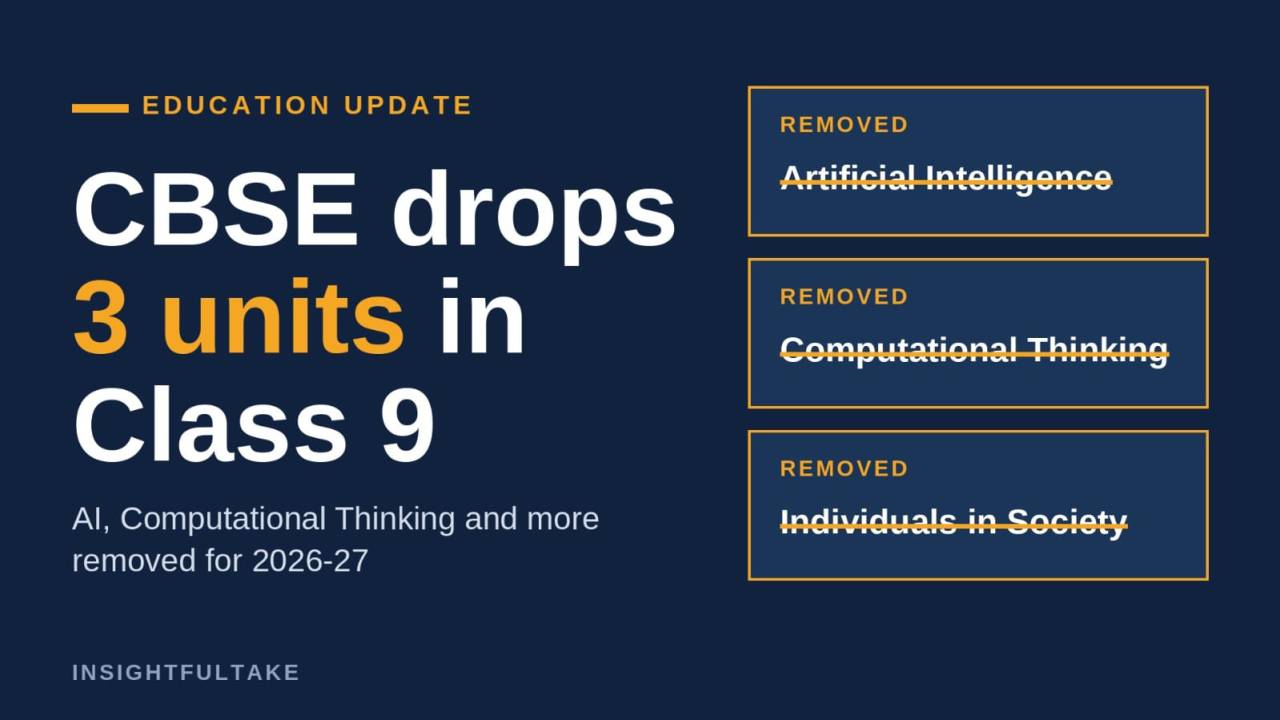
Three proposed components are out of the Class 9 curriculum. What does CBSE's latest decision mean for students and the future of school education?
The Central Board of Secondary Education (CBSE) has revised its Class 9 curriculum for the 2026-27 academic session, dropping three proposed curricular components for the current batch. The changes mean that students will not study Individuals in Society, Computational Thinking (CT) and Artificial Intelligence (AI) as part of their Class 9 curriculum.
The Board has also decided that Environmental Education will not be introduced in Class 10 for the same batch during the 2027-28 academic session.
The decision was communicated through a circular issued on Thursday, October 29, and signed by Dr Praggya M Singh, Professor and Director (Academics). The revision provides clarity on the subjects students must study as they progress towards their Class 10 board examinations.
Why Has CBSE Revised the Curriculum?
The changes follow the revised scheme of studies introduced by CBSE in April 2026. The proposed curriculum was designed in accordance with the National Education Policy (NEP) 2020 and the National Curriculum Framework for School Education (NCF-SE) 2023.
Under the earlier plan, Class 9 students were expected to study Individuals in Society as an interdisciplinary subject. Environmental Education was proposed for Class 10, while Computational Thinking and Artificial Intelligence modules were planned across the secondary school stage.
However, the latest circular has put these components on hold for the current Class 9 batch.
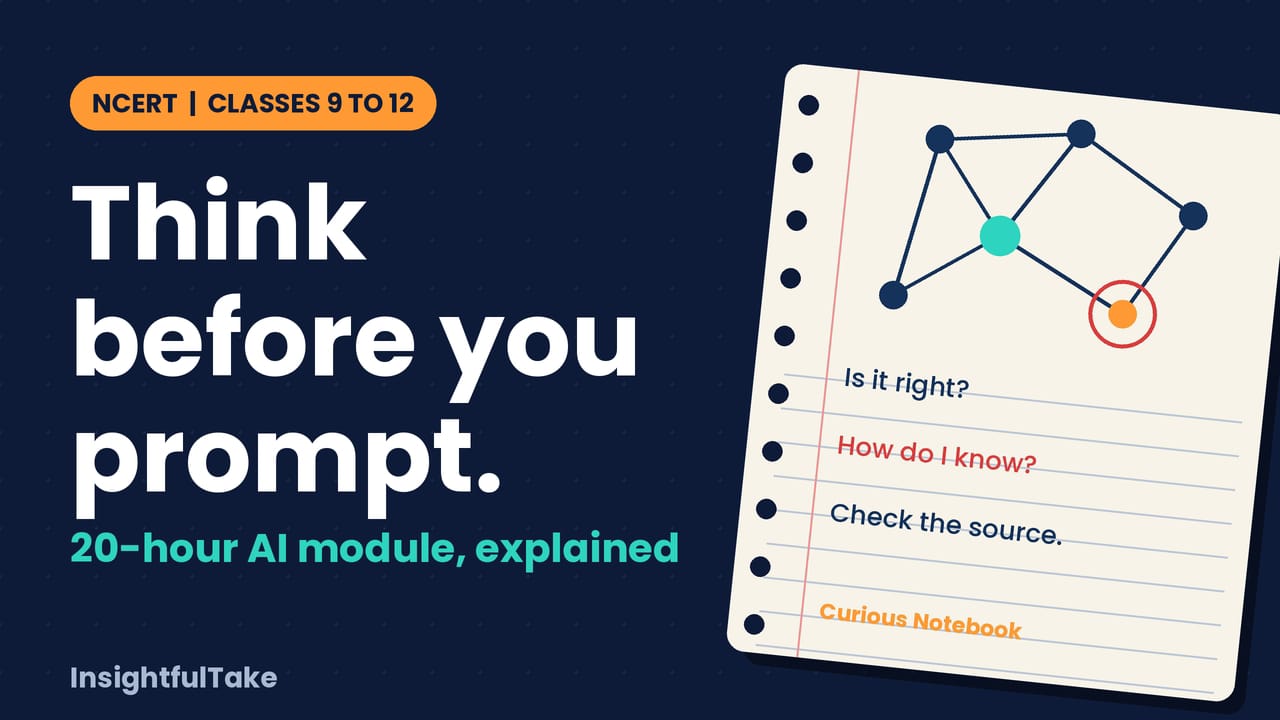
The timing is noteworthy because the National Council of Educational Research and Training (NCERT) released a 20-hour introductory module on Computational Thinking and Artificial Intelligence on October 23. The module is intended for students from Classes 9 to 12.
Meanwhile, NCERT has not yet released textbooks for Individuals in Society and Environmental Education.
What Does the CBSE Circular Say?
According to the circular, the revision is intended to align the introduction of these subjects with the prescribed implementation schedule.
Although the Board has clarified the position for the current batch, it has not specified when the three components will be introduced for subsequent batches.
Officials familiar with the matter indicated that the decision is intended to give students and schools clarity about the academic and examination requirements as the current Class 9 batch moves towards Class 10.
The objective, they said, is to communicate academic provisions well in advance so that students can concentrate on meaningful learning rather than remain uncertain about examination requirements.
NCERT has not responded to questions about why these components were dropped, when they might return or when the remaining textbooks will be published.
Class 9 Students Will Study Nine Compulsory Subjects
Under the revised arrangement, students in the current Class 9 batch will have nine compulsory subjects:
- Three languages (R1, R2 and R3)
- Mathematics
- Science
- Social Science
- Art Education
- Physical Education and Well-being
- Vocational Education
Students may also opt for one additional subject, subject to CBSE rules.
The revised structure retains the core academic subjects while providing space for vocational learning and other areas of interest.
Vocational Education: Students Get Two Options
Vocational Education will remain compulsory, but students can now choose between two pathways.
The first option is Kaushal Vikas, which will be assessed internally by the school. Students securing at least 33 per cent marks will receive a certificate issued by their respective schools.
The second option allows students to select one of the 22 skill subjects offered under the CBSE framework.
Students opting for a skill subject will have to appear for a board examination in that subject in Class 10.
This arrangement gives students the flexibility to pursue practical skills while making them aware of the examination requirements associated with each option.
What Do Educators Say?
Sudha Acharya, Principal of ITL School, Delhi, believes the revised arrangement could reduce the examination burden while offering students greater freedom of choice.
According to her, students will no longer have to manage the additional academic load associated with the two proposed components. At the same time, the option of selecting skill-based subjects could help them explore areas aligned with their interests.
The vocational education options may also encourage students to develop practical skills alongside their regular academic studies.
What About Students Currently in Class 10?
The revised curriculum will not affect students who are already studying in Class 10.
CBSE has clarified that the existing scheme of studies will continue unchanged for the current Class 10 batch.
The changes apply specifically to students presently in Class 9 during the 2026-27 academic session and their progression to Class 10 in 2027-28.
What the Decision Means for School Education
The latest revision raises important questions about the pace and coordination of curriculum reforms under NEP 2020.
First, it highlights the challenges of introducing new subjects without completing the supporting textbooks, teaching materials and implementation arrangements.
Second, the decision to remove Computational Thinking and Artificial Intelligence from the current Class 9 curriculum comes just days after NCERT released its introductory CT and AI module for Classes 9 to 12. How the module will fit into the revised CBSE framework remains unclear.
Third, the absence of a timeline for introducing these subjects in future academic sessions leaves schools, teachers and parents waiting for further clarification.
For the current Class 9 batch, however, the immediate academic position is clear. Students will follow the revised nine-subject structure and must make an informed choice regarding vocational education, particularly because selecting a skill subject involves a Class 10 board examination.
The larger question is when and how CBSE and NCERT will integrate artificial intelligence, computational thinking and environmental education into the school curriculum. Their eventual introduction will depend on further announcements and the readiness of the academic framework.


















Leave a Comment