
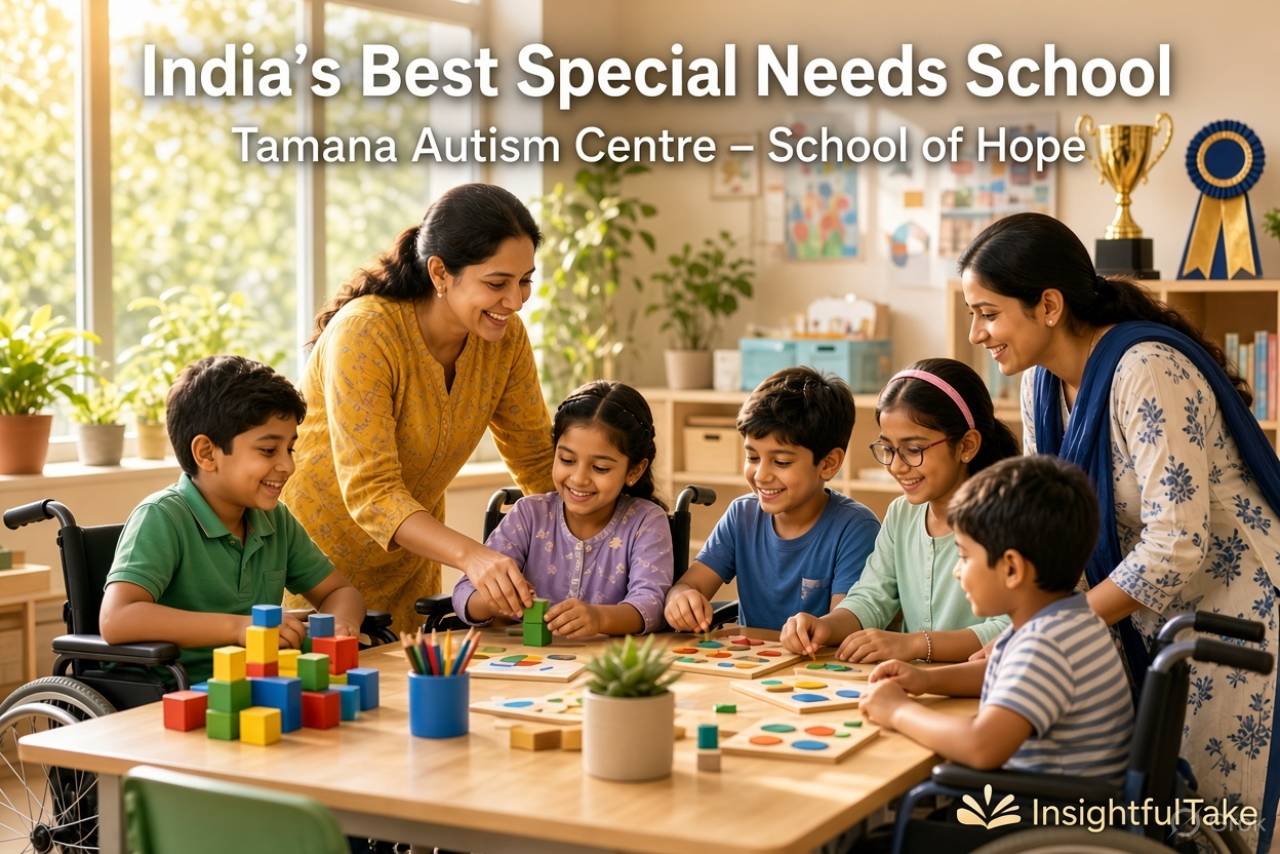
One mother’s search for a better future for her daughter became a 40-year mission that has now earned Tamana School of Hope India’s top special-needs school ranking.
In Delhi’s Vasant Vihar stands a school built around a simple idea that every child deserves the opportunity to learn, grow and live with dignity.
The Tamana Autism Centre – School of Hope has now been ranked India’s best special needs school under the Indian curriculum in the Cfore Rankings 2026. For an institution that has worked with children and young adults with disabilities for more than four decades, the recognition marks an important milestone.
But the story of Tamana began much earlier, with one mother determined to create better opportunities for her daughter.
A Mother’s Personal Journey Became a Larger Mission
Tamana was founded in 1984 by Dr Shayama Chona, a distinguished educationist and former principal of Delhi Public School, R.K. Puram. The organisation was named after her daughter, Tamana Chona, who was born with cerebral palsy.
What began as a family's search for appropriate education and support gradually developed into a wider mission for children with special needs.
Dr Chona went on to devote her life to education and disability rights. Her contribution was recognised with the Padma Shri and Padma Bhushan.
Today, Tamana operates three centres in Vasant Vihar, serving children and young adults with autism spectrum disorder, intellectual disabilities and multiple disabilities.
One of India’s Early Autism Education Centres
The School of Hope occupies a significant place in the development of specialised education in India.
Tamana was among the early institutions in the country to recognise autism as a distinct condition and develop dedicated educational programmes for children with autism. Its autism-focused work began as early as 1985.
The organisation's Autism Centre was inaugurated by former President Dr A.P.J. Abdul Kalam in 2003, adding another important chapter to its history.
The school combines special education with a range of therapeutic and developmental interventions. These include communication development, sensory integration, behaviour management, therapy and practical life-skills training.
The focus is not limited to academic learning. Students are supported in developing communication, independence, social skills and the ability to manage everyday activities.
Education Built Around the Individual Child
One of the central principles of special education is that there is no single approach that works equally well for every child.
Tamana follows an individualised approach, with each student receiving an education plan based on their strengths, needs and developmental goals.
This can make a significant difference for children who may struggle in conventional educational settings.
For some students, progress may mean learning to communicate more effectively. For others, it may mean becoming more independent in daily activities, developing social confidence or acquiring skills that can eventually support greater participation in the community.
That makes special education much broader than classroom teaching.
‘They Have the Same Rights as Everyone Else’
Tamana Chona, who is now a board member of the organisation, has welcomed the School of Hope’s recent recognition.
For her, the achievement is about more than a ranking. It is also about the students who have grown up within the institution.
She has emphasised that disability should not be viewed as something that takes away a person's right to live a full life. Children with disabilities deserve opportunities to enjoy themselves, make friends, celebrate occasions and feel included in society.
That idea lies at the heart of Tamana's work.
The objective is not simply to teach children skills. It is to help them participate in life with confidence and dignity.
Why Specialised Schools Still Matter
India has made progress in awareness and inclusion, but access to appropriate support remains a challenge for many families.
Mainstream schools are increasingly discussing inclusive education, but inclusion does not always mean that every child receives the specialised support they need.
Children with autism, intellectual disabilities or multiple disabilities may require trained special educators, therapists, individualised teaching methods and structured environments.
Institutions such as Tamana provide that specialised ecosystem.
Their work also demonstrates that education should not be measured only through examination scores. For a child with special needs, learning to communicate, perform daily tasks, interact with others or become more independent can represent an equally important achievement.
What the Cfore Recognition Means
The Cfore Rankings assess schools through a national survey that gathers views from parents, teachers, principals and educationists.
Among the parameters considered are teacher competence, quality of programmes, individual attention, leadership and infrastructure.
Tamana's position at the top of the special needs school category therefore reflects more than a single year's performance. It recognises an institution that has developed its educational and support systems over several decades.
The recognition also puts the spotlight on specialised education at a time when India is having a wider conversation about accessibility and inclusion.
A Model Built on Experience and Expertise
Tamana's journey offers lessons beyond its own campuses.
The first is that personal experience can become a catalyst for wider social change. Dr Shayama Chona's experience as the mother of a child with cerebral palsy eventually became the foundation for an organisation serving many other families.
The second is the importance of early and appropriate intervention. Children develop differently, and access to specialised education and therapy can help them build skills suited to their individual needs.
The third is that inclusion requires more than simply placing children with disabilities in regular classrooms.
True inclusion means ensuring that children are supported, respected and given meaningful opportunities to participate.
India Still Has a Long Way to Go
The recognition of Tamana is encouraging, but it also highlights the larger challenges facing special education in India.
Many children with disabilities still struggle to access formal education. Families in smaller towns and rural areas often face a shortage of specialised services, trained educators and accessible infrastructure.
The cost of specialised education and therapy can also place a significant burden on families.
This makes the work of established institutions particularly important. Their experience can provide lessons for schools, governments and organisations seeking to build more inclusive education systems across the country.
More Than a Ranking
The School of Hope's achievement is significant because it places special education in the spotlight.
But the real measure of a school like Tamana cannot be reduced to a ranking.
It can be seen in a child learning to communicate. In a student becoming more independent. In parents gaining confidence about their child's future. And in young people finding a place where they are accepted for who they are.
From one mother's determination in 1984 to a national recognition in 2026, Tamana's journey shows what can happen when personal commitment is combined with professional expertise and a belief in equal dignity.
The School of Hope may have topped the rankings, but its real achievement lies beyond any award. It has created a place where children with disabilities are given the support, respect and opportunity to discover what they can do and how far they can go.
In Delhi’s Vasant Vihar stands a school built around a simple idea that every child deserves the opportunity to learn, grow and live with dignity.
The Tamana Autism Centre – School of Hope has now been ranked India’s best special needs school under the Indian curriculum in the Cfore Rankings 2026. For an institution that has worked with children and young adults with disabilities for more than four decades, the recognition marks an important milestone.
But the story of Tamana began much earlier, with one mother determined to create better opportunities for her daughter.
A Mother’s Personal Journey Became a Larger Mission
Tamana was founded in 1984 by Dr Shayama Chona, a distinguished educationist and former principal of Delhi Public School, R.K. Puram. The organisation was named after her daughter, Tamana Chona, who was born with cerebral palsy.
What began as a family's search for appropriate education and support gradually developed into a wider mission for children with special needs.
Dr Chona went on to devote her life to education and disability rights. Her contribution was recognised with the Padma Shri and Padma Bhushan.
Today, Tamana operates three centres in Vasant Vihar, serving children and young adults with autism spectrum disorder, intellectual disabilities and multiple disabilities.
One of India’s Early Autism Education Centres
The School of Hope occupies a significant place in the development of specialised education in India.
Tamana was among the early institutions in the country to recognise autism as a distinct condition and develop dedicated educational programmes for children with autism. Its autism-focused work began as early as 1985.
The organisation's Autism Centre was inaugurated by former President Dr A.P.J. Abdul Kalam in 2003, adding another important chapter to its history.
The school combines special education with a range of therapeutic and developmental interventions. These include communication development, sensory integration, behaviour management, therapy and practical life-skills training.
The focus is not limited to academic learning. Students are supported in developing communication, independence, social skills and the ability to manage everyday activities.
Education Built Around the Individual Child
One of the central principles of special education is that there is no single approach that works equally well for every child.
Tamana follows an individualised approach, with each student receiving an education plan based on their strengths, needs and developmental goals.
This can make a significant difference for children who may struggle in conventional educational settings.
For some students, progress may mean learning to communicate more effectively. For others, it may mean becoming more independent in daily activities, developing social confidence or acquiring skills that can eventually support greater participation in the community.
That makes special education much broader than classroom teaching.
‘They Have the Same Rights as Everyone Else’
Tamana Chona, who is now a board member of the organisation, has welcomed the School of Hope’s recent recognition.
For her, the achievement is about more than a ranking. It is also about the students who have grown up within the institution.
She has emphasised that disability should not be viewed as something that takes away a person's right to live a full life. Children with disabilities deserve opportunities to enjoy themselves, make friends, celebrate occasions and feel included in society.
That idea lies at the heart of Tamana's work.
The objective is not simply to teach children skills. It is to help them participate in life with confidence and dignity.
Why Specialised Schools Still Matter
India has made progress in awareness and inclusion, but access to appropriate support remains a challenge for many families.
Mainstream schools are increasingly discussing inclusive education, but inclusion does not always mean that every child receives the specialised support they need.
Children with autism, intellectual disabilities or multiple disabilities may require trained special educators, therapists, individualised teaching methods and structured environments.
Institutions such as Tamana provide that specialised ecosystem.
Their work also demonstrates that education should not be measured only through examination scores. For a child with special needs, learning to communicate, perform daily tasks, interact with others or become more independent can represent an equally important achievement.
What the Cfore Recognition Means
The Cfore Rankings assess schools through a national survey that gathers views from parents, teachers, principals and educationists.
Among the parameters considered are teacher competence, quality of programmes, individual attention, leadership and infrastructure.
Tamana's position at the top of the special needs school category therefore reflects more than a single year's performance. It recognises an institution that has developed its educational and support systems over several decades.
The recognition also puts the spotlight on specialised education at a time when India is having a wider conversation about accessibility and inclusion.
A Model Built on Experience and Expertise
Tamana's journey offers lessons beyond its own campuses.
The first is that personal experience can become a catalyst for wider social change. Dr Shayama Chona's experience as the mother of a child with cerebral palsy eventually became the foundation for an organisation serving many other families.
The second is the importance of early and appropriate intervention. Children develop differently, and access to specialised education and therapy can help them build skills suited to their individual needs.
The third is that inclusion requires more than simply placing children with disabilities in regular classrooms.
True inclusion means ensuring that children are supported, respected and given meaningful opportunities to participate.
India Still Has a Long Way to Go
The recognition of Tamana is encouraging, but it also highlights the larger challenges facing special education in India.
Many children with disabilities still struggle to access formal education. Families in smaller towns and rural areas often face a shortage of specialised services, trained educators and accessible infrastructure.
The cost of specialised education and therapy can also place a significant burden on families.
This makes the work of established institutions particularly important. Their experience can provide lessons for schools, governments and organisations seeking to build more inclusive education systems across the country.
More Than a Ranking
The School of Hope's achievement is significant because it places special education in the spotlight.
But the real measure of a school like Tamana cannot be reduced to a ranking.
It can be seen in a child learning to communicate. In a student becoming more independent. In parents gaining confidence about their child's future. And in young people finding a place where they are accepted for who they are.
From one mother's determination in 1984 to a national recognition in 2026, Tamana's journey shows what can happen when personal commitment is combined with professional expertise and a belief in equal dignity.
The School of Hope may have topped the rankings, but its real achievement lies beyond any award. It has created a place where children with disabilities are given the support, respect and opportunity to discover what they can do and how far they can go.














Leave a Comment