
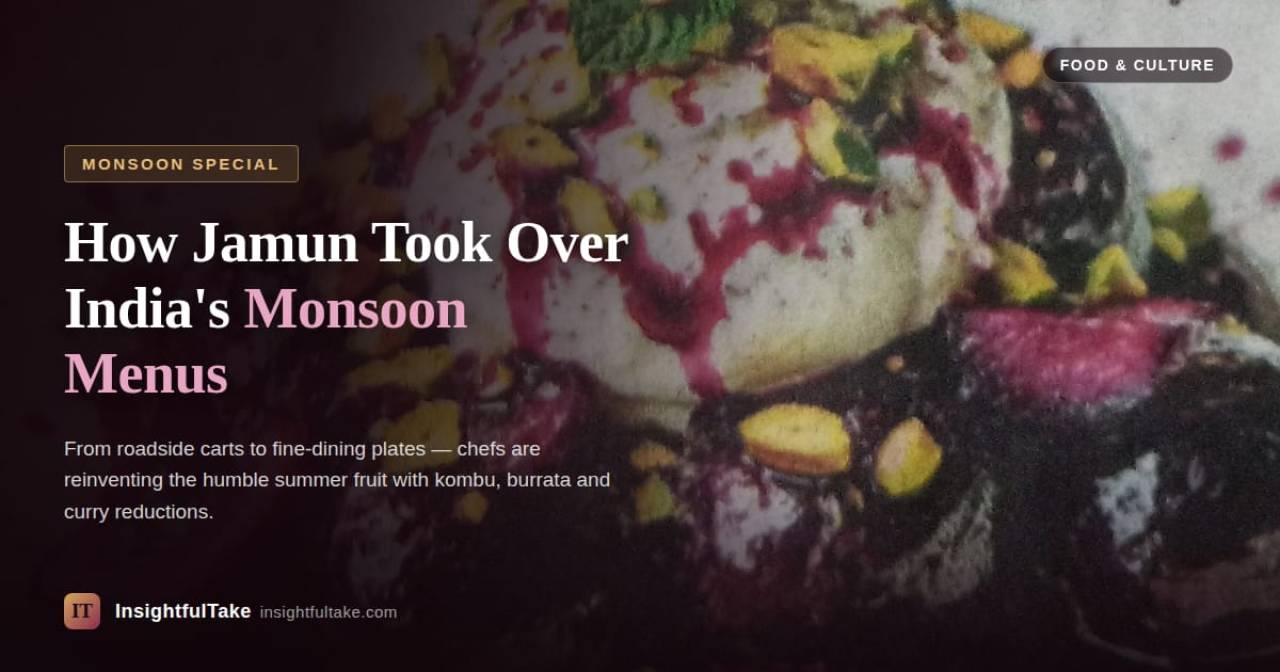
From roadside carts to gourmet kitchens, jamun is redefining India's monsoon dining scene and proving that the country's most familiar fruits can become its most exciting culinary stars.
For generations, jamun occupied a humble corner of India's culinary landscape. It was the fruit sold by roadside vendors, dusted with black salt and enjoyed on rainy afternoons, or blended into homemade sharbat believed to cool the body during the humid monsoon months. Rarely did it appear on restaurant menus, let alone in fine dining.
That story is changing rapidly. Across cities such as Delhi and Bengaluru, chefs are embracing jamun as a seasonal star, incorporating it into innovative savoury dishes, desserts and beverages. Some restaurants have even dedicated sections of their seasonal menus to the fruit, reflecting a broader shift in India's evolving food culture.
A Seasonal Ingredient Finds New Prestige
Jamun's rise mirrors a larger movement within India's restaurant industry. In recent years, chefs have increasingly turned away from imported produce in favour of hyper-seasonal, locally sourced ingredients. Mango dominated summer menus, while kokum and raw mango became favourites in coastal-inspired cuisine. Jamun is now following the same path.
Abundant, affordable and deeply familiar to Indian consumers, the fruit is being elevated with techniques once reserved for premium imported ingredients. What was once considered an everyday seasonal fruit is now being presented as a sophisticated culinary ingredient.
Why Chefs Love Working With Jamun
Jamun offers a flavour profile unlike most Indian fruits. It balances tartness with subtle sweetness while carrying a gentle astringency and tannin-like notes reminiscent of red wine. This complexity allows chefs to use it much like a wine reduction or balsamic glaze rather than a conventional fruit purée.
Its natural sharpness cuts through rich flavours exceptionally well, making it an ideal companion for grilled meats, aged cheeses and slow-cooked curries.
Restaurants in Delhi's Malviya Nagar and Connaught Place have begun replacing traditional flavour bases with jamun in dishes such as galouti kebabs, dahi bhalla and raita, introducing an unexpected burst of acidity.
In Bengaluru, chefs are experimenting with Southeast Asian influences, combining jamun with chilli, peanuts and tamarind to create preparations that resemble Thai-style salads more than traditional Indian chaat. Elsewhere, the fruit has found its way into Japanese-inspired dishes, paired with kombu to soften its tartness or reduced into richly flavoured sauces served alongside lamb.
More Than a Culinary Trend
Long before it entered upscale kitchens, jamun had an established place in Indian households. Ayurveda has traditionally valued both its pulp and seeds, particularly for their role in supporting blood sugar management. The fruit has also long been recommended during the monsoon because of its perceived digestive benefits at a time when water-borne illnesses become more common.
Its modern culinary revival is therefore less a discovery than a reinvention. An ingredient with deep medicinal, cultural and seasonal significance is being reintroduced to diners through contemporary techniques and refined presentation.
A Boost for Local Agriculture
Jamun's growing popularity also carries economic significance. The trees grow widely across India with minimal cultivation, yet the fruit's short shelf life has historically limited its commercial reach. For decades, it remained largely confined to roadside vendors, neighbourhood markets and small-scale producers of preserves and sharbat.
Restaurants sourcing fresh jamun during its brief six-to-eight-week season are creating a niche but valuable market for growers. Increased demand from hospitality businesses could improve commercial opportunities for a fruit that has traditionally generated only modest returns.
What the Trend Reveals
Jamun's journey from roadside cart to fine-dining plate reflects a broader transformation in Indian gastronomy. Ingredients once associated with simple, home-style cooking are increasingly being reimagined as premium products through creativity, technique and storytelling.
Whether this trend ultimately benefits the farmers and vendors who have long sustained jamun's traditional market, or simply positions the fruit as a higher-priced restaurant ingredient, remains to be seen. What is clear, however, is that jamun has moved beyond being just a seasonal snack. It has become a symbol of India's growing confidence in celebrating its own native ingredients on the country's most ambitious dining tables.
For generations, jamun occupied a humble corner of India's culinary landscape. It was the fruit sold by roadside vendors, dusted with black salt and enjoyed on rainy afternoons, or blended into homemade sharbat believed to cool the body during the humid monsoon months. Rarely did it appear on restaurant menus, let alone in fine dining.
That story is changing rapidly. Across cities such as Delhi and Bengaluru, chefs are embracing jamun as a seasonal star, incorporating it into innovative savoury dishes, desserts and beverages. Some restaurants have even dedicated sections of their seasonal menus to the fruit, reflecting a broader shift in India's evolving food culture.
A Seasonal Ingredient Finds New Prestige
Jamun's rise mirrors a larger movement within India's restaurant industry. In recent years, chefs have increasingly turned away from imported produce in favour of hyper-seasonal, locally sourced ingredients. Mango dominated summer menus, while kokum and raw mango became favourites in coastal-inspired cuisine. Jamun is now following the same path.
Abundant, affordable and deeply familiar to Indian consumers, the fruit is being elevated with techniques once reserved for premium imported ingredients. What was once considered an everyday seasonal fruit is now being presented as a sophisticated culinary ingredient.
Why Chefs Love Working With Jamun
Jamun offers a flavour profile unlike most Indian fruits. It balances tartness with subtle sweetness while carrying a gentle astringency and tannin-like notes reminiscent of red wine. This complexity allows chefs to use it much like a wine reduction or balsamic glaze rather than a conventional fruit purée.
Its natural sharpness cuts through rich flavours exceptionally well, making it an ideal companion for grilled meats, aged cheeses and slow-cooked curries.
Restaurants in Delhi's Malviya Nagar and Connaught Place have begun replacing traditional flavour bases with jamun in dishes such as galouti kebabs, dahi bhalla and raita, introducing an unexpected burst of acidity.
In Bengaluru, chefs are experimenting with Southeast Asian influences, combining jamun with chilli, peanuts and tamarind to create preparations that resemble Thai-style salads more than traditional Indian chaat. Elsewhere, the fruit has found its way into Japanese-inspired dishes, paired with kombu to soften its tartness or reduced into richly flavoured sauces served alongside lamb.
More Than a Culinary Trend
Long before it entered upscale kitchens, jamun had an established place in Indian households. Ayurveda has traditionally valued both its pulp and seeds, particularly for their role in supporting blood sugar management. The fruit has also long been recommended during the monsoon because of its perceived digestive benefits at a time when water-borne illnesses become more common.
Its modern culinary revival is therefore less a discovery than a reinvention. An ingredient with deep medicinal, cultural and seasonal significance is being reintroduced to diners through contemporary techniques and refined presentation.
A Boost for Local Agriculture
Jamun's growing popularity also carries economic significance. The trees grow widely across India with minimal cultivation, yet the fruit's short shelf life has historically limited its commercial reach. For decades, it remained largely confined to roadside vendors, neighbourhood markets and small-scale producers of preserves and sharbat.
Restaurants sourcing fresh jamun during its brief six-to-eight-week season are creating a niche but valuable market for growers. Increased demand from hospitality businesses could improve commercial opportunities for a fruit that has traditionally generated only modest returns.
What the Trend Reveals
Jamun's journey from roadside cart to fine-dining plate reflects a broader transformation in Indian gastronomy. Ingredients once associated with simple, home-style cooking are increasingly being reimagined as premium products through creativity, technique and storytelling.
Whether this trend ultimately benefits the farmers and vendors who have long sustained jamun's traditional market, or simply positions the fruit as a higher-priced restaurant ingredient, remains to be seen. What is clear, however, is that jamun has moved beyond being just a seasonal snack. It has become a symbol of India's growing confidence in celebrating its own native ingredients on the country's most ambitious dining tables.


























Leave a Comment