
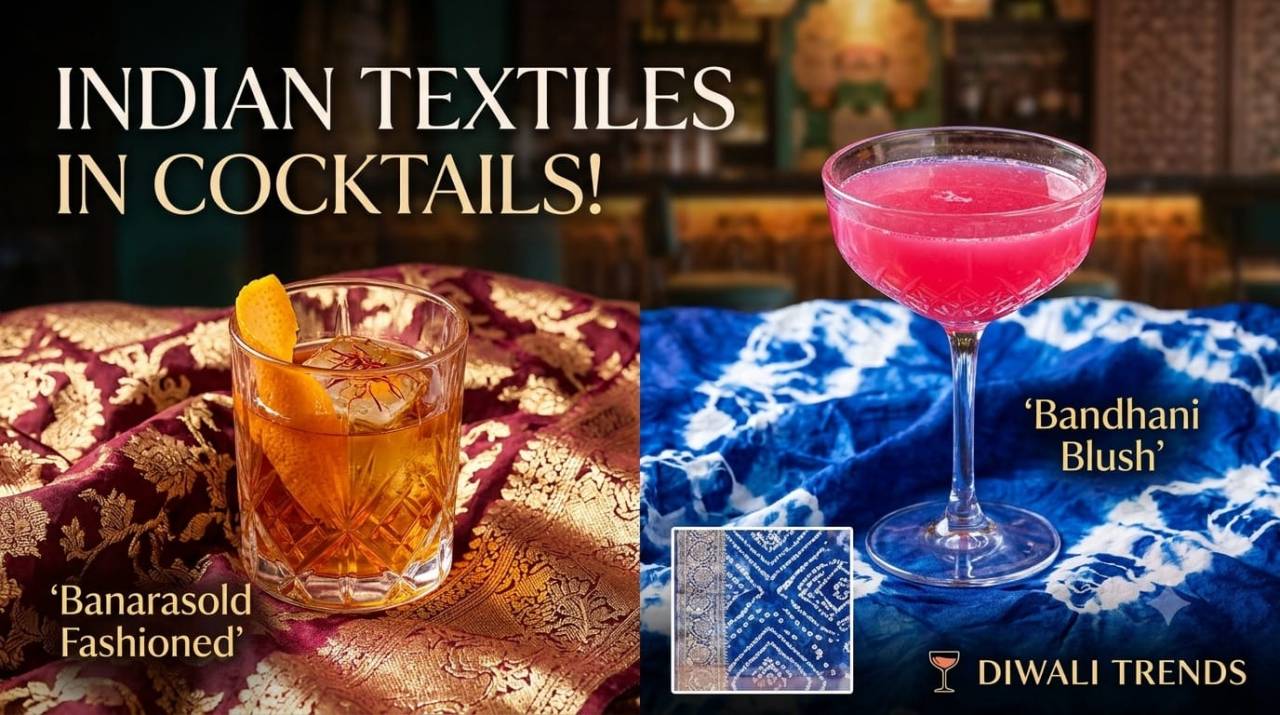
Banarasi silk and Bandhani are moving beyond fashion, inspiring a new wave of Indian cocktails blending heritage with modern mixology.
India’s traditional textiles are finding an unusual expression in the world of mixology. This Diwali, bars and beverage brands are drawing inspiration from the colours, patterns and craftsmanship of Indian fabrics to create cocktails that bring together fashion, culture and festive dining.
From the metallic detailing of Banarasi silk to the distinctive patterns of Bandhani, traditional fabrics are influencing not just the names and appearance of drinks but also their ingredients, presentation and overall experience.
When Textiles Inspire the Cocktail Menu
One of the prominent examples of this concept is PCO Bombay, which has introduced a special cocktail menu titled An Ode to Textiles. The menu features 15 cocktails, each inspired by a traditional Indian textile.
The idea goes beyond naming drinks after fabrics. The team explored textiles such as Banarasi, brocade, Kanchipuram silk, Pashmina, Kalamkari, Kantha, chiffon and Paithani to understand their colours, textures and distinctive characteristics. These details were then translated into cocktail ingredients and presentation.
Rakshay Dhariwal, founder of Pass Code Only, says the team also introduced physical fabric swatches in the menu. Guests can touch the fabrics while choosing a cocktail inspired by them, bringing an element of Indian craftsmanship directly to the bar experience.
The concept offers a different way to explore India's textile heritage, connecting traditional weaving and design with contemporary food and beverage culture.
Social Media Adds to the Appeal
Visual presentation has become an important part of the hospitality business, particularly as restaurants and bars compete for attention on social media.
Textile-inspired cocktails fit naturally into this trend. Creative Reels featuring drinks based on regional clothing and traditional fabrics have reportedly attracted around 500,000 views, showing the appeal of combining visual storytelling with beverage experiences.
Sanjiv Kumar Puri, regional director for India at Angus Dundee Distillers, which owns Macduff's Blended Scotch Whisky, points to social media as an important driver of interest in visually striking drinks.
However, presentation alone cannot make a cocktail successful. Puri emphasises the importance of keeping menus short, maintaining a balance of flavours and ensuring that drinks are practical to prepare and serve.
The idea is also finding relevance in festive hosting. Shalini Sharma, head of marketing at Piccadily Distilleries, says the colours, textures and intricate details of traditional garments can inspire cocktails designed around festive occasions.
Such drinks can become part of the table setting, complementing the decor and food while giving guests something different to experience.
Two Textile-Inspired Cocktails to Try
The concept can also be adapted for home celebrations. Here are two cocktail recipes inspired by traditional Indian textiles.
1. Banaras Old Fashioned
Inspired by the rich colours and metallic detailing of Banarasi silk, this whisky-based cocktail combines saffron, sherry and aromatic bitters.
Ingredients
- 45 ml whisky
- 15 ml sherry
- 10 ml saffron syrup
- 2 dashes aromatic bitters
- Orange peel and saffron strands for garnish
- Edible silver dust (optional, food-grade)
Method
Add whisky, sherry, saffron syrup and aromatic bitters to a mixing glass filled with ice. Stir for 20–30 seconds until chilled. Strain into a rocks glass over a large ice cube.
Express the orange peel over the drink and use it as a garnish. Finish with a small amount of food-grade edible silver dust to reflect the metallic detailing associated with Banarasi silk.
2. Bandhani Blush
Drawing inspiration from the bright colours and dotted patterns of Bandhani, this gin-based cocktail combines pomegranate, lime and rose.
Ingredients
- 45 ml gin
- 25 ml pomegranate juice
- 15 ml fresh lime juice
- 15 ml rose syrup
- 10 ml sugar syrup
- Ice
- Pomegranate pearls for garnish
Method
Add gin, pomegranate juice, lime juice, rose syrup and sugar syrup to a shaker filled with ice. Shake well until chilled. Strain into a chilled cocktail glass and garnish with pomegranate pearls.
Tradition Finds a Place in Modern Hospitality
The growing interest in textile-inspired cocktails reflects a wider effort to bring regional Indian heritage into contemporary hospitality. Traditional fabrics are no longer limited to clothing, exhibitions or craft markets. Their colours, patterns and stories are increasingly being used as inspiration for dining, decor and beverage presentation.
For bars and restaurants, the approach offers a way to create distinctive festive menus. For guests, it provides another opportunity to engage with India's cultural traditions.
The challenge is to ensure that the idea goes beyond visual appeal. A good cocktail still depends on its flavour, balance and quality. When these elements come together with thoughtful presentation, India's textile heritage can find an interesting new expression in the cocktail glass.
























Leave a Comment