
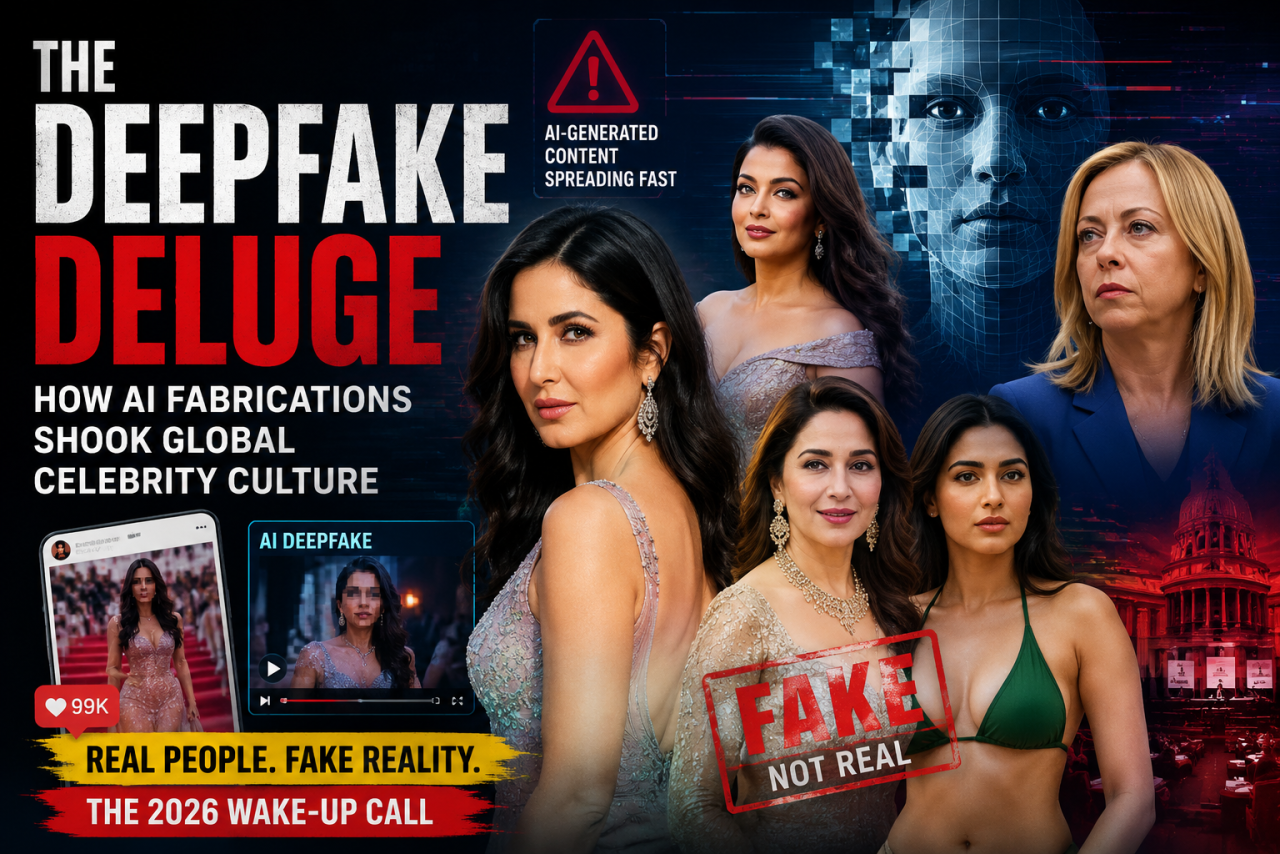
A fake red-carpet photo, a fabricated celebrity video, and a manipulated political image all shared one thing—none of them were real, yet millions believed they were.
May 2026 may be remembered as the moment synthetic media ceased to be a technological curiosity and became a full-scale cultural challenge. Within weeks, a flood of highly convincing AI-generated images and videos spread across social media platforms, targeting celebrities, public figures, and political leaders alike.
From fabricated red-carpet appearances to manipulated videos and misleading political imagery, the surge highlighted a growing crisis around digital consent, misinformation, and identity protection in the age of generative artificial intelligence.
The Met Gala Illusion and Fictional Red Carpets
The trend gained widespread attention in the aftermath of the 2026 Met Gala. Days after the event, realistic AI-generated images depicting Bollywood actor Katrina Kaif posing on the iconic Met steps began circulating online. Fans enthusiastically shared the images, assuming they captured an actual appearance.
The excitement quickly faded when media reports confirmed that Kaif had not attended the event. The images were entirely synthetic, demonstrating how easily AI-generated visuals can blur the line between fact and fiction.
A similar episode unfolded ahead of the 2026 Cannes Film Festival. AI-created images portraying Aishwarya Rai Bachchan in elaborate couture designs spread rapidly across social media. While many users admired the creativity of the fabricated fashion concepts, the incident underscored a troubling reality: for many viewers, distinguishing authentic event coverage from AI-generated content is becoming increasingly difficult.
Deepfakes Move Beyond Fashion
Not all synthetic content was harmless fantasy.
A controversial video falsely portraying Madhuri Dixit in a revealing outfit at a public gathering gained significant traction online before journalists and vigilant users identified it as a deepfake. Comparisons with photographs from the original March 10 event revealed that the actress had actually worn a modest and elegant gown, proving that the viral footage had been digitally manipulated.
Meanwhile, Kannada actor Rukmini Vasanth became the target of another viral fabrication when an AI-generated image resembling her in a green bikini spread across online communities. Due to the image's convincing appearance, the actor publicly clarified that the visual was entirely fake.
These incidents demonstrated how deepfake technology is increasingly being used not merely to entertain but to alter public perception and exploit the identities of well-known individuals.
Toxic Narratives and Manufactured Hierarchies
The wave of AI-generated content extended beyond manipulated appearances.
Following her appearance at the Cannes Film Festival, Urvashi Rautela was forced to respond to a viral AI-generated graphic that ranked Bollywood actors within a fictional hierarchy of global stardom. The fabricated image depicted some actors seated on grand thrones while others—including Rautela—were shown kneeling before them.
As speculation grew that the image originated from an actual photoshoot, Rautela publicly clarified that the graphic was entirely fabricated. She also urged fans to avoid spreading online hostility, emphasizing that every actor follows a unique professional journey.
The episode illustrated how generative AI can amplify existing rivalries and create divisive narratives that never existed in reality.
When Deepfakes Enter Politics
The problem is no longer confined to the entertainment industry.
Italian Prime Minister Giorgia Meloni publicly criticized the circulation of AI-generated images depicting her in lingerie. While condemning the misuse of artificial intelligence for political misinformation, she responded with characteristic humor, joking that the creators had at least "improved" her appearance.
Behind the humor, however, lay a serious concern. Deepfakes targeting political figures have the potential to distort public discourse, damage reputations, and influence public opinion on a massive scale.
As synthetic media becomes more sophisticated, the risk extends beyond embarrassment to potential threats against democratic processes and institutional trust.
The Growing Threat to Digital Identity
The events of May 2026 revealed a troubling trend: visual evidence is no longer inherently trustworthy.
As generative AI tools become cheaper, faster, and more accessible, the barriers to creating realistic fabrications continue to fall. Celebrities may be the most visible victims today, but the underlying vulnerability affects everyone.
Experts increasingly argue that combating this challenge will require a combination of technological safeguards, platform accountability, and legal protections. Digital watermarking, stronger content verification systems, improved media literacy, and clear regulatory frameworks are likely to become essential tools in preserving trust online.
Final Take
The deepfake surge of 2026 was more than a celebrity controversy—it was a warning about the future of digital reality itself. The ability to create convincing synthetic images and videos at scale has fundamentally altered how information is consumed and trusted.
As artificial intelligence continues to evolve, societies will face a critical challenge: preserving authenticity in a world where seeing is no longer believing.
May 2026 may be remembered as the moment synthetic media ceased to be a technological curiosity and became a full-scale cultural challenge. Within weeks, a flood of highly convincing AI-generated images and videos spread across social media platforms, targeting celebrities, public figures, and political leaders alike.
From fabricated red-carpet appearances to manipulated videos and misleading political imagery, the surge highlighted a growing crisis around digital consent, misinformation, and identity protection in the age of generative artificial intelligence.
The Met Gala Illusion and Fictional Red Carpets
The trend gained widespread attention in the aftermath of the 2026 Met Gala. Days after the event, realistic AI-generated images depicting Bollywood actor Katrina Kaif posing on the iconic Met steps began circulating online. Fans enthusiastically shared the images, assuming they captured an actual appearance.
The excitement quickly faded when media reports confirmed that Kaif had not attended the event. The images were entirely synthetic, demonstrating how easily AI-generated visuals can blur the line between fact and fiction.
A similar episode unfolded ahead of the 2026 Cannes Film Festival. AI-created images portraying Aishwarya Rai Bachchan in elaborate couture designs spread rapidly across social media. While many users admired the creativity of the fabricated fashion concepts, the incident underscored a troubling reality: for many viewers, distinguishing authentic event coverage from AI-generated content is becoming increasingly difficult.
Deepfakes Move Beyond Fashion
Not all synthetic content was harmless fantasy.
A controversial video falsely portraying Madhuri Dixit in a revealing outfit at a public gathering gained significant traction online before journalists and vigilant users identified it as a deepfake. Comparisons with photographs from the original March 10 event revealed that the actress had actually worn a modest and elegant gown, proving that the viral footage had been digitally manipulated.
Meanwhile, Kannada actor Rukmini Vasanth became the target of another viral fabrication when an AI-generated image resembling her in a green bikini spread across online communities. Due to the image's convincing appearance, the actor publicly clarified that the visual was entirely fake.
These incidents demonstrated how deepfake technology is increasingly being used not merely to entertain but to alter public perception and exploit the identities of well-known individuals.
Toxic Narratives and Manufactured Hierarchies
The wave of AI-generated content extended beyond manipulated appearances.
Following her appearance at the Cannes Film Festival, Urvashi Rautela was forced to respond to a viral AI-generated graphic that ranked Bollywood actors within a fictional hierarchy of global stardom. The fabricated image depicted some actors seated on grand thrones while others—including Rautela—were shown kneeling before them.
As speculation grew that the image originated from an actual photoshoot, Rautela publicly clarified that the graphic was entirely fabricated. She also urged fans to avoid spreading online hostility, emphasizing that every actor follows a unique professional journey.
The episode illustrated how generative AI can amplify existing rivalries and create divisive narratives that never existed in reality.
When Deepfakes Enter Politics
The problem is no longer confined to the entertainment industry.
Italian Prime Minister Giorgia Meloni publicly criticized the circulation of AI-generated images depicting her in lingerie. While condemning the misuse of artificial intelligence for political misinformation, she responded with characteristic humor, joking that the creators had at least "improved" her appearance.
Behind the humor, however, lay a serious concern. Deepfakes targeting political figures have the potential to distort public discourse, damage reputations, and influence public opinion on a massive scale.
As synthetic media becomes more sophisticated, the risk extends beyond embarrassment to potential threats against democratic processes and institutional trust.
The Growing Threat to Digital Identity
The events of May 2026 revealed a troubling trend: visual evidence is no longer inherently trustworthy.
As generative AI tools become cheaper, faster, and more accessible, the barriers to creating realistic fabrications continue to fall. Celebrities may be the most visible victims today, but the underlying vulnerability affects everyone.
Experts increasingly argue that combating this challenge will require a combination of technological safeguards, platform accountability, and legal protections. Digital watermarking, stronger content verification systems, improved media literacy, and clear regulatory frameworks are likely to become essential tools in preserving trust online.
Final Take
The deepfake surge of 2026 was more than a celebrity controversy—it was a warning about the future of digital reality itself. The ability to create convincing synthetic images and videos at scale has fundamentally altered how information is consumed and trusted.
As artificial intelligence continues to evolve, societies will face a critical challenge: preserving authenticity in a world where seeing is no longer believing.















Leave a Comment