
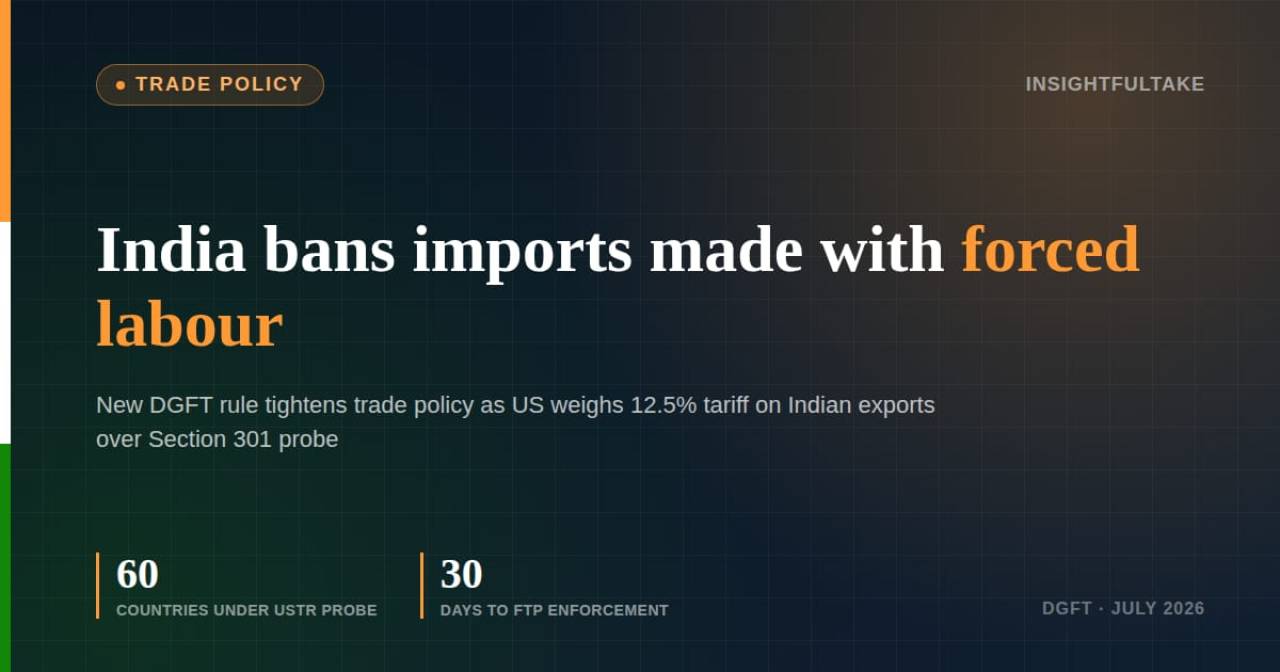
As the United States weighs fresh tariffs on Indian exports, India has taken a decisive step by banning imports made with forced labour, a move that could reshape trade negotiations and strengthen its position on ethical global commerce.
India has moved to prohibit the import of goods produced wholly or partly through forced labour, strengthening its trade regulations just days before the United States is expected to decide on proposed additional tariffs on Indian exports over similar concerns.
The Directorate General of Foreign Trade (DGFT) issued the notification on July 13 after receiving approval from Commerce and Industry Minister Piyush Goyal. The new provision will become part of India's Foreign Trade Policy (FTP) after a mandatory 30-day period from the date of notification.
What the New Rule Says
Under the notification, the import of goods manufactured wholly or partially through forced labour has been prohibited. The central government has also empowered itself to identify and notify such goods from time to time after conducting a formal inquiry.
The DGFT will carry out these inquiries under procedures that will be specified in the Handbook of Procedures, 2023.
The government has also formally incorporated a definition of "forced labour" into the Foreign Trade Policy. The definition is based on the International Labour Organisation's (ILO) Forced Labour Convention, 1930 (No. 29), which defines forced labour as any work or service extracted from a person under the threat of a penalty and performed without the individual's voluntary consent.
Move Comes Amid US Trade Scrutiny
The notification comes at a significant moment in India-US trade relations.
The Office of the United States Trade Representative (USTR) launched a Section 301 investigation on March 12 covering 60 countries, including India. One of the concerns highlighted by the USTR was that India did not have an explicit legal prohibition on importing goods produced through forced labour.
On June 2, the USTR proposed an additional 12.5 percent tariff on imports from 54 countries, including India, citing forced labour concerns. Six other countries, including Indonesia and Pakistan, face a proposed tariff of 10 percent.
India has consistently rejected these allegations. The government has maintained that the issue is being addressed as part of ongoing negotiations for a bilateral trade agreement with the United States. It has also argued that the theoretical possibility of forced-labour goods entering India cannot be interpreted as government approval or acceptance of such practices.
In its submission to the USTR on May 7, India stated that there is no conclusive evidence showing that it imports or exports goods made through forced labour.
During the latest hearing on July 8, India's representative reiterated that eliminating forced labour is a constitutional obligation of the Indian state. The submission further argued that the absence of an explicit import ban did not mean the government tolerated or permitted forced labour in any form.
The USTR has not yet announced its final decision on the proposed tariffs.
Final Take
The amendment serves both a regulatory and diplomatic purpose.
By introducing an explicit prohibition on imports linked to forced labour, India has addressed one of the specific concerns raised by the USTR during its investigation. Whether this move influences the outcome of the Section 301 inquiry or affects the proposed tariffs will depend on the U.S. administration's final assessment.
The responsibility now shifts to the DGFT, which must establish the procedures for identifying goods produced through forced labour and enforcing the new restrictions after the 30-day implementation period.
Until those enforcement mechanisms are fully operational, the notification represents an important policy commitment rather than an immediately enforceable trade barrier at India's ports.
India has moved to prohibit the import of goods produced wholly or partly through forced labour, strengthening its trade regulations just days before the United States is expected to decide on proposed additional tariffs on Indian exports over similar concerns.
The Directorate General of Foreign Trade (DGFT) issued the notification on July 13 after receiving approval from Commerce and Industry Minister Piyush Goyal. The new provision will become part of India's Foreign Trade Policy (FTP) after a mandatory 30-day period from the date of notification.
What the New Rule Says
Under the notification, the import of goods manufactured wholly or partially through forced labour has been prohibited. The central government has also empowered itself to identify and notify such goods from time to time after conducting a formal inquiry.
The DGFT will carry out these inquiries under procedures that will be specified in the Handbook of Procedures, 2023.
The government has also formally incorporated a definition of "forced labour" into the Foreign Trade Policy. The definition is based on the International Labour Organisation's (ILO) Forced Labour Convention, 1930 (No. 29), which defines forced labour as any work or service extracted from a person under the threat of a penalty and performed without the individual's voluntary consent.
Move Comes Amid US Trade Scrutiny
The notification comes at a significant moment in India-US trade relations.
The Office of the United States Trade Representative (USTR) launched a Section 301 investigation on March 12 covering 60 countries, including India. One of the concerns highlighted by the USTR was that India did not have an explicit legal prohibition on importing goods produced through forced labour.
On June 2, the USTR proposed an additional 12.5 percent tariff on imports from 54 countries, including India, citing forced labour concerns. Six other countries, including Indonesia and Pakistan, face a proposed tariff of 10 percent.
India has consistently rejected these allegations. The government has maintained that the issue is being addressed as part of ongoing negotiations for a bilateral trade agreement with the United States. It has also argued that the theoretical possibility of forced-labour goods entering India cannot be interpreted as government approval or acceptance of such practices.
In its submission to the USTR on May 7, India stated that there is no conclusive evidence showing that it imports or exports goods made through forced labour.
During the latest hearing on July 8, India's representative reiterated that eliminating forced labour is a constitutional obligation of the Indian state. The submission further argued that the absence of an explicit import ban did not mean the government tolerated or permitted forced labour in any form.
The USTR has not yet announced its final decision on the proposed tariffs.
Final Take
The amendment serves both a regulatory and diplomatic purpose.
By introducing an explicit prohibition on imports linked to forced labour, India has addressed one of the specific concerns raised by the USTR during its investigation. Whether this move influences the outcome of the Section 301 inquiry or affects the proposed tariffs will depend on the U.S. administration's final assessment.
The responsibility now shifts to the DGFT, which must establish the procedures for identifying goods produced through forced labour and enforcing the new restrictions after the 30-day implementation period.
Until those enforcement mechanisms are fully operational, the notification represents an important policy commitment rather than an immediately enforceable trade barrier at India's ports.
















Leave a Comment