
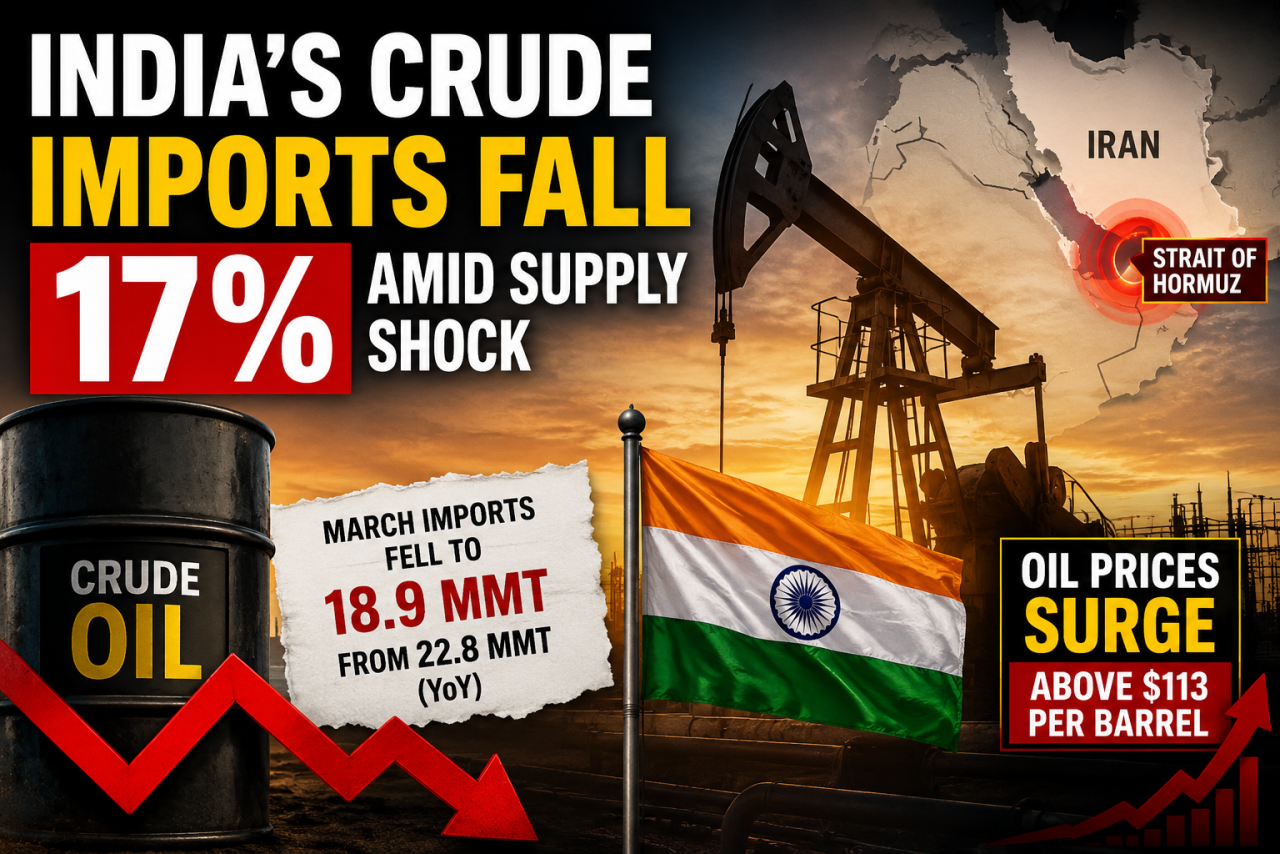
A conflict thousands of kilometers away is now shaking India’s fuel economy. With crude oil imports plunging 17% and global prices surging, the West Asia crisis is rapidly turning into an economic warning sign for India.
India’s crude oil imports witnessed a sharp decline in March, highlighting the growing vulnerability of global energy markets amid escalating geopolitical tensions in West Asia. According to government data, the country’s crude import volumes fell by nearly 17% year-on-year during the month, primarily due to disruptions triggered by the conflict involving Iran and the resulting instability around the Strait of Hormuz — one of the world’s most critical oil transit routes.
The decline came during the first full month after military escalation between the United States, Israel, and Iran intensified concerns over global supply chains. India, which imports over 85% of its crude oil requirements, found itself directly exposed to the ripple effects of the crisis.
Data released by the Petroleum Planning and Analysis Cell (PPAC) showed that India imported 18.9 million metric tonnes (MMT) of crude oil in March, compared to 22.8 MMT during the same month last year. In value terms, the country’s crude oil import bill declined from $12.3 billion to $11.7 billion, a drop of around 4.9%.
The fall in imports is significant because it occurred despite a dramatic surge in international crude prices. Following the outbreak of conflict, benchmark crude prices reportedly jumped by more than 64%, rising from around $73 per barrel in late February to nearly $120 per barrel during peak intraday trading in March. India’s average crude basket price also climbed sharply, reaching over $113 per barrel compared to approximately $72 a year earlier.
Analysts attribute much of the disruption to uncertainty surrounding the Strait of Hormuz, through which nearly one-fifth of global oil supplies pass. Any threat to movement through this narrow maritime corridor immediately impacts shipping costs, insurance premiums, and supply confidence across global markets.
The situation has added pressure on India’s economy at a time when inflation management and currency stability remain major concerns. The Indian rupee has weakened notably against the US dollar since the beginning of the year, increasing the cost burden of energy imports further.
Prime Minister Narendra Modi recently urged citizens to remain cautious about energy consumption and foreign exchange use, reflecting the government’s concern over the evolving crisis. Officials fear that a prolonged conflict or further disruption in shipping routes could create deeper economic strain in the coming months.
Interestingly, while monthly imports declined sharply, India’s overall crude oil expenditure for the financial year 2025-26 showed a more complex picture. Cumulative crude imports for the year stood at approximately $123 billion, lower than the previous year despite a marginal rise in import volumes. Stable oil prices during much of the financial year before the conflict helped India manage its annual import burden more effectively.
The developments have also had a mixed impact on India’s state-run oil companies. Public sector refiners such as Hindustan Petroleum Corporation Limited (HPCL), Indian Oil Corporation (IOC), and Bharat Petroleum Corporation Limited (BPCL) are expected to report strong financial performances for the fourth quarter and the full financial year, aided by favorable refining margins and controlled retail fuel pricing during earlier months.
HPCL has already reported a massive jump in quarterly profits. The company announced a 46% rise in net profit for the January–March quarter, while its full-year profit more than doubled compared to the previous fiscal year. The firm also declared a substantial final dividend for shareholders.
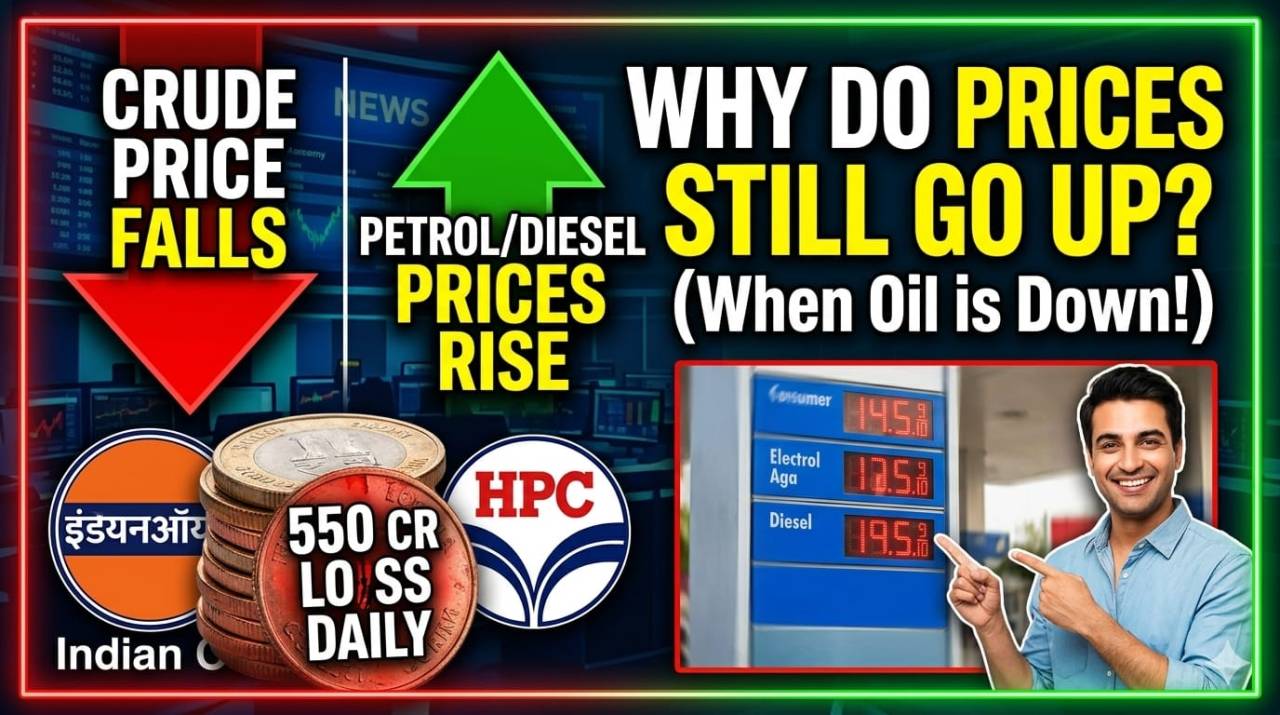
However, the recent rise in crude prices threatens to reverse these gains if fuel prices remain politically controlled domestically. Oil Minister Hardeep Singh Puri recently acknowledged that state-run oil marketing companies are collectively absorbing heavy daily losses because retail fuel prices have not been increased in line with international market rates.
This creates a difficult balancing act for the government. Raising petrol and diesel prices could fuel inflation and public dissatisfaction, especially ahead of politically sensitive periods. On the other hand, continuing to shield consumers could strain the finances of oil companies and increase the government’s fiscal pressure.
Experts believe India may accelerate efforts toward diversifying its crude sourcing strategy and expanding strategic petroleum reserves to reduce future vulnerability. The crisis has once again exposed how deeply interconnected India’s economic stability is with geopolitical developments in West Asia.
As global tensions continue and energy markets remain volatile, India faces the challenge of balancing energy security, economic stability, and consumer protection in an increasingly uncertain world.
India’s crude oil imports witnessed a sharp decline in March, highlighting the growing vulnerability of global energy markets amid escalating geopolitical tensions in West Asia. According to government data, the country’s crude import volumes fell by nearly 17% year-on-year during the month, primarily due to disruptions triggered by the conflict involving Iran and the resulting instability around the Strait of Hormuz — one of the world’s most critical oil transit routes.
The decline came during the first full month after military escalation between the United States, Israel, and Iran intensified concerns over global supply chains. India, which imports over 85% of its crude oil requirements, found itself directly exposed to the ripple effects of the crisis.
Data released by the Petroleum Planning and Analysis Cell (PPAC) showed that India imported 18.9 million metric tonnes (MMT) of crude oil in March, compared to 22.8 MMT during the same month last year. In value terms, the country’s crude oil import bill declined from $12.3 billion to $11.7 billion, a drop of around 4.9%.
The fall in imports is significant because it occurred despite a dramatic surge in international crude prices. Following the outbreak of conflict, benchmark crude prices reportedly jumped by more than 64%, rising from around $73 per barrel in late February to nearly $120 per barrel during peak intraday trading in March. India’s average crude basket price also climbed sharply, reaching over $113 per barrel compared to approximately $72 a year earlier.
Analysts attribute much of the disruption to uncertainty surrounding the Strait of Hormuz, through which nearly one-fifth of global oil supplies pass. Any threat to movement through this narrow maritime corridor immediately impacts shipping costs, insurance premiums, and supply confidence across global markets.
The situation has added pressure on India’s economy at a time when inflation management and currency stability remain major concerns. The Indian rupee has weakened notably against the US dollar since the beginning of the year, increasing the cost burden of energy imports further.
Prime Minister Narendra Modi recently urged citizens to remain cautious about energy consumption and foreign exchange use, reflecting the government’s concern over the evolving crisis. Officials fear that a prolonged conflict or further disruption in shipping routes could create deeper economic strain in the coming months.
Interestingly, while monthly imports declined sharply, India’s overall crude oil expenditure for the financial year 2025-26 showed a more complex picture. Cumulative crude imports for the year stood at approximately $123 billion, lower than the previous year despite a marginal rise in import volumes. Stable oil prices during much of the financial year before the conflict helped India manage its annual import burden more effectively.
The developments have also had a mixed impact on India’s state-run oil companies. Public sector refiners such as Hindustan Petroleum Corporation Limited (HPCL), Indian Oil Corporation (IOC), and Bharat Petroleum Corporation Limited (BPCL) are expected to report strong financial performances for the fourth quarter and the full financial year, aided by favorable refining margins and controlled retail fuel pricing during earlier months.
HPCL has already reported a massive jump in quarterly profits. The company announced a 46% rise in net profit for the January–March quarter, while its full-year profit more than doubled compared to the previous fiscal year. The firm also declared a substantial final dividend for shareholders.
However, the recent rise in crude prices threatens to reverse these gains if fuel prices remain politically controlled domestically. Oil Minister Hardeep Singh Puri recently acknowledged that state-run oil marketing companies are collectively absorbing heavy daily losses because retail fuel prices have not been increased in line with international market rates.
This creates a difficult balancing act for the government. Raising petrol and diesel prices could fuel inflation and public dissatisfaction, especially ahead of politically sensitive periods. On the other hand, continuing to shield consumers could strain the finances of oil companies and increase the government’s fiscal pressure.
Experts believe India may accelerate efforts toward diversifying its crude sourcing strategy and expanding strategic petroleum reserves to reduce future vulnerability. The crisis has once again exposed how deeply interconnected India’s economic stability is with geopolitical developments in West Asia.
As global tensions continue and energy markets remain volatile, India faces the challenge of balancing energy security, economic stability, and consumer protection in an increasingly uncertain world.























Leave a Comment