
MGNREGA is set to end from July 2026 as the government rolls out the new VB-GRAMG Act. The scheme promises more workdays and digital transparency, but its funding model has triggered fresh debate over the future of rural employment guarantees in India.
India’s rural employment framework is set for its biggest overhaul in nearly two decades. Beginning July 1, 2026, the central government will roll out the Viksit Bharat – Guarantee for Rozgar and Ajeevika Mission (Gramin) Act, 2025, or VB-GRAMG Act, replacing the long-running Mahatma Gandhi National Rural Employment Guarantee Act (MGNREGA).
For millions of rural households, MGNREGA was more than a welfare scheme. Since its launch in 2005, it functioned as a legal guarantee of work during periods of distress, especially in drought-hit and economically fragile regions. The new legislation retains the idea of guaranteed rural employment, but its structure signals a significant policy shift — from a demand-driven welfare model to a centrally planned development mission tied closely to infrastructure creation and digital governance.
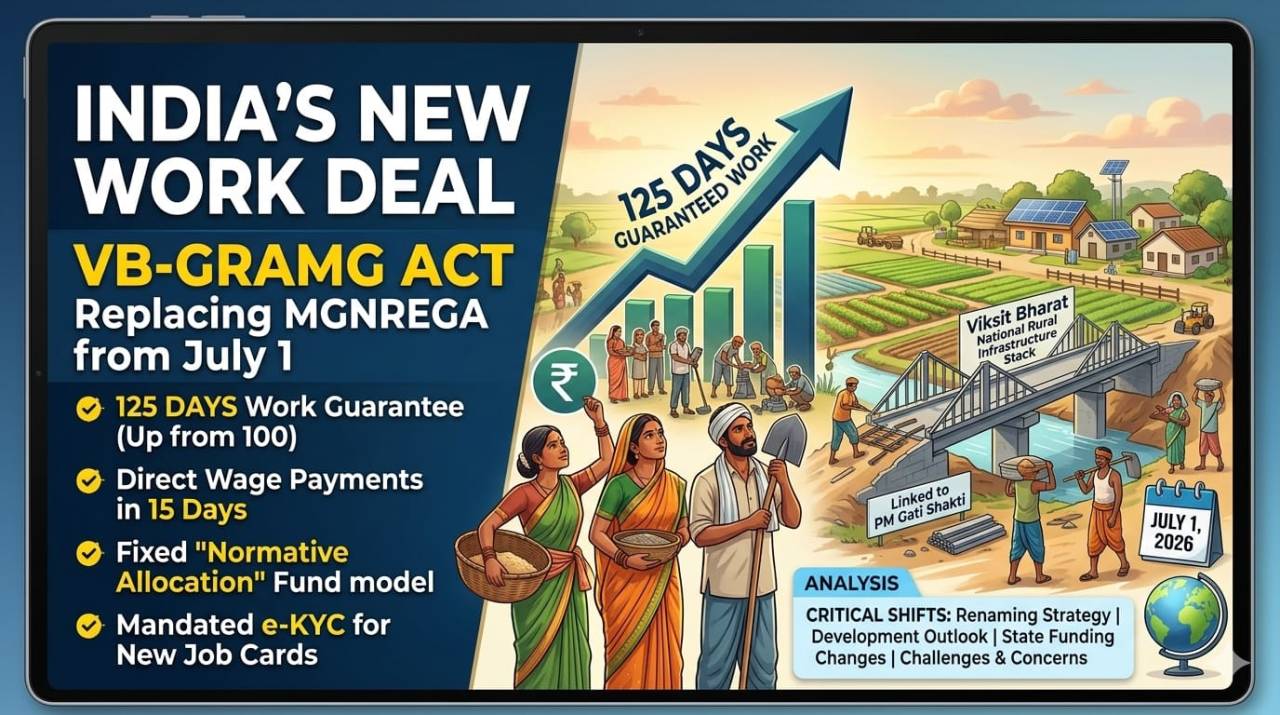
The headline announcement has been the increase in guaranteed workdays. Under the new law, eligible rural households will now receive up to 125 days of paid unskilled work annually, compared to the 100 days provided under MGNREGA. Wages are to be transferred directly into bank accounts within 15 days, and workers will continue to be entitled to unemployment allowance if employment is not provided within the prescribed period.
However, the more consequential changes lie in the scheme’s financing and administration.
Under MGNREGA, funding was largely demand-based. If rural households sought work, the Centre was legally bound to release funds. This mechanism became particularly important during crises such as the COVID-19 lockdown, when millions of migrant workers returned to villages and relied on the scheme for survival.
The VB-GRAMG framework alters this model by introducing what the government calls “state-wise normative allocations.” In practical terms, the Centre will set annual spending ceilings for each state. Any expenditure beyond that limit will have to be borne by state governments themselves.
Supporters of the reform argue that fixed allocations will improve fiscal discipline and prevent delays caused by uncontrolled expenditure. Critics, however, believe the move weakens the rights-based character of rural employment guarantees.
Several economists and opposition leaders have warned that rural distress does not emerge according to predetermined budget targets. During crop failures, floods, heatwaves, or economic slowdowns, demand for work can rise sharply. If states exhaust their allocated funds, poorer states may struggle to finance additional work on their own.
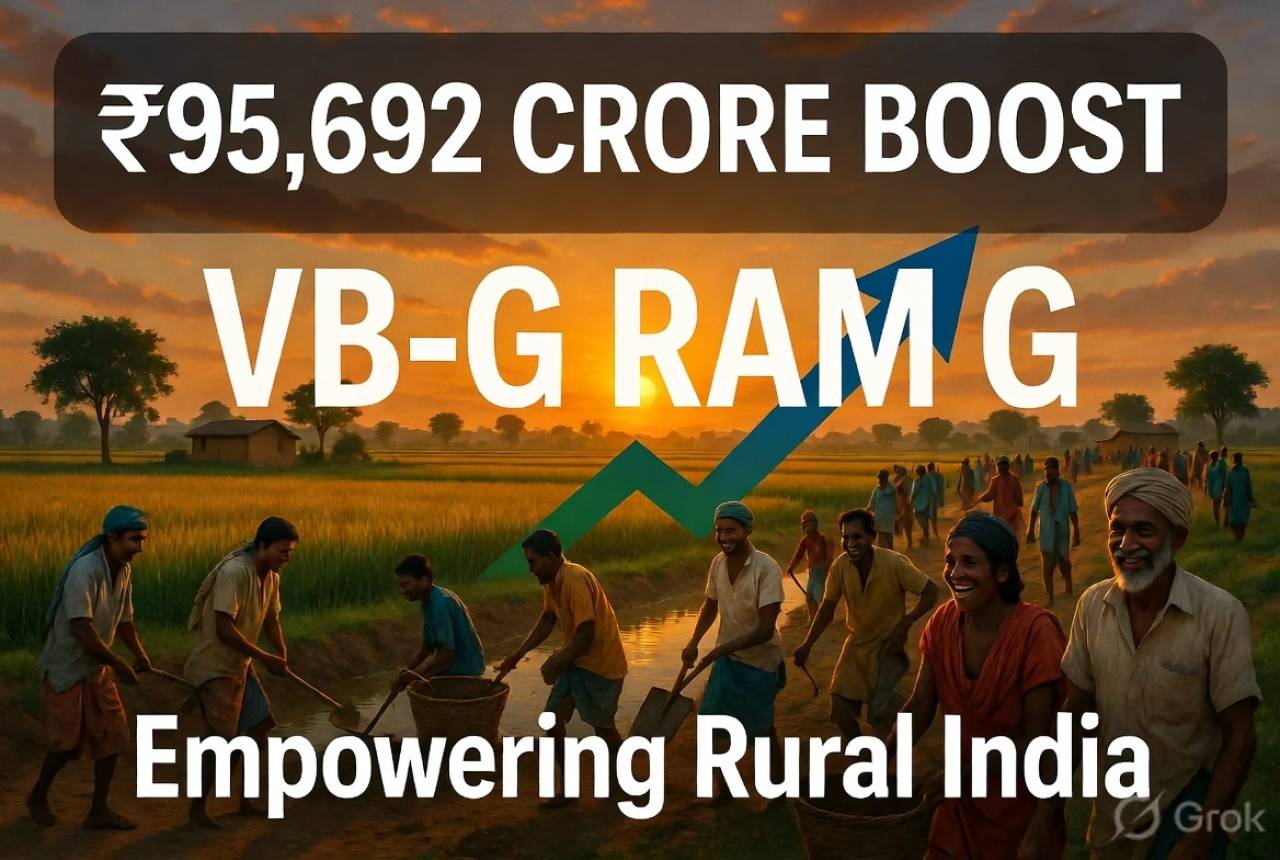
The Centre will continue to share costs with states under the existing formula — 60:40 for most states and 90:10 for northeastern and Himalayan regions. The annual outlay for the revamped mission is estimated at around ₹1.51 lakh crore, with the Union government expected to contribute nearly ₹95,700 crore.
The government has also linked the new law to its broader “Viksit Bharat” development agenda. Officials say the aim is to move rural employment beyond temporary relief and turn it into a tool for long-term infrastructure creation.
Under the new system, every village panchayat will prepare a Viksit Gram Panchayat Plan (VGPP) identifying local infrastructure priorities. These plans will then feed into a larger national rural infrastructure framework connected to the PM Gati Shakti programme.
This integration is expected to push villages toward projects such as rural roads, irrigation systems, water conservation structures, storage facilities, and local connectivity works. The government argues that such an approach will ensure public spending creates durable assets instead of short-term projects with limited economic value.
At the same time, the Act retains the requirement that rural employment spending remain labour-intensive. At least 60 percent of expenditure in a district must go toward wages, while material costs cannot exceed 40 percent.
Another major change involves digitisation. New Gramin Rozgar Guarantee Cards will require electronic KYC verification. Officials maintain that the move will reduce duplication, fake job cards, and leakages that have long affected implementation in some regions.
Yet digital verification has emerged as another point of concern. Activists working in rural areas argue that many villages still face poor internet connectivity, biometric authentication failures, and banking access problems. They fear vulnerable workers — especially elderly labourers, migrant families, and tribal communities — could face exclusion if technological systems fail on the ground.
Political reactions to the legislation have been sharply divided.
Union Rural Development Minister Shivraj Singh Chouhan described the law as a “historic transition” that aligns rural employment with the goal of building economically stronger villages. According to the government, the new model is intended to improve transparency, strengthen planning, and create more productive assets in rural India.
Opposition parties, however, see the changes differently. Congress leader Jairam Ramesh criticised the renaming exercise as cosmetic and accused the government of diluting the rights-based foundation of MGNREGA. Several rural policy experts have also questioned whether fixed allocations could reduce flexibility during periods of high unemployment.
The debate ultimately reflects two competing visions of welfare policy. One treats rural employment as a legal safety net that automatically expands during hardship. The other views it as a structured development mission tied to fiscal discipline and infrastructure goals.
The real impact of the VB-GRAMG Act will become clear only after implementation begins next year. If funding remains adequate and states are able to respond quickly during periods of distress, the new system could strengthen rural infrastructure while continuing to provide employment security. But if spending ceilings restrict work availability during crises, concerns over the weakening of employment rights are likely to intensify.
For millions of rural workers, the transition from MGNREGA to VB-GRAMG is not merely a change in name. It marks a broader shift in how the Indian state approaches welfare, development, and rural labour in the years ahead.
India’s rural employment framework is set for its biggest overhaul in nearly two decades. Beginning July 1, 2026, the central government will roll out the Viksit Bharat – Guarantee for Rozgar and Ajeevika Mission (Gramin) Act, 2025, or VB-GRAMG Act, replacing the long-running Mahatma Gandhi National Rural Employment Guarantee Act (MGNREGA).
For millions of rural households, MGNREGA was more than a welfare scheme. Since its launch in 2005, it functioned as a legal guarantee of work during periods of distress, especially in drought-hit and economically fragile regions. The new legislation retains the idea of guaranteed rural employment, but its structure signals a significant policy shift — from a demand-driven welfare model to a centrally planned development mission tied closely to infrastructure creation and digital governance.
The headline announcement has been the increase in guaranteed workdays. Under the new law, eligible rural households will now receive up to 125 days of paid unskilled work annually, compared to the 100 days provided under MGNREGA. Wages are to be transferred directly into bank accounts within 15 days, and workers will continue to be entitled to unemployment allowance if employment is not provided within the prescribed period.
However, the more consequential changes lie in the scheme’s financing and administration.
Under MGNREGA, funding was largely demand-based. If rural households sought work, the Centre was legally bound to release funds. This mechanism became particularly important during crises such as the COVID-19 lockdown, when millions of migrant workers returned to villages and relied on the scheme for survival.
The VB-GRAMG framework alters this model by introducing what the government calls “state-wise normative allocations.” In practical terms, the Centre will set annual spending ceilings for each state. Any expenditure beyond that limit will have to be borne by state governments themselves.
Supporters of the reform argue that fixed allocations will improve fiscal discipline and prevent delays caused by uncontrolled expenditure. Critics, however, believe the move weakens the rights-based character of rural employment guarantees.
Several economists and opposition leaders have warned that rural distress does not emerge according to predetermined budget targets. During crop failures, floods, heatwaves, or economic slowdowns, demand for work can rise sharply. If states exhaust their allocated funds, poorer states may struggle to finance additional work on their own.
The Centre will continue to share costs with states under the existing formula — 60:40 for most states and 90:10 for northeastern and Himalayan regions. The annual outlay for the revamped mission is estimated at around ₹1.51 lakh crore, with the Union government expected to contribute nearly ₹95,700 crore.
The government has also linked the new law to its broader “Viksit Bharat” development agenda. Officials say the aim is to move rural employment beyond temporary relief and turn it into a tool for long-term infrastructure creation.
Under the new system, every village panchayat will prepare a Viksit Gram Panchayat Plan (VGPP) identifying local infrastructure priorities. These plans will then feed into a larger national rural infrastructure framework connected to the PM Gati Shakti programme.
This integration is expected to push villages toward projects such as rural roads, irrigation systems, water conservation structures, storage facilities, and local connectivity works. The government argues that such an approach will ensure public spending creates durable assets instead of short-term projects with limited economic value.
At the same time, the Act retains the requirement that rural employment spending remain labour-intensive. At least 60 percent of expenditure in a district must go toward wages, while material costs cannot exceed 40 percent.
Another major change involves digitisation. New Gramin Rozgar Guarantee Cards will require electronic KYC verification. Officials maintain that the move will reduce duplication, fake job cards, and leakages that have long affected implementation in some regions.
Yet digital verification has emerged as another point of concern. Activists working in rural areas argue that many villages still face poor internet connectivity, biometric authentication failures, and banking access problems. They fear vulnerable workers — especially elderly labourers, migrant families, and tribal communities — could face exclusion if technological systems fail on the ground.
Political reactions to the legislation have been sharply divided.
Union Rural Development Minister Shivraj Singh Chouhan described the law as a “historic transition” that aligns rural employment with the goal of building economically stronger villages. According to the government, the new model is intended to improve transparency, strengthen planning, and create more productive assets in rural India.
Opposition parties, however, see the changes differently. Congress leader Jairam Ramesh criticised the renaming exercise as cosmetic and accused the government of diluting the rights-based foundation of MGNREGA. Several rural policy experts have also questioned whether fixed allocations could reduce flexibility during periods of high unemployment.
The debate ultimately reflects two competing visions of welfare policy. One treats rural employment as a legal safety net that automatically expands during hardship. The other views it as a structured development mission tied to fiscal discipline and infrastructure goals.
The real impact of the VB-GRAMG Act will become clear only after implementation begins next year. If funding remains adequate and states are able to respond quickly during periods of distress, the new system could strengthen rural infrastructure while continuing to provide employment security. But if spending ceilings restrict work availability during crises, concerns over the weakening of employment rights are likely to intensify.
For millions of rural workers, the transition from MGNREGA to VB-GRAMG is not merely a change in name. It marks a broader shift in how the Indian state approaches welfare, development, and rural labour in the years ahead.





















Leave a Comment