
India’s massive youth population was once seen as the country’s greatest economic advantage. But rising unemployment and widening skill gaps are leaving millions of young professionals struggling to secure stable careers in a rapidly changing job market.
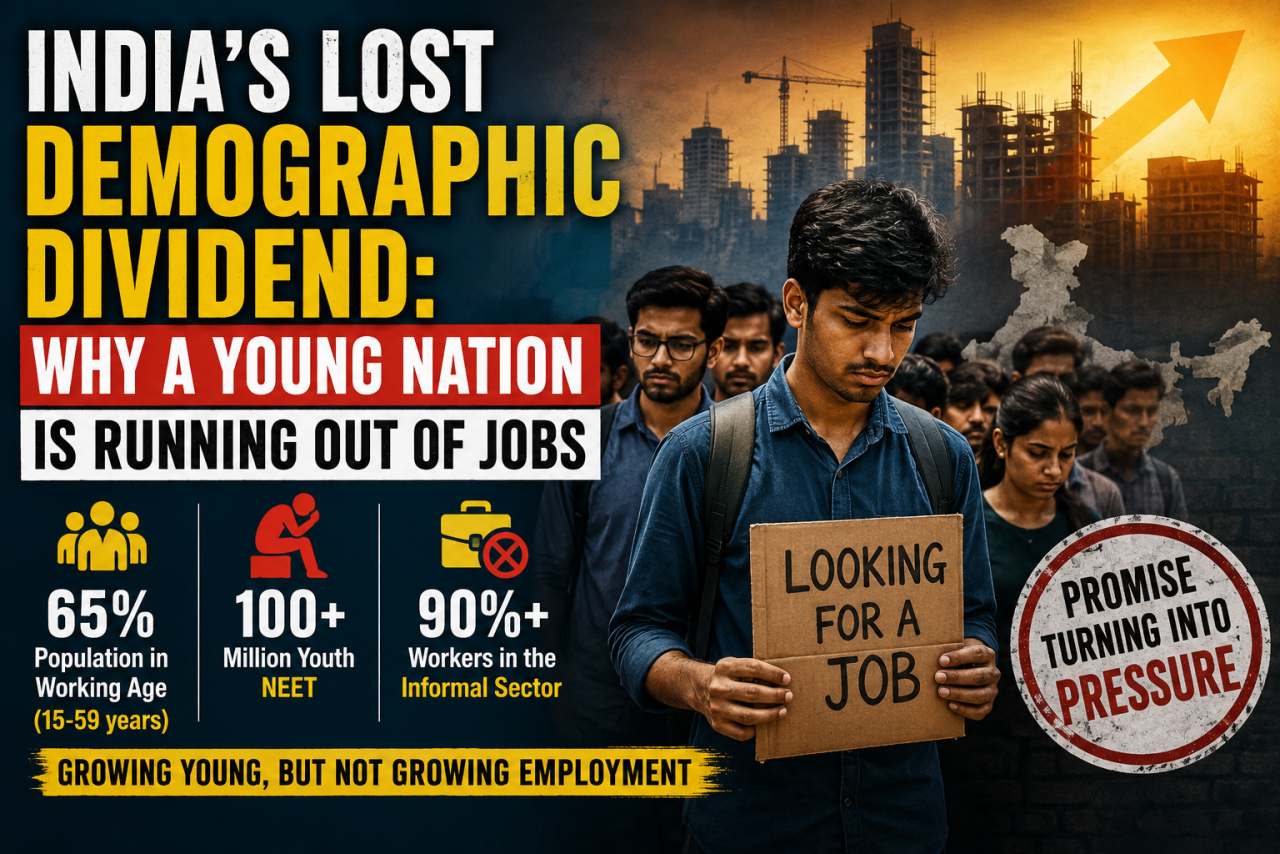
India stands at a critical moment in its economic journey. With nearly 367 million people between the ages of 15 and 29, the country possesses the world’s largest youth population. For years, policymakers described this demographic advantage as India’s greatest economic strength. But for millions of graduates and first-time job seekers, that promise is beginning to feel increasingly uncertain.
The transition from education to employment has become more difficult than ever. Degrees are rising, aspirations are expanding, and yet stable opportunities remain limited. Across cities and towns, young professionals are finding themselves trapped between academic qualifications and a labour market evolving faster than the education system itself.
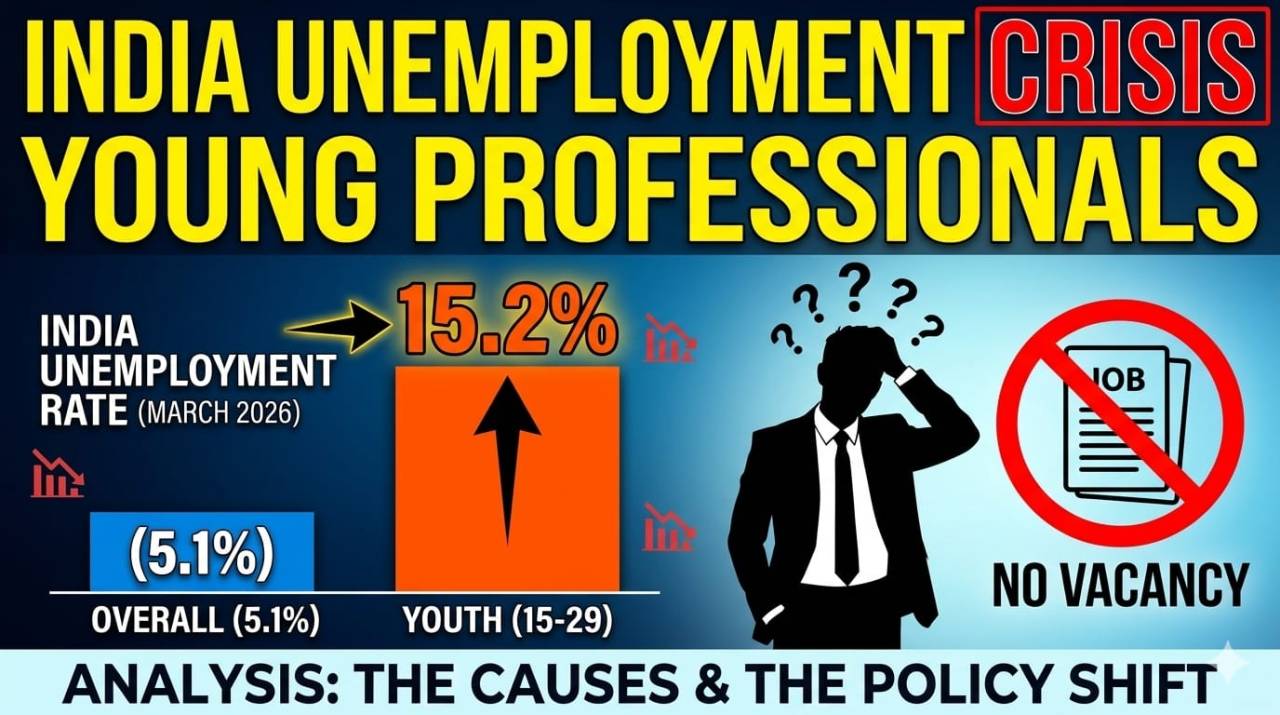
Recent labour data from early 2026 reflects this growing pressure. India’s unemployment rate climbed to 5.1% in March 2026, up from 4.9% in the previous month. The situation is significantly worse among young people aged 15–29, where unemployment has reportedly crossed 15%.
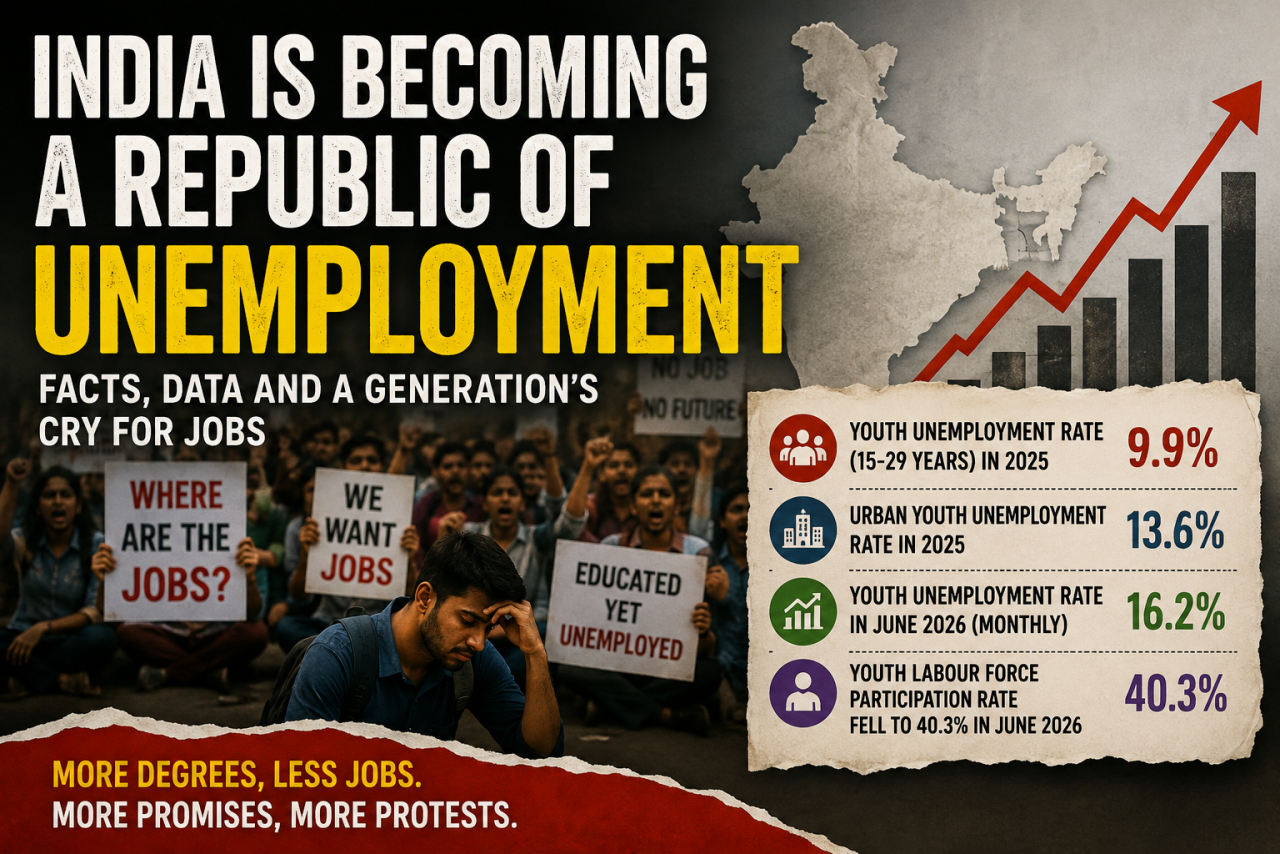
Urban India continues to face the sharpest strain. Youth unemployment in cities remains far higher than in rural regions, exposing what economists increasingly describe as the “graduate paradox.” More students are entering colleges, universities, and technical institutions than ever before, yet many remain unable to secure permanent salaried jobs after graduation.
The expansion of vocational and technical education tells only part of the story. Industrial Training Institutes (ITIs) have grown rapidly over the past two decades, but industry experts argue that quantity has not translated into employability. Employers frequently report that graduates lack practical skills, digital literacy, and industry exposure required in today’s economy.
This widening skill gap has become one of the defining economic challenges facing India’s youth.
At the same time, important changes are also unfolding in rural employment policy. Beginning July 1, the central government is set to implement the Viksit Bharat–Guarantee for Rozgar and Ajeevika Mission (Gramin), commonly known as the VB-GRAMG Act, replacing the long-running MGNREGA framework.
The new scheme promises 125 days of guaranteed unskilled work annually, an increase over the previous 100-day structure. Wages are expected to be transferred directly into bank accounts within 15 days, while e-KYC verification has been made mandatory for workers wishing to retain access to benefits.
However, the new funding model has sparked debate. Under the revised structure, the Centre will allocate a fixed state-wise spending ceiling each financial year. Any expenditure beyond that limit must be covered by individual state governments. Critics argue that such a framework could weaken rural employment guarantees during periods of economic distress or high demand.
Political opposition leaders, including Jairam Ramesh, have questioned whether the transition has been planned adequately and warned that implementation challenges may emerge once the scheme becomes operational.
For many young Indians in smaller towns and villages, government-backed employment programs often serve as a financial bridge between education and formal employment. Changes to these schemes therefore carry consequences far beyond rural labour statistics. They directly affect migration patterns, family incomes, and the ability of young people to continue preparing for competitive careers.
Yet the deeper crisis remains structural.
India’s economy is increasingly shifting toward sectors driven by technology, automation, and specialized expertise. Artificial Intelligence, renewable energy, semiconductor manufacturing, logistics, fintech, and digital services are reshaping recruitment patterns across industries. Traditional degrees alone are no longer enough to guarantee employability.
Recognizing this challenge, the Union Budget 2026–27 allocated ₹1.39 lakh crore toward education and skill development initiatives. Programs such as the Pradhan Mantri Kaushal Vikas Yojana (PMKVY) and the National Apprenticeship Promotion Scheme (NAPS) are now being positioned as critical tools to bridge the gap between education and industry requirements.
The government hopes these programs will help millions of unemployed graduates transition into market-ready roles. But experts caution that skilling initiatives will only succeed if they remain aligned with rapidly changing industry needs rather than outdated curriculum structures.
For India’s young professionals, the message is becoming increasingly clear. A university degree is no longer the finish line; it is only the starting point. Employers now expect adaptability, digital competence, communication skills, and continuous learning in an economy where technological disruption is constant.
India’s demographic advantage still holds enormous potential. But unless employment generation, education reform, and skill development move together, the country risks turning its youth dividend into a generation marked by frustration and underemployment.
The challenge before India is no longer simply creating jobs. It is creating jobs that match the ambitions, qualifications, and realities of a rapidly changing workforce.
India stands at a critical moment in its economic journey. With nearly 367 million people between the ages of 15 and 29, the country possesses the world’s largest youth population. For years, policymakers described this demographic advantage as India’s greatest economic strength. But for millions of graduates and first-time job seekers, that promise is beginning to feel increasingly uncertain.
The transition from education to employment has become more difficult than ever. Degrees are rising, aspirations are expanding, and yet stable opportunities remain limited. Across cities and towns, young professionals are finding themselves trapped between academic qualifications and a labour market evolving faster than the education system itself.
Recent labour data from early 2026 reflects this growing pressure. India’s unemployment rate climbed to 5.1% in March 2026, up from 4.9% in the previous month. The situation is significantly worse among young people aged 15–29, where unemployment has reportedly crossed 15%.
Urban India continues to face the sharpest strain. Youth unemployment in cities remains far higher than in rural regions, exposing what economists increasingly describe as the “graduate paradox.” More students are entering colleges, universities, and technical institutions than ever before, yet many remain unable to secure permanent salaried jobs after graduation.
The expansion of vocational and technical education tells only part of the story. Industrial Training Institutes (ITIs) have grown rapidly over the past two decades, but industry experts argue that quantity has not translated into employability. Employers frequently report that graduates lack practical skills, digital literacy, and industry exposure required in today’s economy.
This widening skill gap has become one of the defining economic challenges facing India’s youth.
At the same time, important changes are also unfolding in rural employment policy. Beginning July 1, the central government is set to implement the Viksit Bharat–Guarantee for Rozgar and Ajeevika Mission (Gramin), commonly known as the VB-GRAMG Act, replacing the long-running MGNREGA framework.
The new scheme promises 125 days of guaranteed unskilled work annually, an increase over the previous 100-day structure. Wages are expected to be transferred directly into bank accounts within 15 days, while e-KYC verification has been made mandatory for workers wishing to retain access to benefits.
However, the new funding model has sparked debate. Under the revised structure, the Centre will allocate a fixed state-wise spending ceiling each financial year. Any expenditure beyond that limit must be covered by individual state governments. Critics argue that such a framework could weaken rural employment guarantees during periods of economic distress or high demand.
Political opposition leaders, including Jairam Ramesh, have questioned whether the transition has been planned adequately and warned that implementation challenges may emerge once the scheme becomes operational.
For many young Indians in smaller towns and villages, government-backed employment programs often serve as a financial bridge between education and formal employment. Changes to these schemes therefore carry consequences far beyond rural labour statistics. They directly affect migration patterns, family incomes, and the ability of young people to continue preparing for competitive careers.
Yet the deeper crisis remains structural.
India’s economy is increasingly shifting toward sectors driven by technology, automation, and specialized expertise. Artificial Intelligence, renewable energy, semiconductor manufacturing, logistics, fintech, and digital services are reshaping recruitment patterns across industries. Traditional degrees alone are no longer enough to guarantee employability.
Recognizing this challenge, the Union Budget 2026–27 allocated ₹1.39 lakh crore toward education and skill development initiatives. Programs such as the Pradhan Mantri Kaushal Vikas Yojana (PMKVY) and the National Apprenticeship Promotion Scheme (NAPS) are now being positioned as critical tools to bridge the gap between education and industry requirements.
The government hopes these programs will help millions of unemployed graduates transition into market-ready roles. But experts caution that skilling initiatives will only succeed if they remain aligned with rapidly changing industry needs rather than outdated curriculum structures.
For India’s young professionals, the message is becoming increasingly clear. A university degree is no longer the finish line; it is only the starting point. Employers now expect adaptability, digital competence, communication skills, and continuous learning in an economy where technological disruption is constant.
India’s demographic advantage still holds enormous potential. But unless employment generation, education reform, and skill development move together, the country risks turning its youth dividend into a generation marked by frustration and underemployment.
The challenge before India is no longer simply creating jobs. It is creating jobs that match the ambitions, qualifications, and realities of a rapidly changing workforce.






















Leave a Comment