
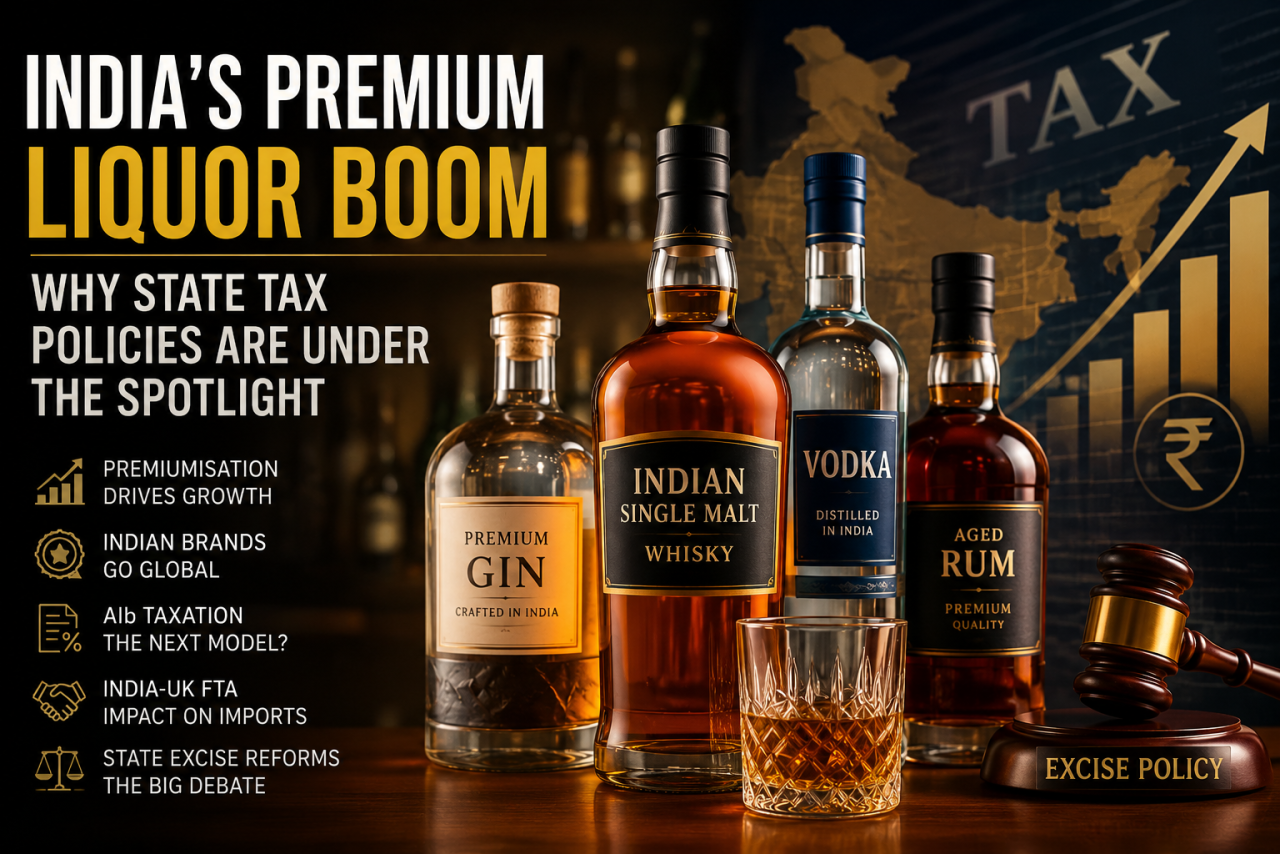
India's premium liquor market is changing rapidly. As consumers upgrade their choices, taxation, state excise reforms and trade policies are becoming just as important as the brands themselves.
India's alcoholic beverage industry is going through one of its biggest transformations in decades. For years, companies focused on selling larger volumes of liquor. Today, the focus has shifted to selling better-quality products. Consumers are increasingly choosing premium whisky, gin, rum and vodka over cheaper alternatives. Industry leaders describe this change with a simple phrase: "Drink better, not more."
This trend, known as premiumisation, is changing much more than consumer preferences. It is influencing how companies invest, how brands compete and how governments think about taxation. As Indian premium liquor brands gain popularity at home and abroad, industry experts say India's tax policies must also evolve to support this changing market.
The discussion has become even more important after the India–UK Comprehensive Economic and Trade Agreement (CETA), which will gradually reduce import duties on British whisky and gin over the next ten years. While the agreement is expected to strengthen trade between the two countries, it has also revived a debate over state excise policies and whether imported premium liquor enjoys an unfair advantage in some parts of India.
Indian Consumers Are Choosing Quality Over Quantity
One of the clearest changes in India's liquor market is the growing demand for premium products.
Rising incomes, greater exposure to global brands and changing lifestyles have encouraged consumers to spend more on quality instead of simply buying larger quantities. Young professionals, especially in cities, are showing greater interest in premium whisky, craft gin, aged rum and high-quality vodka. Many consumers now prefer to enjoy fewer drinks but choose better brands.
For liquor companies, this represents a long-term change rather than a passing trend. Manufacturers are investing heavily in better ingredients, improved production methods, premium packaging and stronger brand identities. The result is that the value of the market is growing faster than the number of bottles being sold.
Indian Brands Are Competing With Global Names
Another major change is the rise of Indian premium liquor brands.
Over the past decade, Indian whisky and other spirits have earned international awards and recognition. Domestic manufacturers have invested in modern distilleries, advanced ageing techniques and global-quality production standards. As a result, Indian brands are increasingly competing with imported products in the premium segment.
This marks an important shift in consumer perception. Imported liquor is no longer seen as the only symbol of quality. Indian brands are proving that they can compete with established international labels on taste, craftsmanship and consistency.
This growing confidence has also strengthened India's ambitions to become an exporter of premium spirits rather than only a large domestic market.
Why Taxation Has Become the Next Big Issue
As the premium segment grows, taxation has become one of the industry's biggest concerns.
Alcohol is taxed differently from most consumer goods in India. The Central Government decides customs duties on imported liquor, while each state frames its own excise policy. This means taxes, licence fees, registration charges and retail pricing vary significantly from one state to another.
Industry representatives say these differences have become more important as premium products account for a larger share of the market. They argue that tax policies should not only generate revenue but also encourage manufacturing, investment and fair competition.
Karnataka's New Tax Model Is Being Closely Watched
One development attracting national attention is Karnataka's proposed Alcohol-in-Beverage (AiB) taxation system.
Instead of taxing products mainly according to category, the proposal links taxation more closely to alcohol content and product value. Supporters believe such a system is more transparent and scientifically designed, while also encouraging responsible consumption.
Because Karnataka is one of India's largest liquor markets, many industry observers believe its new model could influence excise reforms in other states if it delivers the expected results.
The proposal has therefore become an important part of the wider discussion on how India should modernise alcohol taxation.
The India–UK Trade Deal Has Added Fresh Momentum
The implementation of the India–UK CETA has added another dimension to the debate.
Under the agreement, India's import duty on UK whisky and gin will gradually fall from 150 percent to 75 percent initially and later to 40 percent over a ten-year period. The phased reduction has been designed to give Indian manufacturers enough time to adjust while expanding trade between the two countries.
The Confederation of Indian Alcoholic Beverage Companies (CIABC), which represents Indian manufacturers, has welcomed the gradual reduction in tariffs. At the same time, it has urged state governments to review concessions currently available to Bottled-in-Origin (BIO) imported liquor.
According to the industry body, some states offer imported brands lower registration fees, favourable excise structures or other policy benefits. With customs duties now coming down under the trade agreement, these existing concessions could make imported products even more competitive than Indian-made premium liquor. CIABC argues that state policies should ensure a level playing field rather than create what it calls a "double advantage" for imported brands.
There Are Different Views Within the Industry
Not everyone agrees with this assessment.
The International Spirits and Wines Association of India (ISWAI), which represents several multinational companies, believes lower import duties will benefit consumers by offering greater choice and encouraging growth in tourism, hospitality and retail.
The association also points out that imported spirits make up only a small part of India's overall liquor market. A large share of imported Scotch arrives in bulk and is blended and bottled by Indian manufacturers. According to ISWAI, lower tariffs can therefore improve product quality while supporting exports from India.
These differing opinions show that the debate is not simply about imported versus Indian liquor. It is about creating policies that balance consumer interests, industry growth and government revenue.
Final Take
India's liquor industry is entering a new phase. Premium products are driving growth, Indian brands are earning global recognition and international trade agreements are opening fresh opportunities.
At the same time, governments are being asked to rethink tax policies that were designed for a very different market.
Whether it is Karnataka's AiB taxation model or the debate over state excise concessions, the larger question remains the same: can India's tax system keep pace with a fast-changing premium liquor market?
The answer will shape not only the future of Indian liquor companies but also the country's ambition to build globally recognised premium brands. As the industry continues to move towards quality over quantity, taxation is likely to become one of the most important factors influencing its next stage of growth.
India's alcoholic beverage industry is going through one of its biggest transformations in decades. For years, companies focused on selling larger volumes of liquor. Today, the focus has shifted to selling better-quality products. Consumers are increasingly choosing premium whisky, gin, rum and vodka over cheaper alternatives. Industry leaders describe this change with a simple phrase: "Drink better, not more."
This trend, known as premiumisation, is changing much more than consumer preferences. It is influencing how companies invest, how brands compete and how governments think about taxation. As Indian premium liquor brands gain popularity at home and abroad, industry experts say India's tax policies must also evolve to support this changing market.
The discussion has become even more important after the India–UK Comprehensive Economic and Trade Agreement (CETA), which will gradually reduce import duties on British whisky and gin over the next ten years. While the agreement is expected to strengthen trade between the two countries, it has also revived a debate over state excise policies and whether imported premium liquor enjoys an unfair advantage in some parts of India.
Indian Consumers Are Choosing Quality Over Quantity
One of the clearest changes in India's liquor market is the growing demand for premium products.
Rising incomes, greater exposure to global brands and changing lifestyles have encouraged consumers to spend more on quality instead of simply buying larger quantities. Young professionals, especially in cities, are showing greater interest in premium whisky, craft gin, aged rum and high-quality vodka. Many consumers now prefer to enjoy fewer drinks but choose better brands.
For liquor companies, this represents a long-term change rather than a passing trend. Manufacturers are investing heavily in better ingredients, improved production methods, premium packaging and stronger brand identities. The result is that the value of the market is growing faster than the number of bottles being sold.
Indian Brands Are Competing With Global Names
Another major change is the rise of Indian premium liquor brands.
Over the past decade, Indian whisky and other spirits have earned international awards and recognition. Domestic manufacturers have invested in modern distilleries, advanced ageing techniques and global-quality production standards. As a result, Indian brands are increasingly competing with imported products in the premium segment.
This marks an important shift in consumer perception. Imported liquor is no longer seen as the only symbol of quality. Indian brands are proving that they can compete with established international labels on taste, craftsmanship and consistency.
This growing confidence has also strengthened India's ambitions to become an exporter of premium spirits rather than only a large domestic market.
Why Taxation Has Become the Next Big Issue
As the premium segment grows, taxation has become one of the industry's biggest concerns.
Alcohol is taxed differently from most consumer goods in India. The Central Government decides customs duties on imported liquor, while each state frames its own excise policy. This means taxes, licence fees, registration charges and retail pricing vary significantly from one state to another.
Industry representatives say these differences have become more important as premium products account for a larger share of the market. They argue that tax policies should not only generate revenue but also encourage manufacturing, investment and fair competition.
Karnataka's New Tax Model Is Being Closely Watched
One development attracting national attention is Karnataka's proposed Alcohol-in-Beverage (AiB) taxation system.
Instead of taxing products mainly according to category, the proposal links taxation more closely to alcohol content and product value. Supporters believe such a system is more transparent and scientifically designed, while also encouraging responsible consumption.
Because Karnataka is one of India's largest liquor markets, many industry observers believe its new model could influence excise reforms in other states if it delivers the expected results.
The proposal has therefore become an important part of the wider discussion on how India should modernise alcohol taxation.
The India–UK Trade Deal Has Added Fresh Momentum
The implementation of the India–UK CETA has added another dimension to the debate.
Under the agreement, India's import duty on UK whisky and gin will gradually fall from 150 percent to 75 percent initially and later to 40 percent over a ten-year period. The phased reduction has been designed to give Indian manufacturers enough time to adjust while expanding trade between the two countries.
The Confederation of Indian Alcoholic Beverage Companies (CIABC), which represents Indian manufacturers, has welcomed the gradual reduction in tariffs. At the same time, it has urged state governments to review concessions currently available to Bottled-in-Origin (BIO) imported liquor.
According to the industry body, some states offer imported brands lower registration fees, favourable excise structures or other policy benefits. With customs duties now coming down under the trade agreement, these existing concessions could make imported products even more competitive than Indian-made premium liquor. CIABC argues that state policies should ensure a level playing field rather than create what it calls a "double advantage" for imported brands.
There Are Different Views Within the Industry
Not everyone agrees with this assessment.
The International Spirits and Wines Association of India (ISWAI), which represents several multinational companies, believes lower import duties will benefit consumers by offering greater choice and encouraging growth in tourism, hospitality and retail.
The association also points out that imported spirits make up only a small part of India's overall liquor market. A large share of imported Scotch arrives in bulk and is blended and bottled by Indian manufacturers. According to ISWAI, lower tariffs can therefore improve product quality while supporting exports from India.
These differing opinions show that the debate is not simply about imported versus Indian liquor. It is about creating policies that balance consumer interests, industry growth and government revenue.
Final Take
India's liquor industry is entering a new phase. Premium products are driving growth, Indian brands are earning global recognition and international trade agreements are opening fresh opportunities.
At the same time, governments are being asked to rethink tax policies that were designed for a very different market.
Whether it is Karnataka's AiB taxation model or the debate over state excise concessions, the larger question remains the same: can India's tax system keep pace with a fast-changing premium liquor market?
The answer will shape not only the future of Indian liquor companies but also the country's ambition to build globally recognised premium brands. As the industry continues to move towards quality over quantity, taxation is likely to become one of the most important factors influencing its next stage of growth.




.jpeg)
.jpeg)


















Leave a Comment