
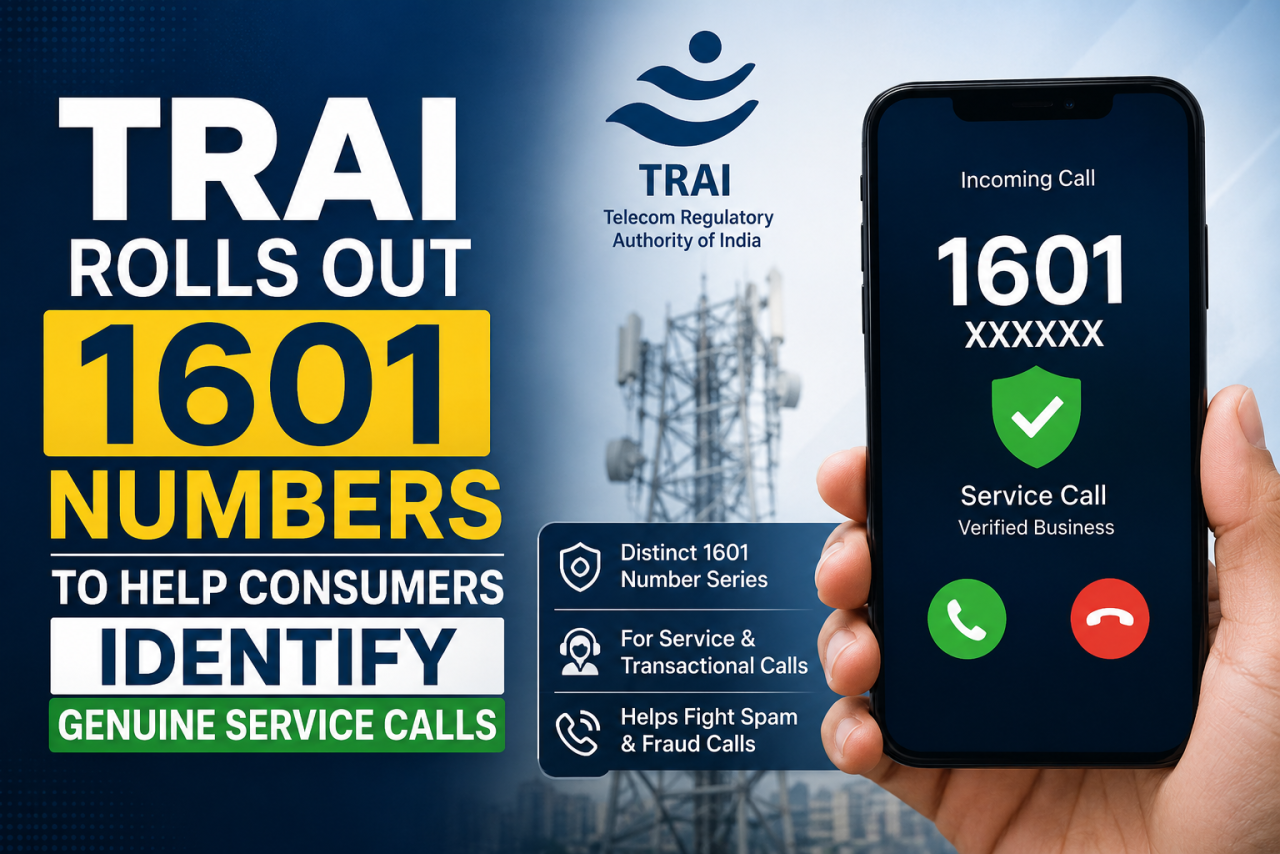
Getting a call about your electricity connection, LPG delivery or courier parcel? TRAI’s new 1601 number series could make it easier to recognise genuine service calls and distinguish them from impersonation scams.
The Telecom Regulatory Authority of India (TRAI) has begun the phased rollout of a new 1601-series numbering system for service and transactional voice calls. The direction, issued on August 10, covers companies outside the banking, financial services and insurance (BFSI) sector and government bodies, which already use the 1600 series for similar calls.
It is intended to address a problem millions of Indians face every day. Companies routinely call customers about deliveries, bill payments, connection requests and other routine matters using ordinary 10-digit mobile numbers. Fraudsters have exploited this practice by posing as company representatives and using similar-looking numbers to trick people into sharing personal information or making payments.
A call about an electricity connection, an LPG delivery or a courier parcel can look identical whether it comes from a genuine company or a scammer. The 1601 series is designed to reduce that ambiguity by giving legitimate businesses a distinct and recognisable number format.
How the 1601 Number Rollout Will Work
TRAI is not opening the new series to every industry at once. Instead, it has adopted a phased approach, beginning with two sectors: utilities and logistics.
The utilities category includes electricity distribution companies, water suppliers, city gas distributors and LPG providers. The logistics category covers courier firms, express delivery services, parcel companies and freight operators.
Telecom service providers have been given 90 days to verify eligible entities and complete their onboarding onto the 1601 series.
Importantly, the numbers will be issued directly to the business entities that need them. They will not be allotted to intermediaries or aggregators that merely operate on behalf of those businesses. The objective is to keep the system tightly controlled and reduce the possibility of misuse by third parties.
TRAI has also imposed a clear restriction on how these numbers can be used. The 1601 series is strictly meant for service and transactional communication. This includes delivery updates, billing-related information, connection requests and other customer-service communications.
It cannot be used for promotional or marketing calls.
Companies allotted 1601 numbers will have to submit a formal undertaking confirming that they will use the numbers only for permitted service and transactional communication. Promotional calls, TRAI has clarified, must continue to use the existing 140 series.
The distinction has attracted attention because of concerns raised by industry stakeholders, including Truecaller leadership, about the relationship between different numbering formats and the challenge of helping consumers distinguish genuine calls from unwanted or fraudulent communications.
Why TRAI Has Chosen a Gradual Approach
Rather than extending the 1601 system to all sectors immediately, TRAI has opted for a calibrated rollout.
The regulator has pointed to the experience gained from the 1600 series, which has been used by BFSI companies for several years, as a basis for extending a similar framework to other sectors.
The first phase will be reviewed before TRAI decides whether to expand eligibility to additional sectors and entities.
The review will consider several factors, including feedback from stakeholders, the efficiency with which allotted numbers are being used and the volume of consumer complaints during the initial phase.
Any expansion of the 1601 series to additional sectors or entities will be notified separately as the system develops.
What the 1601 Series Means for Consumers
For ordinary phone users, the biggest potential benefit is easier recognition of legitimate service calls.
Once utilities and logistics companies begin transitioning to 1601 numbers, consumers may find it easier to distinguish calls relating to electricity, water, LPG, courier deliveries and other services from ordinary calls made from personal mobile numbers.
This could be particularly useful in situations where fraudsters impersonate employees of well-known companies. A scammer claiming to represent a courier company, electricity provider or LPG distributor may currently call from an ordinary 10-digit mobile number, making it difficult for the recipient to know whether the call is genuine.
The 1601 system creates a separate numbering identity for authorised service and transactional calls.
However, consumers should still exercise caution. A recognisable number format should improve identification, but users should not share OTPs, passwords, banking credentials or other sensitive information simply because a call appears to come from a service number.
A Step Towards Safer Telecom Communication
The introduction of the 1601 series is part of a broader effort to rebuild consumer trust in India's voice communication system.
Spam calls, impersonation attempts and phone-based financial fraud have become persistent concerns for mobile users. One of the challenges has been the difficulty of distinguishing legitimate business communication from fraudulent calls.
By creating separate number series for different types of communication, regulators can potentially make the telecom ecosystem easier for consumers to understand.
The success of the 1601 initiative, however, will depend on implementation. Companies will need to complete the transition properly, telecom operators will have to verify eligible entities, and the restrictions on promotional use will need to be effectively enforced.
For consumers, the real test will be simple: whether a call from a 1601 number eventually becomes a reliable signal that the caller is contacting them for a genuine service or transaction.
If the first phase works as intended, the 1601 series could become an important part of India's broader fight against spam, impersonation and telecom-enabled fraud.
The Telecom Regulatory Authority of India (TRAI) has begun the phased rollout of a new 1601-series numbering system for service and transactional voice calls. The direction, issued on August 10, covers companies outside the banking, financial services and insurance (BFSI) sector and government bodies, which already use the 1600 series for similar calls.
It is intended to address a problem millions of Indians face every day. Companies routinely call customers about deliveries, bill payments, connection requests and other routine matters using ordinary 10-digit mobile numbers. Fraudsters have exploited this practice by posing as company representatives and using similar-looking numbers to trick people into sharing personal information or making payments.
A call about an electricity connection, an LPG delivery or a courier parcel can look identical whether it comes from a genuine company or a scammer. The 1601 series is designed to reduce that ambiguity by giving legitimate businesses a distinct and recognisable number format.
How the 1601 Number Rollout Will Work
TRAI is not opening the new series to every industry at once. Instead, it has adopted a phased approach, beginning with two sectors: utilities and logistics.
The utilities category includes electricity distribution companies, water suppliers, city gas distributors and LPG providers. The logistics category covers courier firms, express delivery services, parcel companies and freight operators.
Telecom service providers have been given 90 days to verify eligible entities and complete their onboarding onto the 1601 series.
Importantly, the numbers will be issued directly to the business entities that need them. They will not be allotted to intermediaries or aggregators that merely operate on behalf of those businesses. The objective is to keep the system tightly controlled and reduce the possibility of misuse by third parties.
TRAI has also imposed a clear restriction on how these numbers can be used. The 1601 series is strictly meant for service and transactional communication. This includes delivery updates, billing-related information, connection requests and other customer-service communications.
It cannot be used for promotional or marketing calls.
Companies allotted 1601 numbers will have to submit a formal undertaking confirming that they will use the numbers only for permitted service and transactional communication. Promotional calls, TRAI has clarified, must continue to use the existing 140 series.
The distinction has attracted attention because of concerns raised by industry stakeholders, including Truecaller leadership, about the relationship between different numbering formats and the challenge of helping consumers distinguish genuine calls from unwanted or fraudulent communications.
Why TRAI Has Chosen a Gradual Approach
Rather than extending the 1601 system to all sectors immediately, TRAI has opted for a calibrated rollout.
The regulator has pointed to the experience gained from the 1600 series, which has been used by BFSI companies for several years, as a basis for extending a similar framework to other sectors.
The first phase will be reviewed before TRAI decides whether to expand eligibility to additional sectors and entities.
The review will consider several factors, including feedback from stakeholders, the efficiency with which allotted numbers are being used and the volume of consumer complaints during the initial phase.
Any expansion of the 1601 series to additional sectors or entities will be notified separately as the system develops.
What the 1601 Series Means for Consumers
For ordinary phone users, the biggest potential benefit is easier recognition of legitimate service calls.
Once utilities and logistics companies begin transitioning to 1601 numbers, consumers may find it easier to distinguish calls relating to electricity, water, LPG, courier deliveries and other services from ordinary calls made from personal mobile numbers.
This could be particularly useful in situations where fraudsters impersonate employees of well-known companies. A scammer claiming to represent a courier company, electricity provider or LPG distributor may currently call from an ordinary 10-digit mobile number, making it difficult for the recipient to know whether the call is genuine.
The 1601 system creates a separate numbering identity for authorised service and transactional calls.
However, consumers should still exercise caution. A recognisable number format should improve identification, but users should not share OTPs, passwords, banking credentials or other sensitive information simply because a call appears to come from a service number.
A Step Towards Safer Telecom Communication
The introduction of the 1601 series is part of a broader effort to rebuild consumer trust in India's voice communication system.
Spam calls, impersonation attempts and phone-based financial fraud have become persistent concerns for mobile users. One of the challenges has been the difficulty of distinguishing legitimate business communication from fraudulent calls.
By creating separate number series for different types of communication, regulators can potentially make the telecom ecosystem easier for consumers to understand.
The success of the 1601 initiative, however, will depend on implementation. Companies will need to complete the transition properly, telecom operators will have to verify eligible entities, and the restrictions on promotional use will need to be effectively enforced.
For consumers, the real test will be simple: whether a call from a 1601 number eventually becomes a reliable signal that the caller is contacting them for a genuine service or transaction.
If the first phase works as intended, the 1601 series could become an important part of India's broader fight against spam, impersonation and telecom-enabled fraud.
















Leave a Comment