
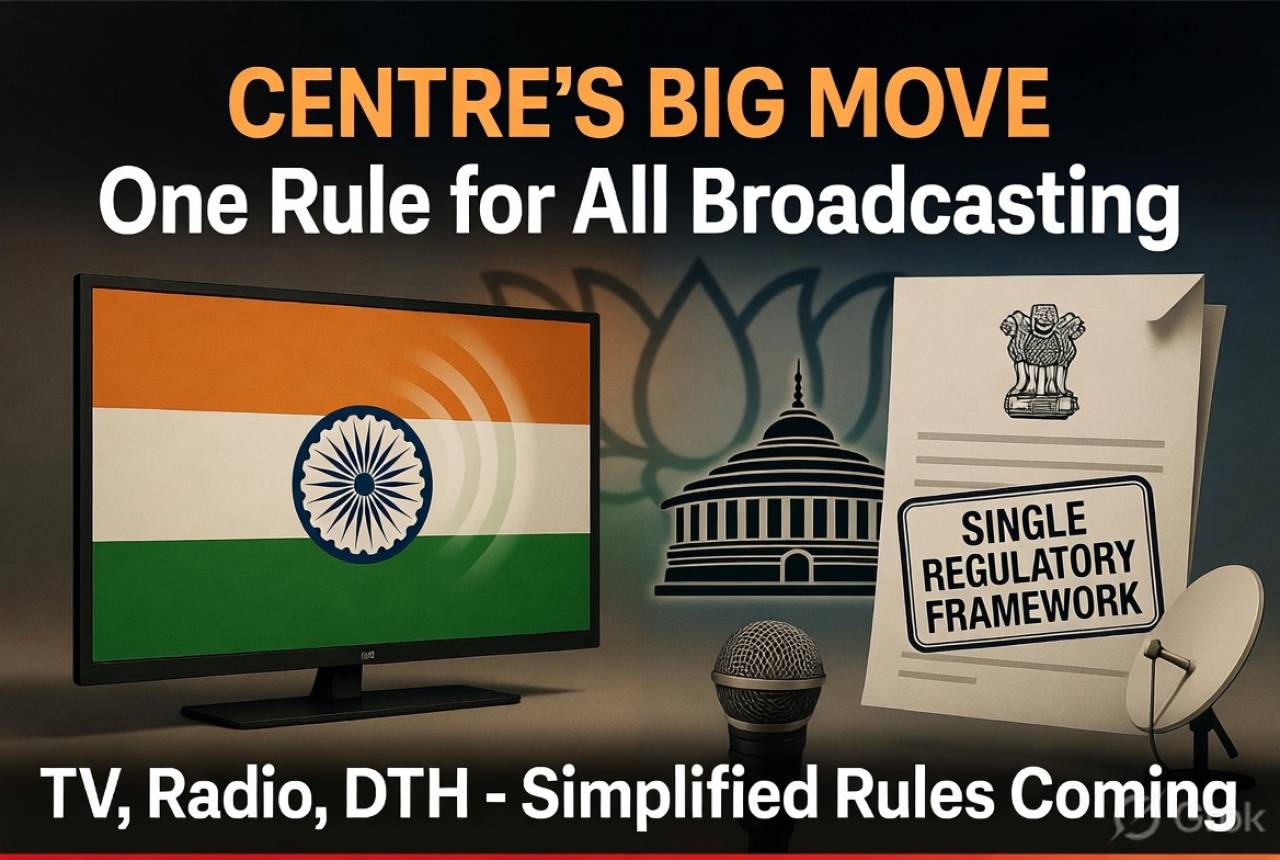
India's media landscape may soon undergo its biggest regulatory transformation in decades, as the Centre proposes a single framework for TV, radio and broadcasting services nationwide.
Imagine switching on your television or tuning into your favourite FM radio station without the broadcasters having to navigate a maze of different regulations. The Centre is now moving towards that goal. In a significant reform initiative, the Ministry of Information and Broadcasting (MIB) has released a draft proposal to bring various broadcasting services under a single, unified regulatory framework.
The draft, open for public comments until July 27, seeks to replace six separate sets of rules governing television channels, Direct-to-Home (DTH) services, FM radio stations, community radio, and other broadcasting platforms. The objective is to simplify regulation, reduce administrative hurdles, and create a more modern system suited to India's rapidly evolving media landscape.
Why the Reform Matters
Broadcasting remains one of the most influential sources of information and entertainment in India. From farmers watching agricultural programmes and students following educational content to millions of families relying on television news and radio updates, broadcasting reaches virtually every corner of the country.
Under the existing system, different categories of broadcasters operate under separate regulatory frameworks. Industry stakeholders have long argued that this leads to duplication, delays in approvals, and unnecessary compliance burdens. The government's proposal aims to streamline these processes through a common set of rules.
According to the Ministry, the new framework is intended to improve the ease of doing business while retaining essential safeguards related to national security, public decency, and consumer interests.
Potential Benefits for Viewers and Listeners
If implemented effectively, the reform could bring several advantages for ordinary citizens.
More Content Choices
Simpler regulations may encourage new broadcasters to enter the market, particularly in regional languages and niche content categories. This could result in greater diversity of programming for audiences across India.
Better Quality Services
Reduced paperwork and faster approvals may allow broadcasters to focus more resources on content creation, technological improvements, and audience engagement.
Faster Resolution of Complaints
A unified framework could simplify grievance redressal mechanisms, making it easier for viewers and listeners to report service-related concerns or misleading content.
Support for Local Broadcasters
Community radio stations and smaller cable operators often struggle with regulatory complexities. A simplified framework may help these organisations operate more efficiently and continue serving local communities.
Balancing Growth and Public Interest
While the proposal aims to reduce regulatory complexity, it also raises important questions about maintaining diversity and public interest protections.
India's broadcasting ecosystem is remarkably diverse, serving audiences across multiple languages, cultures, and regions. Critics of excessive standardisation caution that a single framework should not overlook the unique needs of different categories of broadcasters.
The draft indicates that existing public-interest obligations will continue. These include provisions related to educational programming, agricultural content, emergency broadcasting requirements, and restrictions during sensitive situations.
Such safeguards remain particularly important in rural and semi-urban India, where television and radio often serve as vital sources of information on healthcare, farming practices, weather conditions, and government welfare schemes.
Adapting to a Digital Era
The proposed overhaul comes at a time when media consumption habits are changing rapidly. Traditional television and radio increasingly coexist with digital platforms, mobile streaming services, and online content providers.
Many of the current regulations were designed decades ago, when the media environment was far less complex. The government's effort reflects a broader attempt to modernise the regulatory structure to better accommodate technological advancements while ensuring accountability.
Officials have stressed that the initiative is focused on simplifying regulation rather than imposing additional controls on content.
Questions That Remain
Despite the potential benefits, some industry observers and civil society groups are likely to examine the proposal closely.
Key concerns include whether a unified framework could inadvertently favour larger corporate broadcasters, how independent and community-based voices will be protected, and whether consumer interests will remain adequately safeguarded.
The public consultation process offers an opportunity for stakeholders, industry representatives, and citizens to contribute their views before the framework is finalised.
Final Take
India has attempted broadcasting reforms before, with earlier proposals generating significant debate. The current draft appears to incorporate lessons from those experiences by emphasising transparency, predictable timelines, and reduced compliance burdens.
For ordinary viewers and listeners, the ultimate measure of success will not be the legal language of the framework but its practical impact. Will audiences gain access to better content? Will regional broadcasters become stronger? Will services become more responsive to local needs?
The answers will emerge only after the final framework is implemented. However, the proposal represents one of the most significant efforts in recent years to modernise India's broadcasting regulations.
In a country where television and radio continue to play a crucial role in informing, educating, and connecting people, the move towards a single regulatory framework could mark an important step in shaping the future of Indian media. The challenge will be ensuring that simplification and growth go hand in hand with diversity, accountability, and the public interest.
Imagine switching on your television or tuning into your favourite FM radio station without the broadcasters having to navigate a maze of different regulations. The Centre is now moving towards that goal. In a significant reform initiative, the Ministry of Information and Broadcasting (MIB) has released a draft proposal to bring various broadcasting services under a single, unified regulatory framework.
The draft, open for public comments until July 27, seeks to replace six separate sets of rules governing television channels, Direct-to-Home (DTH) services, FM radio stations, community radio, and other broadcasting platforms. The objective is to simplify regulation, reduce administrative hurdles, and create a more modern system suited to India's rapidly evolving media landscape.
Why the Reform Matters
Broadcasting remains one of the most influential sources of information and entertainment in India. From farmers watching agricultural programmes and students following educational content to millions of families relying on television news and radio updates, broadcasting reaches virtually every corner of the country.
Under the existing system, different categories of broadcasters operate under separate regulatory frameworks. Industry stakeholders have long argued that this leads to duplication, delays in approvals, and unnecessary compliance burdens. The government's proposal aims to streamline these processes through a common set of rules.
According to the Ministry, the new framework is intended to improve the ease of doing business while retaining essential safeguards related to national security, public decency, and consumer interests.
Potential Benefits for Viewers and Listeners
If implemented effectively, the reform could bring several advantages for ordinary citizens.
More Content Choices
Simpler regulations may encourage new broadcasters to enter the market, particularly in regional languages and niche content categories. This could result in greater diversity of programming for audiences across India.
Better Quality Services
Reduced paperwork and faster approvals may allow broadcasters to focus more resources on content creation, technological improvements, and audience engagement.
Faster Resolution of Complaints
A unified framework could simplify grievance redressal mechanisms, making it easier for viewers and listeners to report service-related concerns or misleading content.
Support for Local Broadcasters
Community radio stations and smaller cable operators often struggle with regulatory complexities. A simplified framework may help these organisations operate more efficiently and continue serving local communities.
Balancing Growth and Public Interest
While the proposal aims to reduce regulatory complexity, it also raises important questions about maintaining diversity and public interest protections.
India's broadcasting ecosystem is remarkably diverse, serving audiences across multiple languages, cultures, and regions. Critics of excessive standardisation caution that a single framework should not overlook the unique needs of different categories of broadcasters.
The draft indicates that existing public-interest obligations will continue. These include provisions related to educational programming, agricultural content, emergency broadcasting requirements, and restrictions during sensitive situations.
Such safeguards remain particularly important in rural and semi-urban India, where television and radio often serve as vital sources of information on healthcare, farming practices, weather conditions, and government welfare schemes.
Adapting to a Digital Era
The proposed overhaul comes at a time when media consumption habits are changing rapidly. Traditional television and radio increasingly coexist with digital platforms, mobile streaming services, and online content providers.
Many of the current regulations were designed decades ago, when the media environment was far less complex. The government's effort reflects a broader attempt to modernise the regulatory structure to better accommodate technological advancements while ensuring accountability.
Officials have stressed that the initiative is focused on simplifying regulation rather than imposing additional controls on content.
Questions That Remain
Despite the potential benefits, some industry observers and civil society groups are likely to examine the proposal closely.
Key concerns include whether a unified framework could inadvertently favour larger corporate broadcasters, how independent and community-based voices will be protected, and whether consumer interests will remain adequately safeguarded.
The public consultation process offers an opportunity for stakeholders, industry representatives, and citizens to contribute their views before the framework is finalised.
Final Take
India has attempted broadcasting reforms before, with earlier proposals generating significant debate. The current draft appears to incorporate lessons from those experiences by emphasising transparency, predictable timelines, and reduced compliance burdens.
For ordinary viewers and listeners, the ultimate measure of success will not be the legal language of the framework but its practical impact. Will audiences gain access to better content? Will regional broadcasters become stronger? Will services become more responsive to local needs?
The answers will emerge only after the final framework is implemented. However, the proposal represents one of the most significant efforts in recent years to modernise India's broadcasting regulations.
In a country where television and radio continue to play a crucial role in informing, educating, and connecting people, the move towards a single regulatory framework could mark an important step in shaping the future of Indian media. The challenge will be ensuring that simplification and growth go hand in hand with diversity, accountability, and the public interest.















Leave a Comment