
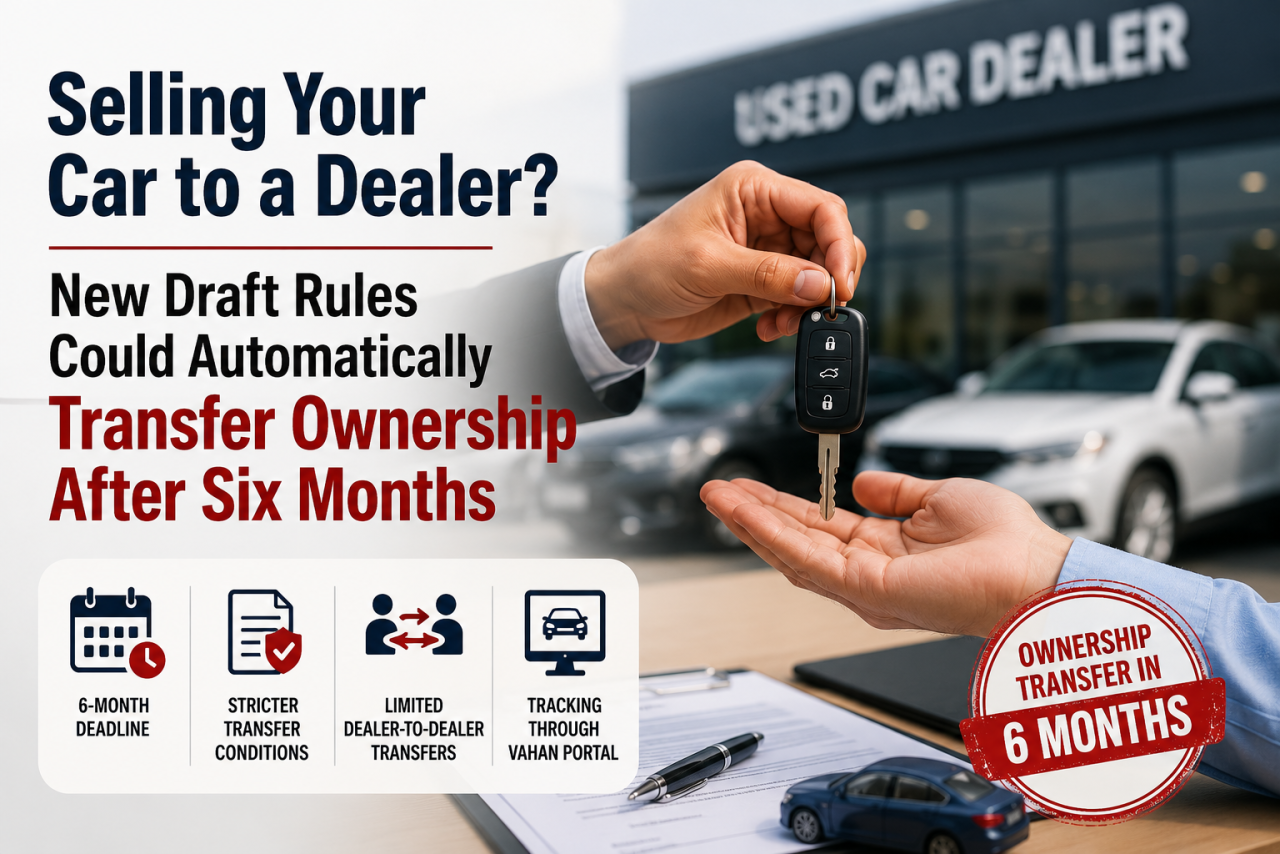
Selling your car to a dealer may no longer end the story. New draft rules could automatically transfer ownership after six months while tightening used-car transfer regulations across India.
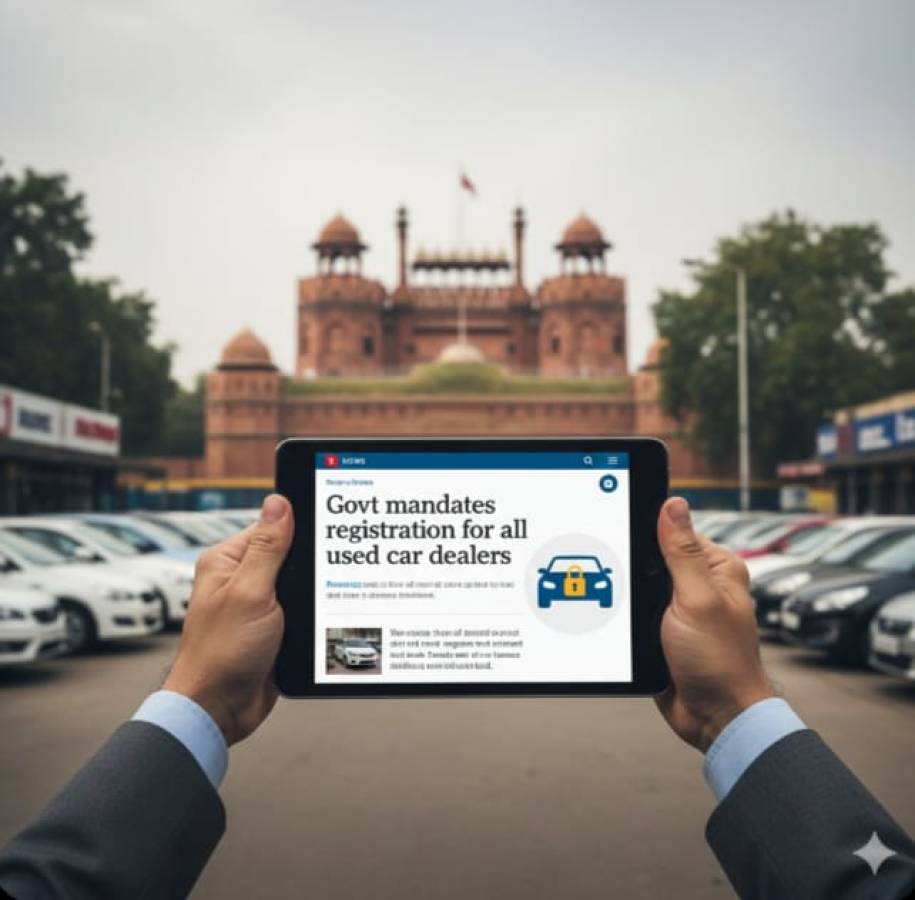
The Ministry of Road Transport and Highways (MoRTH) has released draft amendments to the Central Motor Vehicles Rules that could significantly change how used cars are bought and sold in India. If approved, the proposals would allow ownership of a vehicle to automatically transfer to an authorised dealer if the car remains unsold for more than six months after being handed over. The draft also introduces stricter conditions for vehicle transfers and seeks to improve transparency in the used-car market.
The ministry has invited public comments on the proposed amendments for the next 30 days before finalising the rules.
How the Proposed Rule Works
At the heart of the draft is a new Rule 55BB, aimed at resolving a long-standing issue in the used-car market.
At present, when a vehicle owner hands over a car to an authorised dealer, the transaction is recorded through Form 29C. Although the dealer takes possession and becomes responsible for the vehicle, the ownership often remains in the original owner's name until the vehicle is sold to its next buyer. In many cases, this process can take months or even years, creating legal uncertainty.
Under the proposed rule, if the dealer does not complete the ownership transfer through Form 30 within six months of receiving the vehicle, the registration would automatically be transferred to the dealer's name. The change would be recorded on the VAHAN portal as a transfer under Section 50 of the Motor Vehicles Act, effectively ending the legal limbo that has affected many used vehicles.
Vehicles That Cannot Be Transferred
The draft also identifies several categories of vehicles that would be ineligible for transfer.
Transfers would not be permitted if a vehicle does not have:
- A valid Registration Certificate (RC)
- A valid insurance certificate
- A valid Pollution Under Control (PUC) certificate
- Pending traffic challans or unpaid user charges
The restrictions also apply to vehicles that:
- Are under hire-purchase, lease or hypothecation agreements
- Have been released under superdari during ongoing court proceedings
- Are linked to criminal investigations
- Were used to transport prohibited goods
- Are involved in accident cases where investigations are still pending
These measures are intended to prevent buyers from unknowingly inheriting unresolved legal or financial liabilities.
New Limits on Dealer-to-Dealer Transfers
The ministry has also proposed tighter controls on dealer-to-dealer transactions.
Currently, a used vehicle can pass through several dealers before reaching its final buyer, making ownership tracking difficult. Under the draft rules, a vehicle would be allowed to move between dealers only twice before it must be sold to its final owner through Form 30.
To improve transparency, MoRTH has proposed a new electronic Form 29CA for dealer-to-dealer transfers. Every transfer would be recorded on the VAHAN portal, generating an electronic acknowledgement.
Importantly, the registering authority would also notify the original registered owner every time the vehicle changes hands between authorised dealers, allowing sellers to monitor the movement of their vehicle even after handing it over.
Why the Changes Matter
India's organised used-car market has expanded rapidly in recent years, but ownership records have often failed to keep pace with actual transactions. As a result, previous owners have sometimes continued receiving traffic challans, faced insurance complications or remained legally liable for accidents involving vehicles they had already sold.
The proposed amendments aim to eliminate these gaps by ensuring that dealer-held vehicles cannot remain indefinitely in ownership limbo. They also strengthen compliance by preventing transfers of vehicles with unresolved legal, financial or documentation issues.
For vehicle owners, the proposal is a reminder that handing over a car to a dealer does not immediately end legal responsibility unless the transfer process is completed. For dealers, the draft creates clearer obligations while also providing a legal mechanism to acquire ownership of vehicles that remain unsold beyond six months.
The draft amendments are currently open for public consultation, after which the ministry will review feedback before issuing the final rules.
The Ministry of Road Transport and Highways (MoRTH) has released draft amendments to the Central Motor Vehicles Rules that could significantly change how used cars are bought and sold in India. If approved, the proposals would allow ownership of a vehicle to automatically transfer to an authorised dealer if the car remains unsold for more than six months after being handed over. The draft also introduces stricter conditions for vehicle transfers and seeks to improve transparency in the used-car market.
The ministry has invited public comments on the proposed amendments for the next 30 days before finalising the rules.
How the Proposed Rule Works
At the heart of the draft is a new Rule 55BB, aimed at resolving a long-standing issue in the used-car market.
At present, when a vehicle owner hands over a car to an authorised dealer, the transaction is recorded through Form 29C. Although the dealer takes possession and becomes responsible for the vehicle, the ownership often remains in the original owner's name until the vehicle is sold to its next buyer. In many cases, this process can take months or even years, creating legal uncertainty.
Under the proposed rule, if the dealer does not complete the ownership transfer through Form 30 within six months of receiving the vehicle, the registration would automatically be transferred to the dealer's name. The change would be recorded on the VAHAN portal as a transfer under Section 50 of the Motor Vehicles Act, effectively ending the legal limbo that has affected many used vehicles.
Vehicles That Cannot Be Transferred
The draft also identifies several categories of vehicles that would be ineligible for transfer.
Transfers would not be permitted if a vehicle does not have:
- A valid Registration Certificate (RC)
- A valid insurance certificate
- A valid Pollution Under Control (PUC) certificate
- Pending traffic challans or unpaid user charges
The restrictions also apply to vehicles that:
- Are under hire-purchase, lease or hypothecation agreements
- Have been released under superdari during ongoing court proceedings
- Are linked to criminal investigations
- Were used to transport prohibited goods
- Are involved in accident cases where investigations are still pending
These measures are intended to prevent buyers from unknowingly inheriting unresolved legal or financial liabilities.
New Limits on Dealer-to-Dealer Transfers
The ministry has also proposed tighter controls on dealer-to-dealer transactions.
Currently, a used vehicle can pass through several dealers before reaching its final buyer, making ownership tracking difficult. Under the draft rules, a vehicle would be allowed to move between dealers only twice before it must be sold to its final owner through Form 30.
To improve transparency, MoRTH has proposed a new electronic Form 29CA for dealer-to-dealer transfers. Every transfer would be recorded on the VAHAN portal, generating an electronic acknowledgement.
Importantly, the registering authority would also notify the original registered owner every time the vehicle changes hands between authorised dealers, allowing sellers to monitor the movement of their vehicle even after handing it over.
Why the Changes Matter
India's organised used-car market has expanded rapidly in recent years, but ownership records have often failed to keep pace with actual transactions. As a result, previous owners have sometimes continued receiving traffic challans, faced insurance complications or remained legally liable for accidents involving vehicles they had already sold.
The proposed amendments aim to eliminate these gaps by ensuring that dealer-held vehicles cannot remain indefinitely in ownership limbo. They also strengthen compliance by preventing transfers of vehicles with unresolved legal, financial or documentation issues.
For vehicle owners, the proposal is a reminder that handing over a car to a dealer does not immediately end legal responsibility unless the transfer process is completed. For dealers, the draft creates clearer obligations while also providing a legal mechanism to acquire ownership of vehicles that remain unsold beyond six months.
The draft amendments are currently open for public consultation, after which the ministry will review feedback before issuing the final rules.


















Leave a Comment