
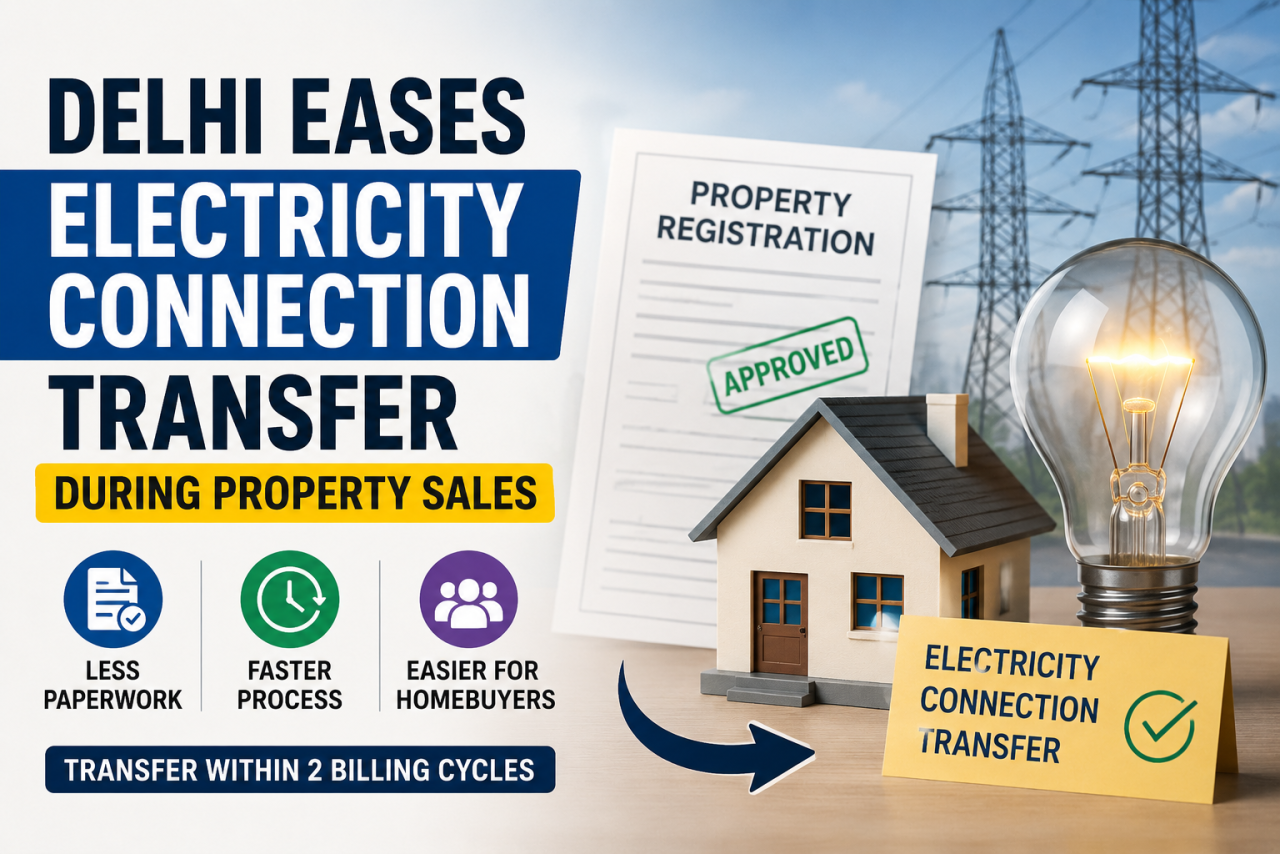
Buying a home in Delhi just became easier. DERC has streamlined electricity connection transfers, reducing paperwork, cutting delays and making property ownership more convenient for homebuyers.
In a move aimed at simplifying property transactions, the Delhi Electricity Regulatory Commission (DERC) has amended its regulations to make the transfer of electricity connections easier when a property changes hands. The revised rules are expected to reduce paperwork, eliminate repetitive applications and ensure that new property owners receive electricity connections more quickly after completing a sale or purchase.
The amendment addresses a long-standing inconvenience faced by homebuyers. Until now, purchasing a property did not automatically result in the transfer of the electricity connection. Buyers had to approach the power distribution company (discom) separately, submit ownership documents, identity proof and other supporting papers, and often make multiple visits before the connection was transferred to their name.
Under the revised framework, much of this process will now be integrated with property registration.
Property Registration to Trigger Electricity Transfer
According to the amended regulations, once a property sale is registered and the concerned electricity distribution company receives the transaction details, the transfer of the electricity connection will be processed without requiring the buyer to submit a separate application.
The information shared with the discom is expected to include the seller's consumer account details, the buyer's name and mobile number, enabling the utility to initiate the transfer process automatically.
The objective is to bridge the gap between property registration and electricity services, which until now functioned as separate administrative systems.
Two-Billing-Cycle Timeline
The amended provisions require electricity distribution companies to complete the transfer within two billing cycles after receiving the relevant property registration information.
This provides a defined timeline for processing requests while allowing utilities to verify records before changing the ownership of the electricity connection.
The move is expected to bring greater predictability for property buyers, many of whom previously experienced delays because of documentation issues or procedural requirements.
Less Paperwork, Fewer Office Visits
Government officials believe the reform will significantly reduce the administrative burden on citizens.
Earlier, buyers were required to file separate applications along with sale deeds, identity proof, ownership records and occupancy-related documents. In many cases, applicants had to visit both sub-registrar offices and electricity company offices to complete the formalities.
With the new system, these repetitive steps are expected to be largely eliminated because verified registration data will serve as the basis for initiating the electricity transfer.
Officials say the amendment is designed to improve service delivery while protecting homebuyers from avoidable delays after purchasing a property.
Role of Sub-Registrar Offices
The reform relies on better coordination between the property registration system and electricity utilities.
Once the property registration is completed, the relevant details will be transmitted to the concerned electricity distribution company, allowing the transfer process to begin without waiting for a separate consumer request.
This integration is expected to reduce duplication of records and minimise errors arising from manual submissions.
Separate System Under Consideration
While the amendment streamlines the existing process, officials indicated that the Delhi government is also working on a broader proposal to make property registration and electricity transfer part of a common digital platform.
If implemented, such an integrated system could further shorten processing times and reduce the need for citizens to interact with multiple government offices.
For now, however, buyers will still need to complete the property registration process before the electricity transfer can be initiated under the revised mechanism.
Improving Citizen Services
The amendment reflects a wider push towards integrating public services through digital governance. Property transactions often require citizens to update records across multiple departments, including electricity, water and municipal authorities. By linking property registration with electricity connection transfer, the DERC has taken a step towards reducing procedural hurdles in one of the most common post-purchase formalities.
Although the success of the reform will depend on smooth coordination between sub-registrar offices and power distribution companies, the revised rules are expected to make the experience of buying a home in Delhi less cumbersome.
For thousands of homebuyers each year, the change could mean fewer forms to fill, fewer government office visits and a faster transition from property ownership to uninterrupted electricity service.
In a move aimed at simplifying property transactions, the Delhi Electricity Regulatory Commission (DERC) has amended its regulations to make the transfer of electricity connections easier when a property changes hands. The revised rules are expected to reduce paperwork, eliminate repetitive applications and ensure that new property owners receive electricity connections more quickly after completing a sale or purchase.
The amendment addresses a long-standing inconvenience faced by homebuyers. Until now, purchasing a property did not automatically result in the transfer of the electricity connection. Buyers had to approach the power distribution company (discom) separately, submit ownership documents, identity proof and other supporting papers, and often make multiple visits before the connection was transferred to their name.
Under the revised framework, much of this process will now be integrated with property registration.
Property Registration to Trigger Electricity Transfer
According to the amended regulations, once a property sale is registered and the concerned electricity distribution company receives the transaction details, the transfer of the electricity connection will be processed without requiring the buyer to submit a separate application.
The information shared with the discom is expected to include the seller's consumer account details, the buyer's name and mobile number, enabling the utility to initiate the transfer process automatically.
The objective is to bridge the gap between property registration and electricity services, which until now functioned as separate administrative systems.
Two-Billing-Cycle Timeline
The amended provisions require electricity distribution companies to complete the transfer within two billing cycles after receiving the relevant property registration information.
This provides a defined timeline for processing requests while allowing utilities to verify records before changing the ownership of the electricity connection.
The move is expected to bring greater predictability for property buyers, many of whom previously experienced delays because of documentation issues or procedural requirements.
Less Paperwork, Fewer Office Visits
Government officials believe the reform will significantly reduce the administrative burden on citizens.
Earlier, buyers were required to file separate applications along with sale deeds, identity proof, ownership records and occupancy-related documents. In many cases, applicants had to visit both sub-registrar offices and electricity company offices to complete the formalities.
With the new system, these repetitive steps are expected to be largely eliminated because verified registration data will serve as the basis for initiating the electricity transfer.
Officials say the amendment is designed to improve service delivery while protecting homebuyers from avoidable delays after purchasing a property.
Role of Sub-Registrar Offices
The reform relies on better coordination between the property registration system and electricity utilities.
Once the property registration is completed, the relevant details will be transmitted to the concerned electricity distribution company, allowing the transfer process to begin without waiting for a separate consumer request.
This integration is expected to reduce duplication of records and minimise errors arising from manual submissions.
Separate System Under Consideration
While the amendment streamlines the existing process, officials indicated that the Delhi government is also working on a broader proposal to make property registration and electricity transfer part of a common digital platform.
If implemented, such an integrated system could further shorten processing times and reduce the need for citizens to interact with multiple government offices.
For now, however, buyers will still need to complete the property registration process before the electricity transfer can be initiated under the revised mechanism.
Improving Citizen Services
The amendment reflects a wider push towards integrating public services through digital governance. Property transactions often require citizens to update records across multiple departments, including electricity, water and municipal authorities. By linking property registration with electricity connection transfer, the DERC has taken a step towards reducing procedural hurdles in one of the most common post-purchase formalities.
Although the success of the reform will depend on smooth coordination between sub-registrar offices and power distribution companies, the revised rules are expected to make the experience of buying a home in Delhi less cumbersome.
For thousands of homebuyers each year, the change could mean fewer forms to fill, fewer government office visits and a faster transition from property ownership to uninterrupted electricity service.

























Leave a Comment