
India has built an ethanol production capacity far beyond current oil-company demand. The surge marks a major policy success, but the growing capacity-demand gap raises a new question: can India’s fuel market absorb the ethanol infrastructure it has create
India’s ethanol industry has undergone a remarkable transformation over the past decade. From a sector struggling with limited production capacity and low blending levels, it has grown into a major part of the country’s energy and agricultural policy.
But the latest government data presented in Parliament points to a new challenge. India now has enough ethanol distillation capacity to produce almost twice the volume currently being supplied to state-run oil marketing companies.
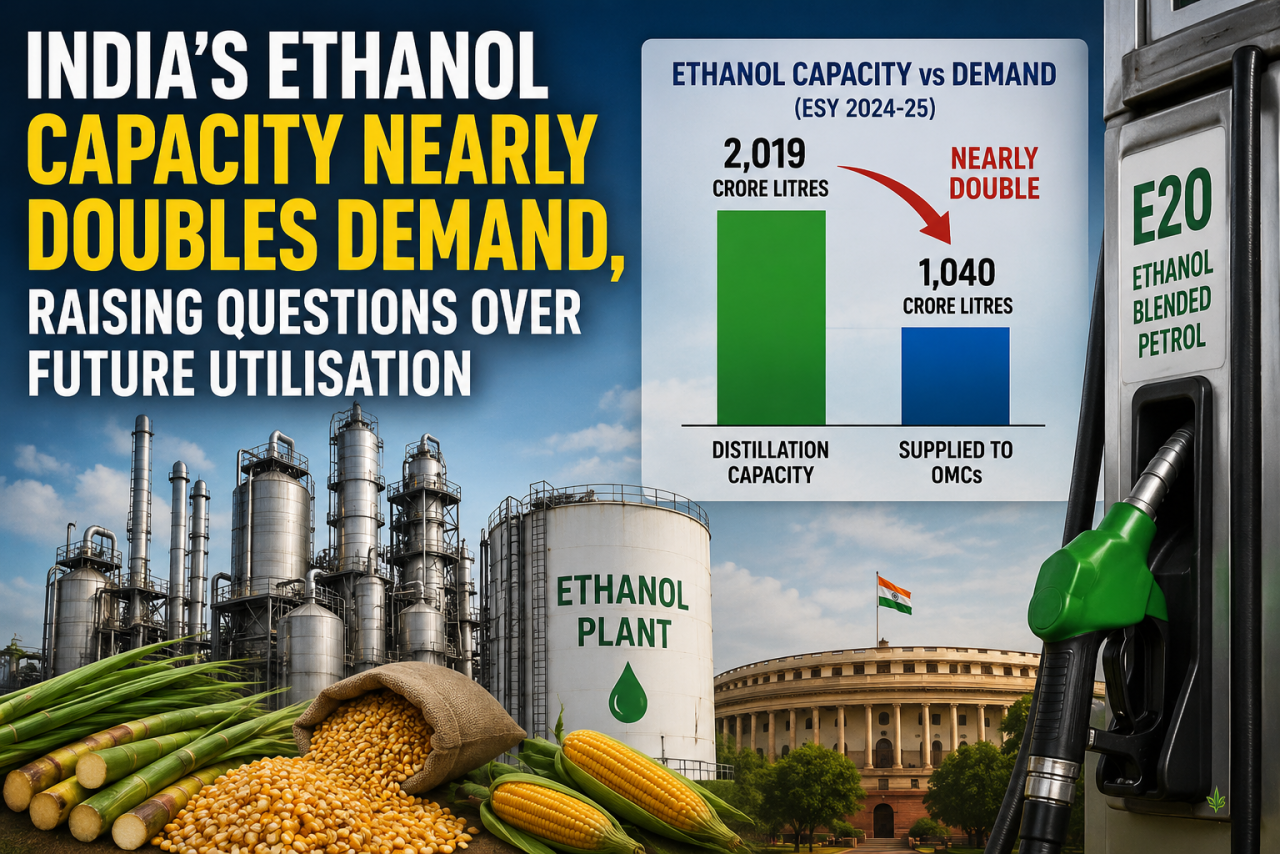
The country’s total ethanol distillation capacity has reached 2,019 crore litres a year, while oil marketing companies (OMCs) received around 1,040 crore litres of ethanol during Ethanol Supply Year (ESY) 2024-25, which ran from November 1, 2024, to October 31, 2025.
The figures were presented in Parliament on August 3 by Minister of State for Petroleum Suresh Gopi. They show both the scale of India’s ethanol expansion and the emerging gap between installed capacity and present demand.
From Ethanol Scarcity to Capacity Surplus
The change becomes more striking when compared with India's position just over a decade ago.
According to a statement issued by the Ministry of Consumer Affairs, Food and Public Distribution on December 20, 2024, India had less than 200 crore litres of ethanol distillation capacity from molasses-based distilleries until 2014.
Ethanol supplies to OMCs stood at only about 38 crore litres, while ethanol blending with petrol was just 1.53 percent in ESY 2013-14.
Since then, a combination of policy support, investment incentives and expanding demand from the fuel sector has dramatically altered the landscape.
By November 30, 2024, molasses-based distilleries accounted for about 941 crore litres of capacity, while grain-based distilleries contributed another 744 crore litres.
The expansion reflects a deliberate policy effort to create a larger domestic ethanol ecosystem and reduce India's dependence on imported crude oil.
The question now is whether demand will expand quickly enough to absorb the capacity that has already been created.
Maharashtra and Uttar Pradesh Lead Ethanol Production
The growth of the industry is not evenly distributed across India.
Government data shows that Maharashtra leads the country with 145 ethanol-producing distilleries and annual capacity of about 389 crore litres.
Uttar Pradesh follows with 79 distilleries and 344 crore litres of capacity.
Karnataka is another major player, accounting for around 321 crore litres of annual capacity.
Other important ethanol-producing states include Madhya Pradesh, Punjab, Haryana and Bihar. Bihar, for instance, has around 97 crore litres of annual capacity, highlighting the growing role of eastern India in the ethanol economy.
At the other end of the spectrum, several states have relatively small production bases. Jharkhand, Tamil Nadu, Assam, Himachal Pradesh, Rajasthan, Jammu and Kashmir, Meghalaya and Sikkim have considerably smaller capacities.
The distribution demonstrates how closely ethanol production remains linked to agricultural activity, particularly sugarcane cultivation and the availability of grains such as rice and maize.
Why India Is Expanding Ethanol Production
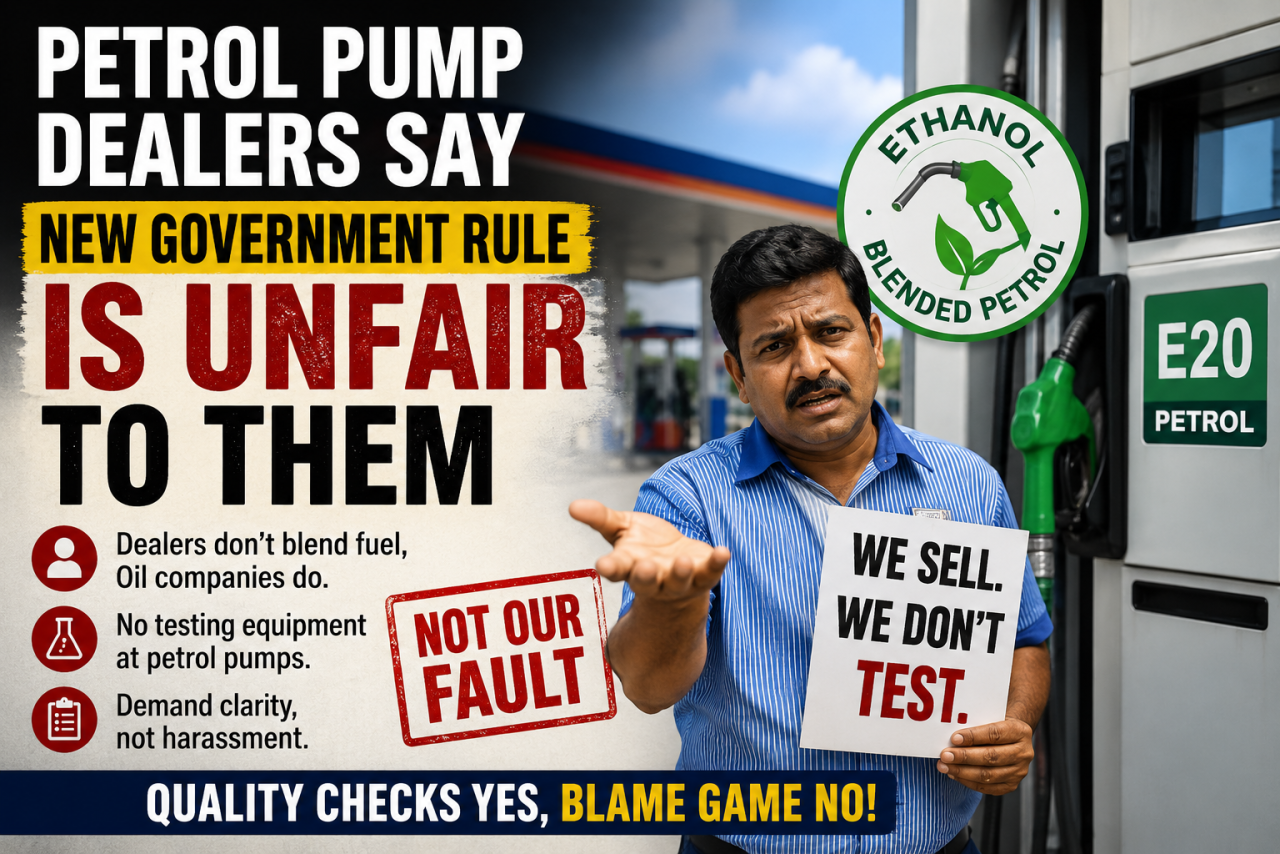
The expansion is closely tied to the government’s Ethanol Blended Petrol (EBP) programme, which seeks to increase the use of domestically produced ethanol in petrol.
The policy has several objectives.
First, greater ethanol blending can reduce the amount of petrol and crude oil India needs to import. For an economy that remains heavily dependent on imported crude, even a partial reduction in imports can have implications for the country’s foreign exchange bill and energy security.
Second, ethanol creates an additional market for agricultural commodities.
Sugarcane molasses has traditionally been an important feedstock, but the industry has increasingly expanded into grain-based ethanol using crops such as maize and surplus rice.
This creates another potential source of income for farmers and provides agricultural producers with a market beyond conventional food and commodity channels.
The government has also linked the expansion of ethanol blending with lower greenhouse gas emissions and stronger domestic energy security.
The Numbers Tell a More Complicated Story
The sharp rise in capacity is undoubtedly a major change. But capacity and actual production are not the same thing.
India now has 2,019 crore litres of annual distillation capacity, compared with approximately 1,040 crore litres supplied to OMCs in ESY 2024-25.
That means the country's installed capacity is almost twice the volume supplied to OMCs during that period.
This does not necessarily mean that half of India's ethanol industry is permanently idle. Capacity utilisation depends on several factors, including feedstock availability, procurement arrangements, blending requirements, plant economics, logistics and regional demand.
Nevertheless, the gap deserves attention.
Distilleries require substantial capital investment, and operators need sufficiently high utilisation rates to recover those investments. If capacity continues to grow faster than demand, some plants could face pressure on margins and utilisation.
The industry therefore needs demand to catch up with infrastructure.
Blending Targets Will Be Critical
The future of India's ethanol industry will depend heavily on how quickly blending requirements increase.
The country has already moved a long way from the 1.53 percent blending level recorded in ESY 2013-14. The rapid increase demonstrates how policy can create an entirely new market within a relatively short period.
Higher blending levels would provide additional demand for ethanol and could gradually narrow the gap between installed capacity and actual procurement.
However, increasing blending is not simply a matter of announcing higher targets. It also requires adequate feedstock, efficient supply chains, compatible vehicle and fuel infrastructure, stable procurement policies and economically viable production.
The challenge will be to ensure that capacity expansion remains aligned with actual market requirements.
A New Phase for India’s Ethanol Story
India’s ethanol journey has effectively moved from one problem to another.
A decade ago, the central challenge was insufficient capacity and inadequate supply. Today, the country has built an extensive production base that is capable of supplying substantially more ethanol than OMCs currently procure.
That is, in one sense, evidence of how far the policy has progressed.
But it also marks the beginning of a new phase. The priority can no longer be simply to build more distilleries. It must increasingly be to ensure that existing capacity is economically utilised and that demand expands in a predictable manner.
For farmers, distilleries, oil companies and policymakers, the next stage of the ethanol programme will therefore be about matching supply with sustainable demand.
India has built the capacity. The bigger question now is whether its fuel market can grow quickly enough to use it.
India’s ethanol industry has undergone a remarkable transformation over the past decade. From a sector struggling with limited production capacity and low blending levels, it has grown into a major part of the country’s energy and agricultural policy.
But the latest government data presented in Parliament points to a new challenge. India now has enough ethanol distillation capacity to produce almost twice the volume currently being supplied to state-run oil marketing companies.
The country’s total ethanol distillation capacity has reached 2,019 crore litres a year, while oil marketing companies (OMCs) received around 1,040 crore litres of ethanol during Ethanol Supply Year (ESY) 2024-25, which ran from November 1, 2024, to October 31, 2025.
The figures were presented in Parliament on August 3 by Minister of State for Petroleum Suresh Gopi. They show both the scale of India’s ethanol expansion and the emerging gap between installed capacity and present demand.
From Ethanol Scarcity to Capacity Surplus
The change becomes more striking when compared with India's position just over a decade ago.
According to a statement issued by the Ministry of Consumer Affairs, Food and Public Distribution on December 20, 2024, India had less than 200 crore litres of ethanol distillation capacity from molasses-based distilleries until 2014.
Ethanol supplies to OMCs stood at only about 38 crore litres, while ethanol blending with petrol was just 1.53 percent in ESY 2013-14.
Since then, a combination of policy support, investment incentives and expanding demand from the fuel sector has dramatically altered the landscape.
By November 30, 2024, molasses-based distilleries accounted for about 941 crore litres of capacity, while grain-based distilleries contributed another 744 crore litres.
The expansion reflects a deliberate policy effort to create a larger domestic ethanol ecosystem and reduce India's dependence on imported crude oil.
The question now is whether demand will expand quickly enough to absorb the capacity that has already been created.
Maharashtra and Uttar Pradesh Lead Ethanol Production
The growth of the industry is not evenly distributed across India.
Government data shows that Maharashtra leads the country with 145 ethanol-producing distilleries and annual capacity of about 389 crore litres.
Uttar Pradesh follows with 79 distilleries and 344 crore litres of capacity.
Karnataka is another major player, accounting for around 321 crore litres of annual capacity.
Other important ethanol-producing states include Madhya Pradesh, Punjab, Haryana and Bihar. Bihar, for instance, has around 97 crore litres of annual capacity, highlighting the growing role of eastern India in the ethanol economy.
At the other end of the spectrum, several states have relatively small production bases. Jharkhand, Tamil Nadu, Assam, Himachal Pradesh, Rajasthan, Jammu and Kashmir, Meghalaya and Sikkim have considerably smaller capacities.
The distribution demonstrates how closely ethanol production remains linked to agricultural activity, particularly sugarcane cultivation and the availability of grains such as rice and maize.
Why India Is Expanding Ethanol Production
The expansion is closely tied to the government’s Ethanol Blended Petrol (EBP) programme, which seeks to increase the use of domestically produced ethanol in petrol.
The policy has several objectives.
First, greater ethanol blending can reduce the amount of petrol and crude oil India needs to import. For an economy that remains heavily dependent on imported crude, even a partial reduction in imports can have implications for the country’s foreign exchange bill and energy security.
Second, ethanol creates an additional market for agricultural commodities.
Sugarcane molasses has traditionally been an important feedstock, but the industry has increasingly expanded into grain-based ethanol using crops such as maize and surplus rice.
This creates another potential source of income for farmers and provides agricultural producers with a market beyond conventional food and commodity channels.
The government has also linked the expansion of ethanol blending with lower greenhouse gas emissions and stronger domestic energy security.
The Numbers Tell a More Complicated Story
The sharp rise in capacity is undoubtedly a major change. But capacity and actual production are not the same thing.
India now has 2,019 crore litres of annual distillation capacity, compared with approximately 1,040 crore litres supplied to OMCs in ESY 2024-25.
That means the country's installed capacity is almost twice the volume supplied to OMCs during that period.
This does not necessarily mean that half of India's ethanol industry is permanently idle. Capacity utilisation depends on several factors, including feedstock availability, procurement arrangements, blending requirements, plant economics, logistics and regional demand.
Nevertheless, the gap deserves attention.
Distilleries require substantial capital investment, and operators need sufficiently high utilisation rates to recover those investments. If capacity continues to grow faster than demand, some plants could face pressure on margins and utilisation.
The industry therefore needs demand to catch up with infrastructure.
Blending Targets Will Be Critical
The future of India's ethanol industry will depend heavily on how quickly blending requirements increase.
The country has already moved a long way from the 1.53 percent blending level recorded in ESY 2013-14. The rapid increase demonstrates how policy can create an entirely new market within a relatively short period.
Higher blending levels would provide additional demand for ethanol and could gradually narrow the gap between installed capacity and actual procurement.
However, increasing blending is not simply a matter of announcing higher targets. It also requires adequate feedstock, efficient supply chains, compatible vehicle and fuel infrastructure, stable procurement policies and economically viable production.
The challenge will be to ensure that capacity expansion remains aligned with actual market requirements.
A New Phase for India’s Ethanol Story
India’s ethanol journey has effectively moved from one problem to another.
A decade ago, the central challenge was insufficient capacity and inadequate supply. Today, the country has built an extensive production base that is capable of supplying substantially more ethanol than OMCs currently procure.
That is, in one sense, evidence of how far the policy has progressed.
But it also marks the beginning of a new phase. The priority can no longer be simply to build more distilleries. It must increasingly be to ensure that existing capacity is economically utilised and that demand expands in a predictable manner.
For farmers, distilleries, oil companies and policymakers, the next stage of the ethanol programme will therefore be about matching supply with sustainable demand.
India has built the capacity. The bigger question now is whether its fuel market can grow quickly enough to use it.




















Leave a Comment