
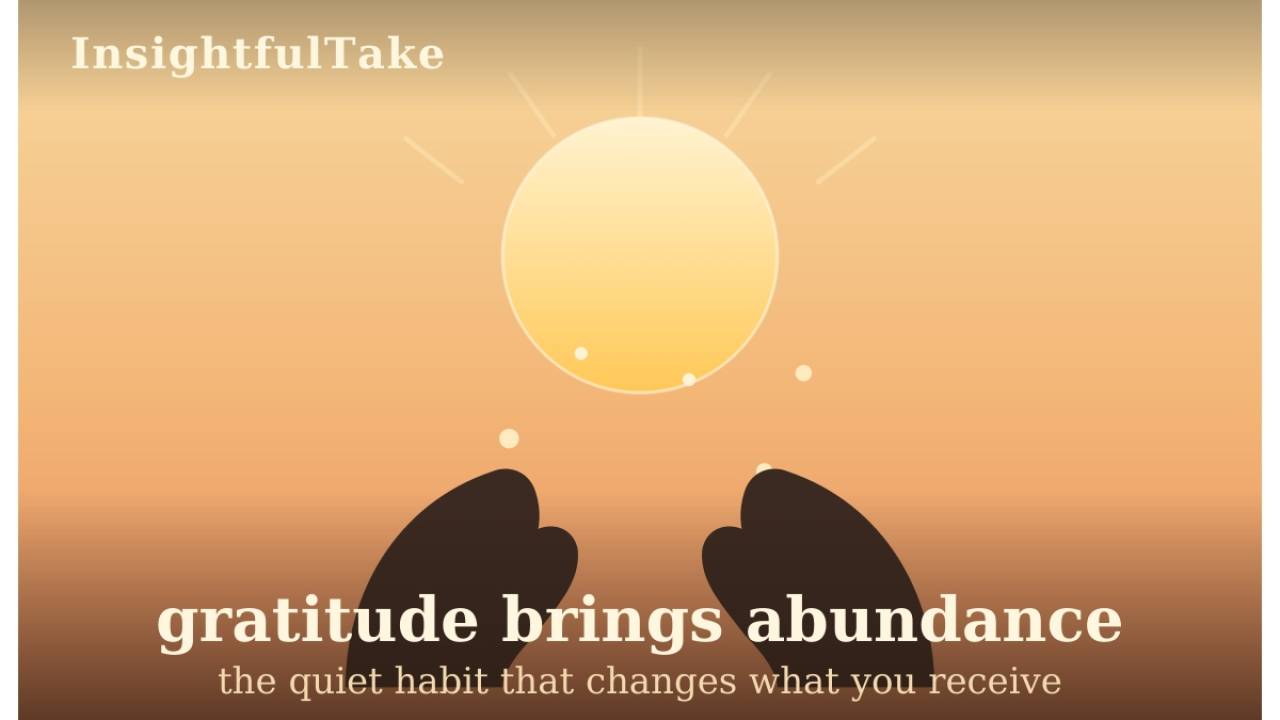
We spend years chasing more, only to discover that abundance may begin by learning to value what we already have.
There is an old habit, easy to overlook, that costs nothing and yet can change the way we experience life: the simple act of saying thank you and meaning it.
We often chase abundance through money, success and possessions, believing that having more will make us feel more fulfilled. Research and everyday experience suggest another possibility. Feeling grateful for what we already have can change our outlook, relationships and choices, creating a deeper sense of abundance in areas that cannot always be measured in money.
What Science Says About Gratitude
Gratitude is no longer discussed only as a moral virtue taught in classrooms, families and religious traditions. It has also become an important subject of psychological research.
Studies over the past two decades have linked regular gratitude practices with better sleep, lower stress and improved overall well-being. A large 2024 study by researchers at Harvard T.H. Chan School of Public Health, which followed nearly 50,000 women over several years, reported an association between higher levels of gratitude and lower mortality. The study also found a lower risk of cardiovascular disease among those with higher levels of gratitude.
Reviews covering multiple studies have reported similar patterns. People who regularly practise gratitude often report better mental health and more positive responses to everyday stress.
Psychologist Robert Emmons, one of the best-known researchers in the field, has studied how gratitude influences emotions and behaviour. His work suggests that grateful people tend to experience fewer negative emotions such as envy and resentment and report greater life satisfaction.
Gratitude does not have to involve long journal entries or elaborate rituals either. Simple prompts such as asking, "Who helped you today?" or "What good thing happened that I did not expect?" can encourage people to pay attention to positive experiences. Some recent research suggests that even brief gratitude exercises can be useful, particularly among younger people.
Why Gratitude Can Create a Sense of Abundance
The connection between gratitude and abundance does not need to be explained through magic. It can be understood through psychology and everyday behaviour.
When we focus constantly on what we do not have, life can begin to look like a list of shortages. Gratitude shifts attention towards what is already present: relationships, opportunities, abilities, health, experiences and small comforts that are easily taken for granted.
That change in attention can influence behaviour.
A person who appreciates an existing relationship may be more willing to invest time in it. Someone who values their health may be more motivated to take care of it. A person who recognises an opportunity may be more prepared to act on it.
None of these actions guarantees success. But repeated small choices can gradually influence the quality of a person's life.
Gratitude also has a social dimension. When we sincerely appreciate the efforts of a colleague, teacher, parent, friend or even a stranger, we strengthen the relationship between us. People generally respond positively when their contribution is recognised.
Over time, appreciation can build trust, cooperation and goodwill. In that sense, gratitude can create a form of abundance that has little to do with possessions and much to do with the people around us.
Gratitude in the Indian Context
The idea is hardly new in India.
Indian traditions have long included expressions of gratitude towards nature, teachers, parents, food and the wider community. Harvest festivals such as Pongal and Baisakhi carry an acknowledgement of nature and the agricultural cycle. Guru Purnima is centred on gratitude towards teachers and those who impart knowledge.
Even everyday practices can carry this sentiment, from offering thanks before a meal to touching the feet of elders as a mark of respect.
Modern psychology is studying some of the effects of gratitude through research, but the underlying idea has existed in Indian social and cultural traditions for generations.
The principle is simple: when people learn to recognise what they have, they may experience greater contentment instead of constantly measuring their lives against what they lack.
Practising Gratitude in Daily Life
Gratitude does not require money, special equipment or a major lifestyle change. A few simple practices can make it part of everyday life.
Keep a gratitude journal: Write down two or three things you are thankful for each day. They do not have to be major achievements. A good conversation, a healthy meal or a peaceful morning can be enough.
Say it out loud: Thank people specifically and sincerely. Instead of a routine "thank you", tell someone what you appreciated about their effort.
Reframe challenges: Difficult situations cannot always be turned into positive experiences. But asking what a difficult experience has taught you can sometimes reveal lessons that are otherwise easy to miss.
Take mindful pauses: Before sleeping or beginning a meal, take a moment to recognise one thing that went well during the day.
These practices are small, but their value can accumulate. They can encourage greater awareness of everyday experiences, strengthen relationships and help create a more balanced outlook.
Final Take
Abundance, in its deepest sense, may have less to do with accumulation and more to do with perception.
Gratitude cannot change difficult circumstances overnight, nor can it replace action when something in life needs to change. What it can change is the way we look at what we have, what we value and how we respond to the people around us.
When we learn to notice the good that already exists in our lives, we become less consumed by what is missing. That shift can influence our emotions, relationships and choices.
Perhaps that is why gratitude remains one of the simplest forms of wealth. It costs nothing, requires little time and can make us recognise the abundance that was already there.
There is an old habit, easy to overlook, that costs nothing and yet can change the way we experience life: the simple act of saying thank you and meaning it.
We often chase abundance through money, success and possessions, believing that having more will make us feel more fulfilled. Research and everyday experience suggest another possibility. Feeling grateful for what we already have can change our outlook, relationships and choices, creating a deeper sense of abundance in areas that cannot always be measured in money.
What Science Says About Gratitude
Gratitude is no longer discussed only as a moral virtue taught in classrooms, families and religious traditions. It has also become an important subject of psychological research.
Studies over the past two decades have linked regular gratitude practices with better sleep, lower stress and improved overall well-being. A large 2024 study by researchers at Harvard T.H. Chan School of Public Health, which followed nearly 50,000 women over several years, reported an association between higher levels of gratitude and lower mortality. The study also found a lower risk of cardiovascular disease among those with higher levels of gratitude.
Reviews covering multiple studies have reported similar patterns. People who regularly practise gratitude often report better mental health and more positive responses to everyday stress.
Psychologist Robert Emmons, one of the best-known researchers in the field, has studied how gratitude influences emotions and behaviour. His work suggests that grateful people tend to experience fewer negative emotions such as envy and resentment and report greater life satisfaction.
Gratitude does not have to involve long journal entries or elaborate rituals either. Simple prompts such as asking, "Who helped you today?" or "What good thing happened that I did not expect?" can encourage people to pay attention to positive experiences. Some recent research suggests that even brief gratitude exercises can be useful, particularly among younger people.
Why Gratitude Can Create a Sense of Abundance
The connection between gratitude and abundance does not need to be explained through magic. It can be understood through psychology and everyday behaviour.
When we focus constantly on what we do not have, life can begin to look like a list of shortages. Gratitude shifts attention towards what is already present: relationships, opportunities, abilities, health, experiences and small comforts that are easily taken for granted.
That change in attention can influence behaviour.
A person who appreciates an existing relationship may be more willing to invest time in it. Someone who values their health may be more motivated to take care of it. A person who recognises an opportunity may be more prepared to act on it.
None of these actions guarantees success. But repeated small choices can gradually influence the quality of a person's life.
Gratitude also has a social dimension. When we sincerely appreciate the efforts of a colleague, teacher, parent, friend or even a stranger, we strengthen the relationship between us. People generally respond positively when their contribution is recognised.
Over time, appreciation can build trust, cooperation and goodwill. In that sense, gratitude can create a form of abundance that has little to do with possessions and much to do with the people around us.
Gratitude in the Indian Context
The idea is hardly new in India.
Indian traditions have long included expressions of gratitude towards nature, teachers, parents, food and the wider community. Harvest festivals such as Pongal and Baisakhi carry an acknowledgement of nature and the agricultural cycle. Guru Purnima is centred on gratitude towards teachers and those who impart knowledge.
Even everyday practices can carry this sentiment, from offering thanks before a meal to touching the feet of elders as a mark of respect.
Modern psychology is studying some of the effects of gratitude through research, but the underlying idea has existed in Indian social and cultural traditions for generations.
The principle is simple: when people learn to recognise what they have, they may experience greater contentment instead of constantly measuring their lives against what they lack.
Practising Gratitude in Daily Life
Gratitude does not require money, special equipment or a major lifestyle change. A few simple practices can make it part of everyday life.
Keep a gratitude journal: Write down two or three things you are thankful for each day. They do not have to be major achievements. A good conversation, a healthy meal or a peaceful morning can be enough.
Say it out loud: Thank people specifically and sincerely. Instead of a routine "thank you", tell someone what you appreciated about their effort.
Reframe challenges: Difficult situations cannot always be turned into positive experiences. But asking what a difficult experience has taught you can sometimes reveal lessons that are otherwise easy to miss.
Take mindful pauses: Before sleeping or beginning a meal, take a moment to recognise one thing that went well during the day.
These practices are small, but their value can accumulate. They can encourage greater awareness of everyday experiences, strengthen relationships and help create a more balanced outlook.
Final Take
Abundance, in its deepest sense, may have less to do with accumulation and more to do with perception.
Gratitude cannot change difficult circumstances overnight, nor can it replace action when something in life needs to change. What it can change is the way we look at what we have, what we value and how we respond to the people around us.
When we learn to notice the good that already exists in our lives, we become less consumed by what is missing. That shift can influence our emotions, relationships and choices.
Perhaps that is why gratitude remains one of the simplest forms of wealth. It costs nothing, requires little time and can make us recognise the abundance that was already there.





















Leave a Comment